
.png?width=300&height=74&name=MorelandU-logo-WH-RGB%20(1).png "Moreland University Logo")
Front of the Class Podcast | Dec 4th, 2025
"Everything is Communication” with Dr. Jenna DiEleuterio
In This Episode
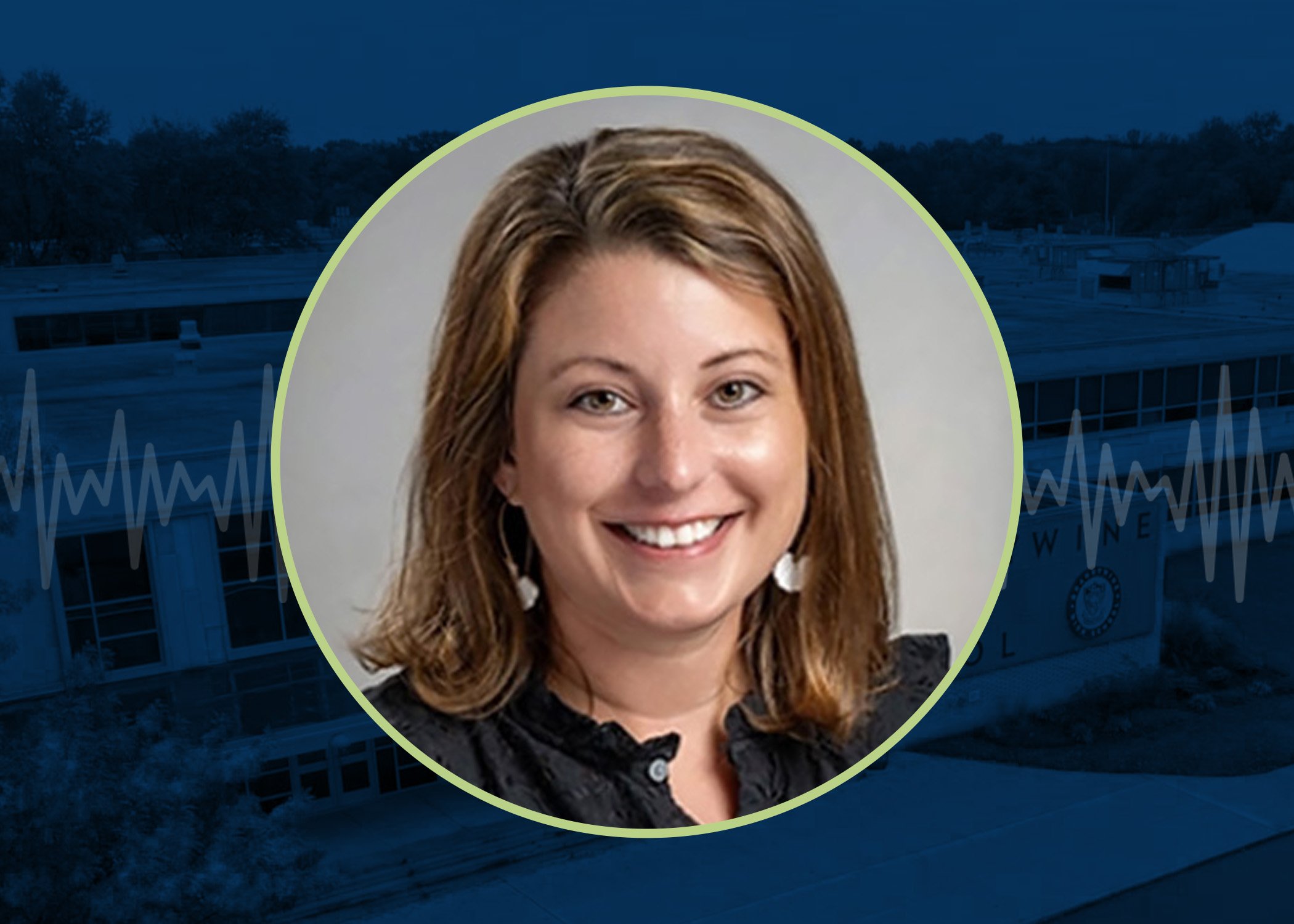
Dr. Jenna DiEleuterio is the 2026 Delaware State Teacher of the Year and a middle school reading specialist in the Brandywine School District. She channels her passion for creating meaningful relationships and stronger school–community connections into helping students build confidence in their reading skills.
In this episode, Dr. DiEleuterio shares her insights on approaching reading intervention with empathy and data, why she believes teaching is both an art and a spiritual practice, and how teachers can help create community movements. Her reflections can offer inspiration for educators seeking to make a deeper impact in their classrooms and beyond.
Key Topics Covered
- Strategies for supporting struggling readers through engagement and intervention
- The role of connection and reflection in sustaining effective teaching
- Ways to involve families and communities in students’ learning journeys
- The importance of self-care for educators
- Why teaching is “continuous work toward the best that we can do”
- And more!
Episode Guest
Listen Now




Episode Transcript
Please note, this transcript is generated by AI and may include some errors.
Spencer Payne: Okay, welcome to another episode of Front of the Class, Real Stories from Real Educators. And our real educator today is Jenna DiEleuterio. And Jenna, can you introduce yourself to our other educators and prospective educators in the audience with however you like to do so? Like, what do you teach? Where do you teach? Maybe how long? Fun facts? Or wherever you'd like to take that. How do you introduce yourself to other educators?
Dr. Jenna DiEleuterio: Sure, my name is Dr. Jenna DiEleuterio and I am the 2026 Delaware State Teacher of the Year. I'm a reading specialist in the Brandywine School District, which is in New Castle County in the northern part of the state. And I work with students in middle school in sixth or eighth grades and we work on reading intervention. So some students, okay, sorry.
Spencer Payne: I know you're good and feel free to go. But yeah, congratulations, first of all, on your nomination. And can you help us understand, like, what does it mean to be a reading specialist? Like, how does that role get created? And like, how do you raise your hand and say, I want to do that? What qualifications? Can you just help us understand a little bit more about what that means?
Dr. Jenna DiEleuterio: Thank you.
Sure. So the reading specialist in a building is one who ensures that students are getting what they need with reading. Of course, the priority is the tier one grade level instruction. However, some students need a little bit more. And what happens is that the elementary level, all students have a small reading group. However, that's not always the case in middle school. So I'm actually an additional class that they have that is in their schedule.
And it is based on a variety of assessment measures. We use screeners such as NWAA map, we use Dibbles, and then of course the recommendations from the fifth grade or their elementary school MTSS teams. So it is my job to make sure that everyone's getting what they need, whether it's vocabulary and comprehension, fluency and comprehension, or even decoding in some places.
Spencer Payne: And this might be an overly simplistic question, but I'm going to ask it anyway. I'm curious, right? Is there a one or two things that you see as being most helpful or effective in helping kids who need to come to you with needing a little help? Is it just getting more reps in? Is it finding books or magazines or graphic novel or something that they're interested in so they actually like to read?
Like, is it being around a couple friends that they can have a challenge? Like, what are some things that you see that seem effective in helping kids kind of overcome maybe their hurdles and get to maybe the grade level that they're trying to get to? Or what are you seeing in terms of just improvement? Like, what are some things that actually work?
Dr. Jenna DiEleuterio: think all of those suggestions are exactly applicable and it depends on the kid. Some students just need to engage in reading. They've struggled up until this point and they need to be actively engaged in reading and that can be the barrier. Some students, yeah, the interest is for them finding something that they're interested in or intrigued by. And then some students need to be matched to the proper instruction.
It just, depends. And then of course the smaller group setting is helpful because in the whole group, you know, they can kind of get lost. And especially in middle school when, you know, the shift is from, it is to, you know, reading to learn at this point. And the teachers don't necessarily have the skills to, you know, break down and diagnose what students need. So that's kind of where I come in. And then I can support both the student in my class, in my intervention class, as well as the teachers.
Spencer Payne: And how did you choose this specialty? did you end up saying, like, I'm going to help middle schoolers improve their reading abilities? How did you choose this path?
Dr. Jenna DiEleuterio: Yeah, so the majority of my career was spent in elementary special education and I loved that. But I was ready for a change in 2021 and I just wanted to see what the supports were like for, you know, my students once they got to this level and the schedule is vastly different and the expectations and experiences is just very different. So I wanted to get familiar with that.
And I started off as special education teacher. was an ELA co-teacher in seventh and eighth grade. But what I noticed my first year here was that there was a significant difference in the reading supports that were available to students going from elementary to middle school. And there was not a clear MTSS process in place in terms of screening and progress monitoring and also interventions, a system of interventions.
So I saw it as an opportunity to support the whole building. And I said to my principal at the end of my first year that I would be interested in moving to the reading specialist position if that ever came up. And serendipitously, the reading specialist was moving to another position. And so I moved into that my second year here at Talley. And so that's what I've been doing over the past four or five years.
Spencer Payne: And what are you seeing that has made you so effective in earning Teacher of the Year awards? what are you able to share maybe some results of, say, from four years ago today of, you know, here's how many kids come to the reading specialist, here's how many go from, again, whatever terms you might be using, at risk to competency or whatever it may be. Like, can you share any results over those four years of what you've seen and how, like for example, you broke down, there's some process steps that you've added. Like what are some things that you have brought to this reading specialist position that maybe weren't there before that you think are contributing to some of those results that you're getting?
Dr. Jenna DiEleuterio: Sure, so one of the steps is having a clearer screening process. So NWEA map is one kind of measure that we use, but it doesn't always tell us all of the information. And sometimes students, if they struggle with motivation or other basic needs, might just be clicking through and it doesn't always give us the information about where they are or what their needs are for reading. So I have ensured that all the ELA teachers are also including dibbles in their screening process at the beginning of the year, which includes a maze assessment, which is a silent reading passage that they have to read and go through and select vocabulary words that make sense in context. And then an oral reading fluency, you know, one minute assessment that kind of gauges where they are with their fluency and their accuracy.
So that's one level that's been important in determining what students actually need. So we're not pulling in kids into my class or another intervention class who don't need it. Perhaps they just need a discussion about the importance of the test. Or maybe we need to accommodate their needs during testing time. Maybe there's an anxiety piece there or whatever. So that has been helpful in identifying who truly needs it.
I think additionally, we have changed our intervention. instead of kind of leaving it open to the reading specialist to do, you know, whatever, we've made it consistent across buildings that we are using read 180 because according to what works clearinghouse that is yielding the best results for students. And according to our data that has our district coordinator has found that our district data coordinator has found that the students who are in the Read 180 intervention, their growth percentile is higher than what is expected. So, you know, the data is proving that we're seeing results with this intervention.
I also will say holistically that when I started as a special education teacher, we had students who were coming to us who still needed a significant number, who still needed single syllable decoding, which is a foundational skill that is not typically expected in middle school. And that has decreased. The number of students from the elementary schools who are coming to us, you know, needing that level of support has shifted. And now we're able to kind of start with the multi-syllabic and go from there.
Spencer Payne: And for those who might be wondering, well, what, if anything, are some books, graphic novels, magazines that kids seem to be gravitating to that are maybe more popular than a novel from 80 years ago that doesn't feel relatable? It's not a curiosity. there, are there any new materials, books, again, et cetera, like new titles specifically that you're like, more kids seem to like this, this and this, then they like this, this and this. So that also helps their, their just desire to read.
Are there any specific titles that again, you might recommend to others out there that just seem to be working for your kids? Again, maybe not every single one, but just in general, like the kids seem to like these things more than they like these things. And they're more excited to get their reps in.
Dr. Jenna DiEleuterio: They're definitely, I cannot keep the dog van and the Captain Underpants books on my shelves. They still are very interested in that. And honestly, I'm okay with that. As long as, you know, when it's their self-selected reading time, if that's what they want to read, then go for it. Because of course that interest and motivation is where we sometimes need to start with that. Definitely any type of graphic novels. know Jason Reynolds is very appealing to the students. He has like the crossover and other books that are accessible to kids when they see it written in prose. They're a little bit more willing to do that.
And honestly all of those can be adjusted to incorporate higher level thinking and you know some of the Lexiles are even on grade level or above so just because they may look like they're easier, doesn't necessarily mean that that's the case. And I encourage students to use audiobooks. Our district provides Sora and I am happy if the students are listening and engaged. I think the combination of both having them read, know, text that is in front of them, but also being flexible because that's the nature of reading today is, I mean, I listen to audiobooks. I read books that, you know, not necessarily according to level or lexile. And so as long as we can, you know, provide our students with a wide range of options, I think that we're on the right track.
Spencer Payne: Yeah, perfect. Thank you. Always love to get into specifics of titles, authors, et cetera, of what kids seem to gravitate to. Captain Underpants, can't keep it off the shelf. I'll repeat that one.
Dr. Jenna DiEleuterio: Mm-hmm. Yep. Nope. Dog man. Yeah, definitely.
Spencer Payne: All right, perfect. And again, you mentioned moving from kind of elementary school to middle school. I'm curious to dig into this a little bit of what, if anything, maybe one thing or two things, what are some consistent approaches that have worked for you and the team kind of helping elementary schools that still work in middle school? And maybe what are some things where you're like, ooh, that older kids, 14, they don't really gravitate towards this that worked for the, you know, the fourth graders, like where have you had to change your approach? So what's still consistent in terms of how you approach helping middle schoolers and what's the biggest difference in kind of helping middle schoolers compared to your elementary school background?
Dr. Jenna DiEleuterio: think the middle schoolers are, well, we've just adjusted our curriculum in elementary, and I've not been a part of that process, but I hear really positive results from the teachers at this point. I think what we've done with students before in terms of repeated reading, we have to take a little bit more of a specific approach when we're talking with middle schoolers because they don't always see the significance. So I think we need to be very clear and intentional about the purpose of why they may be doing a repeated reading, because they're going to find all of those loopholes like, why do I have, you what's the reason for this?
And we have to give it to them, you know, for them to understand, because it may not be clear for them. So sometimes at the elementary level, they're a little bit more willing to engage in what we ask them to do. And at the middle school level, we have to be more explicit and give the why and the background for it.
Spencer Payne: Can you share a little bit about some of the why that you share with the middle school students who might be asking, why do I need to do this or why am I here or why is reading so important? Everything's in video anyway. Can you share a little bit of some of the why that you and the team have kind of worked on of some things that maybe seem to seem to help that conversation?
Dr. Jenna DiEleuterio: Sure. So I always tell the students that reading is communication. Everything is communication. And if I place anything, any text in front of you, I want you to feel confident to stand in front of people and to read it clearly and articulately. That tends to get them because they know that they're not there. And then over time, I'm very, very intentional and specific about giving them positive feedback and showing them how they are growing along the way.
And that includes looking at their fluency data. It includes looking at their maze assessments. It includes digging into the work that they've done on the Ed app, which is a portion of the Read 180 program that's the technology based. How they're doing on specific types of activities and going around and letting them know that information keeps them going.
Spencer Payne: Perfect. how do you, here's how you explore early in a new school year. So maybe the first day, week, month, you know, something in that range. How do you approach kind of setting the expectations for the kids, what they should expect working with you and their parents, and maybe even some of the teachers, because it sounds like in your reading specialist role, you might be advising some of the teachers of, this student needs more of this while he's also in your class time. So you've got multiple kind of parties to kind of allow.
How do you go about setting those expectations, holding those expectations, and just kind of setting the tone for what to expect when kids are working with you?
Dr. Jenna DiEleuterio: So I explain the nature of the class and what it's going to look like. So with the students, I will tell them that there is a portion of the class that is going to be working with me and a smaller group in a workbook where we're going to be doing some readings together and answering questions. There's going to be a portion of the time that they're going to be working independently on the technology. And then there's a portion of the time that they're going to be doing independent selected reading.
So just letting them know what it is they can expect. And then we go through it, know, all the specific details of the different parts of the rotation. We practice them. I ask for students to model. What does it look like when we go to our independent time? What does it look like when we're reading together? And they practice, you know, the expected and the unexpected, and then they get the praise and et cetera. So we go through that.
And that's also part of, you know, incorporating our PBIS, you know, as a whole school, we have our matrix that we incorporate. So it all kind of goes hand in hand. When it comes to the parents, I explain the same thing to them. So for open house, for example, I have the parents come in and do kind of the daily routine that we follow every day, which is the students come in, they have a do now on the board that they that they write in their agenda book. And I have the parents do that as well.
and then we kind of explain the other pieces of that. And then in terms of working with the teachers, they don't necessarily need to know the structure of my class, but what I try to communicate to them is that there are different portions of reading that students may be struggling with. It may not just be that they are disfluent readers. It could be that they sound really good, but they don't understand what they read. And so trying to figure out and diagnose what the need is, they're not always in tune to, and so it's a good communication opportunity.
Spencer Payne: Perfect. I'm curious with the parents. Do you ever approach, you hey, here's the couple titles that they really love in class, like the libraries down the street. You could, you could go get some more of that title or that author for them for free. It'd be great if you had them read one of these books a week or a month or something like that at home. They just keep getting their reps in and practicing because, you hey, my goal is they're in my class because we want to get them back to kind of on grade level as quickly as we can.
Like, do you ever approach kind of working with parents in a way like that? if not, like, what helps? Like, what's an effective way to kind of engage parents in a way that, you again, you don't want to, like, don't want to insult, you don't want to tell them what to do, but you kind of want to like, hey, it'd be great if you could help here. Like, how do you approach kind of working with parents and what have you found effective for how they can help support their child get to where you're trying to help get them to?
Dr. Jenna DiEleuterio: Right.
Well, I let them know that it's pretty simple, you know, it's and it's really even at the middle school level, just reading out loud together is a wonderful activity. You know, it's it's connection building. And then, you know, you're also making the literacy experience enjoyable. And so I try and explain that it's not anything, you know, they don't have to have a background in reading. They don't have to have all of these, you know, different activities up their sleeve just if they're reading and they're engaging with their child in the process. And then of course, if there are certain things that I see children gravitating towards, then I will make those recommendations to the parents. so yeah, it's pretty simple. I've also been a part of this year, a specific reading program at the library that has drawn in a lot of families.
So it actually is paired with a substance abuse and mental health program that is in our community. so they're bringing people in to kind of assess what their additional needs may be. But it's also around a shared experience of reading. So dinner is provided, and then everyone can come together and read. So the person who is running the session at the library kind of models that for them to then take home and continue to do at home.
Spencer Payne: And then at the, that was kind of at the beginning of the year, right? How do you set the tone at the end of a year? How do you sit back and kind of determine for yourself? Hey, how, how did I do this year? How did I do with my goals for the class? And again, that could be quantitative and test scores. could be qualitative and wow, these three students were afraid to read out loud and now they are the first ones willing to raise their hand.
So like, how do you kind of judge for yourself at the end of a school year of like, hey, how did you do this year? How was the reading specialist at this school? Did I do a good job? Did I do a great job? Was I okay? And I wanna make some tweaks. Like, how do you judge that for yourself?
Dr. Jenna DiEleuterio: Yes, I'm very reflective. So I would say that that process happens throughout the entire year. And I'm lucky that I have a cohort of other reading specialists across the buildings. So when we have our professional learning communities, we have those same conversations. You know, it's not just me kind of sitting down and writing out myself, what my thoughts are. Of course, we look at data, absolutely. But then there are those qualitative pieces that we reflect on and that's what kind of keeps you going. know, those little pieces. I've had a student come up to me and say, I really like this class because my English is getting better.
And then a week later, his ELA teacher called me and said, you know, he asked me to stop translating things for him. And I had another student come in and say, Dr. D, like, I heard about the bird flu on TV and I thought about our class and because we were learning about pandemics and so just those little moments that I try to absorb and remember are just as important as the quantitative information.
Spencer Payne: Yeah, perfect. And I'm curious to dig on the quantitative for a second, because you mentioned data a couple of times, like what is or are the top one or two or three things that you and the team are looking at from a data standpoint? Like what are the, if you had the Holy Grail, which is only like one or two or three things on the chalkboard from the beginning of the year to the end, like what is or are those very short list couple of things that you're looking at?
Dr. Jenna DiEleuterio: Did you say the qualitative or quantitative?
Spencer Payne: data. we'll go quantitative. Yeah, sometimes I might get those backwards data. We'll just say data.
Dr. Jenna DiEleuterio: Mm-hmm.
Okay, yeah. So what we are looking at, we're looking at the Smarter Balanced scores, of course, because those are directly related to the standards. And then we're looking at the proficiency on the NWEA map. So how the students have progressed from the beginning of the year to the middle of the year to the end of the year. And then the Dibbles is kind of more of a screener, but also we expect to see growth in those areas as well. So using a combination of norm-referenced screeners, the Smarter Balanced, which is a line, you know, it's a kind of an outcome measure aligned to the state standards and then kind of those day-to-day assessments that are for learning that we look at as well.
Spencer Payne: Yeah, perfect. I'm curious to explore some stories over your career so far. any proudest moments jump out at you of things that maybe still make you light up or smile or think about because it was just such a great day or moment or year or class or whatever it is. So any proudest moments strike you that you're able to share?
Dr. Jenna DiEleuterio: Sure, so in 2023, I told a group of students they needed to put down their phones and go play outside after school. And one student came back and said, I'm not allowed to go play outside at school. It's not safe. I live in a bad neighborhood. And of course, I appreciated the check of my privilege. And so it made me inquire a little bit more. And she told me about her neighborhood and the history of conflict and
Spencer Payne: Oof.
Dr. Jenna DiEleuterio: prevalence of drug use and other struggles that people experience. And at that point, I was still new to this school, so I was not familiar necessarily. And we live in a suburban area, so I wasn't even thinking that, I wasn't even aware. So I inquired and she kind of explained a little bit more. And I thought back to what I had done when I was in elementary school. My friend, Pastor Sandra Ben lives in the most violent part of the city of Wilmington. And many of our students, when I taught at that elementary school, were bussed to our school. And so she invited us as teachers and the Wilmington Police Department to join her for monthly walks where we could greet the students when they arrived home from school and just do a loop around the neighborhood and, you know, reach out to the kids and the families, et cetera.
And it was...the most profound experience of my career because these kids are not used to seeing their teachers in their neighborhood, especially on a regular basis. The families were overjoyed when we came and you we have these perceptions sometimes that students and families don't care or that they're uninterested or uninvolved and it's not always the case, especially when when we meet them where they are. So I thought back to that when I had moved to middle school and now encountered this student who was telling me about her neighborhood dynamics. And so I wanted to apply that approach and see if we could do it. I pulled, I called the chief of our County police and I asked the County executive to join me on a call with my principal and to propose this idea. Of course, I had pitched it to the students at first to make sure they were interested in it anyway. And everyone was on board and ready for this movement.
And the key thing that I tried to reiterate was that this was not a one-time dog and pony show that we were going to do. This is an ongoing activity that is going to happen once a month in the neighborhood. We're now on our third year and it is a really profound movement that has been created. And there are students who come up to me that I don't even teach and they say, when's the next Peace Walk? You know, community organizations and members, elected officials are coming to me and wondering how they can participate and how they can partner. You know, it's kind of grown and expanded to now we have resource fairs that are attached to these peace walks. And so in the beginning of the school year, for example, you know, we had a backpack giveaway. We were able to provide some physicals.
And these are just community organizations that are coming together and pairing it with the walk. There was one month that was substance abuse prevention and awareness month. so various different organizations came and provided resources to families and anyone who participated in the walk and gave the students some background about what they can do if they see someone who is overdosed or how to kind of work through the trauma of that and so that is, would say the most profound experience of my career is going outside of the classroom walls and listening to my students and giving voice to communities that feel unseen and unheard and bringing in other organizations. I think that's how we're going to change the world.
Spencer Payne: Thank you for sharing that. That's a, you're three years in to doing this once a month. how did that start? Again, you, you, you had this, like, you had this moment where this one child is like, well, I can't go outside. Like the playground is dangerous, et cetera. How did that, that moment turn into, I'm going to create this monthly outdoor activity where kids are off their phones and we're bringing the community together. Like a lot of people might just hear that moment. Like, man, I guess that was a bad idea. I guess I won't say that anymore.
Right. Be easy to just stop. What, what, what sparked this? I'm to make a community event out of this because we're going to get kids outside. I didn't even realize this neighborhood was that rough. Like we're going to go figure something out. Like how'd that, how'd that happen for you?
Dr. Jenna DiEleuterio: Well, I think just thinking back to what I had experienced when I was an elementary school teacher and seeing, you know, the significance of an event like that and the trust that it brings. Some of my elementary students that I had would come out and, you know, specifically ask for, where's Officer Conine and his dog XO? And like to know your community by name, like the police by name and that the police know the children by name.
Not in a negative way, was part of the driving factor that I thought, you know, we could do this and bring more people together in this community where there is so much conflict. So thinking back to what I had experienced, you know, that way, and then getting student buy-in and just having a real passion around that approach and connecting. We have a lot of students who are from that neighborhood.
Spencer Payne: Yeah.
Dr. Jenna DiEleuterio: And they struggle coming into school. so I thought, you know, if we can just do one thing, if we can show our presence and, you know, that maybe it make a difference.
Spencer Payne: Perfect. Thank you. And a couple more like very quick follow-up questions of that of, of, know, is this on a, is this on a weekend or a weekday? And, you know, how do people get there? Right. Are there, you have, do you have school buses lined up? Like, how do you, like, how, like, are you coordinating everybody? Like I got a police person there every single week and I've got one special kind of community, vendor partner, whatever it may be. Like, are you coordinating all of that? Like, so like maybe help us paint a visual of like the last one that you did.
Dr. Jenna DiEleuterio: Okay?
Spencer Payne: What it looked like and feel like, how many people were there, was it on a weekday or a weeknight? Like how did people get there? Is the school involved? Can you just paint us a little bit of picture of what it looked and felt like?
Dr. Jenna DiEleuterio: So I create a schedule for the year that goes out to anyone who has shown any interest. Also, I send it to elected officials so that they can kind of spread the word through their community. So kind of a holistic share out also on social media, you know, using those kinds of things. And then I get on the bus with the students and remind them that we're meeting at the end whenever that walk is occurring so that I can get them to come and be present.
And then in terms of the community organizations, it's become such a routine at this point that there are people who are regular partners with us. So the police, for example, are always there with us. And they even posted on their website as a community, one of their community organizations or one of their events that they participate regularly. So I think that, and I try to reiterate and praise those who are there on a regular basis, I'll announce once we're at the Peace Walk that we're so grateful for our New Castle County Police. We're so grateful for this organization who is always here with us. yeah, so it's just kind of become routine, which is exactly what I want.
Spencer Payne: Yeah, perfect. That's fantastic. So congratulations. Kudos to you. Appreciate you for doing that. That's a great thing. And I'll add even another example as you were describing that is I don't know if you ever heard of a guy named King Randall the first I've heard him speak a couple of times. He's in Albany, Georgia, which I guess he says is a relatively, you know, not super well off neighborhood. And he's kind of organized these events for kids there where he's teaching them how to like change the oil in a car and change tire and actually he has a walk. I think it's at like six in the morning where he's just like, Hey, like we've got a health problem in this country. We're obese, fat, sick, et Like 6 a.m. we're going out for a community walk. Whoever wants to come, come on out. We're going for a walk.
So another just great example of someone who's kind of doing that community building in a way that I think people are in many instances kind of starving for, like want to be a part of something, but it's hard to start. like, anyway, your example, his example are two things. If you're out there listening, you're like, I want to start something like that. There's two examples with you, Dr. D and with King Randall, the first of people who have gone out and started something. And now you're three years in, he's multiple months, multiple years into doing this kind of stuff. There's models out there that you can go follow to kind of create that community that you might be searching for.
Dr. Jenna DiEleuterio: Definitely, definitely.
Spencer Payne: Perfect. Thank you very much for sharing that. And on a more, well, that's also fantastic. Also on a fun, funny, energizing note, any crazy stories that you've had in your years of education, things where students are like, I can't believe they said that, or wild, crazy, funny, anything like that that you might be able to share that's just kind of like those laugh moments that in the moment might be just hilarious that hopefully can write down and remember, because sometimes it's easy to forget those moments if you don't write them down, but any funny, crazy laughing hysterical moments that rise to the top for you in your career and education that are just so fun or funny that they've stuck in your memory.
Dr. Jenna DiEleuterio: My gosh. COVID was a very interesting time, know, Zoom instruction. And there was a moment I remember working with a small group. Again, I was still a special education teacher at the time and I had the Zoom up and the students are all there. And this one student had a baby sibling in the background who like ran across naked and I will never forget the kid's face. He just was like so mortified. I don't think any of the other kids on the Zoom had seen it, but it was so funny. he was trying to like close his Chromebook or just like, you know, make sure that nobody saw it. Things like that are hysterical, you know. I would say my middle schoolers make me laugh every single day. They keep me in check. They do not let me get too big for my britches.
It's so funny because someone...another teacher was saying to one of my students like, know, Dr. D is the state teacher of the year. They're like, yeah, we know we've seen it. Yeah. And so it's just, I think that's important that we find the joy and that we, we embrace the lightness because it's tough if you don't. And if we don't approach things, you know, with, with that, with that lightness and that heart, then, you know, things are going to be...It's gonna be the grind.
Spencer Payne: Yeah. And on that note of it being the grind, even, even when you're approaching things from a positive way, mean, I, I generally optimistic and there's times where I get, she, geez, I'm slogging through this right now. So I'm curious, there, there any times in your career where you've kind of felt that. Drag or that like grind or that just doesn't things feel off right now? maybe, and how do you bounce back? Like what's, what's gotten you back on the, you know, positive teacher of the year mentality, philosophy horse. So can you share any.
Dr. Jenna DiEleuterio: Mm-hmm. Yeah.
Spencer Payne: Any times where you felt kind of, you know, blah down, just okay, whatever it may be. And then any strategies that you've used for yourself that you can share with others of how to get back on and be on again for the kids again, like that next day or even that next hour.
Dr. Jenna DiEleuterio: Yeah, I will say that it happens all the time. There are days when I'm like, what just happened during period four? Or that whole day, I don't think anyone got anything out of my instruction. That's a very, very real thing. And it can be heartbreaking when, as a teacher, you're trying so hard and you're planning and spending so much time and energy. And so I'm very intentional about making sure that I take care of myself.
Therapy is a big part of my life and it has been for a long time. I make sure to schedule in time and nature and know walks and exercise. You know I make sure that I'm eating and you know drinking well and what I need to throughout the day. I have systems of support with individuals so among my teacher friends among other friends.
And then I just really make sure that I rest as well, instead of scrolling on my phone until 11 o'clock at night, which is easy to do. And I've certainly been there, but to keep myself in check and to really show up and be my best self, I need to make sure that I'm getting enough rest. So all of the things that are recommended for health and wellness, think...teachers especially really really need to do and then like I said You know it can be kind of be annoying to hear the well self-care, you know people will say that to you, but You know making sure that you are connected with other individuals so that you can check on each other It's it's that's crucial
Spencer Payne: Yeah, perfect. And I'm going to pick on one little detail there that I'm curious to dig on is the concept of kind of nutrition and, you know, eating right. And in a school day, sometimes you got lunch and then you might have, you might be hungry again and you got four minutes. So what, if anything, are your go-to snacks during the day? What are, what are some Dr. D approved snacks in the classroom during the day when you just, you need a little something and you just don't have a lot of time?
Dr. Jenna DiEleuterio: I like those RX bars, the blueberry RX bars, and just a piece of fruit, a banana or an apple or a bag of mixed nuts or something. Although I just got Invisalign, so the whole process of eating and snacking throughout the day has totally been upended, because now I have to brush after I do it.
Spencer Payne: Perfect, but pre-invisalign, we got fruit, RX bars are the go-to's for you. A couple more rapid fire, more kind of quick hitter questions as we get close to wrapping up. But you what, if anything, you've been doing this for a while. This is not your first year, this is not your first rodeo, multiple different types of classes, multiple grade levels. But for those teachers who might be in their first year, or maybe they're prospective teachers, they're gonna go into their first year soon. They might face those struggles two, three months in.
Questions, does this really write for me, whatever it may be. What would be your number one piece of advice for any of those teachers who are relatively new in their career and they might be questioning themselves? What would you sit down and tell that person if you had a chance to just give them one useful piece of advice that maybe has helped you or helped others?
Dr. Jenna DiEleuterio: I would say slow down and connect. Connect to yourself, connect to your students, connect to those around you, because that's where you're going to find those answers. When you dig deep and you think about why you're there and what your purpose is, and then you think about how are you connecting with your students and if you're connecting with your students. And sometimes we get lost in the structure of the day. You know, the schedule is, it just keeps going.
And sometimes when we give ourselves a little grace and flexibility and say, you know what, I'm just going to sit here and enjoy these kids and enjoy the moment. I think that's how we can get to, all right, are we gonna continue doing this? Are we gonna keep at it?
Spencer Payne: Yep. Slow down and connect. And Dr. D, you have your PhD. You've also, masters, can you help share your approach to your masters when you got it and what you might recommend for others in terms of their approach to their masters? Like do it right away. Wait until you know which field you really want to go into. So how did you approach that for you? What did that unlock for you? And how would you recommend others approach the thought of getting their masters?
Dr. Jenna DiEleuterio: I do. Yeah, so I graduated in 2011 from my undergrad and then I got my master, I waited a year and then I went into a master's program. And during that year, I, as a special education teacher, I was in a position where I was working specifically with students on reading. And so I wanted to learn more about reading. And so, you know, that was my approach and I'm glad that I did.
I think it's great to have a specialty in a particular content area or something a little bit, yeah, just not so general. And going through the master's process was wonderful. I was grateful for that. And then I got my doctorate in 2020. And that's always been something that I've wanted to do. And I just see myself as cliche as it is as a lifelong learner. I really do love learning. And I love the formality of learning of school because it works for me and I know how to do it. And so I embraced it and I went for it. sometimes people will ask me, well, what do you wanna do with your doctorate? And I'm like, what do you mean, what do I wanna do with it? Like I'm doing what I wanna, it's a journey and it's a process and I don't view it as something, a ticket to get to something else.
It's all about the relationships you build. It's about the knowledge you acquire. And then I apply everything that I've learned every single day.
Spencer Payne: And phones, smartwatches, etc. in the classroom, are they allowed, not allowed? Do you lock them up? How do you in your classroom and your school kind of approach that?
Dr. Jenna DiEleuterio: So our school adopted yonder pouches and it has been life-changing. It's been amazing. And yes, of course, we're in our second year of that and there have been students who try and cheat the system and things happen, but I don't see the phones out like I did when I first arrived to middle school.
It's profound. think Jonathan Haight and anxious generation is a really important text for people to read and get their hands on about phones and the impact. And I absolutely think that we should get them out of kids hands in school. But what I will say is because many students, they don't understand why. And I think what we could have done better in the yonder pouch approach is involve student voice. So had them at the table when the adults decided that this was going to be our approach so that they could voice and understand the process because a lot of them now, you know, will complain about that and, but yes, it is for instructional purposes, for anxiety levels, it has completely made a difference.
Spencer Payne: Yep, perfect. And what to you is the single number one best thing about this profession? Education.
Dr. Jenna DiEleuterio: The best thing is the relationships with students. come with, I mean, they just have so much to offer, not just to the academics or to each other, but to my life. And I think that we need to embrace the goodness that they have and connect with them.
Spencer Payne: And on the other end of that, what's the toughest part about this profession? Or if you had a magic wand and you could point it at one thing and change it overnight, where would you point that one?
Dr. Jenna DiEleuterio: Hmm. would, if I had a magic wand, I would ensure that everyone's nervous system was ready for learning. Adults and students.
Spencer Payne: I like that. And what, anything, is there one thing, two things, is there anything that you wish maybe the public at large, excuse me, parents, whoever it might be who are not teachers, what if anything, if you could share or have them walk a mile in your shoes without actually walking a mile in your shoes, but kind of share something about the education profession that you think is important that maybe they don't realize, what is one or two things that you wish other people who are not in this profession knew about what it's like to be in this profession.
Dr. Jenna DiEleuterio: I think being in this profession is like juggling a million things at one time and you're on this schedule and these bells ring and it can feel like your day is just very, you're on a hamster wheel. It can feel like you're on a hamster wheel. And I think that when we're looking holistically, we need to embed more freedom. I believe rigor is important, but I also believe that kids need recess and they need time to process and they need a little bit more than just a very rigid structured day.
Spencer Payne: Perfect. Anybody you'd like to shout out to, any educators you really respect, any approaches you really respect, tools, system, whatever it is, right? Anybody you really appreciate, respect, et cetera, it's just time for a good old fashioned appreciate you shout out. Anybody you want to shout out right now in the education world.
Dr. Jenna DiEleuterio: I would like to shout out kindergarten teachers. My friends, Sarah Greco and Deb Miller, for example, I think they are creating the foundation and they are welcoming with open arms and love students who are coming from preschool experiences and then students who are not, who are not coming from any kind of formalized structure to a day. And I think that they have a lot that they need to face every day. And so I'm very grateful for them because that's the foundation for the rest of their education career.
Spencer Payne: And any final words of wisdom, anything that you were hoping we were going to get a chance to talk to today that you wanted to share that we just didn't get to or anything that you did share that's so important that you just want to restate it, re-highlight it because it's just that important. So any final new or repeated words of wisdom.
Dr. Jenna DiEleuterio: All right, first, slow down and connect. That's very important to me. And also, I think that teaching is a spiritual practice. And I think that every day we pour faith and hope and love into our students and their families and our colleagues and our greater communities. And it's a gift. we are constantly seeking to better ourselves, to better our students and those around us. And for me, that keeps me going is that mindset that it's just it's a continuous work, you know, towards the best that we can do and it's never finished.
Spencer Payne: Well, Dr. Jenna D, thank you for your great stories, real stories from a real educator, a teacher of the year educator. Thank you so much for sharing your story and especially those peace walks and just kind of creating creating a movement in the community that is like you said, not some one and done thing that we're going to clap our hands because we did something one, but this sustained kind of walk that involves the community and the kids and everybody. So thank you so much for for doing that, for sharing that and sharing your story. Appreciate you. Thank you.
Dr. Jenna DiEleuterio: Yes, thank you for the opportunity.

Moreland University can help you take your teaching career to the next level.
Whether you’re looking to get professionally certified or earn an M.Ed., our 100% online programs can help.
Complete your no-cost application (it takes less than 15 minutes!).