
.png?width=300&height=74&name=MorelandU-logo-WH-RGB%20(1).png "Moreland University Logo")
Front of the Class Podcast | Dec 11th, 2025
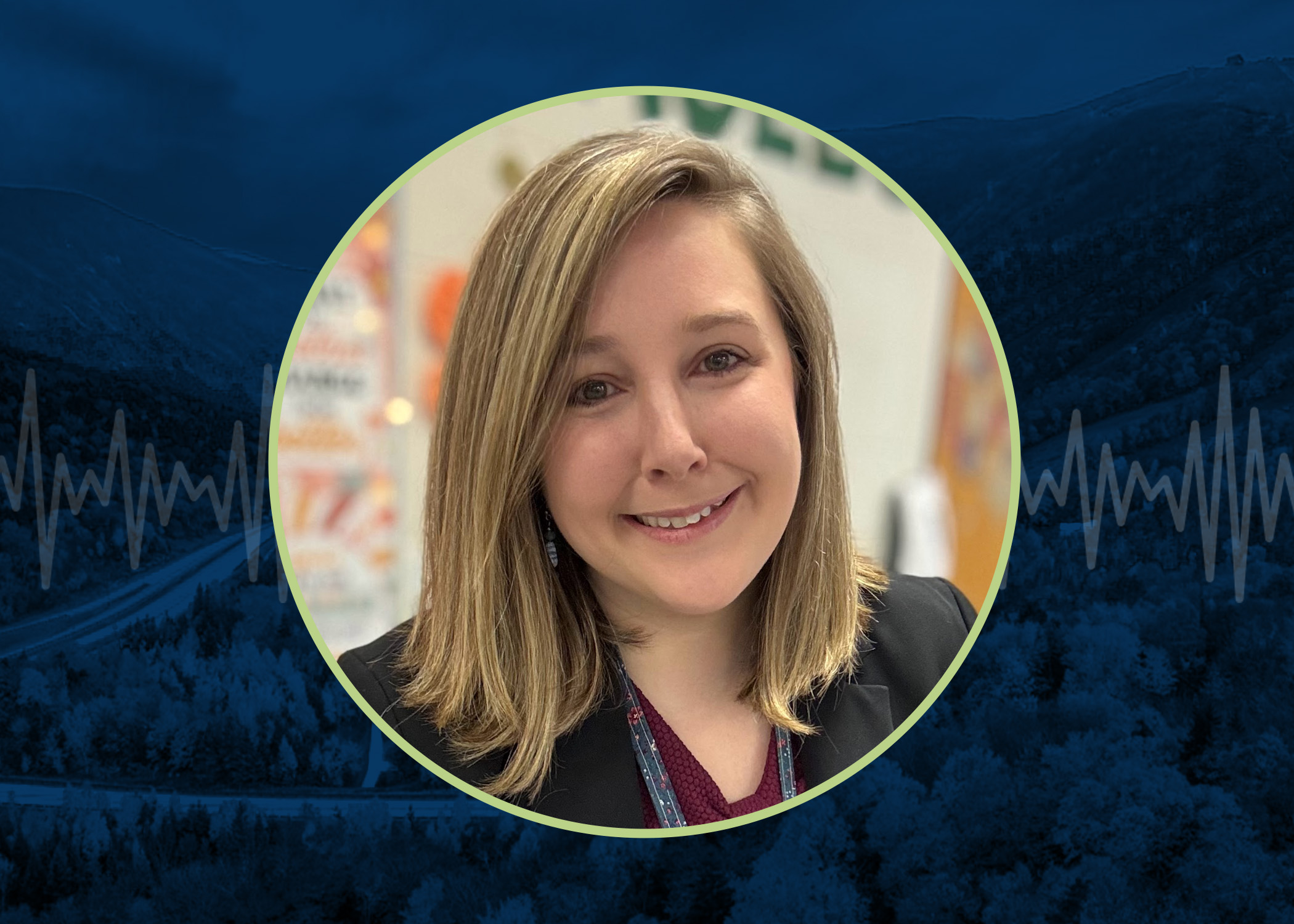
Making Learning Magical with Megan Philbrook
In This Episode
As the 2026 New Hampshire Teacher of the Year, Megan Philbrook focuses on filling her classroom with curiosity and creativity for the fifth through eighth grade social studies students in her rural community.
In this episode, Philbrook shares how she brings history to life through immersive lessons, why students love her simulations, and the importance of listening and emotional engagement. From reenacting the stock market crash to debating the Articles of Confederation, her students don’t just learn about history — they experience it. Teachers in any subject area can come away with new inspiration from Philbrook’s insights.
Key Topics Covered
- How simulations and active learning build deeper understanding
- Why emotion and hands-on experience belong in the classroom
- Creative strategies for keeping students engaged
- Where teachers can find career and classroom inspiration
- Navigating writing grants, community support, and real-world constraints
- And more!
Episode Guest
Listen Now




Episode Transcript
Please note, this transcript is generated by AI and may include some errors.
Spencer Payne: Okay. All right. Here we are. Welcome to another episode of Front of the Class, Real Stories from Real Educators. Our real educator today, Megan Philbrook. Megan, can you introduce us to the group and sharing how do you introduce yourself normally to other educators? It could be things like, what do you teach? Where do you teach? How long you've been doing it? What lights you up about it? Or any fun facts out there? So how do you introduce yourself to other educators?
Megan Philbrook: Hi, thank you. So first off, I am on my 12th year of teaching in the beautiful Granite State of New Hampshire. And I teach in a very small rural community of about 2,400 citizens. And I am the fifth through eighth grade social studies teacher, which means I am an absolute history nerd. That is a huge facet of who I am as an educator, my interests. And excitedly, I can add to my introduction that I am the newly named New Hampshire State Teacher of the Year for 2026. Yeah. Thank you.
Spencer Payne: Yes. Congratulations on that. can you share a little bit about how did that come about? Like nomination process, things you had to submit, like were you like, my gosh, I don't deserve to be here. my gosh, I do. Here's all the things I can brag about. Can you just share a little bit of the whirlwind story of that?
Megan Philbrook: It's been a long year, yeah. I have the wildest, yeah, I have the wildest imposter syndrome. I still wake up and I'm like, me, me. But it has been a long year of distinguishing myself. I got an email early on in 2025 that I had been nominated for this award through the New Hampshire Department of Education that hosts this selection and this search.
And then through kind of some inquiry, I did discover it was two of my eighth grade students from last year who are now in high school. One has even since moved out of the state and is living life on the Western United States now. Couldn't have gone farther from me, but they nominated me. I don't know what possessed them to type in Google search, New Hampshire teaching award or whatever they had searched, but they found it and it is so so special and so meaningful. But that started a lengthy, a lengthy task of applying, sending in teaching materials, sending in evidence of my work, answering a lot of essay questions about my pedagogical, pedagogical beliefs, my practice. And there was many different rounds and phases of that.
So there was over 100 nominated. And then in that first round, we got to about 30, I think, maybe 35. And that was kind of a meet and greet round, a lot of rapid fire questions. We did a short mini lesson for the selection committee, which is made up of members of the New Hampshire Department of Education and other business leaders in New Hampshire. Governor's husband was there. He's also a teacher himself. And then we moved down to a semi-finalist, speech round of can you be in front of an audience? Can you speak eloquently? Do you have really what it takes to be the face of teachers in our state? And then that finalist round, the top three, we had some really beautiful school visits and that got us to October where they're announcing that it's me.
Spencer Payne: Congratulations again. And can you share maybe a little bit along the way of, you know, what potentially did those eighth graders who now did you like, why, what did they love about your style, like your approach? What were they learning from you? Like what can you share a little bit about why, especially as you've gone through all those processes of like, what have other people appreciated about your approach in the classroom that has allowed you to continue down the steps and ultimately win that award?
Megan Philbrook: You know, I, I can...
Sure, so I am a looping educator, which means that I teach multi-age level children and I have them longer than a semester, longer than a trimester, longer than a year. I teach my students for four years straight. Fifth through eighth graders, I am the only social studies teacher in my building. And that means that I know my students and they know me extremely well. And you have to be extremely careful with the relationships with your students and how you draw them in and engage them in learning. Because if in fifth grade they decide they do not like you, it's going to be a long four years. So a huge facet of my personality is my nurturing experiences and how I facilitate making sure that my students feel like they have ownership in my classroom and they are heard in my classroom so that by the time they get to eighth graders they I have earned their trust and a part of drawing them in and my beliefs is that active learning is the key to success.
I want my students to be up and moving around the classroom. I want them to be doing something, making something, reenacting something, especially in social studies when we look at history. And it's very, very active because learning is a verb and it requires a lot of action to do it correctly.
Spencer Payne: Well, let's dig right into that then. What are some of your favorite, maybe for you or the kids' favorite, like active learning techniques, days, reenactments, are there specific things on the calendar that you look forward to every single year? Like how do you bring that to life, right? It's one thing to say, hey teachers out there, you should engage in active learning techniques. I might be wondering, what does that mean? Like what's an example? Like can you share a couple examples that have been very well received by your students?
Megan Philbrook: Nah. So my students love my simulations. That is definitely my claim to fame. That's if I, a teacher asked me to share a resource, I'm going to send you one of my simulations where my students are portraying a historical character, a historical figure, and they have a task to complete throughout my lesson that day. So a good example, one that I love, my students don't always love is the stock market crash where they are borrowing money from the Bank of Philbrook and they know that they've got to pay it back and we go over what a stock is and they can buy stocks in my classroom and they have no idea that after rounds and rounds of trading is that that stock is going to become worthless and they will not be able to pay me back. By the end of class they are shouting, they are so upset. I start talking about things like collateral when it opens up my US economics unit and they are just absolutely flabbergasted by it. They leave classroom, they don't know what happened.
And it is, it's an emotional activity. It really plays on their ability to communicate, to effectively follow directions, to be a little creative. And when I can get them to simulate a moment in history when they don't already know the outcome, but they're going to figure out the outcome, that's probably one of their favorites. And mine too.
Spencer Payne: Yeah. And you mentioned, you know, there's that day, right? If, you know, again, even though it's a game, sometimes the games can feel a little bit real or you're supposed to make it feel real acting as if you're that part. How would you feel if, you know, the stock that you just borrowed on the margin just went to zero and now you have no way to pay this back? I guess, how do you translate that for those feelings of stress or there's some anger or there's some feelings of like, what the heck just happened into learning or teachable moments that open up your U S economics class?
Can you share that bridge? I could see how that day could be very engaging. How do you turn that engagement into learning?
Megan Philbrook: Well, they leave. I mean, I have an hour long period with each of my grade levels and then they walk out. And then that's plenty of time though to dissect and for them to calm down. So the next day we got to answer and we got to figure out why that happened. And we go to talk about consequences and that often leads to some really valuable discussions where, and all of our discussions have to be solutions based. They're coming up with some ideas and some goals of how it can be fixed.
We just did a simulation on the Articles of Confederation. Same thing, it's America's first attempt at building its brand new government and it's horrible failure. And I give them, you know, real world things that the colonies or the newly formed states had to figure out as a brand new country. And by the end of class, they've got nothing solved either. So then I introduce obviously the US Constitution and we work through that, but it's definitely getting them, that emotion piece definitely draws them in and makes them really active learners and also just good humans. We've got to practice these things before adulthood, communication, facing emotions, and it's good, it's safe to do it in my classroom.
Spencer Payne: Yeah, it's also the experiment, the experiential learning, the active learning. It's one thing to read in a book how the Articles of Confederation lasted say less than 10 years before it was replaced by the Constitution because of X, Y, Z reason. It's a whole nother one to actually engage your kids and say like, all right, you're North Carolina, you're South Carolina, maybe you're Pennsylvania, you're Virginia, you're New York. Here's all the things that you want more of or want less of.
How do you structure when one crop goes from one state to another? it tack? What if one state wants to tack to the other state? Like, how do you structure this? How do you raise money? Like you, yeah, go ahead.
Megan Philbrook: Yeah, well that was one of the problems is that interstate, mean, one kid was like, United States wasn't even united. And that's great to see them go through those historical realizations.
Spencer Payne: Yeah, and the only way to do it is to actually do it, right? Think through, like, how would this actually work?
Megan Philbrook: Yeah, no, so that's definitely it's one of my funnest ways to be an active teacher, but I will admit and I'm in year 12. So now my brain works this way when I go to design a lesson and I can backwards design some of these things. I was not teaching like this in years one, two or three. Absolutely not. It took me a while to figure out that this is the key to some heat hitting some real good learning targets.
And definitely practice makes perfect because I have had lessons where I thought I would attempt something like this and it's absolutely blown up. I didn't reach my learning outcome and that's okay too because I'm still learning as well.
Spencer Payne: Yeah, and two questions on this. Where does these active learning techniques come from? Are they entirely from you? Are you getting your inspiration from a couple other places on socials where you're kind of, ooh, I'll do a little bit of what this person does. Where is this coming from where you're crafting these types of things?
Megan Philbrook: I never stop learning myself. I am big on socials. I follow a lot of great creators out there who are just completely inspired me, given me my own ideas. I spend a lot of time on Teachers Pay Teachers looking at and getting inspiration for what I'm gonna then make myself. That's very helpful. And then I also just listen to what the kids are interested in. I have kids ask me all the time about certain conflicts, the Vietnam War, and then I think, can I make something about this? how can I simulate the draft? just how do I make this more personalized to the interest of my students? So it does take a lot of research phases, a lot of design phases. But that's probably one of my favorite things about teaching is that creative side of teaching.
Spencer Payne: Yeah, and on that note, then, you know, some schools, states, districts, private public, there's, there's more and less, there can be more or less autonomy or freedom and the ability for you to go kind of create your own lesson plans or how you want the year to progress. I guess, can you share a little bit more about from an administrative standpoint or a bureaucratic standpoint, like do you have to go get approval for these things? Do you kind of have a little bit more free reign? Did you need to go earn trust in year four and now you have free reign? Can you share a little bit about your autonomy to be able to go kind of create these types of lessons?
Megan Philbrook: Sure, so I strategically chose social studies when I was in college. It's not a tested subject. There's no standardized test in my state. I also just loved history, of course, but I knew that I was going to have some more freedoms. We do not have a canned social studies curriculum in the state of New Hampshire. There are products out there that are fantastic, but nothing in that regard is mandated in my state standards and I have my curriculum frameworks and that is the guide for everything and each of these more active learning experiences of it hits my standards naturally and it just so happens to do so in a really magical fun way. So I'm very lucky in the state of New Hampshire and I will give praise where it is due as well anytime I have a wacky idea I'm very supported by my administration to run with it to apply for grants to take them on fun field trips and get really cool, neat teaching resources in my classroom and experiment and have fun with learning.
Spencer Payne: And to use your words, if you have a wacky idea, you have the freedom to go run with it. Any wacky ideas maybe outside of the classroom of things that you have taken kids on field trips on and any that worked out well, and also any that worked out so poorly that you're like, that was a wacky idea. I thought of my work, it didn't, I'm not gonna do that one again. So any successes or maybe even some failures that led to future successes on these field trips.
Megan Philbrook: Sure, sure. So I teach in rural New Hampshire now, but I have not always. My first teaching job outside of college was in our largest city in New Hampshire, that of Manchester, where there are ordinances against a livestock. And so my wacky idea, my first year of teaching was to incubate and hatch chicks and tie it into like subsistence farming. And that was some standards that I had had.
And so I met a local farmer. I picked up what I thought what they said were fertilized eggs and some were and some were not. And the incubation period is 21 days if you know anything about chickens. And day 21 I did not have I had three chicks. And that was it was a good like life moment of sometimes this life cycle does not work out and we obviously tied it into science as well. But it was hard to see them be so excited for something and not much happened. And the chicks that we had stayed in school for a little bit on little Chick Mobile. But there was personal failure in that for me. That I just felt like this was fun idea and I want to run with it. And it didn't really turn into what I thought it could be. But that's still OK as well.
Spencer Payne: Yeah. And any favorite, any favorite, maybe especially getting kids outside of the classroom, Manchester, where you are now, any favorite field trips outside the classroom that you were able to do that maybe became fan favorites, or maybe you've repeated because it just seemed like it was such a great experience.
Megan Philbrook: I've been on all the trips. Obviously the Washington DC experience is pretty quintessential eighth grader in the United States of America, especially on the East Coast. That is always so fun. That's a meaningful trip. But in rural New Hampshire where I work, we go up into Maine and do their eighth grade class trip in Maine. And on the first year of this trip, which was kind of like our post COVID year, we had been doing New York City, but we couldn't do that in the pandemic. went into the woods and we just thought it would be a great idea to take them on a whale watch. In the Atlantic Ocean and our kids do not have sea legs and we learned the hard way that their stomachs did not did not farewell and most I think we lost 19 out of 2425 kids got sick. Our school principal was the first to fall and that was just...that was another one where what were we thinking? But we since we still take them out in the water still, we love the strip, but we just take them a little close to the coastline and they're fine on a little harbor cruise. Yeah.
Spencer Payne: There you go. So even when it seems like, that one didn't work quite as well, you still do the trip. You just tweak it a little bit, tweak it a little bit so there's a little bit less seasickness. If there's a teacher out there who's like, this sounds good. I wanna do more field trips. I've always wanted to. I wanna do more active learning. I'm just not sure where to start. I'm not the most creative person or I'm looking for like a process or a playbook I can go follow.
Megan Philbrook: Yeah, absolutely, absolutely. Yeah.
Spencer Payne: Where might you point a teacher who might be thinking about something like that right now? Like you mentioned a couple socials that you follow. You mentioned a couple of teachers pay teachers. Where specifically, and maybe you have some place where you'd point people like, here, I detail what I did here, here, and here. Like where might you point someone who's like, that sounds good. I want to do something. I'm just not sure exactly what to go do next. Where would you point that person?
Megan Philbrook: I'm glad that you asked this because I think that these opportunities to make learning magical are the reason why kids love coming to school. And so more incorporation and extending learning opportunities, maybe beyond the standard, is going to get kids really engaged. And that's always been my goal. I started out with a lot of Google searches, just a simple teaching kit New Hampshire, just asking for ideas on social media.
I search and scroll a lot of hashtags. Immersive learning, that's a great one. Especially on Instagram, I find so many things just scrolling hashtags. And it's simple to do in your spare moments. I think that as educators, we are always curious and we always want to be educated ourselves. And so I think a part of our professional development has to be a lot of seeking and figuring out what is out there and the best way to my only it's not great advice, but it's it's what I do constantly is just a simple Google search. You don't know how much resources your state probably has until you try and figure out what they are because New Hampshire has an abundance of resources.We just have to figure out what they are. For me, so many of our local museums, department agencies have teaching kits that...
Teachers can pick up and bring back materials to their school and utilize with their students for a grace checkout period. And it allows students to have access to a really neat object. Our local telephone museum comes and does the neatest presentations with some of the oldest phones in phone history. And teachers just got to figure out what this stuff is and where it is and how to get it. Because I promise you it's there.
Spencer Payne: Perfect, thank you. So a lot of self search and you're just on a mission and you're gonna go find it through hashtag search, Google search, immersive learning, active learning techniques, Instagram, wherever it is, you're just out searching and you're proactively spending that time until you find something that you're like, I'm gonna go do that.
Megan Philbrook: Yeah, yeah, always, always. think that teachers need to be opportunistic at this point. It's 2020. All students taking the bus, you are now dismissed. All students taking the bus, you are now dismissed. Please walk. It's 2025, all teachers need to be extremely opportunistic to try and find really neat opportunities for their students that engage and create situations where they can connect their students to maybe something that they have no clue about.
Spencer Payne: Before we get into more, some stories looking into your career and some more specific quick hitter questions, I love to on this experimental learning, active learning, these things that you've created. What is an example of something that is one of your favorite lessons to teach? And it could be in fifth grade, eighth grade, it could span any of the years. What's one of your favorite things that when that week comes up, you just get like, yes, I get to teach this again. I'm so proud of this lesson. This is something I know I do really well. Like what's something like that? What lights you up? What's a topic that you love teaching every single year?
Megan Philbrook: I'm looking at my curriculum map right now. And my next unit for sixth grade is one of my favorites. It's ancient China. Sixth grade is ancient civilizations. And I love the misconceptions that a lot of students have about other continents. And I love playing off of that unawareness. And one of the things that we actively study is that the Great Wall of China. In reality, the Great Wall of China is a western named. I'm so sorry. guess kids are not getting where they need to be today.
The reality is that the Great Wall is a western named structure. The Long Wall, as they call it, did not keep out foreign invasion. It was very scarcely constructed in some areas. People believe sometimes you can see it from space. They believe it entirely surrounds this country or this empire. And all of that is factually not true. So I really love debunking some of those myths and getting my students to see different perspectives about the construction of the wall, whether it be the laborer, whether it be the planner, whether it be the emperor. That's definitely what I'm looking forward to next week.
Spencer Payne: Thank you, and as a complete side note, I don't know if this movie is probably not appropriate for six-year-olds, but you never know. There's a movie called Hero with Jet Li that I want to say was made like
Megan Philbrook: That's probably gonna be the last one and she watches them on camera see where they're going Yeah, I don't think anything gently is too too middle school geared Unfortunately, but for a personal note I could check it out
Spencer Payne: Okay. yeah. well, we'll, I guess we'll edit this out then, but yeah, on a personal note, that movie is fascinating. great color schemes. It's like one of those hidden crouching tiger, hidden dragon type. And more importantly, there's a, there's a story there of like, you know, there's all these warring empires and are we going to unite them or are we going to be continue to be warring empires? And what are the choices that these people are going to make? Are going to dictate like where the country goes over the next centuries? It's just, it's a fascinating, it's a fascinating movie. all right, let's see, where can I?
Megan Philbrook: I'm right down. cool.
Spencer Payne: Pick up that that is not Jet Li movies. Your favorite one was China studies. Okay.
All right, well now after 12 years in teaching, I'd love to transition to just maybe some of your favorite stories, interesting stories, et cetera, as you look back on 12 years in the education world. So first thing I'd love to hear, and maybe it's what's been announced is you're the teacher of the year, but any proudest moments stick out to you after 12 years in education, and it could be again, your latest accolades or maybe something a student did, one class did, one group that you had for four years was able to accomplish after all that, whatever it may be, but what, what, what if any proudest moments really stand out to you after more than a decade in this profession?
Megan Philbrook: I think the school day every single year that always really hits hard and is standout of the whole year is that eighth grade graduation. Especially in my school after having a group of kids for three, four years and they're leaving us. That is probably a moment that is just as like proud feeling inducing as being New Hampshire Teacher of the Year because it's four years of my life that I have dedicated to get them ready for high school and really adulthood as you think about it they're in those critical years and when after four years you've gotten them ready you've gotten them through some pretty hard developmental years emotional years and that is always a stick-out day. I think in terms of student success I think when you watch a student maybe step outside their comfort zone and I can give an example and see them shine in that way, that's also something that I look at in my career and I'm excessively proud about. A good example was last year. I had a very high achieving student in the eighth grade who needed more. And I think all of these opportunities and resources is sometimes the more.
And I said, hey, look, I really want to enter you in this contest. And she was like, what is the contest? And it was an oration competition on speaking about the US Constitution through the American Legion. And I had never gotten a kid in the past who I could be convinced to do this. I've always wanted to enter because I wanted to help to prepare a student with this level of knowledge for this type of experience. They've got to speak for three to five minutes, no note cards about anything, their thoughts on the US Constitution. And then they rapid fire, get a random amendment that they've got to speak then for an additional two to three minutes about that amendment. And it's intense and she thought about it and she said yes and she ended up winning at the district level and going up against students from a school that is pretty notorious for being really high achieving kids. So I was proud about that and then when she went on to the state level she wound up with the runners up.
But I was just that was like just to hear her talk and talk and talk about something so important and so valuable. I was really, really, really proud. And especially as we get to the 250th birthday of our nation, just kind of seeing that preservation of our founding ideals in 14-year-olds was just, and other 14-year-olds at the competition, it really did renew my vigor towards kind of the importance of what we're doing in schools, especially with my content, at least.
Spencer Payne: Yeah. thank you for sharing that. And, on another note, it's not always proudest moments. It's not always highs. There's sometimes there's some lows, any, any, any tough moments, tough times that you're, able to share that maybe had you thinking, my gosh, am I really in the right place? So I really cut out for this. Like, is this really what I want to do? or maybe just a, you know, just a tough moment, tough day, tough year, and, and ultimately how you bounce back? Like, cause guess what? The next day is coming and those 12, 13, 14 year olds expect you to be on again. So can you share any tough moments and then how do you bounce back and flip the switch and be on again the next day?
Megan Philbrook: Yeah. Sure, that is probably a lot of things come to mind, which is kind of sad. But I know that our small towns are very, very conscientious about the dollar amount for schools, I'm in a public school. And so we are a local taxpayer funded. And I think I'm always really, really nervous around annual meeting in March when the taxpayers come together and they decide what the bill is going to be as is their constitutional right, as is our honor and our duty as citizens. But I am always so nervous about how that's gonna play out.
And I'm very, very lucky to work in a very supportive community. The hoopla around me being New Hampshire Teacher of the Year, so much support. Everyone is so proud. But it's not without some criticisms because when it comes down to it and I as a taxpayer myself in the one town over where I live, it matters. And so I am always...nervous. I'm always you know, I'm always present at our our school board meetings every year at this this big one and I just listen and take it all in and I take the feedback and I take the criticisms and I hope I can apply it but it's I always sometimes feel a little underappreciated after those meetings because it's hard.
I like I will reiterate again. I am in a town that supports teachers. I am able to do so much because I my students have amazing parents and if I call them they answer if I email they respond if I need something. For the most part they will provide it, but it is it is hard. That's that sometimes gets me and I know for my coworkers too.
Spencer Payne: Yeah. And kind of similar to this note, but you mentioned just right, every March, you know, there's, there's votes and it is taxpayer funded local community dollars. So there's some sense of like, Hey, how, how are our kids getting better as a result of all this money that we're putting into the school system, which on some level is a fair question, right? If I'm going to, if I'm going to, if I'm going to spend money, there's some sense of like, well, what am I getting for this? Right. And on a similar note, like how do you handle something like that? Maybe even just with your classes of how do you get on the same page with your students and your parents, especially in this environment where it's so rural, it's so local, there's so much more community at this than maybe a very large system.
How do you get on the same page with the students and the parents at the beginning of a school year or the beginning of a three or four year run with those kids of what are they going to expect from your classes? Why are they better off from your classes? Why are their taxpayer dollar, their hard earned money that's going to you teach their kids? Why are they better off for it? How do you, how do you approach those conversations or have those conversations to, I don't know, for lack of a better concept of like sell, you know, your ability, yeah, your, your ability to go improve their kids, their kids' education, their kids and their kids' lives.
Megan Philbrook: We do have to sell education. Yeah, we do. That is a really good way of phrasing it. And it is marketing. It is public relations. It is about being very, very transparent with what we are doing in our schools. My school does have social media. We have a school Facebook. We have a school Instagram. And the best way to show on a day-to-day basis, what it goes towards is through those photographs, through our, we just had a Veterans Day assembly. It was beautiful. It was really well attended by our local veterans and by some parents as well making sure that we are doing community activities so they can come in and they can see. We have Grandparents Thanksgiving that we are hosting very soon. Bring your grandparent, have a lovely lunch at our school, and be a part of our community. Our school is a hub of activity for sporting events and making sure that our doors are always open in that way. I will say personally, a lot of what I do, I get funding for myself.
I am busy writing grants. am busy trying to get funding for field trips because I don't want the things that I want to do to be the reason why a teacher gets cut because our town is paying for my things. So a part of my active teaching is being very financially and fiscally conscientious. And I have had a lot of luck, luckily and thankfully, in getting donations, Donors Choose Projects funded. Teachers, we are creative and we are resourceful. if I hear that the town can't afford it this year, I'm still going to provide it and I'm going to figure out a way to do it.
Spencer Payne: And can you, would you mind sharing if you'd be willing any sense of over the last five years or whatever timeframe you pick on average per year, right? Like how much are you able to go get from grants or from donations to be able to fund some of these field trips if the school is unable to do what you hope that they could do, like just on average, like what's that, what might that look like in a typical year?
Megan Philbrook: I mean, if I could ballpark it and be frank, it's probably thousands. And my coworkers are definitely involved in fundraising as well. I mean, kids are asking right now, they want to dance. We're going to charge admission. And we obviously volunteer. We do not get paid to chaffron dances, but we're going to come with the candy and the snacks and we're going to sell you a of chips for a dollar. And that is going to pay for our virtual reality headsets. And we're going to do a mercy of learning. So it's always rolled back into the school somehow and there's so many creative ways for schools to come up with some some co-ing to make these things possible. But I'm sure certainly some people maybe see kind of some of what is shared and posted on our school social media and think they paid for that but you know we always we always find a way.
Spencer Payne: Yep. And one final question on this point, and it goes back to something you said earlier about, you very specifically and intentionally chose social studies because it was going to allow you a little bit more freedom because it was allowed, it was going to allow you a little bit more room to run and do some of these things without necessarily some adherence to some very specific math school or reading school or whatever it be. You chose this for a reason. Now that can create a lot of freedom and a lot of fun and a lot of these great experiment, experiential learnings that you're doing. It can also create some sense of ambiguity of like, well, what are the kids really getting out of this? Cause it's harder to measure.
So in some sense, how at the end of a four year run that you have with some of these kids from fifth to eighth grade, how do you specifically with your social studies program kind of sell to the parents, like, here's what we got out of this. We succeeded, that your kids learned this, this, this, or this. On what way do you kind of judge and help sell to them why they got what you were hoping to get and what they should have gotten and then some out of your four year program?
Megan Philbrook: Thank you. Yeah.
Yeah, sure. Quantifying our learning is exceptionally important. And while I do not teach math or reading and writing, I am extremely data informed. And I am very aware of my students' test scores and actively work to try to hit some of those needs in social studies class. You cannot do social studies or learn any of my content without reading and writing. And there is a lot of math and history as well.
And so I don't want anyone to listen and think that I am not doing these things. I think hitting your standards and being conscientious of test scores is the bare minimum. All teachers, even the gym teacher, even the art teacher is responsible for these things. We are civil servants and again, this is the bare minimum. But for in terms of content, how I measure as I do with my own assessments, of course.
We have a unit quiz coming up in sixth grade tomorrow and another one in eighth grade as well. American Revolution. I hope they're at home studying, but that data is going to go home. We have open communication with parents. They can sign on to their students gradebook 24 seven and so it's really easy to see. I do a lot digitally so student is going to take their assessment for what they learn that unit on the computer and their correct and incorrect scores are going to go home to families and it's very obvious that way. I will say our school is a rural K8 school and they go up to a high school a little far away.
And the feedback that I received from teachers down there is they know which students were mine. And I got that last night even by talking to a few of them, and that feedback is unmatched. That is so important because our students meet up with high schoolers from other towns when they get to high school. So to say they know who Mrs. Philbrook's student was, I must be doing something right. And obviously it has worked out quite well. I am very proud to be New Hampshire State Teacher of the Year as a social studies educator. Yeah, it's working, I think, I hope.
Spencer Payne: Yeah, I can't imagine a higher compliment than the kids, teachers in ninth grade saying, I know who came to us who was taught by you versus who was not taught by you. That's about as tall of a compliment as I can imagine you could get. A couple more rapid fire quick hitter questions as we get close to wrapping up here, but curious, your classroom and your school's approach, phones, smartwatches, et cetera, a yes or no in class? Like what's the story there?
Megan Philbrook: Yeah. Yeah. Yeah.
No, and so we have a new a brand new for the state of New Hampshire per our governor signed a bell to bell sound full band that happened I believe in August and they did a beautiful media release of what that would look like and all schools had to get on board as fast as possible no usage bell to bell. My school had to change nothing because that was already our policy and is one of our biggest strengths as a school is that my students are unplugged and while teachers are teaching that is the same expectation because they grew up with this K to eight. It has never been something that's been difficult to enforce.
They are one-to-one with Chromebooks. So our internet usage is fine. They are very Digitally literate. I just said we use virtual reality headsets They are very tech savvy, but not on their phone in school and it has I do believe it is one of the reasons why we have a smaller amount of difficult behaviors to deal with in school. Hearing about what some of my colleagues in other districts have been going through as students have to unplug and transition to this has been, there's been some scary stories. It has been covered on our local newspaper a lot, the Concord Monitor has done several articles. But you know what they have said in when I read those articles is that that kids appreciate it, that they knew that someone had to make them do this because they couldn't do it themselves. And so that ultimately they are appreciative of the change even though it's been a hard transition.
Spencer Payne: And what is your favorite thing about the education profession? What's the number one, what's your number one favorite aspect of this?
Megan Philbrook: I think obviously my students are amazing. think any teacher who doesn't say like right away that it's the kids, I would question. My students are amazing. I have the very best students and I say that every year, but it is true. They are such wonderful human beings and I know that we are doing something very, right in the community that I live in. There is a culture of service to others and unselfishness where I live and it is reflected in the kids. They obviously do have their moments because they are middle schoolers and they are figuring themselves out. But for the most part, I know that my kids are going to be very, very helpful adults.
Spencer Payne: And what is the single toughest thing about this profession? Or if you had a magic wand, it could point that magic wand and solve one thing overnight. Where would you point that wand?
Megan Philbrook: I hate seating charts.
I will admit, I'm just being honest, I hate doing a seating chart. And I just admit, I love my students so much. They're amazing humans. But in middle school, especially, we always say my teammates, the math teacher, the writing teacher, the science teacher, on any given day, it's hard to track who's their friend versus who's not their friend. The chatty kid who will chat to whomever you put them near. If I could wave my magic wand, it would be for the perfect seating chart to arise. And I even say that as someone who is an active teacher and there's a lot of movement in my classroom but we still start in the assigned seat so it is always something I'm working on.
Spencer Payne: Alright. And if there was one thing that you wish folks who do not work in the education profession knew about what it's like to work in this field, what would you wish you could convey to the public at large who maybe has never worked in education before?
Megan Philbrook: thing to convey just one.
Spencer Payne: or two, if it has to be two quick ones.
Megan Philbrook: I think I would just want them to know how hard we work. And I think the hours that I put in, and I think it is hard to really give an amount as a salaried professional, and a salaried professional across any field, because I have dabbled in other things over the summers.
But it is, it's time intensive. It is really time intensive. So I know when sometimes I get a parent email like, my child made this up. Can you grade it? That's a, you're asking me to donate a lot of hours when you send that email at seven o'clock at night. And so I think the time constraint, we do a lot of volunteering. And it is always with a purpose. my students get so much out of, I wouldn't be able to do my job if I didn't work after 3 PM, which is my contracted time to leave. But I think that, I think in general, that may be something that is not understood.
Spencer Payne: And any, your approach to your masters, can you share a little bit about kind of your approach to it? How'd you go about it? And maybe what would you recommend to others who are on the fence thinking about their, their masters of when to do it, why to do it? How'd you approach it what would you recommend to others?
Megan Philbrook: So I do not yet have my master's in education and I am I'm a learner how I teach and I'm very very hands-on and so I will receive my master's that is in the 10-year plan I have young children and I will be furthering maybe even beyond that to reach some of my long-term goals but I knew that I was not going to spend any more money on education until I really got to what I knew my needs were in the classroom when my strengths were in the classroom and maybe where I want to go because I do know that at some point I think my leadership skills and my practices on a larger scale would translate into being a principal, an administrator, and I think I know once I get that masters I'll want to dive right in. So and I'm not ready to leave the classroom so and I think it's in the 10-year plan. Ten years.
Spencer Payne: And anything that we, you were hoping we were gonna chat about today, but maybe we just hasn't come up yet that you want to share as final words of wisdom or anything that maybe you already did share, but it's just so darn important. You wanna say it one more time. So any new or repeated final words of wisdom.
Megan Philbrook: Sure. My personal mantra is make learning magical. When I design a lesson, when I think about a new project that I want to take on or maybe a grant that I'm applying for to get a field trip covered, at the root of my core educational beliefs is that I want our students to have magical experiences in school and opportunities that tie in their interests but maybe push them a little bit. And I think if we always keep kind of that goal in mind, of that preservation of childhood with really high expectations and some fun ways to meet those expectations, we've got a formula for some success.
Spencer Payne: Well, thank you so much, Megan Philbrook. Real stories from a real educator. Congratulations again on your New Hampshire 2026 Teacher of Year Award. And thank you so much for sharing your live immersive learning stories of what you have done. Some of that work well, some of that maybe didn't work so well, but you tried again and tweak it anyway, because that's part of the journey is you just got to try stuff, see what works and keep tweaking. So thank you from what it sounds like your students are lucky to have you leading the helm.
Best of luck for the rest of this school year with with all those live immersion learning techniques that your school that your students are lucky enough to have you lead through them. thank you very much. Appreciate you.
Megan Philbrook: Thank you so much.


Moreland University can help you take your teaching career to the next level.
Whether you’re looking to get professionally certified or earn an M.Ed., our 100% online programs can help.
Complete your no-cost application (it takes less than 15 minutes!).