
.png?width=300&height=74&name=MorelandU-logo-WH-RGB%20(1).png "Moreland University Logo")
Front of the Class Podcast | Dec 18th, 2025
Helping Students Find Their Voice with 2026 Rhode Island Teacher of the Year Sarah Dully
In This Episode
Sarah Dully has built her career on helping young people articulate their ideas with confidence and clarity whether they’re crafting college essays, analyzing literature, or navigating everyday communication.
In this episode, Rhode Island’s 2026 Teacher of the Year reflects on the classroom moments that shape her work, the joys and challenges of teaching English and special education, and the value of embracing constant learning and feedback. Dully’s stories offer practical insight for educators and encouragement for anyone striving to help students find their voice.
Key Topics Covered
- How intentional language empowers students to communicate with purpose
- Incorporating creativity into lessons to deepen student engagement
- Navigating the rise of AI in the English classroom with openness and honesty
- Why feedback and “being a little bit of a weirdo” make teaching more meaningful
- Advice for new teachers finding their footing
- And more!
Episode Guest
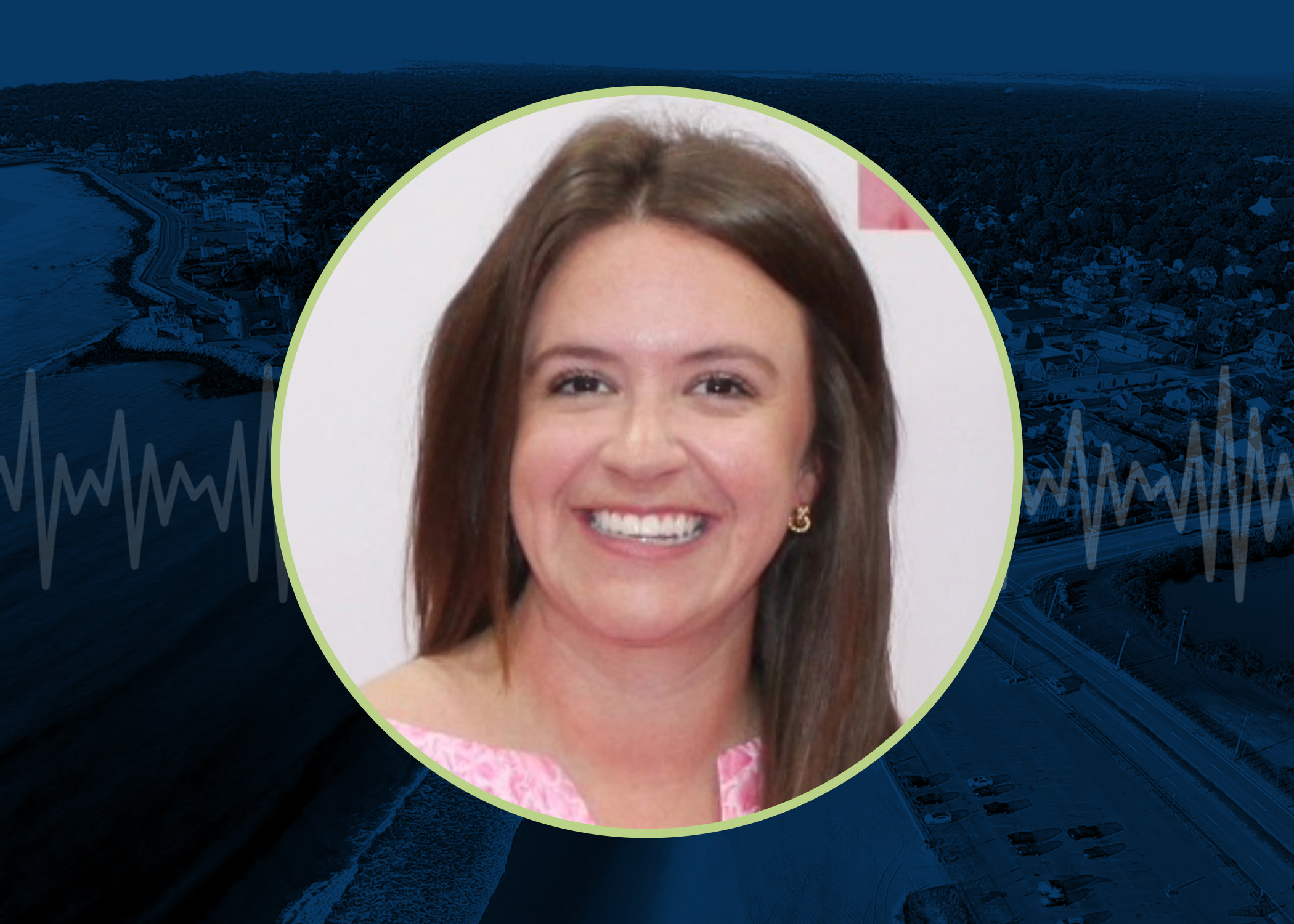
Narragansett High School (RI)
Listen Now




Episode Transcript
Please note, this transcript is generated by AI and may include some errors.
Spencer Payne: Okay, here we are with real stories from real educators. Another episode of the podcast, our real educator today is Sarah Dully. And Sarah, can you introduce yourself as you would to other educators? And you could go with things like, what do you teach? Where do you teach? How long? Fun facts? What do you love about this profession? Wherever you'd like to go with that? How do you introduce yourself to others who are in this profession?
Sarah Dully: Sure, hi, I'm Sarah Dully. Everybody calls me Miss Dully. I have been teaching for 14 years. I currently teach high school English and special education in Rhode Island. I've also taught in Providence in Boston at both the middle school and high school level. I think that I have the best and probably arguably most fun job in the entire world. I get to teach kids how to articulate their ideas, whether or not I agree with them, and we get to hang out all day, and I think that is pretty darn awesome.
Spencer Payne: Well, let's dig into this best, funnest job where you help kids articulate their ideas. I don't know that I've heard an English teacher quite describe that's what they do before now. So can you help us understand what do you mean by that? Like how do you help kids articulate their ideas and suss out? They might have this thought, but the words just don't quite sound like what they really mean. Like how do you go about helping kids?
How do go about helping kids actually going to do that? Because it's a very important thing when they might be thinking X, but it comes out Y and that's not like all what they meant. Like how do you help translate from what's in their head to really what they're saying out loud in class?
Sarah Dully: Well, the first thing that I always tell them is to think about their audience, right? Sometimes what we say or what kids say might come off the cuff or it might be something that might not be totally appropriate. So the first thing you have to think about is who is my audience and what is my purpose for delivering my message?
So within the classroom, a lot of times our purpose is an academic one, whether it is to inform, whether it is to educate, whether it is to persuade. But then outside of the classroom, students might be doing more persuading. They might be selling themselves. I teach juniors, so we do the college essay. So they might be selling themselves for their college essay or for students who want to get into a career. They might be proving that their expertise.
So we first look at the audience and who are you trying to reach with whatever you're doing. And the second thing that I do is I try and tell students that no matter what we're working on in English, whether we're working on Beowulf, whether we're working on the Crucible, Reading Catcher in the Rye, right now we're doing some transcendentalism, you are reading other people's works who were also expressing themselves in some way.
And what we talk about is how every writer, every speaker is really thoughtful about their words that they pick. So whether a student is deciding that they are applying for that job or they are writing that academic essay, they really need to be intentional about their language and how that language is related to the audience.
And I really try and make those connections between, it doesn't matter what you want to do. All you need to know is how to articulate it. And so you'll be taken seriously and you'll be given the chance. And even if someone doesn't agree with you, that's okay. But you have to be able to articulate your idea clearly and in a professional manner. So someone can take you seriously, no matter what the topic is.
Spencer Payne: And I'm curious, how do you bring that to life? So any examples maybe that you pull from TV shows, movies, historical references of here's an example of how you can communicate well. And here's maybe an example of how you do it where this person's message obviously didn't get conveyed. And I'll share a quick example just because it relates to things you learned in high school, right? More history, but like on, it comes to like the American Revolution and Ben Franklin.
There's a great mini series from HBO called John Adams and the first couple episodes Ben Franklin plays a prominent role is getting people to vote for independence all kinds of things and As you see Ben Franklin, he's he's not like the way he approaches and words things and again to your point He has a purpose like my purpose maybe isn't to go convince that person. It's to go convince that person I'm gonna tailor my words to convince that person I need that person that then can go convince that person but I'm never gonna get to that person in first place
And just watching kind of how he approaches that is fascinating. And I personally have taken that as like, wow, that's a great way of how you, how you approach being very exacting with your words with a specific end goal in mind of how to approach kind of communicating with people. Um, cause this is a hard thing to teach because I don't know. I never had a class in high school of like, Hey, how to talk to people. Like, so do you have any, any examples of, know, who,
Sarah Dully: Mm-hmm. Right. Thank you.
Spencer Payne: Who are your inspirations? Who are the kids inspirations? Do you have clips? Like how do you show people like how to convey this and do it well?
Sarah Dully: So actually the cool thing where I work is we have a professional communications class that all students have to take to graduate. It's not something that I teach, but it is within my department. And so that is something that is already being taught within our curriculum. And students are building those skills because it is a predominantly freshman course. So by the time they get to me, I teach predominantly juniors and seniors. They are already familiar with
Spencer Payne: Mmm. Nice.
Sarah Dully: How to be an effective speaker. Now, do they always utilize all those skills? Definitely not. But one thing that comes to mind is I just did the college essay with my juniors. so we start the year off with that. That way, I get to know them. And I always say, I promise you that you will use this when you're a senior. And some of them are like, I don't know about that. And then they come, beginning of senior year, and they were like, you were so right.
But during the personal narrative unit, I use a lot of actually Eminem, the rapper, and we do, we look at the lyrics and the music video to lose yourself because you are seeing someone who is being so intentional with his language and it is telling a story. And we talk about how that song is maybe three minutes, four minutes but you can so clearly picture what he is going through and the image that is in your head matches pretty well to the video. And so we talk about how Eminem is trying to show you how he is feeling in that moment, whether you're listening to the song or whether you're watching the music video or whether you're watching the, I haven't seen it, but the movie that goes along with it.
And so I try and make those connections just with people who the students are familiar with and use those like bite-sized moments to be like, this is so intentional. I've been working with a lot of students outside of school who are doing supplemental college essays. So those like 150 to 250 word essays, and they're kind of, by the time they get to those, they might be a little tired. They've already done the whole college application and we really sit down and we break it apart. Okay.
What does this specific word mean? Is that what you're actually trying to say? You know, I am good at something a student said, okay, but what does good mean? What does that look like? What are you trying to show or tell the college? And it's, I find it fascinating because what they start with at the beginning can be so drastically different than what they end up with, but the idea is the same, but what they're trying to convey is so different and so much more nuanced and so much more focused.
Spencer Payne: Thank you for sharing that. And I'll also add there's a, there's a blog, I think it's just called the, the day you became a better writer, that I'll just share. I mean, it is, it is maybe, maybe it's a half a page in length of actual text and it is so powerful in its brevity and the exactness of the language that you should choose and why use an adverb you think saying it's very sunny, you think very add something it doesn't it's sunny and very sunny or two, the same thing, right? Anyway, it's a, it's a fascinating, like half page of.
Sarah Dully: Mmm. Yeah. Exactly.
Spencer Payne: of, of kind of how to write and be clear and crisper and more exacting in your language, as well as, without being boring and Susan, all these words that actually don't add anything to what you're, what you're sharing. so the day you became a better writer.
Sarah Dully: And I think with AI too, in the emergence of AI, we're also able to look at what AI has produced and say, okay, well, this word AI used X word, is that actually what the prompt is asking? Or like, let's break it apart and let's pick stronger language than what the artificial intelligence was doing. And so it really makes you...to your point, like, I like like make your writing crisper by breaking it down and being like, okay, we need to be so deliberate. And what I'm finding as I'm incorporating, trying to incorporate more AI in my classroom is that the students are realizing that they're actually stronger writers than what a lot of the chat bots are producing or what they're prompting it to produce.
Spencer Payne: I want to come back to this AI in the classroom, especially in English in just a second. But first I want to go back to sharing a clip of an Eminem music video and a song in class for high schoolers. And I'm curious, how did that come about? Did you need approval from somebody? How do you go about introducing something that is very not in a, how to teach seniors English textbook where you're infusing a little autonomy and creativity, especially something that, I don't remember that particular song, Eminem is obviously he's not exactly clean.
I don't remember if that song has square words in it not, but how do you approach kind of like bringing some creativity and autonomy in the classroom that is helping to aid where you're ultimately trying to help students go, even if it's not necessarily a part of the normal curriculum? Like how do you approach that? How'd that start? How do you get approval for something like that? Can you just share a little of the story of how that came to be?
Sarah Dully: Well, they told me that Eminem I believe is now like an old outdated rapper and my heart was I was dying because I like that is what I listened to when I was in high school. So that was like they were very honest about that. But I was like he's my favorite or was one of my favorites. So I came about with adding this particular mini lesson. It wasn't even a whole lesson when I was looking at student personal narratives and realizing that they were just telling, they weren't showing. And so I was trying to think what is a quick way that we can say, let's show a feeling to try and convey it versus let's tell the feeling. And I was driving to work. I drive a very old car and so I can only listen to the radio. That is like the only thing that I have. And Eminem came on and I was like, he does, he's such a great lyricist and such a strong writer. I immediately looked it up, found the clean version.
And, so I play the clean version in my classroom and the video that I found that corresponds with it is also, is also the clean version. I currently have a student teacher. And one thing, like one hint that I gave her was even if you like, think that, you know, right, I know the lyrics to that song. Always preview it before you're playing it for a group because there might be something that you didn't pick up on As you're driving in your car to work That you might pick up on when you know that you're listening to it in a different environment or for a different audience so as long as it's clear and it has a direct or clean and it has a direct relationship to the content. Like the, you know, the objective of the lesson was academic in focus. We started by talking about showing versus telling students then like broke down the lyrics while listening to them. And then I gave them examples of sentences that were using telling, and then they rewrote them in showing.
And then the last step to the mini lesson was they all had to rewrite one sentence that they had used that they identified was using too much telling. And then they had to rewrite it as showing. So it was incorporated into the larger objective and it was 100 % definitely previewed. And...It did kill me because we didn't listen to the whole song. We listened to only two minutes of it. I was like, I wish I had more time. I then on my drive home went and obviously listened to the whole song.
Spencer Payne: Perfect. Thank you for sharing that. And yes, on the note of previewing things, it's amazing how, you know, something you remember from, yeah, your high school days, whatever it may be, something you remember from your past, you think, oh, that was perfectly fine. And then all of sudden, I've got a little three-year-old, we started watching The Sandlot, which is like, you know, by the way, that movie totally holds up. And I remember that being like just a great movie when I was a little kid. But like, I completely forgot. Like they say the S word a few times. I'm like, oh, I should have watched this before I unleashed this.
I totally forgot that they said this. So anyway, yes, always check your work before you show it in front of a group. Now, going back to AI in the classroom, I'd be curious to hear, it sounds like you're embracing this, especially from high school English. I could see that being the number one potential place, right? With, I'm just gonna let Chachi BT write my essay. I don't have to do any. I could see that being the number one use case of where AI is kind of taking over the kid's ability to think. I could also see that being the number one use case where if done appropriately, this could be the place where, all right, well, let's have chat GPT write an essay for what are the main lessons on Beowulf?
What do you agree with? What do you not agree with? Where do you think the AI is wrong? Where do you think the AI kind of chose words poorly? How would you choose? So I could see this being a place that's high risk, high reward, I guess. So can you share a little bit of, yeah, where have you seen maybe obvious examples of kids trying to just not write the essay and it's clearly chat GPT or whatever it may be. And then how have you counter that and turn that into maybe a more productive lesson in class.
Sarah Dully: can tell you the first time that I knew it was used, I'm not going to name the student. He knows it too, because when I had the conversation with him, we were working with Frederick Douglass. I can't remember the exact text, but he was a student. It was approaching the end of the quarter. He was trying to get in work, so he earned credit for the class. And I was reviewing it on my couch. My husband was sitting in the chair, and I...let out an audible like, my goodness. Yes. And the, mean, it was so obvious because the analysis was not even analysis that I had thought of. It was so much deeper and nuanced than anything we go into within, with Frederick Douglass beyond my realm of, you know, expertise. And I was sitting there and I was like, what do I do?
Spencer Payne: It happened. Like it happened. I can tell.
Sarah Dully: I've got to have the conversation, but what if he didn't? And so I was like, you have to have the conversation with the student. And I was like, prepared, I practiced the conversation, and I went up to him with no other students in the room. It was just us. And I said, hey, so and so, I was reading your Frederick Douglass. And he cut me off and he was like, I didn't write it. And I said, well, there goes all, you know, there goes all of my preparation.
And so I asked him, I said, okay, so you are the first student that I've ever known to utilize this. It's new. Why? And he was like, I was scrambling. I knew I needed to get the work done. I have so much work that I owe. So I put it in. So I said, all right, thank you for your honesty. I appreciate it. So I booked this student. have, it's called a task block, like just an opportunity to get extra help, like within the school day and get, and so I booked him and we did the assignment together. I walked him through it. And, we also talked in that same content, like what are other things that you can do if you are feeling in a pinch? And I still think about that conversation because that was one of the probably the easier conversations about AI that I've had with kids, because it was so obvious.
But I will never ever, I mean, I can tell you what he was wearing. Like it was, I know exactly where the conversation was happened. Because I think from that point forward, it's now like that kind of broke a barrier, right? And now it's like, we're not turning back. And so how do you embrace it? And how do you provide students with the tools because once they get out into their real world, if you will, it's gonna be around them. So how do we teach them ways to utilize it appropriately?
Spencer Payne: Yeah. And, and, and curious, yeah. How do you do that? How, how have you, because you're also trying to figure this out on the fly, just like anybody else. This is new. you're, you're, you know, many teachers across the country wondering like, okay, how do I actually embrace this? How do I use this for good and not just be a, you can't use it or you're banned and I have to catch you. Like, so how, how are you approaching that?
Sarah Dully: So I think it's constant learning. In my district, we have a wonderful technology coach who is very well connected within the state. And she does a great job of being available for support and sharing resources and coaching. And so I think being in a district that is embracing this and is supporting teachers is so wonderful. I think it's also an opportunity I think it's having the conversation with the students. Look, this is new for me. This is new for you. We're learning it together. And one thing that someone told me, I can't remember who, but they said, be honest with students. Tell them when you're using it. So I've also said to them, like, hey, that's a wonderful question. Let's run it through, you know, ChatGPT or Gemini.
Or I do an attendance question every single day with my students as a fun way to take attendance and build connection. And what I've been doing is I've been asking AI if it has some ideas. And so I'll share with the students, hey, I put this through ChatGPT because I am all...I have used like every single attendance question that I have and it gave me some great ones and it gave me some really not so great ones. And like today's was, if you could teach one subject in school, what would you teach? And that wasn't one that I had come up with. I, the last one that I did was like, what is your favorite cake topping? Like, you know, chocolate frosting, vanilla frosting, et cetera.
So I think being really honest with students about I am utilizing it and then showing them in really small ways how they can use it. So a perfect example is I'm doing Transcendentalism with my juniors and we just are working with Emerson and we're reading Nature and we're reading Self-Reliance. And as a way to practice summary and main idea, I had them, I call it Transcendental Tweets. I know they're not called tweets anymore, but I like the alliteration and they had to create a little image, like what would Emerson's picture be in his Twitter account? So instead of just going into Google, I had them all go onto Canva and Canva has an AI feature. And so all of the groups created the Emerson picture with AI. And so some made him like a lumberjack because he's in nature. Some students made him like, where's Waldo because his first name is Waldo.
So not only am I being honest with them, but we're also trying to show them like, yes, it can help with writing, but also there are way more things that it can do besides that. I also give students do nows every single day. And so some of their activators have been pick the best topic sentence, pick the best thesis statement. And some of them have been generated by AI. And then the following question was like, why did you pick that one? And so then we'll share, you I picked this one because of X, I picked this one because of Y, and then we'll have the conversation. This one was generated by Miss Dully or generated by one of you, or this one was generated by AI. Now, how can we take that? And then how can we make that stronger? So it's really, I'm finding embedding it in like little ways and showing them that you can use it appropriately. You just have to be taught how.
And I'm not an expert on that. So I'm only using my knowledge. But I'm currently developing a lesson with our tech coach about how do we teach students how to properly prompt AI and how do we teach them to ask the questions. And so we're gonna do it over multiple days as we're reading a text and as we learn more about the setting, we're gonna prompt it at the beginning, prompt it on the middle, prompt it at the end. And so I'm excited to try that and see how it works and also get student feedback about what they liked, what they didn't like, what they found helpful, et cetera.
Spencer Payne: And real quick, you mentioned your fun attendance game every day. What is that? If there was a teacher who's like, I hate attendance, I want to make it more fun. And I want to steal your idea and see if it works for me too. What is it that you're doing every
Sarah Dully: Well, you can't see it, but on the right of my computer, there is a little green Post-it note that says, take attendance, you dumb dumb. Because I try my best, but that is just one thing that falls off of my radar. And I know that when my phone would ring and it would be the secretary, she wouldn't even have to say anything. I just knew if she called mid first period, I forgot to take attendance. I was like, oh no. So I started this was during COVID, when it was really hard to keep track of students, because some were in person every day, some were on Zoom full time. Just a question that a student can answer that has nothing to do with academics. And it's a great way for me to get to know them and build that relationship outside of academics.
And so I will start with a random student in the middle and I will have the question posted on my board. It's on the daily agenda. And so today's was, if you could teach a class, what class would it be? And so there were a range of answers. Some students, a lot of students actually said war on politics. A lot of students said criminal justice.
We have a really robust agriculture program. So students were like, I would teach, teach floriculture. I would teach ag two. I would teach animal science. And so it was, I was also learning like what areas are students interested in that I might not get to see or know because I only teach them within the English realm. My favorite thing that I do is during March, I do a March madness bracket. So all of the questions are related to a topic that that class has picked. So in the past, we've done donut flavors, we've done ice cream flavors, we've done types of candy, and then we do the March Madness bracket. And at the end, we'll do a tasting because you can't make your final choice without having a tasting. So I'll go and I'll pick up some of those ice cream flavors or candy flavors. Or one year for my seniors, we did movies.
We didn't watch the final four. We just watched the final one. And it was a horror. I don't even remember what the movie was, but I was like, if this is your number one movie, like we've, we've got to talk because you have questionable choices in, in movies, but it's just a great way to get to know students. And I've had students come back or tell other people, like you got to wait till March. Like March is the best. And typically in schools, March can be very gray and very kind of dreary because there's no days off and the weather is not always the best. And so it's a great way to just bring some positivity and some really, really good ice cream kind of to a time that can be otherwise, you know, a little challenging for teachers and students. And so I love it.
Spencer Payne: Perfect. And you mentioned feedback. And as you kind of go through some of these AI lessons, asking for feedback from your students, what they like, what they not like, what could have been better, et cetera. But you also mentioned if this is your number one movie, my gosh, what is your taste? So where I go with that is love asking feedback, what works, what you want more of, but also I can see there'd be a tension there of like, what do you decide to use in their feedback and what do you decide to not use in their feedback?
Because sometimes, you know, it might be like, make the lesson easier, right? Like, well, we're not gonna do that. Right, so when, what, can you share a little bit more about your approach? Like, how are you going about conducting feedback from your students? And then how are you going about sifting through and figuring out what's actionable versus what are you maybe actually going to choose to ignore because you don't think it's actually actionable, good feedback for you? So can you share a little bit about both? Like, how do you conduct your feedback and how do you decide what to use?
Sarah Dully: Absolutely. So I personally like to receive like my own feedback, whether it's personal or professional in a very like low stakes kind of more casual environment. I have found personally that if I, you know, am brought into a meeting and it's like, all right, we would like to talk to you about X, Y, and Z. I get very nervous. And so that is my approach to soliciting feedback from kids. I like to do it kind of in a much more casual, sneaky, hey, you're giving me feedback, but you don't necessarily know that you're giving me feedback.
A perfect example is I was absent, and so I created a lesson plan. The students had to do some synthesis of the translational text that we're working on, and I was using our curriculum, but I thought that the chart that they had to fill out needed more direction. So I went through, I added some more direction, I added different fonts, different colors to try to distinguish some things. And then I got in today and a student came up to me and was like, hey, I was a little confused about that assignment. And I said, okay, great. Like, thank you so much. And you know, I kind of kept that in the back of my mind. And then I was working during our task block and there was two other students who take the same class. And so I just casually said to them, hey, what did you think about the assignment from yesterday? And both of them shared.
I found the formatting very confusing or I found, I was a little unclear about X, Y, or Z. And so in the back of my head, now I'm starting to see a trend that multiple students across multiple classes in multiple environments prompted or otherwise are telling me the same thing. And so I then found my co-teacher who I have common planning time at the end of the day. And I asked him, I was like, Hey, what were you seeing from the students and he said, I was seeing that they were confused about X and I needed to clarify why. And so when I think about feedback, the first thing that I look for are trends. And so this was a clear trend that the formatting that I used was unsuccessful. So that for me is a great way. When I teach that same class tomorrow, I'm going to immediately address, I heard from a number of you that this formatting was confusing, let me clarify.
And then from there, I'm gonna give them the opportunity to revise after I made that clarification. So I think the immediate thing for how do you sift through is if I'm noticing a massive trend, you're gonna know that, okay, that is something that is like truthful, honest feedback in something, in this case, that I could fix, you know, immediately. I also know that there are certain students who might not, English might not be their favorite subject or who might struggle. And so if I find that their feedback might tend to be more critical, I'll try and find a place where is that feedback reflected elsewhere, whether in another student or with a colleague.
And when I'm looking at student feedback, as I said, I like to do it kind of more low stakes. So I'll use a lot of our do nows and our lot of our exit tickets as a way to ask students, what did you like about this? What did you not like about this? What was effective? Or how can this be changed and like a better experience for you? And one thing that we do in the department that I work is we have students write reflections about larger assignments. And those are for a quiz grade or a larger grade. And I really look at those reflections. And the last thing I have them do is what is one piece of advice that you have for Miss Deli? And what is one piece of advice you have for a student who is doing this assignment next year? And so when I'm looking at the...the advice for Miss Dully, that is a hidden way of asking for student feedback. And the what is a piece of advice for students for next year, that's also a hidden way. Because if everything says, you know, make sure you focus on this part, I know that as a teacher, I should be highlighting that part.
So feedback doesn't always have to be something that is this large daunting thing. It can be something that's much...more normalized, whether or not the students know it. I think my background, I spent a lot of time in the charter school world before I made the transition to public and the charter school world, there was so much constant feedback given that it was normalized from the beginning of my career. And because of that, I think I seek it so actively to improve my practice on a, on a regular basis beyond just my evaluations from my district. Because ultimately, if we're thinking about customer service, and if business is asked for feedback, or like we think about Yelp reviews, the customers of a teacher are the students that are in front of them. And so they are the ones who we want to make sure are feeling successful in the classroom.
Spencer Payne: Uh, any, uh, anything rise to the top as maybe a most useful piece of feedback that you received. And it could have been maybe from a teacher, uh, an administrator from a student, uh, pick. seems like, again, from your charter school world to what you're trying to do now in public school is you're trying to solicit feedback from a large group to just continue for you to be the best teacher you can be. Uh, so anyway, can you, can you share a little bit of, is there anything risen at the top for you of what's a piece of really, really good, genuine feedback that was really impactful that you were appreciative of, that you may be changed how you approach something because the feedback was that important.
Sarah Dully: Well, the kids told me that I needed new shoes, but that was just feedback. said, I'm just going to continue to wear these shoes because they match most of my outfits. But when I was working in the charter school realm, I got a piece of feedback that I had never thought of. it was someone came in and they actually looked at how often I was calling on students on one side of the classroom versus the other side of the classroom.
And they pointed out that I favored the right side of my classroom. And I would have never known that if someone hadn't come in. And I think all they did was they just tallied, right? Like how often I was speaking to students on the right, how often I was speaking to students on the left. And I believe it's because I'm right-handed and I prefer my right side. And so that was just so eye-opening that like something like that is therefore impacting student experience in the classroom because I'm tending to not ignore, but give less attention to students on that side. So that was a piece of feedback for me that was so telling and was so eye opening. And I actually like shifted where I had things in my classroom and where I positioned myself. That way I give an equal air time to both sides of the classroom.
Spencer Payne: fascinating, these little things that you would never even notice until someone points it out for you. Curious on stories that rise over the span of your career that rise to the top, any proudest moments, anything that just is like, you still smile or light up like you are right now because you think about what happened in that class or that student or whatever it be.
Sarah Dully: Right. So my proudest so I love teaching high school because of the relationships you can build with students and then you can see them off if You keep in contact with those few students, you know post high school and my proudest moments are When I have students reach out whether it's email or some have like my phone number and they'll I actually just got a text from a student last week and It was a picture of an annotated bibliography that she did in college with a big a on it circled and her text said like thanks for preparing me for annotated bibs and it was like, okay, I did my job. My job was to prepare you for whatever you want to do in high school or after high school and I did my job and I was like, my gosh, that's amazing and then I was like, what was your topic? And she wrote about college sports and the impact that college sports have because she goes to Alabama. So like, you know, a large football school.
But there's another student who I have kept in very close contact with who wants to be a teacher. And we meet up several times a year. And just any time that I am able to see that the students can articulate their ideas and are successful, that to me is just, is my proudest moment. Because I imagine...All right, if there are students who have reached out and I could name them on both hands and my feet, then I imagine that there are students who also haven't reached out. And that's the best thing, that I know that it's more than just those.
Spencer Payne: 100%. if there's one reaching out, there's probably five to 10 that feel the same way that might be even be talking about that person or you or that teacher to somebody else, but they just never actually come back and give the kudos. so if you're feeling that way about somebody, go share it, go tell them. here's a really, really stupid example, but like my, my, I'm from near Cleveland. My, my dad was down visiting one day and you know, the Cleveland Browns are not good. but
Sarah Dully: Exactly. Yes, yes.
Yeah, I'm sorry.
Spencer Payne: We had this player, Joe Thomas, who's in the Hall of Fame and this Great Lakes Beer Company made a beer about Joe Thomas. And it's like, you know, it's just got its face. It's just cool. Right. And it's good. It tastes good. So we're, you he brought this down. We're drinking one and we're like, you know, this is really good. Let's tell him. What do mean? Like, let's tell him. Like, so we called and we're like, Hey, where's I'm sitting down with my dad drinking a Joe Thomas colch. I just want to say thank you for making this. It's really good. Exactly. We need it. But the point there is like, Hey, when someone's doing something great, like
Sarah Dully: Hey, you know what? The Browns needed the positive feedback, OK?
Spencer Payne: Tell them, like tell them it goes a long way. Then they then again, to your point on feedback, then you have more validation. Hey, what I'm working, what I'm doing is working. Like it's reaching, it's resonating. Like it energizes you to keep going and keep doing more of. So please for folks out there, if you appreciate what someone's doing, go tell them, just go tell them, go tell them.
Sarah Dully: And like, if you can do a handwritten note, if I could show you, have bulletin boards of cards and notes and folders that, you know, I haven't even opened or I don't even have enough room for, of notes that colleagues have written me, former students have written me. Like, I will cut out like doodles that a student will write or a silly note on the bottom.
Anytime you can share, just takes two seconds and that can make someone's day. That can make someone's year. I know I have like a rainy day folder in my email where I favorited all of these emails from colleagues and students. And when you're having a bad day or when the lesson didn't go as planned or when you're just not feeling well, I open that folder or I look at my bulletin board and it's like, no, you are doing great work and what we're doing matters.
Spencer Payne: That is a great example that others listening could go take. And maybe if you're a new teacher, maybe you don't quite have the library of kudos yet. That's okay. Save them when you do and start your rainy day folder of all the kudos you get from other teachers, peers, parents, students, people who are just praising like how you approach things and what you do because you're gonna have a down day. And that I'm sure helps tremendously to go back and like, wait, look at all these, look at all this appreciation I've got or things I've done for people or whatever it may be like sometimes you need that when you're having that down day.
Sarah Dully: And also like save the funny too, right? Like those, doesn't have to be just gratitude. Save the funny because, so I'll share funny, well, okay. So this is like, I would say probably most, probably an embarrassing story, but the later part is funny. So I was teaching a class of juniors. This was two years ago. It was a tiny year class, maybe like 16 or so kids.
Spencer Payne: Can you share a funny, can you share what's a funny, crazy, wild story that you can share?
Sarah Dully: And I said a word, I misspoke, and it is not a word I'm going to repeat, and it is not a word that I ever say in my lexicon. The kids lost it. I didn't even realize I said it. They were losing it. Kids who I hadn't heard a peep from all year were doubled over. Kids were sobbing you know, one of my tricks is if a kid is really, you know, maybe needs to get it together, I'll be like, Hey, grab my water and fill my water bottle up. I did not have enough water bottles to get filled up because so many kids were laughing hysterically. I tried to bring the class back together. They were still laughing. I lost it. I don't think anyone learned a single thing that day except for the word that I said. Then the word traveled throughout the school that I had said this.
By the time it got to sixth period, everybody knew that I had said it. And I was like, my gosh, I can't believe I did that. The kids then created an annual reminder in their cell phone, national blank day, the day that Ms. Dully accidentally said a word that she would never say. And now those students are in college and every day on that year they reach out and say happy national blank day the day that you misspoke and lost the whole lost the whole entire class.
Spencer Payne: incredible. Thank you for sharing that. Like you said, maybe no one learned anything that day, but they're still talking about that day four years later and maybe will be for 10 years later. So sometimes in those moments, like you create these memories that are way more powerful than whatever you were supposed to learn that day. And probably just, again, like it was obviously not in bad faith. It was an accident, right? Like, and everyone had fun with it. Like this seems like this is actually one of those like, is, this is kind of one of the fun things of what this is all about of working with kids is you see them laughter to tears and they're gonna remember this moment for 20 years.
Sarah Dully: Great. And I think it was like, sometimes you just need to embrace that. It's like, you can fight it, but that's not gonna work. So you might as well laugh together. Like we misspoke, we all have accidentally said the wrong thing. And if you can laugh at yourself when the kids are laughing with you, that makes the classroom so enjoyable. And then when you have colleagues who were also like, I heard X, Y, and Z happen. It's like, yep, it did. And then we move on, because every day is a new day. Except if it's not one day, now it's National Day.
Spencer Payne: Yeah. Yeah. Yeah. Except for that day, every day going forward. and I'm curious, actually a one little thing, right? Like, yeah, did you have to, did you need to go apologize to your principal, other teachers? Like, how did you, I mean, obviously everyone knows it's not in bad faith. It's not something you're saying every day. It slipped out. It was an accident. But I'm just curious, like, how did you handle that with your, your fellow teachers or your administrators? Like, did you have to address it? Were they like, do you need to go address this to your parents? Like, how do you, how do you handle something like that on the back end of that? Like, what's the communication that goes out? Do you just ignore it? Like, what'd you do after?
Sarah Dully: Yes so the good thing with, you know, working with high schoolers is it wasn't a word that they had never heard before. it was, you know, a simple misspeak and I said that to them. They knew also that I didn't realize that I said it. just was continuing with the lesson. And so I straight up said to them, that was an accident. Like, I am so sorry. I did not mean to like, I sincerely apologize. And everyone else knew, right, that it was a misspeak. so when somebody else had brought it up, I was like, yeah, it was an accident. And just owning, we all make mistakes. And so in that case, I accidentally misspoke. And I think I did let my principal know, like, hey, I just want to let you know that I accidentally said this. And he said, OK, great. Thank you for letting me know. And that was the end of it. So I think, too, I owned it. We acknowledged it and, and, and, you know, we, progressed.
Spencer Payne: Yes, moved on. And a couple more, just quick hitter questions. This will be a close to wrapping up here. Any advice that you'd have for a brand new teacher? Maybe they're starting out, maybe it's, they're a couple months into their first year right now. What would be the number one thing that you might share to a brand new teacher who might be questioning themselves or they feel underwater or they feel like, geez, is this the right thing for me? What might you share with that person who might be in their first year and kind of wondering, oh man, is this really for me?
Sarah Dully: The first thing I would say is don't be afraid to ask for help. And then the second thing I would say is find your go-to people.
Spencer Payne: And can you share a little bit more about your masters? How did you or did you not approach getting your masters? And what is, what do you recommend for others who were on the fence or thinking about going, going that route?
Sarah Dully: Absolutely. I got my master's after I'd been teaching for several years. And I would recommend if you do have the opportunity to wait and teach before, because I think if I had gotten my master's right after undergrad, I probably would have gotten something different. Through my first few years of teaching, I actually learned that I love working with differently abled students. And so I got my master's in special education. But that wasn't something I knew immediately going into teaching. It took me some time to have some experience under my belt before I knew what I wanted to study.
Spencer Payne: and your approach in your class and your school to smartphones, smartwatches, et cetera, allowed, not allowed, what's the policy, like how do you and team approach that?
Sarah Dully: So this is our first year of we're calling it off and away no phones I was on the cell phone policy committee last year the book the anxious generation really transformed my relationship with my own phone and also how I view the impact of technology on teens and I find that absolutely fascinating so we are off in a way It's been wonderful students have been more engaged there's less battles for attention and they're having conversations with each other and that is, and with me, and that is truly amazing to see. I know in Rhode Island, there was legislation that was recently passed that said by the beginning of next school year, all schools had to come up with a cell phone policy. In my district, we just did it earlier.
Spencer Payne: Yeah, perfect. And I know this could be a much deeper answer, but I'm curious, just a quick hitter on this one is, how do you approach getting on the same page every school year with not just your students, but with their parents? Like, how do you approach kind of that first conversation that maybe what they should expect of you in your classroom for the year? How do you get on the same page with parents?
Sarah Dully: I turned my syllabi into a brochure and it was a really, really nice way for parents to look at the syllabus, but it looks different. And so that one switch, I found that I actually got more responses from parents because it was more engaging, because it looked different. I also am a big fan of positive emails home. So I try and do one to two positive emails home, especially in the beginning of the year, to build those relationships with parents. So if there is something that comes up or they have any questions, they'll be more willing to reach out.
Spencer Payne: and that brochure, Canva again.
Sarah Dully: Yes, yes, I love Canva. Absolutely.
Spencer Payne: And what to you is the number one best thing about this profession, education?
Sarah Dully: I mean, I get to have these really great conversations with some really cool kids. And I think that's the best. And they have taught me so much. And the fact that I get to do that all day, I am so lucky that I get to do that and prepare them for whatever they have for their goals in the future.
Spencer Payne: And what is the single toughest thing about this profession or if had a magic wand and could just go point it and fix it overnight, where would you point that wand?
Sarah Dully: For me personally, it is grading, especially with high school English. I wish that there was more time to be able to grade. There's only so much time in a day. And so it's constantly striking that balance. And I think I'm still working on that. And every year it looks different depending on what I'm teaching and the group of students that I have.
Spencer Payne: And we talked about sharing appreciations with others and you have a whole rainy day note box, digital note box of some of those. So now let's give it back to others. Like who do you wanna appreciate in this education world? Can you shout out a name or two or three, whatever it may be and why, what are they doing great?
Sarah Dully: Well, my first one is my mom, and that is because she was an educator for 40 years and she is the person who inspired me to teach. The second thing I am so inspired by the teachers that are around me, Amanda, who I share a door with, she listens to me teach, but I also listen to her teach because our walls are so thin. And I don't think that she knows how much I have picked up from her just by listening to the amazing instruction that she delivers.
Spencer Payne: Perfect, thank you. And is there anything that we didn't have a chance to talk about today that you were hoping to? So any maybe new words of wisdom or anything that you shared that's just so darn important, you want to share it one more time. So any new or repeated final words of wisdom?
Sarah Dully: My final word of wisdom would be be authentically yourself. Don't be afraid to maybe have kids look at you like you're a weirdo. Because those smiles and those moments are the moments that are going to help them. If they're happening outside of the class or those non-academic moments, they are going to be what are gonna help them academically. So mine is a Bluetooth microphone that is charging right now that I sing outside of my door on every Friday. But be authentically yourself and don't be afraid to be a little bit of a weirdo because kids love that and that's okay.
Spencer Payne: Indeed, embrace your funk as it was told to me once, embrace your funk. Well, thank you so much, Sarah Dulley for sharing your real stories from a real educator. Appreciate all the stories and how to embrace in an English class and get away with it. And thank you so much for sharing all these bits of wisdom, including the attendance questions that others can bring to the.
Sarah Dully: Yes, I love that.
Spencer Payne: to the classroom tomorrow. If folks out there are listening and they're like, that's my least favorite part of the day. I want to spice it up a little bit. There you go. So thanks for sharing your wisdom and appreciate you.
Sarah Dully: Thank you.

Moreland University can help you take your teaching career to the next level.
Whether you’re looking to get professionally certified or earn an M.Ed., our 100% online programs can help.
Complete your no-cost application (it takes less than 15 minutes!).