
.png?width=300&height=74&name=MorelandU-logo-WH-RGB%20(1).png "Moreland University Logo")
Front of the Class Podcast | Jan 15th, 2026
Building Student Trust with 2026 Wisconsin Teacher of the Year Toni Fink
In This Episode
Named the 2026 Wisconsin Teacher of the Year, Toni Fink has spent her career teaching in Milwaukee Public Schools, the largest and most diverse district in the state. After teaching abroad and pursuing an alternative pathway into the profession, she has built a career on the belief that every child deserves to be seen and valued.
In this episode, Fink shares how she creates learning environments on a foundation of safety and trust, where curiosity is celebrated and students’ needs guide every decision. She shares how flexible classroom design and personal relationships help students excel both academically and socially.
Key Topics Covered
- Designing learning spaces that support movement, choice, and attention
- Why creating a supportive classroom community drives academic growth
- How restorative conversations — not punishment — reshape student behavior
- Approaches to working with families and building shared expectations
- Advice for teachers on finding support and not giving up
- And more!
Episode Guest
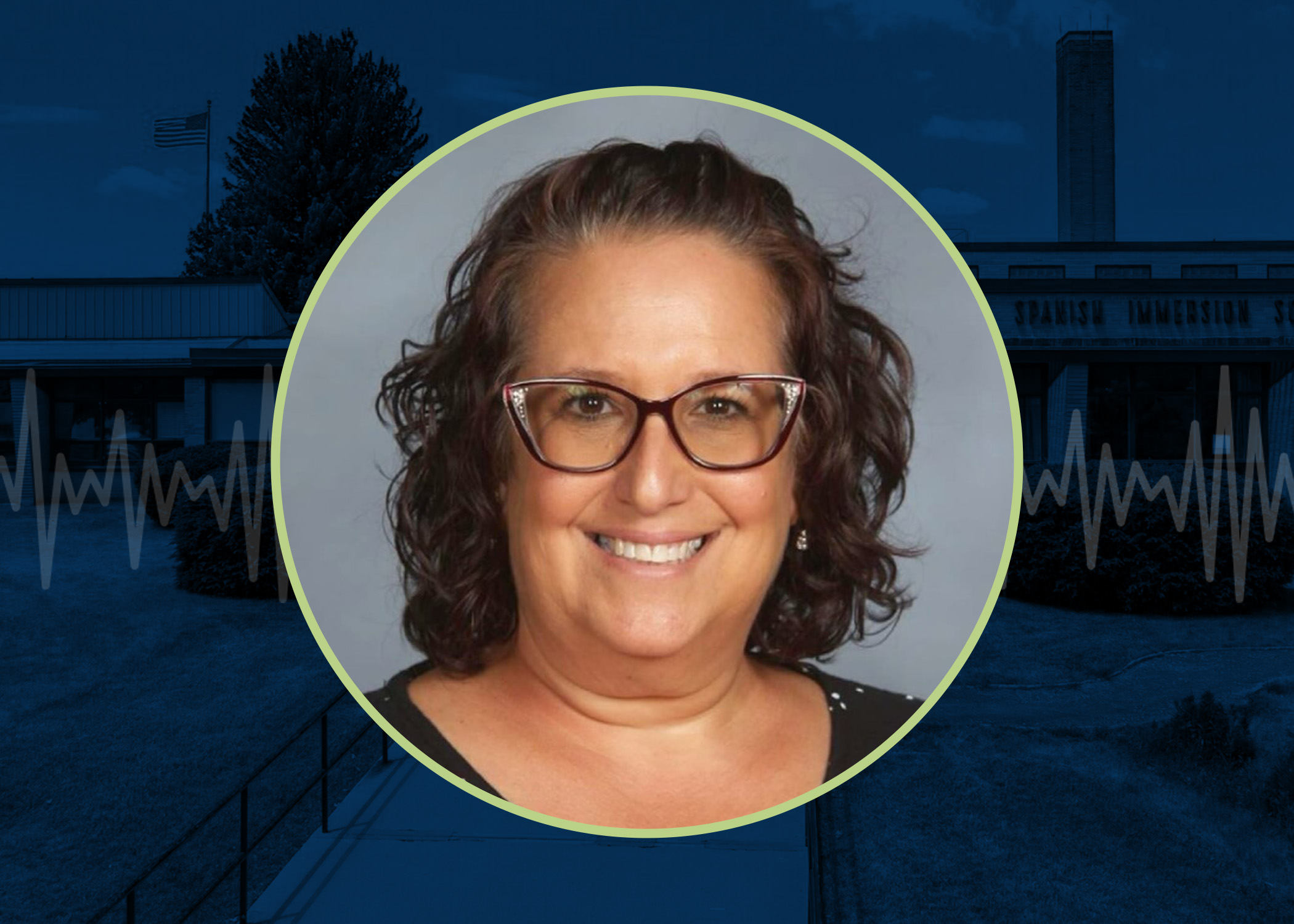
Milwaukee Spanish Immersion School
Listen Now




Episode Transcript
Please note, this transcript is generated by AI and may include some errors.
Spencer Payne: Okay, welcome to another episode of Front of the Class Real Stories from Real Educators. Our real educator today is Toni Fink. And Toni, can you share with us a little bit about how you introduce yourself to other educators? So that could be what you teach, where you teach, how long you've been doing it, maybe any fun facts along the way. How do you introduce yourself when you meet others in the education profession?
Toni Fink: Yeah, I'm Toni Fink. I'm from Milwaukee, Wisconsin. I teach in Milwaukee Public Schools, the largest school district in the state, most segregated and diverse, very special work to be doing it here. I've been teaching for a long time, trying not to date myself, but I now get to work with former students and I have former students, children in my class, which is amazing. And yeah, I think.
I think that's about it. I never thought I was smart enough to be a teacher, even though I always wanted to be one. So I took an alternative path to become one. I did an alternative licensing program after living out of the country and teaching in different places and was like, okay, think I can do this finally. And so that's kind of how I got into it.
Spencer Payne: Well, how, yeah, so let's, let's dig into that a little bit more. How, how did you get into it? Why did you take the alternative path? And maybe most importantly, what gave you, that confidence to kind of step in to, be the teacher that you wanted to be? Like what, what, clicked for you to finally make you think, yes, okay. I'm ready now.
Toni Fink: Yeah, I just always idolized teachers. They knew so much. I just thought it was amazing when they would teach us something. was so like mysteries revealed and I loved it. I always wanted to be a teacher since I was little. I just didn't see myself smart enough because I thought they were just so, so smart. I majored in Spanish and my family's Puerto Rican. So that was great because I could use all of that kind of bouncing off what I already kind of knew was comfortable with.
That led me to teaching in Mexico, living in Mexico, living in Ecuador, being able to teach in both those places. I always was drawn to kids, feeling like kids needed a voice, their value being noticed and seen. We moved around a lot as kids and I never remember going to a new school and having teachers welcome me or make me feel important. And even though I loved school so much, that still really stood out, like, why didn't they do that? I felt like there were missed opportunities to be like, wow, Toni, I noticed you or wow, you did a good job. And of course, all you want as a kid is to hear the teacher, your adults around you say, wow, about something you've done in a great way. My brother was diagnosed with ADHD before it was embraced in the educational universe.
And seeing the struggles and challenges that he had, how he was treated differently, not in good way, right? Not understanding how to handle students that had challenges or were not compliant, let's put it that way. And missed opportunities for them to see what I saw as his sister, which was how amazing he is. And he's still amazing. He is incredible. The life of everybody's party, room, the most generous person leads with his heart. But I do know who he is now, probably, most definitely was influenced by those early experiences. the lack of, hey, you're amazing, even if you can't sit at a desk all day. Sitting at desk doesn't mean you're not smart. There are things that I think directly affected your self-esteem, your self-worth, and you see yourself differently.
Spencer Payne: On that note, I'm curious, how do you approach your classroom maybe differently knowing that your brother was ADHD and maybe again, there's not something wrong with him necessarily, but like just sitting down for six hours straight is not at all putting him in a position to succeed. But at the same time, if you have a kid with ADHD in your classroom, you can't have him just running around screaming and yelling and disrupting everybody else.
So I'm curious, like, how do you approach your classroom teaching knowing that you want to make it more, you don't want to have it be a box where everyone has to sit there for six hours a day, but you also can't have this other extreme where three kids with ADHD are running around. So how do you approach that in a way that allows those kids who maybe have that ADHD or that energy to kind of get it out a little bit without disrupting anybody, all the other students? Like how do you approach that?
Toni Fink: Yeah, it's so tricky, but it's everything. I know you can kind of get a little insight into my classroom right here. I don't have traditional desks. I haven't for years. I taught fifth grade before. Now I'm teaching second grade. I don't know about you, but I don't want to sit at a desk for any longer than 15 minutes, maybe. So it starts with just creating the physical space. There's opportunities for wiggling and moving, standing if they need it. We have lots of flexible spaces in the classroom when I'm not delivering instruction, they can go and work.
It's so huge because whether they're sitting or standing doesn't affect the actual learning, but it allows them to have access to the learning differently. And so I start there just with the whole physical environment. Knowing that as a community, everybody has to know that we all have differences in how we learn. And that might mean you're an auditory learner, you're a visual learner, but also for our friends that have lots of extra energy and things like that, like they also need the same thing.
And just as a teacher would plan a visual for their visual learners, we have to plan opportunities for movement or things that are hands-on or where you're actually engaging in learning, not just listening. And in second grade, there's seven. Nobody's listening to a lecture like in college or high school. They're done. I'm going to say 20, 30 second attention span in one moment at a time. And just always being aware of the intention is for learning. Will them sitting on a wobble chair that does not affect anybody else's learning, but it can allow them to have more access to their learning, right?
And so the physical space, creating a community, so we all understand if Fred is on that kind of chair, because that's what they need, then we dig it. We're all for it, because we're all for everybody's success. And if somebody likes to sit in a regular chair, then they can do that. You know, we just have options for those things. So it starts there.
Spencer Payne: And real quick, yeah, can you share a little bit more about how you have your physical classroom space set up and why? So I assume it looks like we're in your classroom right now. So can you share a little bit more of like, how did you choose to set it up this way? Why? has that, like, I really, we're getting really into the weeds of like physical classroom setup, but I'd love to understand the why behind that and maybe some testing that you did along the way to arrive at why is it set up with the way it is right now? Why does this work for you?
Toni Fink: Yes, yes, yes, yes. Yeah, it's huge.
Yeah, it evolves every single year, to be honest. And I see things, was like, oh, that would be great. And I'll be honest, the educational universe has evolved. When I was doing this 10 years ago, you were making it up because there weren't ways to purchase, there weren't things designed. And so we would just find things and kind of adapt them. I had yoga balls 10 years ago for the kids to sit on. And that is amazing because they're at a place, they're at a station, but they can have that energy, that just constant motion.
I have low seating on the floor. If they're not on their chairs, sometimes they're laying down, but they're engaged and they're working. I have higher chairs for seating for kids who just need more stability and structure for them. When I notice that kids, there's kids that stand up a lot, then we put the desk a little tables. don't have desk, tables a little higher and they can stand, although at any time anyone can do any of those things. When it's work time, they have the flexibility of going to different tables, different areas.
We have several different carpet areas and all the cushions just all sorts of things where they can feel comfortable And it's all about like how they can best engage with the learning and I just offer opportunities for them We learn how to do it safely, you know, we talked about all that in the beginning of the years How would you use this seat in that seat? But being responsive to the specific group that I have each year, so it does evolve each year I always have a plan when I get here in the summer and then as soon as the kids come it's already been evolving right?
So we have these little stools. They didn't like those. So those are kind of off to the side. A lot of the kids like wobble chairs and actual chairs. So it's really kind of interesting. And that's just how they feel safe and able to access learning. So that's what we've kind of tailored it to. And I have lots of other things that are just in the background ready to pop up if we feel like we need those too. So, yeah, just it definitely evolves on who's in the class and what their needs are for sure.
Spencer Payne: And you mentioned at the beginning of the year, you're kind of maybe a little bit kind of playing a game of like, what do you think we do more of in this type of seating versus in this type of seating, right? And I guess I'd love to explore a little bit of, you know, if for students and for their parents who maybe come see your classroom for the first time. And some of them might be like, good. Like my child has high energy and it looks like this is a place that's good for them. Some parents might also be like, what in the world is going on in this classroom?
So my question with that becomes, how do you kind of get on the same page and set expectations with not only your students, but also their parents kind of at the beginning of the year of what to expect from your class? What's different about your class? Why do you do things the way they do? How do you kind of have that conversation to get out in front of those conversations, which people could be like, yes, I love this space. And some parents might be like, what in the world is going on in this classroom? And they kind of need a little bit of perspective of why you have it set up that way. So how do you get out in front of that?
Toni Fink: Yeah, that's so, I love that question so much. In general, it has always been super positive, especially, I think it's funny that most of the dads were like, I wish I had a class like this, right? I just think it's just super funny. We just talk about everything as a community and how we sit, how we learn, how we share materials is community and we will support each other with our strengths, but we're also responsible for each other's successes. And that means understanding each other's weaknesses as well, and our own. So we talk about, we do a lot of exploration, team building things to really get to know each other and ourselves. I did have a parent a few years ago, it was really kind of funny. And obviously you're judging your child's learning space on your own learning space. So this person was educated in Mexico where it's very traditional, especially at that time. And...
It was funny because she kind of followed me around the room and was like, how are they, is this how they're sitting the whole year? Like this, like in this kind of chair right here? And I said, yeah, absolutely. And you're not gonna bring real chairs and desks? And I said, no, not at all. And she was very, very skeptical. And she asked a lot of questions and I said, you know, when kids are comfortable, they have the ability to move, even though we're learning and they can sit over here or there, you know, they engage more. They're more relaxed, they're more, they're not worried about being uncomfortable. They're worried about.
What are they doing? How are we engaging? And a lot of it is partner work, group work. So it's not just, you're not on your own. And that was the first time I went to the office, I like, I think this mom might say some other classroom is better. And she let her son kind of lead the way. And I remember when we had conferences a couple of months later, she's like, senora, I really doubted you, but my son says he loves it and he loves coming to school and he can't wait because we change seats every two weeks.
I'm a part of that, but they do get to change. And he, I can't wait to change seats and where he's sitting next. And so she's like, so I trusted him and he likes it, so it's okay. But that was the first parent I was like, wow, it was very interesting. And she listened very willingly and she just said, I've never seen education like this. You where I come from, it would not look like this. Yeah.
Spencer Payne: Yep. Yeah. And on that note then, so that seems like, you know, getting out on the same page, right? Leading to a potential success story. How do you judge for yourself at the end of a school year? How did I do this year? Was I effective? Could I have been better here or there? And what do I want to tweak next year? So I'm curious to explore in your own mind, not necessarily those around you, but like for yourself. How do you look back on a school year and kind of determine for yourself, how did I do this year?
What do I want to do more of? What do I want to do less of? What did I do really well? Like, how do you decide that for yourself?
Toni Fink: I feel, when you're a teacher, it's such important work, but you're so critical about everything that you do. So that reflection is just constantly ongoing. Like this, we have no students this week. And so all of us have already started texting last night, like, my gosh, we should change this or, you know, what's happening and how are the students reacting to all the things. For me, it's about how they function. I know this sounds really repetitive. How are the kids functioning as a community? Do I see them embracing themselves in each other? Do I see them walking over to me like, hey, you don't have a black marker? I do. How do I see them? Hey, you don't have a paper? I do. Do you need help? I know how to spell that word. Let me go help you.
Because to me, when you create the community around the environment that's allowing these kids to engage in the learning at their entry point, which is different for everybody, and yet everybody's using their strengths to lift everybody up, that's how I observe. I'm not, don't, data tests, we can talk about that another time. That's how I see the true growth. And when I am not saying anything and the kids are literally, they're in charge of their community. They come in, your jacket was on the floor. They pick it up for them. wait, you forgot your milk. Here it is.
You know, that's where you see the physical environment and the learning environment and the social-emotional environment kind of coming together you know, when you see filling in the gaps for each other. You know, I don't have to, I hardly ever say ever stay in your seat. Never have to say that. I never have to say it goes to your seat because everybody's in a great seat that they are at least enjoying for the moment, right? Or they know soon they're going to get a new seat. And when I see their ability to have longer stamina for learning and producing work at the beginning of the school year, even just copying a sentence, that took forever. We're no longer copying sentences, they're creating sentences, 10 minutes, four sentences. And so you kind of just see what's happening, what's working. I did create a couple other spaces because I noticed there's a lot of kids who just get distracted because they're very hyper aware already, which breaks my heart, about what others can do and what they cannot maybe do.
And so I created alternative spaces where they could come work while they're working and not be distracted by that. And so that was a direct response to what I was seeing. So at the end of the year, when I see academic and social emotional growth, but also how that community came together, that's how I know that that was working. And there's always things where I'm like, hmm, I gave that direction and they did weird things. So I sent that message wrong. I need to figure out how I'm going to send that message better or set the steps up or structure better because that to me is a communication error, right? And so I'm always evaluating that always. How am I, did they need a visual for that? Do I need a poster for that? Is there a space for that? And some things they get immediately and I had a poster and a visual and I was like, take that down. They don't even need it. So, you you're always balancing and seeing the reactions and reflecting on what was success or not.
Spencer Payne: Yeah, and you did bring up, and there's always a qualitative kind of how it feels, things that you see. And there's also a little bit of quantitative of like, hey, are people improving in their ability to write, read, et cetera? How do you kind of judge that side? I mean, you mentioned kind of standardized tests and sometimes people love them. Sometimes people hate them. Sometimes people are like, this is how we know kids are doing well. Sometimes it seems like it's too much, but there is still on some level, right, for a second grade, like there should be, there's still some level of baseline of ability to read, write, speak, et cetera.
So I'm curious to dig in a little bit of how do you assess that impact of a standard of maybe the typical things that an eight, nine-year-old second grader should be able to do and your ability to lift them up in that regard. How do think about that?
Toni Fink: Wow, to me data can be a very controversial conversation. I have often been told by leadership to duly noted how you feel about these kinds of talks. Feel free to keep it in check at whatever conversation we're having currently. I feel standardized tests and all those kinds of things are unfair practices, especially for young children. Those are snapshots of a moment in time, 15, 20 minutes.
Spencer Payne: It can be great and it can be bad. Yep.
Toni Fink: maybe a little more, and then we judge them on that 15, 20 minutes, almost until for the rest of the year, till they take it again. And there's just so many factors that go into those kinds of things. And so I tread lightly. I think it is a data point. It's a small insight, but how they perform on a daily basis, because that's literally a reaction to the actual instruction and learning environment is so much more important. I can't control how they come to me.
And so that is another thing that is obviously a factor. When they get here, I know what the second grade standards are. It may or may not always be clear that that's how they're entering second grade. And there's lots of factors on that. No blame, just factors, right? So I have to kind of take them as they come. And even though I know there were basics they should have come with, I can't dwell on that too long. I can take inventory of them and that's a starting point. And my purpose then becomes partnering with the families that are at home so that we can grow the students confidence in themselves and then in skills and then obviously in their academics, you know learning in retention of skills and just gaining skills and I feel like that's really at the basic level where it begins and to me again reflecting back to the classroom environment when you have confidence and you feel supported and you feel when you walk into the classroom, you know if you make a mistake or you don't know something, you will be supported and not shamed or shunned, you're so much more willing to take risks and believe in yourself to learn.
And I have to say that that's the part where I see the learning grow exponentially is when you start seeing them being so afraid to even speak out loud and then they're raising their hand. They couldn't spell words on their own and maybe they still can't spell them all the way, but they're writing whole sentences anyway. And to me, that's like, wow, they're feeling it. They're going somewhere. They want it. And then I just facilitate that excitement and that growth. And then I try to continue them growing and leading them on the path. But always going back to that classroom community and making sure we have it set so everybody that comes in does feel that exact thing, that they can make a mistake, not know something, discover something, and regardless of it, and even be proud of something, right?
And be an expert maybe in something and the class is gonna embrace them with the same support. Because that's everything. When you walk into a room and you know everybody there's on your side, you can do anything. When you walk in and you're like, that person already thinks that I'm not this, I'm not that, that starts diminishing. So I taught fifth grade for a long time. It's a lot harder with the bigger kids. But the little kids, I mean, they can embrace that so easily. So it's really exciting to have them at this age where they're just so open and willing and genuine about, yay.
And so it's exciting to see that. Much more challenging with the big kids to get them to believe in themselves at that point. So hoping to build that base now, maybe that'll continue better to the big kid grades.
Spencer Payne: And one thing, again, on this note of kind of natural tensions that can exist is this concept of, hey, wanna give, especially maybe in second grade, fifth grade too, right? But I wanna give kids a chance and help them understand the right way of doing something or if they're afraid to raise their hand, like give chances to be more confident and raise their hand, even if they're wrong, because we're all wrong sometimes, right? And there's sometimes a tension between trying to foster that.
And sometimes kids can just keep maybe yelling or screaming or taking advantage. And so one thing I am curious to explore is this tension of, you know, how do you, how do you approach the concept of, there's, there's some, there's some kids who, again, maybe it's background, whatever it is, right. But there's some kids who seem like they break the rules or they test the boundaries maybe over and over again. and how do you, approach that tension of here's the boundary, you went over it and trying to help that child grow without fostering, they just keep going over the boundaries and they're not disciplined and they're not getting it. And so we have to be harsher or more disciplinary with the students. How do you approach that? Cause this is a very hard tension to try to figure out, especially with younger kids, cause there's a lot of testing of the boundary and some kids are needed to be told once and that's fine.
And some kids need to test that boundary, it seems like 30 times. I have a three-year-old, the boundaries get tested a lot, right? There's a natural just like, gosh, am I being too harsh or am not being harsh enough? Like, how do you approach that with kind of your eight, nine, 10-year-old maybe that you see in second
Toni Fink: Yeah, wow, that's such a good question. One example comes to mind is I cannot assume, like I alluded to earlier, they have learned anything before me. You know, as parents, we always assume in a household they've been taught certain things. And I can't assume that, right? So I remember a boy in fifth grade and he was so arrogant and so rude and disrespectful, always talking back, talking down to all of the kids. And at that point we have this, we always have these discipline things that I don't use, but we have this card chart that I never use because I don't need it because the community kind of we take care of things ourselves but I finally had had enough and I was like that's it change your card and the whole gasp because nobody's ever done it because I just I had it for decoration because I was required to and he was appalled like my gosh.
Anyway so we sat down and had a conversation a conversation first of all even seven and eight year olds can do that and I was like listen I want to do I want to talk to you about this card situation first of all sorry, I had to go there. It's not my choice. I said, I just needed you to see enough. And he's like, what am I doing? And I said, what do mean? What are you doing? Fifth grade, this is the last grade in our school. And he said, I said, is this the first time something like that's happened? He's like, oh no, all the time. I just thought because I talk too much. And I said, literally, you are so arrogant and talk down to people. That is like against the whole purpose of how we run our classroom. And I gave him some examples. And in his voice, because I can be good at that now.
And he was stunned. And he said, you're the first teacher who told me that I was rude, disrespectful and arrogant. Nobody ever told me that before. They just told me to be quiet. And I was talking too much. And he and I said, well, that's the person we think you are most of the time, because that's what you show us all the time. And he was he was so heartbroken that that's what we believed about him, because in his mind, he's not that person. And that conversation was really telling to me because all the years he's been told the same things, be quiet, be quiet, be quiet. But there wasn't a deeper conversation about this is why you need to be quiet because this is how you're coming off of what you're saying. His mom was a principal at a different school and he's like, do you think teachers didn't tell me because they're afraid of my mom? I said, well, she's not my boss. So I'm just telling you.
And also, I don't want you to walk into the world like this. He was extremely intelligent, but nobody was respecting that about him because he came off so just so rude and disrespectful. And I said, nobody's looking at your intelligence anymore. We're just like, oh my gosh, can you just not be so rude? And that conversation to me was very telling because when we're telling kids to do stuff, we're missing that point where we're explaining to them why it's not gonna work either in the classroom, in the school, or in society in general. And even several-year-olds can listen to those conversations like, hey, I also need to respect the fact that another conversation comes to mind. A girl was just always talking back to me. And that's one of my things that I, ooh, struggle with.
And I was like, listen, I just want to understand why you're talking like that to me. Because I feel like I try to speak very respectfully to you. I'm not on your case any more than anybody else. So I'm just asking, like, this is what I hear from you. And again, when I played it back to her, she said, well, that's how I talk to my mama. And I said, OK, you need to know that is a special relationship you two have. I'm not a part of it. So I don't understand that. And to me, it feels, again, so disrespectful and rude. And she's like, well, I didn't know that's how I talk to everybody because in the house, that's how we engage.
And so I think that always for me is going back to what do they know? I'm assuming they understand why this is wrong or why it's disruptive or why we can't have them doing all these crazy things. And after those conversations, I don't ever assume. So some of these kids don't understand. They know they're different and they're just reacting. Like they're reacting to every stimulus happening at once. They think they have to respond to it. I think understanding intention.
I think there's a lot of teachers like they're disrupting my class. In their mind when they woke up this morning, they were not like, let me see how I can disrupt so-and-so's class. Some of it's in their control and some is not. And yes, it still needs to get handled, but there has to be a conversation like, that's a little too much. You know, I have a friend that checks in with me, ADHD to the max every lunch hour.
And the other day my class was kind of on edge and I was trying to keep them calm and he came, not in a bad way, but with all this energy and I just looked and I said, I really need you to take it down a notch because I'm struggling right now and I need them to get on track. So can you just take it down? He's like, oh, okay, okay, okay. And it was like that. But like I said, not to have assumptions that they already know. And yes, they're being told a lot of things, but are they really getting it in their intention? Are they in, you know, I think sometimes.
This may be a little controversial statement. think sometimes as teachers, we feel control and compliance is how students show their respect and care for us. And when they're not compliant or we feel we're not in control, we are personally like, they don't see how valuable I am as their teacher and they're not complying. And we have to understand compliance is nothing more than compliance. It's not necessarily a sign of anything more. And when we're asking kids who have challenges, such as the ones we're talking about, that compliance piece is not a factor for them. Their brains don't work that way. It's not about compliance. And in fact, they tend to be hyper aware of how they're letting people down around them because they know it's not within their control. And I'm not here to cause that kind of harm, right? I do want them to learn, like, I would take you more seriously if you weren't saying six, seven every five seconds, right? Yeah.
Spencer Payne: And on that note, I'm curious with these two examples that you just brought up, after you sat down and had these one-on-one conversations with these two kids, did you see, like what happened afterwards? Like, did you see positive results the next day? Was that the first of three or four private conversations of like, hey, you're doing it again, but like now you're on a trajectory, they still relapse into doing the same things that you were talking about, but now they're on a positive trajectory and by the end of the year, you're in a better place. Can you share a little bit of results from those two in particular? What did you see after you had those conversations?
Toni Fink: Yeah.
Well, the girl was really funny because she was really hurt that I told her that because she thought that meant I didn't like her. And so we had to have follow up conversations of sometimes when you have difficult conversations because how much I care about you, because I want the world to see you as the smart, strong person you are and not disrespectful. And you know, the truth is, especially when you're big kids is, you know, I wanted to say the world. I remember when I found out the world wasn't all lollipops and flowers and things. And it's like the real world is going to judge you.
And the truth is adults are in charge of your future, your scholarships, being on the basketball team, cheerleading, like adults control those decisions. And they may not know you're the smartest person in class. They're gonna know what they see and hear from you first. So we always talked about that. And so she, we took a few conversations and to me directly, that was a quick change. But in general, it was just so hard for her to understand. And also there's a family factor.
Am I saying I'm judging the family practice because that's how they interacted? No, absolutely not. That's special between y'all. That's fine. But when you go out in public and when you have to now present yourself as wanting to be more than just this girl, what do you want? And so we talked about that. The boy was so funny because listen, he had been like this forever. And so he he was trying really hard. And I remember the day where he was like, what else? Yes, like just being nice. And the kids are like, what's wrong with you? Why are you acting like this. And then they were suspicious of him being nice because it really was so different than what he had shown us. And so that took a conversation with everybody being like, look, somebody is brave enough to change, then you all have to give space for that. Because if you're holding him down, then what's the point? You if you're always just going to keep him as that guy, then there's no point of actually doing anything differently. And so we had that talk. That was the community talk. But he did do so much better. And even a couple.
He's only child. So he's like another adult in the house. And so there was a blurred line between adults. The boundaries between adults and him were very blurred. And that was a big complaint from other adults in the building. And so he did do better at trying to check himself. again, we talked about like in your house, you feel more equal. You get to question decisions and things. But in the real world, probably not going to happen when you have a boss one day. You don't get to probably do that and so we just kind of tried to frame it. And he did, but I remember the transition period was rough because the group was like, what's he, why is he, this is really awkward. Yeah.
Spencer Payne: Yeah, yeah, yeah. Which is a great point because when they're like kind of mistrustful of like, what are you trying to accomplish now? You seem different, right? There's that really important point of, hey, someone's brave enough to try to take feedback and make a change. I mean, you don't necessarily have to believe it that first time. You might still remember those seven times that they weren't so nice, but we got to give a little space for...
for this person to make the change that they're trying to make, to be a more nicer, less disrespectful, less arrogant person. And you might be on guard, right? That's fair, because what you've seen until now and what you're seeing this time are not matching, but we're consciously trying to make a change. So give a little space for that change. And I'm curious on both of these examples, how did you have the conversation with these students? Like, I'm assuming it was one-on-one and not in a group.
Toni Fink: Right? Yeah. Mm-hmm.
Spencer Payne: but like was this before school, after school, like how did you create the space to go sit down and have a honest conversation with them about what you're seeing and what you're, the information you're trying to convey so that you hope that they can see what others see so that they can choose to make a change. Like how do you go about having that conversation? Where, when, like what's it look like? Are you seated across from each other? Are you on the same, like even just little details like that, like how do you have a conversation?
Toni Fink: Yeah. For the girl, was, you know, I have my table right in the beginning. They have to pass me every morning. And so just asked her to have breakfast with me. The kids were all in the classroom and we were just having a talk. And I think it's really important to model also like how I wanted. I was trying to really be like a conversation now. We're just having a conversation like I just really wanted her to understand. And I was hopefully modeling like a calm, an understanding and openness so she felt she could participate in that conversation.
Because ultimately, had she walked in the world that way a little bit differently, things would be different for her. The boy thing was really, it was rough at first because he blew up and he had a huge outburst in front of the class, yelled at me, said all sorts of disrespectful things in the class. And so that was a personal conversation during a lunch hour. But then we also had to go back to the class community and they have like a kind of restorative conversation together because they just saw this boy completely disrespect their teacher. going back to what we were talking about, consequence, the consequence was the conversation we had to have, he and I. The consequence was also that I communicated with home about this conversation and all the things that we talked about. And that, you the goal was for him to try to at least clean it up in regards to communicating with me. And that obviously with peers, it would change his life too.
But if we'll just one step at a time, and that was hard. Like I said, that revelation to him was really something. It was really something. He really had no idea that's how people were seeing him. And remember, adults were actually more important to him because he was an only child. So he had that adult influence way stronger than peers. And so the peer thing never got to him. He could care less. The kids would tell him all the time, know, kids, they're not afraid to be like, dang it, I'm being a jerk. Didn't care.
It wasn't until he and I had that heart to heart where he was like, that's how the other teachers see me. That's how every teacher sees you as far as how they've communicated with me. That to him was the point where like, wow, that's not how I really wanted to be seen. And so that took multiple conversations, but definitely, you have to always go back to the class community. What do they see? What do they hear? How do we clean that up too? So yeah.
Spencer Payne: And again, more detail, like I'm curious, like after this student disrespects you, yells to you and front of the whole class and the whole class sees it, you know, do you have him apologize? Do you formally then say, I forgive you? Like what happens next? Right. Because for all the students in class, they might be thinking, is it okay to yell at the teacher? that's just him. Or they're all observing, right. Of like, what happens next to try to understand like,
Toni Fink: Yeah, right.
Spencer Payne: Do they break the rules? Do they not break the rules? Is only that kid allowed to break the rules? But that's not fair. So they're all little observing of like, all right, how do I play this? I'm curious, what happened after that? how was the situation handled to the next days or weeks to kind of address that issue that happened that everybody saw?
Toni Fink: Yep.
Yeah, we had that clean conversation which involved me explaining that I had to have a talk with him and this is what I said and that we talked just like I'm talking to you. There was no yelling, there was nothing involved. And then he, you know, facing the kids and having to admit that's just how he was and didn't know that it was coming off a certain way, which you know, it was fifth grade so they're like, yeah, right. But he's like, no, for real. And so he really had to be vulnerable in front of them, which obviously was difficult for him. And I...
Spencer Payne: Yep, just cool, calm.
Toni Fink: I really wanted to model the forgiveness and now you have another chance. However, I always am saying like, you're getting another chance because, you know, apologies to me are like, my bad, but I have to do better. But then you have to give them a chance to do better. Kind of like we were saying before, if we're just going to hold them down to that same thing, there's no point of trying to do any better. And so I try to also be calm. like, after that moment, like I always high five, we see the deal, then we're done.
We've sealed it. It's over, it's done, but now we know like the next step, which is new, should be continuing. And so I just really tried to lead with like, I forgot all about that. I didn't. And we all knew like, hey, if that pops up again though, there's gonna be, the next step has to come on. And whatever that step is, we'll find out in that moment what it needs to be. But I wanted the kids to see how you can move past an incident as well. And then I know this sounds so simple and I'm not the...
I'm more of a football, soccer fan, but the basketball thing works better. You when you learn how to do a layup, you just don't like, here, let's learn how to layup, and then you're not gonna do layups for the next two weeks of basketball practice. You're doing them constantly, constantly practicing, practicing. For me, the behavior thing is the same. If I'm telling you that behavior was inappropriate, I now have to provide places for you to practice the right way of doing it. And I can't do that if I'm already judging you the second you walk in the door, like, here you are again. we know you're gonna mess up.
Like, that's not allowing you an opportunity to practice. It's not gonna be perfect, like you said. It doesn't take just one conversation. I wish, that would be amazing. I need more than one conversation for a lot of things too. But giving them the opportunity on a clean slate to practice that. Otherwise, why are we wasting our voice on that? If we're still gonna judge them as the adults or even let the kids still judge them and not allow them opportunities to be different, then they're not gonna be. then it's just, it is gonna go back to that same thing. So I just really try to...
show the kids like, all right, I'm done with that. You should be done with that. We're taking them at his word, because everybody wants to be taken at their word. And we're going to see where it goes. If things are bumpy along the way, then we're going to figure it out, too. So I just try so hard to be conscious that it's not easy. It sounds real easy when I'm telling you right now, but it's not always that easy. But I just have to go back to that basketball analogy. Like, I'm telling them, I'm teaching them this, but I'm not giving them a chance to practice it. That really doesn't make much sense.
Spencer Payne: Yeah, definitely not easy. Not easy to go from that disrespectful to now we're going to name it to now we're going to give you a chance to maybe you backslide a little bit. Never easy of how heavy handed or forgiving should I be? And on your basketball example, I'll even give, I'll even give an example of this. Like this thing that you're describing in fifth and second grade is not unique to fifth and second grade. These examples of someone crossing a boundary and then how harsh should I be versus how forgiving I should be apply in all contexts in life.
And this basketball example is from those 90s kind of Chicago's bulls teams that won like six titles. Well, in between those two years when they didn't win, when Michael played baseball, Scottie Pippen was now the best player on the team. And there was a, there was a playoff game where there was a last second shot for the bulls and coach Phil Jackson drew it up where Scottie Pippen was not going to take this last shot to potentially win the game. Somebody else was going to take the shot and Pippen decided to just not even go in the game. He just sat on the bench. So if I'm not taking the shot, I'm not in. And.
Whoever takes actually got the shot ended up hitting it. won the game. But then there's a story of like, go into the, you know, the locker room afterwards. And like, one of the players is in tears saying like, I can't believe how disrespectful that was Scotty. there's, there's a whole feeling there of like, what do you do now? You're star best player just kind of quit on his team because he wasn't anointed to take the last shot. What happens? Do you, do you just not play him the rest of the playoffs?
Does he say sorry if he said he did say sorry? Do people think he meant it? Like there's a whole bunch of stuff that goes on of like, do we forgive and move past this or do we hold this over his head and not play him? by the way, what ended up happening is he played the next day. Everyone moved past it. Everyone was a professional about it. He apologized. Everyone believed him. Like he ended up winning three more titles with Michael Jordan later with, with Phil Jackson. Like it all ends up having a good outcome. But in that moment, like.
Toni Fink: Yeah.
Spencer Payne: There were people in the media and newspaper stories who were like, Scotty Pippen shouldn't play. He should be kicked off this team. And it's like, well, you're, you're not in the locker room. You don't know the dynamics of what's going on inside. anyway, I just share that story because this, do I forgive or do I go heavy handed? Like this is a natural tension through all of life, even at NBA level basketball, Like it's hard to figure this out. And sometimes there's individual facts and circumstances going on, that you just happen to take into account to figure out how do you.
How do you play this situation for everyone's benefit?
Toni Fink: think what you just said reminded me of like, you know, we have other worldly influences right now, like social media. And you're like, that one moment was before all the Instagrams and TikToks of now. But that one moment could have taken down his whole career because in that moment, when you have access to everybody's opinions in that way, and I feel like that's an evolution with students that we have to be very conscious of. And going back to that, giving the opportunity for change because they see your one moment, one mistake blows up your whole life.
And in fact, when you and I had spoken a few weeks ago, I had a student that was here sobbing his eyes out, a fifth grader, inconsolable, because he had done something impulsively that he didn't mean to do and was crushed because he felt everybody, students and adults alike, would be judging him on that one moment and only see that moment forever and ever, amen. nobody was mad, nobody yelled.
You know, we just involved a Chromebook falling in a piece breaking off and whatever. And I was like, we're just not mad. We're just really concerned how upset you were. And he just kept saying, everybody's going to hate me. Nobody's going to everybody's going to judge me on this. Everybody's just going to see this mistake forever. And I think, you know, when we consider just environmental influences, this the whole idea that that's how they see things because of social media and things that one second can change everything. And that's how he was feeling about this simple mistake in class.
And so it was really different for me to try to manage that. And it was one of the few times that he was genuinely unable to kind of walk, to leave that behind. And it took us several hours of talking to different people to finally feel like I can go back to class and that's not really gonna be the case and things like that. And I think, you know, that's a new evolution in how these kids feel about mistakes and things like that as well. And like, how are we preparing ourselves to handle that something so ultimately trivial could be so devastating? And, the emotional rollercoaster that these kids put themselves on because of those influences is really kind of crazy and something something new because I'm like, why is this happening? And you see it more and more, obviously. But yeah, that kind of thing is something that I feel like we have to be more conscious of. And I don't know the solutions or who knows enough about it to help us.
That's literally how they see things. Just like, somebody gave thumbs up, I got 65 thumbs up. they think it's golden and they have nothing. Both sides of that issue are just something that's so interesting now. And just exasperating those kinds of things in the classroom for all, for all.
Spencer Payne: Yep, and on that note, a couple more just quick hitter questions as we get close to wrapping up. Cell phones and smartwatches in school. What's your policy and your school's policy? What do you see? And maybe second grade, you don't have to worry about it much, but I'm guessing there's still probably second graders who maybe have phones. So like, what's your policy kind of in school for smartwatches, cell phones, et cetera, in class? And what's your take on
Toni Fink: Yeah, our school is a citywide school. So we have kids coming from all corners of the city. As I mentioned, our city is one of the most segregated cities in the country. Safety is an issue when you're traveling so far from home. I do have second graders that have phones primarily for the fact they can be traced or for emergencies. When they come in the classroom, we have a lock box that's right next to me. It's like a cash box. They know they come and put it in there. And that's for their safety. So if something happens to it, we're still not responsible, but at least we know where it is.
They're not supposed to be on during the day. And in general, we don't have many kids trying to press it. They've known it. It's always existed for us at our school. I would say the adults are very consistent about holding the kids to that. Each teacher has a place where they put them. They put them there at the end of the day. If they prefer it in the office, they can do that. Even when I taught fifth grade, I just had a place. They just put them in there and it was fine. I understand the threats of schools and how your parent, my son is in college now in Toronto, but I remember when he was in high school just thinking, if something happened and he didn't have one, what would happen? I totally get it.
I think if I were teaching older kids still, I would find a way to incorporate it and embrace it. I don't know how, but I would have moments where, your phones out, we're gonna do a game, we're gonna do something, we all can engage on it. How you do that safety obviously is again, setting standards, building trust, making sure we're all in it. And if not, then you break trust, then you have consequences. But in general, our school, it's not an issue. Our school goes to...fifth grade, our building is second to fifth only. And so it's usually a non-factor for us.
Spencer Payne: Yep. Got it. And what to you is the single best part about this profession, education.
Toni Fink: my gosh, everything. I would say the relationships you build with the kids and the parents, the families, seeing the impacts that you have. A former student of mine who never really had confidence in himself as a student and had a lot of anxiety in middle and high school is now chefine at a wonderful restaurant here in town. And my husband and I got to go to the restaurant and taste this amazing food that he's created.
And seeing those moments are, it's the everything. It's the everything. Every hug, every smile, every like, I did it, I did it. Never the test scores. It's never that. It's never about that. Seeing them grow as people, helping them through crisis, supporting them. These are people, they're real people. Just because they're little doesn't mean that they deserve less. So I just think every day,
The smiles of the fun and I mean it is challenging. It's challenging. I'm making it sound like all hugs and rainbows But I try to focus on those moments because they take you to the next one, you know and take you through those things but it's just the relationships that you build and I keep in touch with so many of my people and seeing them grow up and I've seen their babies and their weddings and You know the quinceaneras and funerals And and all the things and just knowing that you have made a special impact on somebody and them on you and that it doesn't end when they're not in your class any longer, I think is just the greatest reward.
Spencer Payne: And for any new teachers out there, maybe you're in their first year or still early in their career, or maybe they're about to be in their first year soon, what, if anything, would be your number one piece of advice to someone who is brand new in this profession and they're trying to figure out how they're doing and how to survive? What would be your number one piece of advice to folks who are kind of brand new?
Toni Fink: Ooh. Wow.
I can't imagine starting out now. I mean, the environment is so tricky with education and things. Don't give up, have a support system. This work cannot be done alone. You need your family, your friends, you need your colleagues, you need those people who are gonna lift you up and then also tell you like, I don't know about that. That community is gonna keep you from losing your mind in lots of ways. But that's the other beauty of coming to work every day is three teachers here were former students.
And so that's amazing. My joy every day is learning from them and just being there for each other. I think like when you have that support system, you feel like you can do anything, even though all the crazies happening around you. And just, you know, be brave, just be brave. Don't give up, don't give up. Create your support system so you can keep going.
Spencer Payne: Yep. And last one, anything that we, you were maybe hoping we were going to get to talk about today, but we just didn't have a chance to that you want to, you want to share stories, wisdom, et cetera, or anything that you've already shared that is so important. You want to say it one more time because you just don't want to get lost. any, any new or repeated words of wisdom.
Toni Fink: You know, one of the things that I was thinking about when we talked about all these things is we're talking about children and how they test you and things. And I feel like in our case, in our city, we're tested a lot because the students struggle with trust for one reason or another. And just know that that testing is sometimes at what point will you give up on me? You know, they're just checking. They're checking to see what is that moment where, ha, got them. Now they're done with me. And don't let them get there. Don't let them get there. Always know that you can come back and they can come back.
And when you kind of consider maybe that the things that have happened in their young lives have influenced the fact that they don't have trust, being conscious of that. And I always say, try not to judge the parents and the kids. The kids aren't making decisions. And the parents decision-making is for whatever their circumstances are, I'm not here to judge that. But we can still work together for the children. And I just think, remember, you know, we don't know. We just don't know. You know, and it's just really important to keep that at the forefront, whether it's cultural, racial, you know, financial. Like there are so many factors in creating people and who they are and not assuming bad intentions. You know, always going back to like, do you think that seven year old woke up today and been like, let me make my teacher's life miserable today? No, that wasn't their intent. It might have happened.
But always being aware of like intent is a big part for me. Like I know that's not their intention. It's happening. We're gonna handle it. But don't put intent on children sometimes, I guess. And just judging and knowing that these tests sometimes are trying to see, is there a level they can take you to and then you're done with them. And don't be done with them. They're just children, whatever age you're teaching. And I just think it's so important to think about that.
Spencer Payne: Yeah. Well, definitely some great real stories from a real educator. thank you so much, Tony Fink for sharing your, your stories here in the education world, especially this natural tension of, man, sometimes we're to get tested. And how do you, how do you go about, your reactions in such a way where, know, you're, you're setting boundaries of what's good and what's not good and what's okay. And what's not okay without losing that trust where, where a kid feels like they've completely lost your trust.
So how do you maintain that balance, which is a hard thing to do. So thanks for sharing some of your specific examples of how you go about doing that, because this is a hard thing we all struggle with, even all the way up into the NBA, right? So thanks so much for your real stories and real education. Appreciate you.
Toni Fink: Yes, thank you. What a pleasure.


Moreland University can help you take your teaching career to the next level.
Whether you’re looking to get professionally certified or earn an M.Ed., our 100% online programs can help.
Complete your no-cost application (it takes less than 15 minutes!).