
.png?width=300&height=74&name=MorelandU-logo-WH-RGB%20(1).png "Moreland University Logo")
Front of the Class Podcast | Jan 22nd, 2026
Safe Places and High Expectations with 2026 Nevada State Teacher of the Year Ali Snabon-Jun
In This Episode
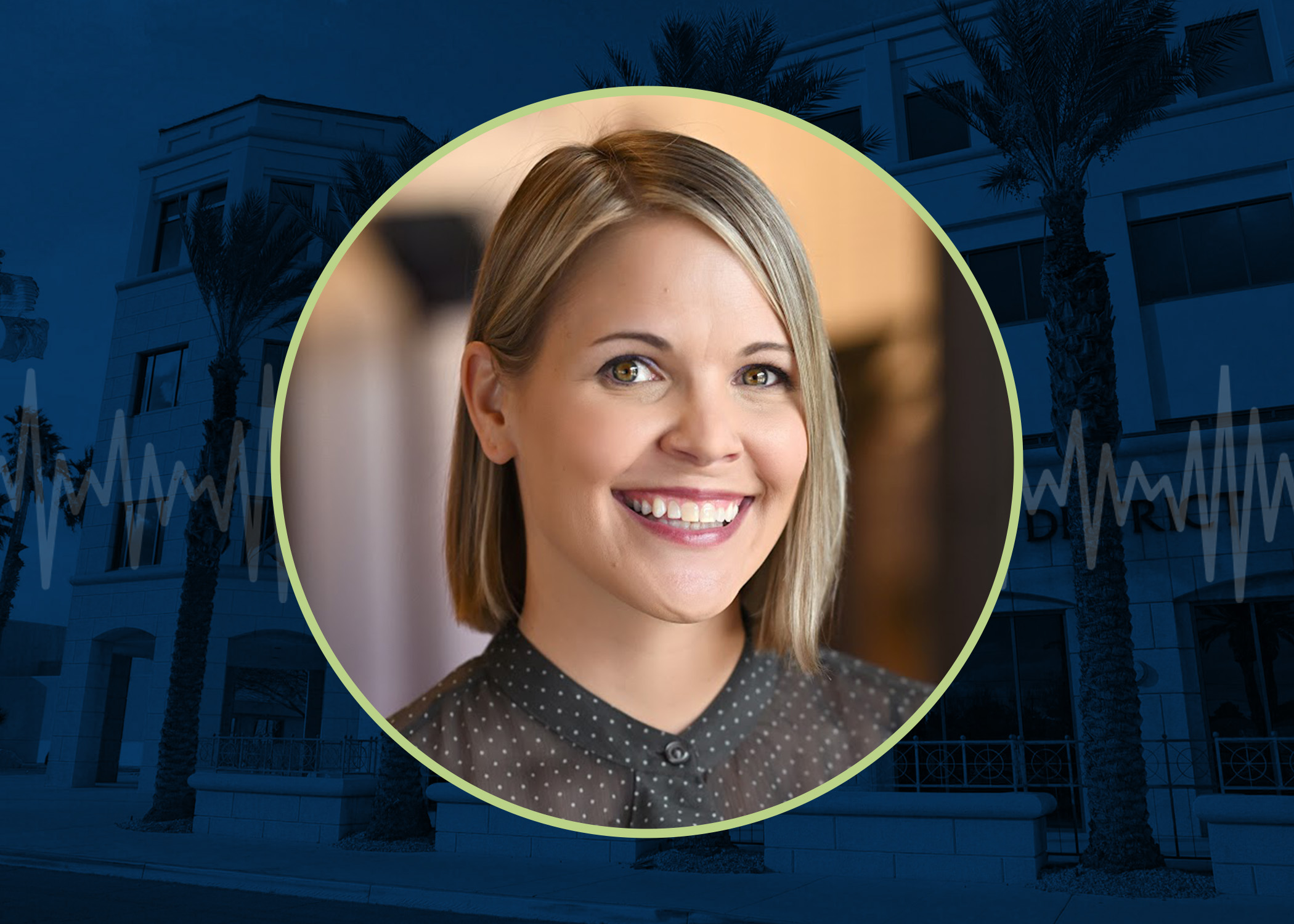
Ali Snabon-Jun, the 2026 Nevada State Teacher of the Year, has spent 20 years teaching music in the Clark County School District in Las Vegas. From opening new schools to re-establishing elementary music programs from the ground up, she has created classrooms and choirs defined by joy and the belief that every student can rise to meet high expectations.
In this episode, Snabon-Jun shares how she builds trust with administrators to teach creatively, why she leads with encouragement and honesty, and how her inclusive classroom culture gets meaningful results. Whether she's inspiring students to discover their voices or making an 80-member choir into a schoolwide family, Snabon-Jun offers a fresh perspective for teachers looking to inspire confidence and growth in every learner.
Key Topics Covered
- Building teacher autonomy by earning trust and delivering results
- How to create safe, joyful, and inclusive classroom environments
- Why high expectations and inclusion can — and should — coexist
- The impact of arts education on student identity and growth
- Advice for teachers on grounding themselves in their “why”
- And more!
Episode Guest
Clarke County School District (NV)
Listen Now




Episode Transcript
Please note, this transcript is generated by AI and may include some errors.
Spencer Payne: Okay, we're live another episode of front of the class real stories from real educators and our real educator today is Ali Jun. Ali, can you introduce yourself? How do you how do you introduce yourself to other educators? Maybe what do you teach? Where do you teach fun facts? Anything that you like to share with other educators when you introduce yourself?
Ali Snabon-Jun: I would love to.
Perfect. My name is Ali Jun. It rhymes with fun because I'm a person, not a month people. And I have been teaching in Las Vegas, Clark County School District for 20 years, believe it or not. I can't believe it. That's what I say. And I teach music. I love my job. I absolutely love my job. And I love everybody I work with. And I would give you my go-to karaoke song, but I don't want you to steal it. So.
Spencer Payne: Well, can promise, how about this? I give you exclusive regional rights to the greater Las Vegas area. Maybe I can steal it in other locations. Cause now we gots to know what's your go-to karaoke song.
Ali Snabon-Jun: Gosh, me and Bobby McGee. Yeah, little Janis Joplin.
Spencer Payne: Okay. Okay. That's a, that's a very good one. and you said you love your job. You love the people you work with. Can you share a little bit of, you know, was, was this love at first sight with teaching? Did you kind of meander a little bit before you found a school and a team that you really felt that way? Like, how did you, how did you find that environment that you are so passionately, optimistic about?
Ali Snabon-Jun: I do. I do.
Well, my mom was a teacher, so I feel like I grew up in the classroom, know, like stapling things on the bulletin boards and doing all that. And I saw her love and her passion for her students. She taught fourth grade, so she had like a specific group. And then she kind of rounded up the year and then went into fifth grade. So she grew like these great relationships with their students. And I always kind of envied that.
When I grew up in New York, the districts were very different as opposed to how they are in Las Vegas. So my mom said, know, Alexandra, I do not want you in the school where I am teaching, which I'm very grateful now because now I have my kids with me and it's a whole different ball game, but I love it. I wouldn't have it any other way. So I feel like I've always grown up in kind of an education background. And then as I got older, I started like doing camp counseling and things like that.
Then when I became a teacher, I started in New York my first couple years and I had so I'm still best friends with some of the people I taught with. I feel like I didn't know anything back then, anything. And now in Las Vegas, it's very transient. So I have the opportunity of moving from school to school. I've had the opportunity to do that, which is not, it's kind of unheard of in other states. You live and die by that one position. And in doing so, I've grown such a huge family of mentors, of other colleagues.
It's just so amazing how supportive education can be and how so many people have the right answers. And it's just a matter of sharing our things and growing that family, finding new friends, but keep the old one is silver and the other is gold. It's a big world out there. And I think that's an important lesson for our kids too. You don't have to be in one pocket. So grow your educational family.
Spencer Payne: And how do you choose in this unique experience in Las Vegas where it seems like you've got easy access to mobility from one school to another to another to another? Can you share with us a little bit about how do you choose? Is there a school where you're like, this one is my gold and I'm going to stay here for a couple of years? Or I want to go to that school for these couple of reasons. How do you kind of decide?
How do you kind of co-create that experience with the schools of what you're looking for next, why you want to stay, what you want more of, what you want less of? How do you go about that?
Ali Snabon-Jun: Um, I've had the really, really great opportunity to work with the same principal for about 13 years out here. And he, um, had the opportunity, the privilege to open up schools. So out here in Las Vegas, schools are named after people and namesakes. And because Las Vegas is constantly growing, we're always building new schools. Um, some of my schools have been at 1100 elementary kids in one school. So right now my school's about, I've brought 900 elementary kids. I see every single one of them.
It's a great problem to have for me. I love the more kids the merrier, but that's not always so great in the classroom. So their class sizes are pretty big. So Las Vegas opens up a lot of schools pretty often and my principal was asked to open that school and he asked if I would go with him knowing that that is a huge undertaking. I would have to reestablish from the ground up a music program, but luckily he asked me to do that three different times or two different times and then he retired.
But I found another really, really great admin and I went to this last school that I'm at now and re-established this music program because I heard about the joy and they started the house program and I had never been a part of the house program and I heard amazing things and they always went like above and beyond and huge events for the kids. I was like, I've got. I mean, this is me, this is my jam. I have to go here, you know, and I have a big personality. teach with a lot of high energy. sometimes schools aren't like that.
So I've been blessed to have admin who lets me lead creatively and teach creatively. So I'm always looking for, you know, people who will let me do my thing because I teach music and I love my admin, but they've never taught music. They don't know what I'm doing, so just let me do my thing. And I don't work well being micromanaged. So that's another thing I look for.
Spencer Payne: On that note, let's say there's a teacher out there who is listening, who's like, you know what, what's really missing in my world is just a little bit more autonomy. Like, I recognize the value of maybe standardized tests and doing some things by the book, but also like there's some things I want to infuse and I want to ask for and be granted the freedom to try things, test things, et cetera. Like, can you share a little bit about maybe how have you built such a level of trust with that principle and those administrators where you have, because on some level, like a lot of people want freedom, but you got to earn it, right?
You also have to deliver results. You have to be doing a good job in the classroom. Can you share a little bit about maybe to a younger teacher or someone who maybe had just had a new curriculum thrown in their face and they're like, I could use a little more autonomy. How might you advise that person to consider going about getting the administrators, principals, et cetera, kind of on the same page, on the same side to grant that level of autonomy and also what it is that you're expecting to deliver also in exchange, right? So can you share a little bit about how you've created that and how you might help foster somebody else who is looking for that as well?
Ali Snabon-Jun: Yep.
Well, you kind of answered it, results. You have to have results. It can't just be fluff. So our school does a lot of themed things, but there has to be teaching involved. But you also have to know your audience. So you have to tell your admin, like, I know these kids. Like, I just did a lesson, pop culture, one, two, three, four, five, you know, and they were, but I was teaching the scale, you know, and I invited him in. So I said, Hey, I know this is a little out there and I know it's driving the other teachers crazy, but they eat up and I'm teaching the scale lessons and I'm teaching you know the soulfish and so please come in I want you to see that this actually does work I get their attention everybody's participating and he was blown away so oh my gosh I can't believe so-and-so who always has their hoodie on is that was having a time of their life I was like oh I know oh I know but.
So I would invite your admin in, I would invite the people in, I would take a recording of what you're doing and say, look at them engaging and maybe try a couple of those techniques that your principals always tell you, okay, let's them turn and talk, like, or whatever they're kind of drilling into your curriculum environment classroom, if you will. And with that being said, my principal does expect me if I am doing these kind of out of the box which I don't really think they're out of the box. I just think you have to, like I said, know your audience and have fun.
Like I have to teach the same thing all day long. So I want to teach things that I enjoy too, but still has a great effect and kind of opens their mind to a bigger picture too. I'm going out of tangent here. What was I saying? my principal. Yes. This is how I teach by the way. My principal does expect me to incorporate, you know, keywords and facts that the other subjects, you know, so even when I did this one, two, three, four, five, six, I was talking about, kids, in the scale, it's an octave. Why is this called an octave? So I'm putting those keywords in. Okay, if I wanted a pentatonic scale, how many do I need? Okay, if we're gonna have a trio. So I have to put those math words in, those prefixes that they're working on for those standardized testing.
So music is very easy to lend itself to other subjects, but the other subjects are so easy to incorporate music to. yeah, it's results. give them the results, show the kids are having fun. And if you kids aren't having fun, you've already lost them. You know what I mean? If they don't come into school wanting to be there, you've kind of already lost them. So I have fun, be you. You're the only teacher that they're gonna see every day and you have to love your job too. So my advice is be you, but invite them in, show those, give results.
Spencer Payne: Yeah. And how, curious, how do you set that tone with a new class? especially if you're again, moving schools, creating a new music program in three different schools, three different times where maybe none of those students know who you are or have any background. So I'm curious, how do you, how do you kind of set the tone with a new class with not just those students, but also their parents of kind of what they should expect from you, what you expect from them. and it sounds like you're, you're doing this balance of like, I'm, we're to have fun here.
And we're also gonna get results, which is an interesting balance also to undertake. I'm curious, what do you kind of do to set the stage with students and parents, maybe the first day, first week, first month of a new class? How do you get on the same page with them? How do you set expectations? How do you think about that and how do you have those types of conversations so people know where they stand and know what to expect from your fun, but also result-driven classes?
Ali Snabon-Jun: yeah.
I pride myself on having my room being a safe place. in the very first week of school, I do give the fun. I do let them know and parents do that I have high expectations. I was raised with high expectations. I have high expectations for you because guess what? You can do it. They can do it. They can do it. and a lot of them, they're not intrinsically motivated. They're not highly motivated nowadays. So I think that is one of my main that like you you're going to do this because you can do it. So I can't, it's not allowed in my room. I always say take away the tea and you can. But a lot of it really is built on a safe place that even if we know, I've noticed that kids...
specifically now are really easy to dole out negativity. Super easy. Even if I'm showing something on the screen like a different music group or from different genres or like this is where your music came from. got, know, back in my day we didn't have electronic music, you know, and it's they're so quick to say, ew, that or, you know, and then I always we always have to bring it back and I'm always telling the kids, hey, turn to your neighbor, tell them they're a rock star. Give yourself a pat on the back.
Tell yourself you're amazing. Hey, did you know that your parents can't even read that music? I guarantee if I called in 90 % of these teachers and parents, they can't do what you're doing in this music classroom right now. So you should be really, really, really proud of yourself. I nip negativity in the bud like right then and there. Sometimes it can be an awkward conversation because it's something that's learned from young mouths and young students. But I am strong in my beliefs that everybody should be treated equally and fairly and be who they want to be.
And I have things all over my room, like room, like weird as a compliment and I have over my door when they exit says dramatic exit so they all have to you know is that just silly things and when they do all sing or you know because of course sometimes getting fifth graders to dance is not always the easiest but I was like my gosh you all sang and you all survived nobody died from embarrassment you know and they're all like yeah I did it you know so just having fun, letting him know, you know, this is my room. Yes, it is our school, but this is my room and I'm still in charge and I expect you to do what I ask you to do. So.
Spencer Payne: And that statement that a kid can say after they do something hard that maybe they didn't think that they could do. I did it, I can do this. It sounds like you pride yourself on finding and unearthing those experiences. there any in particular that you can share? Any particular kid's moments, again you have to share names, but just any particular moments or anything like that that really hit home with a kid who
Ali Snabon-Jun: it's so cool. It's so cool.
Spencer Payne: Had one of those I finally got it. I can do that. I've been trying for three months. I couldn't do it now. I can do it Are there any moments particular examples? that you can share or or anything that yeah or anything maybe even that you expect just in general in your class That you maybe talk to other music teachers who teach the similar grade level and they're like wait you get them to do What by the end of your year they're doing what how do you do that? So any specific moments or are there any things that you just hold the the whole class is standard so high?
Ali Snabon-Jun: Getting the cleft here. Yeah, there's so many.
Spencer Payne: that other music teachers are like, how are you doing that?
Ali Snabon-Jun: I do get that question a lot. I don't know if I have a specific answer, but I'm not above bribery. so sometimes when my kids are in classes or they do something that's really particularly hard, I let them do something called torture the teacher and I do you know, the jelly bean game the gross jelly bean and you know, could be boogers or a sock. They love it. I mean, I let them silly string me if they earn something. They love it. It's really nice to because I in teaching music I get to see them from kinder through fifth grade.
So I do get to form a really great bond with them and their brothers and their sisters and their family. And I do go to their soccer games and I do it like when they see a teacher out in the wild, you know, like, oh, you know, the groceries are simple. Where do you think I buy my wine, kiddos? So, yeah, it's funny that, you know, in different classrooms and comparing, you know, contrasting teachers and stuff, a lot of times I'll talk about students, you know, in the lounge, we all do. Sorry, kiddos, we talk about you. And, you know, say, little Lucy in class. I who's Lucy? I'm like, Lucia, because I get to call them nicknames that nobody else can call them. And that's really, really, really special.
I would say a couple of students that stood out in particular. showed me the most important lessons about inclusion and creativity because for me, innovation isn't always like a tech upgrade. It's like a big moments, those transformational moments when a struggling reader is now succeeding and excelling as stage manager or a kid who barely talks gets up and auditions for a solo. And I had one particular student to always came every day with a therapy dog and she rarely made eye contact. She had a sister at school who would answer all their questions for her probably way more than she wanted to. And after a couple of years, she had the courage to come into choir and I was really excited about it. And she auditioned for one of our solos and I have 80 kids in the choir, in my elementary choir. So it's a big group and our audiences are huge and we sing at a lot of community events.
So big, big, big audiences and she had the most beautiful voice, it still does, and she got up in front of the school and all their former teachers and just wowed everybody. She had her dog by her side, ooh, and just wowed everybody and blew kids away, blew her parents away, like, you know, it was just amazing. And then I went to visit her and saw her in her middle school musical and she was just shining on stage and was completely different person from the kid I met and there's so many transformational moments in music and it's just ah it gets me right here because it's it's what these kids need nowadays they just they just really need an outlet to share their emotions their talents it's a hard world for kids it's a hard book for adults so can you imagine being a kid right now it's just it's great
Spencer Payne: And that choir of 80 kids, can you share a little bit about when you started at that school, how big was that group? And how many people joined your choir in that first year, new school, new teacher, new program, and now you're at 80. Can you share a little bit about the growth and then like how have you grown this choir to 80 kids in your elementary school. So can you share a little bit about that growth story of like, how are you fostering that? How are you getting people to want to opt in? Maybe it's bribery, maybe it's fun, right?
But like, how are you, how are you building? There you don't bribe. How are you building this program? I asked this in the context for other teachers who might be like, I want to try a new, I want to try a new program in my school. How do I think about starting? How do I build this? How do I get momentum? Can you share a little bit about how you've done that at this school where you now have a choir of 80 kids?
Ali Snabon-Jun: That I don't bribe, yeah, acquire, yeah. Well, I'm not going to lie. Budgets are tight so I don't get paid for it. So I'm giving up a lot of extra time. but once you get that ball rolling like choir, and then they take away your budget, it's an, I, what, what am going to tell those kids? sorry. Well, I personally wouldn't ever, tell the kiddos, Hey, sorry, I'm not getting paid for it. Not doing it for you kids anymore. So, so I get that. I get why people don't do it. but it's a great problem. It's a great problem to have. It really is. All those kids. I don't know how I do it. That's awful.
I perform, they form a family. We form a family. So every year we, I start with a handshake. and well, first of all, my choir is only fourth and fifth graders. So that's another thing that the kids throughout the years, they look up to. So when I do the winter concert, I do like a preview, even though it's not a preview, it's kind of like a dry run. So we do it for the entire school. And so the kids have been watching these kiddos you know, performing for them for years and then it's finally their turn. And I start a beginning choir in the springtime, which is only third grade. So they kind of earned that spot in fourth and fifth grade.
What's been really great is that I have an equal amount of fourth and fifth graders. In the past years, I've had a lot more fourth graders and what's even cooler now is that I have an even amount of boys and girls, which is really, really amazing. I think again, it's just fostering that safe family. I have so many kids audition for solos that you wouldn't, you the athletes, the, you know, the math leads and everybody is so supportive. They all cheer for each other. Even though there's 80 kids, I make sure each kid knows each other's name in there. So that's, that's a big undertaking. It's more for me too.
I drill their names in my head. And we do a handshake and every year we add on to that handshake and only the choir kids are allowed to know the handshake. So it's really cool. And even if they forget their names, they see each other in the hall and they do the little handshake and we do the, you know, the thing. And it's just building something really special for them. And I take them to different community events. sing at the Silver Knights game. So that's always something that they look forward to. And...
Spencer Payne: Wow.
Ali Snabon-Jun: Yeah, and they sing at PBS and we sing at a big event called Town Square and in Vegas it doesn't snow so after they're done singing they make it snow and it's just yeah there's tons of opportunities out here in Vegas to perform.
Spencer Payne: And another question, like PBS, Knights games, like how, how, how has that started? Like I'm, I'm guessing, and correct me if I'm wrong, that they're not going around saying, Hey, who has a great choir of fourth and fifth year, fourth and fifth graders that we can feature? Like maybe they are, and they're looking for somebody who's the best at that. And it's still, they have to find you. Like how, did those opportunities come about? Like did you, were you proactively outreaching looking for where can my kids sing? They want more opportunities beyond just their classroom. Like were they reaching out? Like how did those opportunities come about? How'd they happen?
Ali Snabon-Jun: A little bit of both. Some people have reached out to me. I've actively looked for opportunities for these kids to form because I know it's core memories. I know that they might not go on in middle school and sing. to be able to form on stage with lights and people and mics and all the things is really cool. PBS, I started many moons ago. had, again, things have changed a lot because now broadcasting rights and the YouTubes and the filtering and the, you know, all the things.
So, you know, has changed significantly on that, but that is one of my all time favorite ones. So I actively seek PBS out every single year for the kiddos. And now that I've done it with all my schools, they kind of know that, you better put Ali on the list or she will email me and make sure that she's on the list because they get to go to a real recording studio and their faces when they walk in is, it's a...
You know, it's so cool and everybody wants to, all the parents want to chaperone on that one. And with these dedications, so every time I have opened up a new school, there's a huge dedication for that namesake. So all the governors, every time I've done that, the governors have been there. So my choirs always perform for that. So I think my name has kind of gotten out there a little bit and there are some events that I have taken the kids to that I won't take them to again. So just in terms of like crowding, parking, stage, cause I have a lot of kids. So, I actively seek out a lot of them. and word of mouth, I listen for things and some, I mean, it's, Vegas. There's like, there's so many places for kids and people are looking for things and you just don't even know unless you ask.
So, and the kids love it. It's again, it's a lot of extra work, I mean, and the parents love it, the community loves it. So it's great. It's great for the school. It's great for the kids. So.
Spencer Payne: Yeah, well, I mean, thank you for doing that. That's a lot of accolades. We'll have to maybe share where people can find if there are recordings available in little notes for people to follow along of where can they go here? Like if I'm listening, like, where can I go hear them perform live at a night's game or on PBS? So I'll have to provide some notes if you don't mind after this. And then one thing, again, I'm curious about, you mentioned kind of making sure your classes, your choir, the things that you're doing, there's an opportunity to kind of...
Ali Snabon-Jun: Absolutely. Of course.
Spencer Payne: Be weird, embrace your funk, be unique, be a safe place that's all inclusive, and also have very high expectations of what you know the kids can do and you expect them to maybe deliver, have results, do things that maybe others wouldn't expect of them. And I don't always hear those two things in the same ballpark. Sometimes there's, we want to be all inclusive, so maybe we lower our standards to make sure everybody feels okay. You seem like you're not.
You're not doing that. You're going the opposite of like, no, I'm, being inclusive while holding the higher standards. And it's amazing that kids actually maybe, you know, maybe not right away. It's not their favorite thing, but once they see themselves do something they didn't think they could do all of a sudden, maybe they embrace that higher standard. So I'm just curious to dig into this a little bit of like, how have you fostered that? Cause sometimes those two things can seem like they're opposed. Like we're inclusive. but we also have high standards.
Ali Snabon-Jun: Yeah. Absolutely. Yeah.
Spencer Payne: Like how, how do you, how do you thread that needle of being able to do both? Because that seems like a very rare ability to actually be able to do both where you have high standards, but everyone's in like, how do do that?
Ali Snabon-Jun: Yeah, praise, praise, praise, praise, and honesty. I'm honest with the kids when they're not living up to their standards that I.
Spencer Payne: And could you share an example of maybe what does that sound like from you, your honesty of how you might phrase that to a child? Because again, the phrasing of that can matter a lot. So like, can you share a little bit of like, how might you approach being honest about a kid in your class who's maybe not living up to the standards that you expect? How do you do that?
Ali Snabon-Jun: Okay. Even if it's a first grader or a fifth grader and they're doing something in class that I know is not expected of them getting out of their seat, dancing around, shouting something out, whatever the case may be. And then usually typically if one kid does it, then another one will. And then I will stop and say, do you see what just happened there? It's like, you're a leader. What you just did, you're a leader and you made a mistake and you did something that you know you're not supposed to do and guess what? Your friend just followed you because they're looking for you because you are a cool kid and you do know what you're doing and like what you just did, you know? So let's come on man, let's lead. Like what else could we do? That's like a good thing to do. Are you gonna be a leader man? And you know, and then I talked to the other one, you know, or...
Spencer Payne: And you're doing that just to get you're doing that in front of the whole classroom. kind of everyone sees this. Yeah. Yeah.
Ali Snabon-Jun: Whole class, whole class, whole class. I sometimes get, know, when kids do show their uniqueness or they, do, I have a lot of kids at the end of class now. I've kind of created an atmosphere where they do raise their hand. Hey Mrs. Jun, can I show the kids how I beat box?
Heck yeah, yeah, are you kidding? Yeah. Mrs. Jun, can I show him how to play the piano? And then just the other day, a third grader got on and played this like, and all these kids were like, whoa, bro, like, yeah, like high five. Like it was a whole classical piece and all the football players like, whoa. And he's like, thank you. Like he barely says boo. And then his teacher came in and was like, you've got to see him play it. So he played it again. Of course, the class was late and the other class was waiting, but you know, that was amazing. So that kid showed his leadership.
But sometimes some kids do get up and they show, a special talent or something, some other kids will make a remark or say something that's inappropriate, they'll say it in front of the class and I will stop and I will say, hey, I don't know where you learned that word or blah, blah, where if you use that at home and your parents use it, that's fine. But in my classroom, that is not okay, that is unacceptable. Everybody here is allowed to be whoever they want. And if you don't like it, then you have nothing to say, then you may leave or you don't say anything at all because nobody in here is perfect. Nobody down here is walking the runway. So, you know, let's all be respectful for each other. So I usually don't hit like when I nip it in the bud, they're pretty like, they know, they know my expectations.
So, it doesn't happen often, but when it does, I do stop it all. And my dad, one of the reasons why I don't cut anybody in the musical, so I do a musical every other year and now that's at like 150, 180 kids. It's so, it's amazing. My dad said when he was in choir, his choir teacher went up to him and told him just to move his mouth, but not to have anything come out and he was devastated and from this still to this day, I've never heard him sing like he barely ever sings and it devastated him. And he said, Alex, whatever you do, don't do that to another kid. And I still dad, I haven't. So I don't cut anybody in lessons based on, know, behavior expectations and things like that. Yes.
Spencer Payne: Well, thank you for sharing that. Sometimes it's easy to gloss over like, well, I just kind of set the expectations. Like we have, how do you do that? Right. Cause people are going to test you constantly of does she really mean it? Like, what can I get away with? mean, that's kids are doing, got three year olds testing me every day. So thank you for sharing a little bit of like how you, you know, how you specifically address some examples that could happen where, you know, you've, you're trying to hold the line of your standards, right. Because they're going to be tested.
Ali Snabon-Jun: Well, the older I get or the longer I've been, it's easier to do. And it's easier to respond to the parent. Like, I hate confrontation. You couldn't pay me enough to be admin because that is just not my forte. So even, you know, when I do have to address a student or I do have to write to a parent about something that happened in class, it's much easier now than it was 10 years ago, for sure. But
Spencer Payne: And is that just through practice? Like, why is it easier now than it was 10 years ago?
Ali Snabon-Jun: I think through practice, I think I don't take it as personally as I used to. I am a mom too. So, and I have a 14 year old and a nine year old. So I kind of get it when you get a message about your kid. Not that my kids have ever gotten a bad message, but I get it. The mama bear kind of comes out, but I of course, I'm the teacher. So I first say, what did you do? I know, I know your teacher didn't lie to me. You know what I mean? So now it's kind of a different like, well, his version is this and your version is like, ma'am.
I promise I did not lie to you about what little Jimmy did in class today. So that I think just being a little bit older and not taking it personally is, you know, is, it has helped a lot, but it's not easy. It's still not easy.
Spencer Payne: Yeah. Yeah. Yeah. But again, this is something that many people struggle with. This is why I'm curious to dig into the examples and how you've gotten better at this and that statement of just like not taking it personally of like this kid isn't trying to just come at me. Like he's, you might be trying to test the boundaries in all of life of like, there's a lot of people telling me what to do. Like, is that, is that what I listen to? Do I listen to this one? Which ones, which ones are real boundaries and which ones aren't? And that might have nothing to do with you or your classroom. It's just a.
Ali Snabon-Jun: Yeah. Absolutely.
Spencer Payne: It's the world at large, right? And not taking it personally, think is great advice and helps tremendously for folks who are wondering, like, why do I always have such a problem with that kid or that period or that thing I'm trying to teach, whatever it is, it might not be personal.
Ali Snabon-Jun: Absolutely. No, and you really, you know, everybody knows you never know what's going on in somebody's life. mean, some of these, yeah, yeah, it's, yeah. Don't take it personally.
Spencer Payne: Yeah, and we did dig in a little bit to the beginning of a school year and kind of how you set the tone and expectations with students and with their parents and also to earn autonomy. You've got to get results, right? I'm curious from your perspective, just you, like how do you judge for yourself at the end of a school year? How you did like on what basis do you decide? you do you mix standardized tests with how big the choir was or how successful the event was or that?
There's three kids who I know never raised their hand in the first two months and I talk at the water cooler and no one else, they don't raise their hand ever, but I'm gonna get them to raise their hand and participate on their own by the end of the year regularly. What are some of the things that you look to to say, I had a great year with my class this year, these are things I wanna do more of? How do you kinda judge that for yourself?
Ali Snabon-Jun: by how tired I am by the end. No, I'm just kidding. I'm always tired. I don't work on data or awards. I've been fortunate, but I don't, it's moments and memories. It really is. It's the growth of the kids personally. It has nothing to do with the concerts, although you know those and I'm my own worst critic on those. So even if somebody did tell me it was fantastic, I'm like, yeah, no, they were a little flat on that song. I'm I it's really hard to please me but like, in my I just I have a major imposter syndrome.
So I it's hard for me to see that but it really is the kids. It's those kids that, you know, gave me major attitude in the beginning of the year, I could barely get them to, you know, clap their hands and are now participating are now like, yo, Mrs. John, can you come to my concert? Can you get like, I can't wait to do this after like, it's moments and memories without a doubt connection relationships. Absolutely.
Spencer Payne: Anything that your mom did in her all her all of her career as a teacher that you've decided, oh, I really like how she did this or this or this that you have embraced and that you've maybe I'll use someone else use this term of R &D was like rip off and duplicate and intended to be like a compliment of like, oh, I like what you're doing. I'm going to R &D that I'm going to rip off and duplicate that I'm going to steal your idea. I'm going to do myself. Anything anything that she set the stage or the foundation on that you bring to your classroom that you really appreciated about kind of how she showed up, the relationship she built that you wanted to make sure was the foundational component of how you show up as an educator as well.
Ali Snabon-Jun: Joy, my mom is is and was very joyful all the time. She not just with her students, but she had a really, really, really great connection with her colleagues and still to this day is great friends with them. And I think that's really important because the the people you work with are your family outside of your family. They're the people you're going to need, the people that you lean on, the people you're going to ask for help support. So I really enjoyed the relationship she made with her families and her like her own chosen family if that makes sense like her school family i think that was really cool and again she was very very very high expectations so yes it's very yes all a's in this house
Spencer Payne: Yeah. Have there been any downsides of those high expectations, right? Like are there, are there anyone as ever pushed back of you're expecting too much or gosh, I don't, don't think my kid needs to work this hard in your class or there's too many events. There's too much stuff you have them. Like do you, do you feel any of that and kind of how do you, how do you react to that? Like, again, you mentioned not liking confrontation, so maybe it's coming from a student or a teacher or an admin or whatever, but like, do you ever have any, does any conflict ever arise from the high expectations that you have and kind of how do you handle that when that conflict happens to try to get back on the same page with who's ever bringing it up to maintain the standard that you hold that seems to work very, very well for you and your classes? Like how do you handle that?
Ali Snabon-Jun: I don't typically haven't gotten a lot of pushback on, I think parents appreciate it, that, and just musically speaking and creatively speaking, creatively speaking and emotionally speaking, I...
I don't think, I know they see the power of music. We do class dojo, so even when I do have choir rehearsals, I'll send a little clip of them all singing and the parents love it. And I'm like, this is what we're working on. This is what I expect when they come back on Thursday. And it's, I hope it's not hard. Yeah, nobody's ever really pushed back in terms of too many things, too many rehearsals, too high.
No, not so much, but I do get pushback when I give like leads in solos and things like that. That's really difficult. get a lot of, think my child should be Willy Wonka or whatever it is. So that is really hard. That is, that's hard. That's really hard. Even solos, I know I'm breaking hearts, but every concert say, okay, if anybody auditioned for solo raise your hand. And they all raise their hands and I say how...brave they are, you know, to get up in front of everybody and saying, the whole audience applauds, you know, and tell them it's still your year, it's still your time, it's still your year, you know, it'll, it'll happen and, and things like that. But so that's the hardest part. I don't really get too much pushback on, things in my classroom or things I teach or oddly enough things I say. But yeah, yeah, just solos in parts. Yeah.
Spencer Payne: And when you do have those hard moments, maybe it's a hard day, hard moment, kids were acting up, they didn't understand your expectations. You accidentally took it personally maybe 10 years ago, right? But how do you bounce back when there are those hard days, hard moments? There's two kids who both are great for the solo, you can only give it to one, you know you're breaking heart.
How do you go back and kind of refill your own cup, so to speak when you have to have those kind of hard moments, hard conversations, like what do you do to kind of get back on track and show up as this joyful, high energy person the next day in school?
Ali Snabon-Jun: Again, I'm honest with them. I say, hey, you guys, this is so close. And I put them together, you know, and they say, yeah, I can see why she got it. Or, you know, I explain to them, you know, I don't just say, maybe next time, you know, I say, well, this is what I was looking for. This is, you know, and it's hard. They're nine, they're nine and 10 years old, you know, to be like, but they are really...empathetic towards each other and they're empathetic towards me too.
So if I did have a rough class and then my next class comes in and I'm frazzled, I'll tell them like, guys, listen, whoo, that class was a lot for me. And they're like, oh, who'd you have? Was it my sister? Was it my sister? No, no, it wasn't your sister. But you know, you guys got to give me a minute. That was hard. then, know, if one guy, guys, guys, Mrs. John, she's come on, she had a hard class. Come on, guys. You know, so they're, they're, kind of helped me. When I do have, I've learned to the
Spencer Payne: Hahaha
Ali Snabon-Jun: longer I've been in when I have problems or if I've, you know, a lot of times this profession is a lot of females and not that came out really wrong. Edit that. no, but like a lot of times there can be a lot of chatter, a lot of water, cooler talk. and I found it really important to go directly to that person. Or if I, there's a he said, he said, she said thing or one day I was out and there was an incident with the sub and I heard a story about this and I heard a story about that. And when I'm not there, it's a reflection on me, my substitute. And so I wanted to get to the bottom of it.
So for me, it was, okay, I need everybody who's talking about this and everybody who's involved to come together and we all need to sit down and I need to know what actually happened. And because sometimes I get worked up too. And if you don't really have...the truth, what's the point of getting worked up if that's not even really what's happening right now.
Spencer Payne: 100%. Um, I actually, I, I've lived a dig in that for a quick second. Like, how, like, how did that work? Did you get everybody in like in one room? Just like, what I'm just trying to understand what actually happened. I want to make sure I'm doing the best I can for you. Future subs, my classroom. Uh, so what I've heard a couple of different things. What actually happened to kind of, that how you approach that? Like how, did, how did you uncover what really happened when there's 17 different little stories and you're trying to just figure out like what really am I solving for here?
Ali Snabon-Jun: Yeah, well, unfortunately, I, maybe not unfortunately, but I got like worked up about it too. Like just walking in and I was out that day and I said, oh, we had help in your classroom because so-and-so child was misbehaving again. the key word there being again.
And I said, you know, well, what did the sub do? Well, the sub, you know, reprimanded him. said, well, that's yeah, because he should have. He's the adult. He's in charge. And then I, well, you know, then, well, but they didn't like the way that they spoke to them and they didn't like the way. So we're taking that person off the sub list. I was like, whoa, whoa, whoa, whoa, whoa. And then, yes. And then I hear, no, I didn't. I'm not taking somebody off the sub. Yes. You know, it sounds like, whoa, whoa, whoa. You know, so I got upset because I think I'm under the guise that if you are the adult in the classroom, which I know is different nowadays, and I asked you to do something I expect you know, and yes, this particular student does have some behavioral issues, but that sub didn't walk in knowing that and nor do I think that the teacher should always say, Okay, well, we have to hold you with a, because the other kids see it too, you know what I mean?
So that the whole consequence thing. And so I said, Hey, I need whoever that was all about. And I called all into the principal's office and I sat on the ground and no other person was talking. And it was a little heated at first. And I was just like, Hey, I just want to know what actually happened because I'm hearing 14 different stories. And that's not conducive to anybody or anything. So that's, it wasn't comfortable, not really in the beginning, but by the end, we all had the truth. We're all on the same page. We, apologies were stated.
We are all like, high five and at the end because we're all passionate about the same thing. She was passionate about the student. I was passionate about sticking up for my classroom, the sub. The admin was passionate about both of his teachers. You know what I mean? So it was just, that's a great, again, a great problem to have that we're all so passionate about something, but that's how the world of education kind of works sometimes. One person says something and then, you know, and then Allie had a fire in her room and the sub came in with another can of fire and threw it on, you know what I mean? It just gets out of control. So I think it's not always comfortable, but the best way to handle it is just to sit everybody down.
Spencer Payne: Yeah and put some sunlight on the situation and just like what actually happened. So thank you for sharing that and for doing that, right? Because those can be hard situations of how do I navigate this, of like what actually happened, like what's the right response? And it's really, it's.
Ali Snabon-Jun: Yeah. Yeah.
And nobody was at fault. Yeah, nobody was at fault. It was just a miscommunication and that's all it was. So.
Spencer Payne: Well again, thank you for sharing that and for handling it that way. Hopefully folks here can maybe learn and apply that approach or something like that happens to them, which is not comfortable, but sometimes just sunlight and getting people in the room, what really happened, like we're just trying to figure out what really is the story and how we can move on to all be our best. Sometimes that approach is the right approach and as uncomfortable it sounds in the moment, sometimes that's the right thing to go get to the best place for everybody. Yes, a couple more.
Ali Snabon-Jun: Yeah, was just, it was all about perspective.
Spencer Payne: kind of quick hitter, rapid fire questions as we get close to wrapping up here. Excuse me, if there's a new teacher, maybe their first year, what might be the number one piece of advice you would give to that brand new teacher who's in their first year who might be wondering, my gosh, I knew I wanted to do this, but this is harder than I thought, or maybe I'm a little overwhelmed or whatever they might be feeling. Like what's the number one piece of advice that you would give to that new teacher? Or maybe it's advice you've given to some new teachers in the past. Like what would you do to help them?
Ali Snabon-Jun: As cheesy as it sounds, it's very true. Know your why. You have to know your why. Why did you start this in the beginning? Why are you standing up in front of these kids? I mean, your why can evolve. It certainly can. My why from 20 years ago is different than it is today. But that will really ground you on those hard days. There's so many things that go on in the classroom that you don't learn in college. So know your why. Let that ground you and remember why you're there for those kids and be yourself, be yourself. They'll eat out of the palm of your hand if you create those relationships with those kids and yourself and they will eat you alive if you're not. They will know, they know when you're putting on an act.
Spencer Payne: Hmm.
Would you mind sharing a little bit about what is your why?
Ali Snabon-Jun: The arts, bringing arts to all the kids, every kid, every adult. need the arts. Arts education is so important in all forms. And again, it's connection, those moments, those memories, the connection with the kids. It's all about making sure they feel safe, loved, seen, and you're ready to be that person to show them that they're special. Yeah, that sounds so lame. It's so true though. It's just the connection, the relationships. I laugh every single day. So it's great.
Spencer Payne: And that might be the of the answer to this next question. But what to you is the number one best thing about this profession, education?
Ali Snabon-Jun: that it's a privilege. It's a calling. it's one of the most important professions that there is in this professions. I emphasize that I know that took, they took it away from us, but it's mo it's one of the most profound professions on this planet. and our jobs are so important. I've always been on the stage. I've been blessed to be on many stages in the world, but my classroom is without a doubt the most important stage there is. And those kids are our most important audience without a doubt. Our jobs are a privilege.
Spencer Payne: and what is the toughest part about this profession? Or if you had a magic wand and could just change one thing by pointing that wand at it overnight and poof, it's better. Where would you point that wand?
Ali Snabon-Jun: Two things, the negativity surrounding education. It's really bad. think we as professionals too have to be careful of how we talk about it, how we speak about ourselves and education as a whole. I wish more things, those small moments, those transformation moments, there's hundreds, of them happening every day, good things in the classroom, but I feel like we only hear about negative things. And I would say a lot of the policymakers or people who are making big decisions in the classroom, have never been in the classroom, and I think that's really frustrating.
Spencer Payne: And on that, maybe that's similar, but if there's one or two things that you wish the public at large who have not been in the classroom knew about what it's like to be an educator, what would you hope that you could share with them or if they could walk a mile in your shoes? Just in this conversation, I wish you knew this and this, right? Is there one or two things that you kind of wish the public at large knew about what it's like to be an educator when they've maybe never been in front of classroom?
Ali Snabon-Jun: I would say lately in the last few years, I'm doing less about teaching music and more about teaching how to be a good human. And that's troublesome. So, yeah, we're not just teaching our standards anymore. We're not just teaching subjects. There's so much more on teachers' plates, the welfare of these kids. And I'm not saying that every kid is struggling or anything to that effect.
They're our future. I mean, these kids are our future. it's...I don't even know what to say. Yeah, it's so it's it's more than just teaching.
And we're getting, yeah, we just don't get what we, we don't get the respect we deserve. We don't get the money we deserve. It's hard. It's, and I can see why people are leaving. And that's the, that's heartbreaking. That's heartbreaking because we need our teachers and there's so many good ones out there and so many kids that could be great teachers and mentors and all that. So it's, it's, there's more to it than just teaching.
Spencer Payne: Yeah. And anything that you were hoping we were going to get a chance to talk to you that may talk about that we just didn't have a chance to we get for almost a time here. So any, any new words of wisdom or anything that you shared that you feel is just so, so important that it's maybe I want to re highlight this. So any new or repeated final words of wisdom.
Ali Snabon-Jun: Be yourself, have fun, teach creatively if you can, find out what your kids are into and have them teach you. You know what I mean? Your kids can teach you a lot too. I mean, they teach me. They just teach me how to be so cool. Yeah, no.
This profession is amazing if you make it, you know? Not even if you make it, it is. It's just, it is, period. You have such a power, such a calling to make the world a better place and have these kids laugh every day and show them what it is to succeed. That's, you know, a lot of kids don't think that they can and they, there's so much, they have so much in them just like waiting to burst out and a lot of them don't even know it. So they just need someone to believe in them.
Spencer Payne: Well, thank you so much for the great real stories from a real educator, Ali John rhymes with fun. Congratulations on all your accolades awards, concerts, PS nights games, all these things that you've done. So thank you so much for sharing your story. Appreciate you.
Ali Snabon-Jun: Thank you.

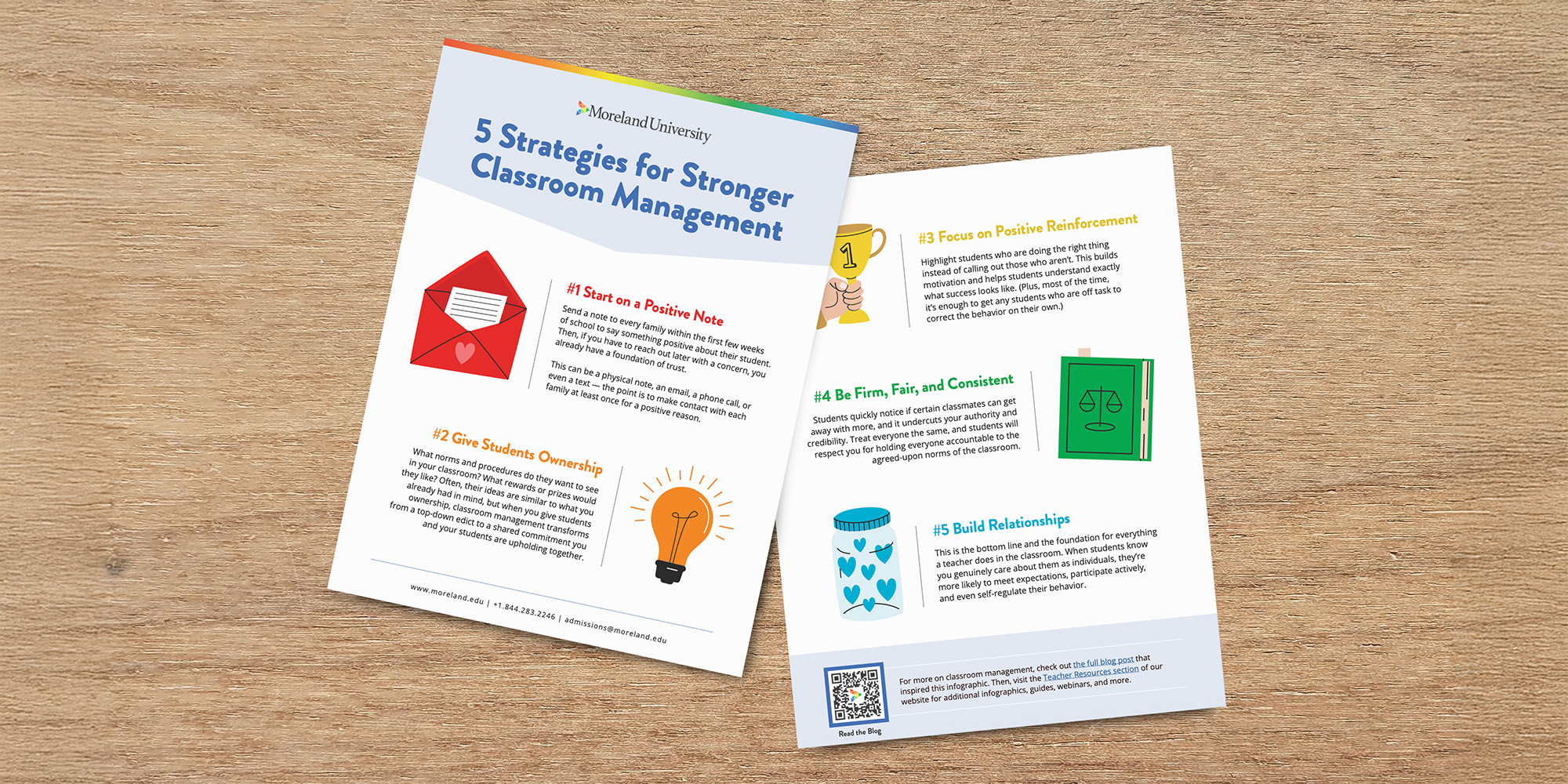

Moreland University can help you take your teaching career to the next level.
Whether you’re looking to get professionally certified or earn an M.Ed., our 100% online programs can help.
Complete your no-cost application (it takes less than 15 minutes!).