
.png?width=300&height=74&name=MorelandU-logo-WH-RGB%20(1).png "Moreland University Logo")
Front of the Class Podcast | Jan 29th, 2026
“Seeing the Whole Student” with Dr. Michael Lehan
In This Episode
Dr. Michael Lehan spent 6 years playing in the NFL before navigating the education world as a principal, superintendent, head of school, and district leader. From growing up in foster care to graduating from the University of Minnesota and playing football at the highest level, his journey reflects a deep belief in the power of education to transform lives.
Now in Massachusetts, Dr. Lehan joins this episode to discuss how school can be both a challenging environment and a safe place, how educators can help shape students’ identities, and why he believes in leading with humility and curiosity. His story offers meaningful insight for any educator striving to build trust, create thriving learning spaces, and help children grow in all aspects of their lives.
Key Topics Covered
- The outsized impact that educators can have on students experiencing trauma or identity challenges
- How to approach honest educator-student conversations
- Seeing the whole student beyond grades and test performance
- What it means to meet students where they are and show you care
- Creating environments where every student feels seen, valued, and heard
- And more!
Episode Guest
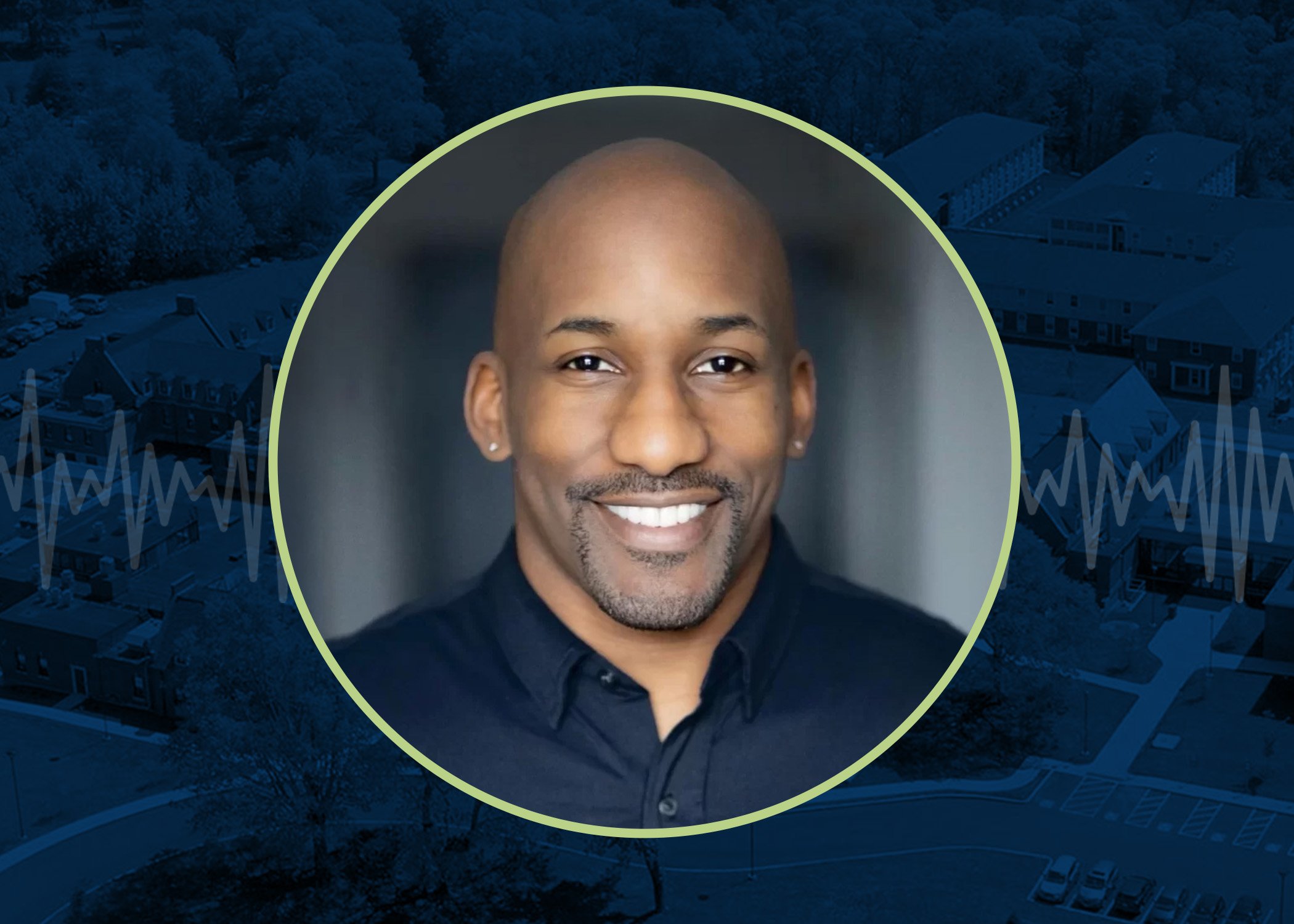
CATS Academy Boston (MA)
Former NFL Football Player
Listen Now




Episode Transcript
Please note, this transcript is generated by AI and may include some errors.
Spencer Payne: Okay, we're rocking and rolling live with another episode of Front of the Class, Real Stories from Real Educators with us today, Dr. Michael Lehan. And Dr. Michael, can you share a little bit about how you introduce yourself to others in this education profession? anything you like, where are you now? Where'd you come from? Any fun facts? Like how do you introduce yourself to others who are in this profession?
Dr. Michael Lehan: Yeah, you know, thanks for the question. And again, thanks for having me on today. And as I think about how I introduce myself as a within this educational space, I think about like, how did I find myself here just from a young person growing up where my K-12 experience wasn't necessarily the most rewarding. But I also think about that person. I was that person who that was the safest place I ever had as well as being in the educational space, being in school and so forth.
And so how I introduce myself is that I'm a natural, curious person. I love to learn. I love to learn from people. I position myself with great humility, knowing that there's great wisdom around us, knowing that we learn so much from the differing perspectives to have this meaningful cognitive discourse. Share a little bit of my journey from the fact that I was in foster care, that I went to the University of Minnesota. That I graduated there and played six years in the NFL. Then I had this passion for education, a passion for young people. I would donate money back to different schools. And that really was the segue into education for me. I've been a principal, I've been a superintendent, I've been a head of school, I've been an area director of schools. So a wide journey and a lot of great experiences.
Spencer Payne: And congratulations, thank you for sharing all that. There's a lot of interesting places that we can go dig and dive in. One thing I'd love to focus on you shared at the beginning, know, hey, school, when you were growing up, wasn't necessarily the most rewarding experience, but it felt like the safest place for you to be. Can you share a little bit more about what you mean by that and how that now translates into what type of environment you are trying to provide for your students, your educators, your teachers, et cetera now that you're in these more executive level kind of roles in the educational world.
So can you share a little bit about how did that background, what did you mean by that? And how did that shape kind of the philosophy or the values that you like to kind of lead with in the schools that you work in today?
Dr. Michael Lehan: Absolutely, absolutely. Yeah. So I was in foster care. Well, first I was adopted, moved up to Minnesota, then I was in foster care. At eighth grade, I found myself in a space of where am I going to live? I was kicked out of my adoptive parents' home, and then I was in multiple different placements.
During that time there was this identity crisis of what's wrong with me? How come nobody loves me? What does home feel like? What does safety feel like? Right as we think about Maslow hierarchy needs, none of those at the basic level were ever being met. However, they were being met at a school location. But the dichotomy was this, that my basic needs were being met, however my...my investment wasn't in school, wasn't in grades, wasn't getting an HP and honors classes and that sort of things. And quite honestly, I was getting suspended as well. So it was these two worlds that were parallel in nature, but were also just meaningfully impactful at that time in my life. And so knowing that school was a safe place, knowing that these individuals invested deeply in me, knowing that I could count on something and know that where that something was coming from was really, really impactful for me.
And to this day, I can think about Marty Conody. I can think about Ken McDonald. I can think about Larry Petrowski. I can think about these teachers that invested so deeply in me and saw me for who I was. And so as you asked the question about what is my leadership philosophy now, it's about seeing the whole child, seeing the whole student, having this holistic approach to education, understanding that one's brilliance isn't necessarily only in how do they perform on a test, but these multiple intelligences that these young people bring forth each and every day. While also thinking about what does trauma and to the extent in which A-scores show up in how students come and what they bring and the elements of themselves that they bring to these educational spaces.
So as I think about professional development with the teachers, as I think about one-on-one conversations with students, with parents, it's about asking questions. It's not about having this mental model about what a student needs to look like, what their profile needs to look like, or what success looks like. Showing up and doing the best they can, sometimes that's success on a daily basis. And then it's about meeting students where they are and breathing life into who you believe they can be and giving them a safe space to allow them to practice being that person that they want to be.
We don't need to always have the answers. As an adult, I don't have all the answers all the time. So it's not reasonable to have to expect students to have the answers all the time. So that's really my philosophy is meet students where they are, meet them with care, celebrate their humanity, encourage the adults in that space to remember when, right? Remember when they were this or that or whatever the case might be. And let's grow and walk this journey together.
Spencer Payne: And those three folks that you mentioned who were seem like that a very outsize impact on you as you're going through that maybe middle school, eighth grade time identity crisis. You know, you're out of your foster, you're out of your foster home. You're wondering who you are, where you fit in. Is there anything that, that you're willing, able to share that you remember of something that they did some way that they talked to you? You mentioned questions, questions that they asked you, um, that really helped you and guided you and are things that you're, kind of trying to carry the torch of like, know that really worked for me. So I want to carry that torch and kind of deliver some of that same attitude or questions, specifics to others who maybe are in that, that difficult situation or other difficult situations that they're facing today. And they're wondering for themselves, like, how do I handle this?
So any, any specific questions, ways that they interacted with you that were really impactful that you can share and how does that then translate to what you try to do today when you might see a kid who needs a little something extra. And he doesn't know what it is and he doesn't know how to ask for it, but he just needs a little something extra.
Dr. Michael Lehan: Yeah, you know, anybody that knows me knows that I have this favorite quote and it says that, you know, best friend is somebody who can sing the song of your heart when you've forgotten the words. And as I think about these individuals, these are the people who would sing the song of my heart when I forgot the words or potentially didn't even know the words. so Ken McDonald, he was my football coach. And one of the things that he did was held me accountable. There was, I had the opportunity when I was a young kid growing up, I had this opportunity to do a modeling shoot. So I'm like, yeah, I'm gonna go do this modeling shoot. But I was late for practice and I wasn't like egregiously late. I was five, 10 minutes late. I told him that I had this, but when I went to the game, I didn't start. I didn't play the first quarter. And what he told me is, Michael, your teammates were counting on you. I was counting on you and you let us down.
And in my head, I was like, well, I communicated this. Well, you have obligations and commitments. And so, and at the same time, as I think about singing the song in your heart, when you've forgotten the words, although he held me accountable, he also reminded me how much he believes in me, how much he cared to me, how much he loved me and so forth. And he told me, said, Michael, there's only a couple of athletes that could have done this too, but the message was clear to everybody else that this is what accountability looks like.
And this is what being part of a team looks like. And I think about Marty Conody. Sometimes I wasn't always the best kid, as I mentioned in school. And for her, it was, you know, when I got suspended, I would go into her classroom and I'd have to sit there and we'd have these deep conversations. And the individual that she was dating at the time was a kickboxer. And maybe they still are, I don't know. But it was a kickboxer. So it was more about what's a productive way to get that energy outside of your body.
And what is a way to feel your body and move your body in this notion of it's important to be active and so forth. So each of these individuals, and Larry Petrovsky, he is the salt of the earth. He is just the kindest spirit and the way that he would sit. And oftentimes when people have conversations, there's a barrier, whether that be a desk, whether that be a table, whether that be something.
Every single time that he had a conversation with me, there was no barriers. It was almost like we were sitting knee to knee right across from each other and that he was holding space for me. And he would look deep into my eyes and just because, and it was care. It wasn't, it wasn't positional, it wasn't authority. It wasn't that he wasn't a, you know, a adult or wanted to be a person of authority, but it was like, Michael, help me understand these decisions. Help me understand who you are.
And then let's talk about where and who you want to be and how these decisions help you get to that outcome. And so I think it's, so as we talk about life lessons of what it means to be on a team, as we think about life lessons of it's important to move your body productively for good. As we think about life lessons of let's remove barriers and have real and honest conversations. Those are life lessons that we can all bring forward as we think about how do we want to interact with people? And as we think about the humans, just in general, we're supposed to, healing, healing is a communal act. You looked at multiple cultures across the world and it's not that people heal in isolations. Animals don't heal in isolations, they come with a community. And so that's a message I also learned. And although there's adversity that I was facing, the idea to be able to heal in community and let people in and have these critical conversations, those are life lessons that I carry with me today.
Spencer Payne: Yeah. And thank you for sharing the way some of those conversations were phrased, right? Not Michael, why did you do this bad thing? Like, Hey, help me understand the decision you made here. and it sounds like that, salt of the earth, gentlemen, you, you spoke of was again, he was coming, he was coming at these conversations from a genuine desire to help you and believe in you, not to accuse or tell you how bad you were or things like that, which is, I just want to highlight the intent that you have coming into a conversation, sometimes that's step one, right? The phrasing is really important, right? But the intent of, sounds like he was coming at that from, help genuinely help me understand what you're trying to do, because I'm trying to help you be the best version of yourself. It sounds like that's how he was coming at that from. How do you do that today? How might you handle a situation or any examples that you might be able to share with a kid recent, maybe earlier on in your career who's
Dr. Michael Lehan: Correct. Absolutely.
Spencer Payne: Having a tough time, maybe they're a little troubled, right? Maybe they have this physical, like they need to get the energy out and it's being caged up too much in the classroom. Any examples that you can share of kind of how you may have approached that with a younger student now that you're on the other side of this and you've learned these lessons from these people who have really helped you and mold you. Any examples that you can share of how you've approached that with any current students and or their parents in the last few years of like, how do you handle one of these difficult students. How'd you handle it? Like what results did you see? Any, any examples you can share.
Dr. Michael Lehan: Yeah, you know, I'm going to tell a story about where I was at Boys and Girls Club. Wasn't necessarily when I was a principal. I can certainly talk about that or ahead of school. But I went to go visit one of my friends who's a director at that time of a Boys and Girls Club in Florida. And I walked in, it was so good to see him. And there was activities after school sessions that were happening. And this Boys and Girls Club, demographics was about 95 percent students of color with tremendous need across the board. As I talked earlier about safety and security, kind of those Maslow kind of hierarchy, many of the students may have not had some of those basic elements met. And so as you can imagine, there's a lot of energy that is, that when you're adolescent, you don't know how, where to put it or how that shows up. And so him and I were talking, we were walking around the club and just engaging with students.
And then all of sudden there was this yelling, loud yelling. And so we ran over and ultimately it became, you know, not necessarily a fight, but different individuals needed to be restrained and still very, very angry. And what happened, it was a young man and a young lady that they were dating and they were having a passionate discussion, shall we say. you know, and I said, my friend is like, Michael, I'm so sorry, I apologize. this doesn't happen, and on and so forth. And I'm like, you know what? Now I feel at home. Like, as when I was principal, we'd have fights at school. So I'm like, you know, I feel at home. And he's like, wait a second, I don't have enough staff. So let me put the young man over here. Let me put the, said, listen, like I'll go with the young man. I'll go with the young man.
And so him and I just went to the room and he needed to get escorted there. And I wasn't the one doing that, but I was the one sitting there holding space and being safe, being there with him. And as we were sitting there, I said, Hey, you know what? I want you to know that you cared for and if and when you're ready to talk, I'm ready to listen. And we sat for probably about five minutes before anything was said. He was still.
Spencer Payne: Hmm.
Which I'm sure that five minutes felt like way longer than five minutes, right? Yeah.
Dr. Michael Lehan: Way longer than five minutes in my head. I'm just like, Michael, did you say the right thing? As a reminder, I don't know this young man at all. Like, I don't know who he is. I don't know what his story or anything like that. And so we were sitting there, just sitting there. I'm watching his legs shake, his fish just clenched up, not knowing exactly what's his. I was just like, you know what? I don't think I've worked out for a while. So I don't know if I'm gonna tussle this young guy or anything like that. So we were just sitting there. And then after a while, he started talking you know, just a little bit. And I'm asking questions, I'm listening. And at the end of the conversation, we didn't spend too much time talking. I asked him, I said, can I give you a hug? This is the first time that I've ever done this in my life.
And I don't know that it was, you know, as an educator, I'm not going to tell, you know, other education, hug students, not at all. But the moment, called for it, because it felt like there was something missing that he needed to be affirmed in a different way. And I think that as men sometimes, this toxic masculinity, this idea of the fact that you can't show emotion or you can't hug another man or all these sort of things, but this is what this young person needed. And so I gave him a hug. And when I tell you this 16 year old melted in my arms, he absolutely melted in my arms. And so I share this story, not to say that I was a hero or anything like that but one thing that we forget sometimes as adults or educators is that sometimes rather than all this theoretical application of what we learn in school and how to synthesize and sometimes humanity needs to prevail. Sometimes we just need to say, what does this young person need and try to show up in that moment to the best of our abilities.
And so...that's kind of a story that made me think about who are the people that held space for me when I was growing up. And sometimes you have to let your intuition also prevail. That you've been around, you know what people need, and you create a safe environment, a safe space, if you will. And it's amazing, it's amazing what comes from that. And again, people just want to be seen, valued, and heard. That's the basics of humanity.
Spencer Payne: Yeah. Thank you for sharing that. I'm to ask one more follow-up, extremely tactical for a second, just in case there's someone out there who's like, all right, you know what? I may have tried that. I'm going to be the one who's sitting in the room and be calm and just say, look, take whatever time you need. I'm ready to talk when you're ready to talk. As you're waiting for that five minutes of silence that feels like it probably feels like 45 minutes, can you share a little bit of,
Dr. Michael Lehan: Yeah.
Spencer Payne: What's the room like? Are you behind a desk? Are you sitting across? Are you looking at him the whole time? Are you doodling? how, like, because that five minutes can feel so awkward in that moment. And it can feel like, you know, geez, do I look at this kid the whole time? Maybe that's triggering. Do I look away from the whole time? Do I whistle? Like, do I stay? Like, can you share if you remember anything of like, how did you pass that time in a way that that allowed him to calm down and allowed you to also continue be to show that you were there, you're not threatening, you have no expectations. It's okay if he doesn't ever want to talk. Like, do remember how, how did that, how did you sit? How did you feel? What did you do in that five minutes?
Dr. Michael Lehan: What, not to break the moment, but what I did was just took inventory of his body language. And when he made, you know, indication that he was ready to talk, I would say, I noticed this. I noticed that your legs were shaking. I noticed that your hands were clasped. What does that mean? What does that mean for you? What was coming up for you? Because what I wanted to...really show that it wasn't my agenda at all that I wanted to push. It was me truly, truly investing in him and his nonverbals because those nonverbals tell the story. And so I wanted him to know that I'm notice you, that you, that decent herself, Michael, as the adults and center this young man and some of the nonverbals. And so when you can sit there and say, Hey, I noticed statements about somebody. I noticed this, I noticed that.
And even sometimes sentence stems are helpful as well. What does that mean when? Or usually when I have my clenched fist clenched, it means this for me, just to show that, you know what? I've done the same thing. So nobody's wagging their finger at you. So really it was more about just taking inventory and that helped me hold that space or hold that tension, if you will, of conversation. And also knowing that I'm pouring into you right now and it's not about me.
Spencer Payne: Yeah, Again, thank you very much for sharing that story. Like I'm sure that was, and I'd also thank you for handling that way. A lot of people wouldn't handle it that way. And because of your background, you probably have this special knowledge of like, this kid doesn't need to be told that's bad or that's wrong or you're going to detention. That's not gonna help right now. Like what he needs is a little bit of space and to know that I'm ready to talk when he's ready to talk.
Dr. Michael Lehan: Yeah.
Right. Right.
Spencer Payne: I'd love to get into a little bit now of, so where specifically are you coming at us from? Like you've now been in this educational world for quite a while. You've been in multiple different types of schools. Can you share a little bit more about your track of where are you today? Where did you just come from? And what was kind of your first school like of when you first dropped into this educational world? So can you share a little bit about the evolution of the types of schools that you have worked in over your career so far?
Dr. Michael Lehan: Absolutely. So today I'm coming from you from Braintree, Massachusetts, and I'm in Katz Academy. So this is Katz Academy is a international boarding school. We have about 450 students. We have about 25 % of students that come from Asia. We have about 25 that are domestic students, so US students. And then we have Brazil is our next largest population. Tremendous, tremendous, tremendous young people, brilliant minds, and you talk about an investment in your kids. And when you send your kids across the world to go to school, there's an awesome responsibility that we have as adults to make sure that we're showing up for them. And so this is a incredibly rewarding environment to be able to lead, but then also be able to build these relationships with absolutely dynamic young people. have so much passion.
And I've been in some great, great locations, but I will say, and dare I say this, but the students here really are invested in developing themselves, investing in the community, and really just take a lot of pride and ownership about everything that Katz Academy is. And so it's a truly, truly honor. Before this, I was with Fusion schools, which Refusion Academy, which has about 85 campuses. They also have a global online campus as well. I oversaw 10 schools, 10 academies that were in Colorado and Texas combined. And I was a DVP, so the district vice president overseeing those. It's another for-profit entity in the current entity that I am as for-profit as well.
Tremendous model for Fusion Academy. It's a one-to-one. And so I walk into your class Spencer, and it's just you and I sitting there. And so we see some really, really good academic gains from students in that model. Prior to Fusion, I was with IMG Academy with the world renowned IMG Academy, if you will, that a lot of people know about and head of school there. And it was tremendous just to see reflections of myself walking in the hallways, on the fields and so forth. Really, really great model. And again, for profit. So there's a trend that's coming up. then even before IMG, this is where I was in public schools. I in public schools for 12 years.
And during that time, I started out as a Dean of Students in Northview Middle School. this was, as we talk about, 1990, 90% students of color, 90% freedom reduced lunch. That's where I got my start. so every single Friday in, well, when I was at Osseo as well, Northview and Osseo, it was Friday Backpacks. So what are Friday Backpacks? That's pretty much like, hey, there might be some food insecurities at home. And so we would have a food shelf in our school. Students would come and pick these items up and take them home in a backpack. And so it wasn't, it wanted to honor them and make sure that they didn't feel exposed. And that's what this experience was. So was a dean, then I became an assistant principal, and assistant superintendent. My time at Osceo was fantastic. I'm, know, point of pride there is when I was principal of the year at the high school level in Osceo Senior High School. And when I say that that award has truly nothing to do with me. I was just fortunate enough to have my name on it. It had everything to do with the staff and the students that made Osceo absolutely remarkable and the achievements that they had during that time.
So it is a big shift, right? And you talk about this journey, from this idea of starting at a school that has a profound need in a lot of different instances. And then you come to this place that's a for-profit boarding school that cuts in the upwards of $75,000 to attend, IMG, $75,000 or more, Fusion Academy, $75,000 or more. So that's quite the realms of experience, absolutely. Yeah.
Spencer Payne: Wide range. Yeah, wide, wide range. I'm curious, like, how do you show up differently for those teachers, those students, when again, you've got you're, you're spanning from Friday backpacks to, I'm shipping my son off or my daughter off from Brazil or Korea or wherever to Boston for 75 grand a year, and I might not see him for a year. Like these are wildly different spectrums kind of on the educational world, like for lack of a better question, just like, how do you handle that span? Or maybe what are some of the things that you see that excite you, given your background, where you want to give back to these students? What do you see that's different? And what do you bring that's similar to maybe both ends of this wild spectrum that you have played a leadership role in across?
Dr. Michael Lehan: Yeah, I think one of the things that I always tell myself and tell my staff is that a couple of things are true. I've never seen a student who doesn't want to do well. I've met students who don't know how to do well based on circumstance, but I've never met a student that doesn't want to do well. And I've never met a parent who doesn't want their student to do well. And so these are the two basic fundamental philosophies about what education is and as educators what our responsibility is to young people and to their family. No matter if you come from Friday backpacks or you come from traveling around the world and you have the ability to write a check for $75,000, the nucleus and the essence of why we do what we do as educator remains the same.
And when I was a Dean of Students, when I first got my start, I felt convicted every single day to try to figure out, gosh, there's something unique about this student. There's gotta be a spark. How do I understand what that spark is and how do I develop that spark to help them be successful? And now, what is the spark of the students that are here at Katz Academy Boston? How do I make that connection? Are they happy? And that's the other thing that I really want to emphasize is just this idea of mental health as well.
And mental health from insecurity standpoint, that's what I experienced before. Mental health from, wow, I'm in a new place. My English level might not be highly proficient, so now I'm going inward because I can't effectively communicate. So there's all different things. But again, at the truly base of, and even if I were to center myself, I didn't have the words for some of the emotions that I was feeling growing up. as you Spencer, as you talked about, Michael, how do you how do you navigate these things? It's really just understanding what parallels that I might say, well, Michael, you're going up, you may have the language for this. So your behavior looked like that. So it's really queuing in on some of the behavior, really queuing in on creating safe spaces for students to be in and share about who they are and what they want, and what's working for them and what isn't working for them.
One of the most rewarding experiences that I would always have is that I call it a lunch with Lehan. And that's when I would just go position myself and order pizza and have students come in and just have a conversation. What's coming up for you? What is important for me to know? And one of the questions I always...
Spencer Payne: And real quick, how many students might be at this lunch? Is it four? it the whole room of 200? Like how many people are in that lunch with Lee Han?
Dr. Michael Lehan: Yeah, you know, it didn't work well at Osceo sometimes because we ran out of space, you know, quite honestly. And some of these other places, we've been able to manage it a little bit better. it's more of a targeted invitation, which is not great, but I've seen the impact of just having anybody and everybody. So, yeah, but great experience just to kind of go around, understand where students are. And then give us adults the opportunity to be responsive to what they share.
Spencer Payne: And you mentioned this concept of safe spaces a couple of times in this conversation and, you know, someone who maybe hasn't seen that done well might hear that and think, well, that's just giving people, I don't want to feel bad. So I don't want my feelings to be hurt. So I need to be in a safe space and nothing challenging can be said in there or nothing bad can be said, or I'm going to win the trophy because I'm in my safe space, right? That's maybe a stereotype people might have. I would argue that the space that you gave that a gentleman who was in a passionate argument where you sat in the room together, you gave that person safe space to go have an actual real meaningful conversation and help calm that person down to get to a root issue. So I guess my point here is the concept of a safe space, depending on how you define the term, you could argue is overly coddling kids or exactly what they need.
Can you share a little bit about how you thread that balance? And you gave that one example earlier, but what are some other examples where you can create this kind of safe space for kids to be able to grow and get what they need without maybe overly coddling them, which I think is a stereotype many people can think of when they hear that term. How do you approach that balance?
Dr. Michael Lehan: Yeah, and Heather Platt has a really good quote about what a safe space is. So for the listeners, definitely look up Heather Platt and safe space and be able to give a really good working definition of what safe space might be or might look like, or at least a framework for individuals to work from. As I think about a safe space and this idea of threading the needle, it's about inviting discourse, productive discourse.
It's about understanding and decentering self. I know I said that a couple of times too, really just decentering self because sometimes the greatest gift that we can give people is a listening ear. In the time and the moment where there's so much new emails coming in, phone calls that need to be had, so on and so forth. I think even as adults, we can think back about times which we wish that our voice was central to a discussion.
We can also remember a time when our perspective was not taken into consideration and the decisions were made for us and what was the unintended harm of those things. And so really this idea of a safe space is really just being 100 % present in that moment. And while being present in that moment, that's not saying that we throw policy or expectations, behavioral expectations out the door. It's about listening to understand how what manifested us to be in this moment right now, and then reminding the young folks that, hey, you know what? I appreciate you sharing this with me and do this for yourself, because you deserve it. And so that's how I think about a safe space.
Spencer Payne: Yeah. thank you very much. And, one more thing I'd love to explore just a little bit in this wide spectrum you've had from your first school to now is parents. and you, you shared coming from the place of, I, every student wants to do well. They may not know how, and every parent wants to do well by their kids. They also may not know how. but the comp, the level of conversations and expectations might be very different between, you know, Friday backpack school and $75,000 a year school. Can you share a little bit more about like, how do you get on the same page with parents in these wildly different backgrounds? You know, and, and maybe it's coming from that, that simple place of, look, I have a simple belief that your child wants to do well and that you want to do well by your child and that we're all just trying to figure out how, and maybe it's just that simple, but can you share a little more of like, how, do you kind of align with the parents to be on the same page?
So it's not an adversarial relationship and that you're both trying to go ultimately get the best results that you can for the child. How do you do that in such a wide spectrum of parents that you've dealt with across your career?
Dr. Michael Lehan: Yeah, and one of the one of questions I always like to ask parents is what is the hopes and dreams that you have for your child? Really just to start the conversation, because then I take obviously mental notes of that, because their ideas, what are their hopes and dreams for their child? They have their own kind of philosophical way of getting to that outcome, whatever that might be. And as I hear that.
I'm gonna have our own within the context of a school setting, our own approach as to how we might be able to make those days. So in those conversations, I always like to make those connections. The hopes and dreams of your child, this is what you're doing to try to them there. Within our school context, here's the hopes and, by hearing the hopes and dreams that you have for your child, here's the context that we can meet you where you are and we can walk this pathway in this journey together to get to this meaningful.
So it's really about this idea that we're not in competition. We need to be in relationship with one another. We need to be in collaboration with one another for this outcome. And to the extent that I can understand or access their mental models and beliefs around what they want, their outcomes, so then am I going to be able to use the language that resonates most deeply with the parents and get to this aspirational outcome for their child.
Spencer Payne: Um, and you mentioned outcomes and results there. I'm, curious, how do you kind of judge for yourself at the end of a school year? How did you and your team and your teachers and your school perform right on, on what basis do you kind of judge for yourself at the end of a year? How did I do, how did my team do? How did my students do? Um, right. Like that could be test scores or retention rate. How many people chose to come back to the $75,000 year school? Um, or, you know, IMG Academy is known as being a kind of a pipeline for D1 collegiate athletes. Is it all about just how many scholarships do we give?
So can you share a little bit about across maybe across these different spectrums these different schools where you've played also some sense of like, how do you judge success? How do you kind of look back at yourself for the year and say like, I had a great year and the team had a great year because of X, Y, and Z this year, or we could have been better here. This is where we're going to focus next year. How do you kind of, how do you kind of suss that out and judge that for yourself?
Dr. Michael Lehan: Yeah, naturally, you know, there's continuous improvement and this idea continuous improvement in public school is often around test scores, math and reading. There's sometimes behavior that will be as part of that as well. And that sometimes can be an indicator of how proficient or how well a principal and subsequently the larger team in school does.
These for-profit entities, as you alluded to, it might be retention. What is the percentage of retention that we have from students year over year over year? What is the number of students that we've had all four years of high school comparatively that came at the junior and senior year? And then to your point as well, looking at matriculation, because it's huge for independent schools just in general. If you have matriculation that goes to the IVs or goes to the Cal Berkeley or Michigan or some of these also other, you know, institutions, those are gonna be markers. This may be controversial, maybe not, but I don't necessarily use those as markers of success. Yes, those are often indicators of one's ability to maintain favorability with, you know, the powers that be and so forth. But truly, it's my belief that if we can create...
meaningful cognitive discourse throughout the year. If we can create spaces in which students are going to be challenged in new and innovative ways that they haven't in the past, if we can introduce a new way of being and a new way of thinking that has not challenged them previously, they have become incrementally better year over year over year. As we think about colleges and universities, one thing that we always hear and say is that the creativity and critical thinking at the collegiate level has diminished. And so why is that? so if, and sometimes those, that's not necessarily a quantitative assessment to understand, wow, has your creativity gotten a little bit better? Has your creative thinking?
Spencer Payne: Yeah, it's a hard, how do you measure critical thinking? Right? Like how do you even come across it? How do you even decide? I doing, are we doing better or worse at this? Right? Like that's a hard one to try to suss out. How do you, how do you think about that?
Dr. Michael Lehan: That's a good look.
Yeah, so I guess I think about that is what are the questions? What's the quality of questions that we're asking inside of our curriculum, inside of the classrooms? What are the activities? What are the modalities that we're introducing inside the classroom? Is it this rogue memorization of, yes, I can fill out the map of the United States? Or is it this idea of how were the lines drawn and how did the lines move? And what was the social political elements that helped influence some of those outcomes?
And how would you have responded differently if you were in those moments, right? To really go deeper into this, this why, how and what and so forth. And so it is a very, very difficult thing to measure. But I also think it's about how are we in connection with the communities? And when we're in connection with the community, does that means that we open our doors as a school and let the community come in and we have different showcases? Whether it be art, whether it be science, whether it be plays, whether it be sport, all of these different things to allow students to show that they are beyond a math assessment or whatever the case might be. So it is, it's really, really hard to measure. It's really, really hard to quantify. But I do believe that that's what needs to be done or needs to be reframed as we think about what does meaningful learning outcomes look.
Spencer Payne: Yeah, like that concept of curiosity and the, maybe the number and also the quality of the questions that's being asked, which again, it's hard to measure, but you could see it. When you see it, you can see it you can feel it. And as a dumb example, like I've been doing the big brother's program for a number of years. My little brother is 14 now, and it was just announced this deal of, you know, Warner Brothers, maybe being bought by Netflix and you know, entertainment, know, Warner Brothers characters. This is, this is interesting to him. Right. And so
He's starting to ask like real questions. Like, did you hear about this? Yeah, I heard about it. What do you think about it? I don't know yet. Like, what do think they're going to do? Like, what do mean? What do think they're going to do? Like, what do you think they'll like? They'll like, you think they'll like raise their subscription rates? Or do think they'll like, put everything on the same? Like, you know, today, you have to go buy both. Like, do think you'll just buy one and you get all of them and like, I've never heard him speak like this, right? He's actually wondering like, how does the world work? Like, how will this work? Like what matters? Like, will I pay more? Will I pay less? Like, and it was just, it's just fast. Like, it's like that to me felt like a massive, like this is a really cool day. Like, and I even told him like, you are asking some really, really good questions.
And that was just a fun experience that again, I can't quantify. There's no reading score for this, but just like, wow, the quality of your questions just up level today. Like you finally have something you're interested in. And now you're asking like little nuances of how this is gonna work. And it was just like that, that's the type of thing I think you're getting at is like, when you see that it's like, that's now we're talking. Now we're having a real conversation with genuine curiosity. And that's the kind of thing I think you're describing here, which is really fun to see. And it's really hard to convey in a test score, but you know it's there, right?
Dr. Michael Lehan: Yeah, right. Absolutely. That's exactly it.
Spencer Payne: A couple little quick questions as we get close to wrapping up here. But the first one is, you hey, let's say you've got a brand new teacher, maybe it's their very first year. What advice might you give that teacher, especially if they're a couple months in and they might be wondering, my gosh, how am I doing? This is harder than I thought. Or maybe it's their first year in your more rigorous school curriculum. Like what's the number of advice you might give for a brand new teacher or a brand new teacher who's in a very prestigious, rigorous curriculum like yours, where it's just very different from what they experienced before. What's the number one piece of advice you might give?
Dr. Michael Lehan: Again, this might be controversial, but what I would tell them is that they are not the only expert in the room. And I think oftentimes teachers, new teachers, or just in general feel like they need to be the expert in the room. And oftentimes when teachers take on that disposition, that means their questions aren't as great. That means that the breadth of a topic or a unit is really narrow to what they're most comfortable in teaching and that we're not introducing maybe multiple modalities of learning and how learners access that information. So if they understand that the students bring their own virtuosities into the classroom, how they question differently might be it. How they flip the learning experience and say, hey, you know what? What are you most interested in learning? And here's the opportunities to learn within this union of study. That might be a great way there might be some feedback worthwhile.
Spencer Payne: And how about phones, smartwatches, those types of things? What's the approach that you believe kind of works best? what are you bringing to Cats Boston? Yes, no, allowed, locked up in the rooms, allowed, but with certain rules. Like what is maybe the most useful approach you have seen thus far with regards to cell phones, smartwatches, et cetera, kind of in the classroom?
Dr. Michael Lehan: Yeah, the jury is still out on that. know, truly over my tenure, it's gone, you locked away, bring them out. I do think there's this idea of digital citizenship as we've talked about, as a broad conversation. And as we talk about AI education as well, what's responsible usage on that and how that can be a learning tool. We have seen in different research schools that have gone away and locked up cell phones and packed up. We have seen test scores improve. So I think that's probably the way that we need to lean and look at.
And I also think that there is hopefully a responsive way that students can hold. And honestly, adults are worse at their cell phones than kids are nowadays as well. So it's the jury's still out. However, there are indicators that suggest that no cell phone use is the way to go from an educational standpoint based on scores.
Spencer Payne: And coming from your background, right? NFL player, the elite of the elite, in terms of, you know, at that role, the number of people who play football versus the number who actually play in the NFL is mind boggling. If you actually run the numbers of how few people make it to that level. can you share a little bit of what was the number one most important or most helpful transferable trait from that profession to your current profession? Like what was most useful that is transferred to what you're doing today?
Dr. Michael Lehan: I really think it's about knowing your opponent. And when I say that, I'm not in opposition with anybody in my current roles, but it's about studying game film. It's about understanding tendencies and habits. It's about knowing that adversity is going to strike. And then it's a know about that you have a team around you that can help move the work forward. So those are the transferable skills.
Spencer Payne: What to you is the single best thing about the education profession and working in it?
Dr. Michael Lehan: Each day is a new day. Sometimes when you're in different profession, you might go and sit in front of your computer and know what you're going to get day after day after day. Not so much here. You never know what demands of a teacher might have or a family might have or a student might have. And you also have the opportunity daily to make an impact. And that's a very, very, again, humbling proposition.
Spencer Payne: And the number one toughest thing about working in this profession, or if you had a magic wand and could point it at something and just change it overnight, where would you point that wand?
Dr. Michael Lehan: Yeah, you know, I just see students and what they're grappling with. I wish I could read minds in many cases because I know that there's a lot of need out there. I know that a lot of young people don't have the words to be able to articulate what they're going through. So it's not necessarily the wish wouldn't be alleviating whatever they're navigating, it's to be able to respond efficiently and effectively.
Maybe that's a better word, effectively to what's going on with the students.
Spencer Payne: Yeah. And two more really quick ones. If there was one or maybe two things that you wish you could convey to the public at large who has never worked in education, now that you've been in this world for over decade, what if anything would you wish you could convey to the public at large about what it's like to be in the educational world?
Dr. Michael Lehan: I would say that grace is a gift to be able to give grace because I do believe the lion's share educators are doing the absolute very best that they can in various different environments and circumstances and so forth and that the we believe in the future. I'm not gonna break out in song or anything like that with We Are the World or anything, but this idea is that there's grace, there's grace that needs to be given. And I would just encourage people to get into the profession because we've seen a decline year over year over year of people who are graduating with the credentials to become educators.
And we need educators to make sure that as a country, as an economy, as a society that we have educators, we have people who want to and are willing to invest deeply into the growth and the development of our young people.
Spencer Payne: and anything else that you wish we had a chance to dig into that we just couldn't today or anything that you said already that's so important you wanna say again. So any final new or repeated words of wisdom.
Dr. Michael Lehan: Yeah, you know, it's more about just, I'm humbled to be here. Thanks for the time and you're doing amazing, amazing work to be able to hold these conversations. again, just honored and want to celebrate and lift up all the educators out there for the work that they're doing and know that on a daily basis, you're making an impact. And thank you for ensuring that so many of our young people are seen, valued in here.
Spencer Payne: Great words of wisdom. Dr. Michael Lehan, thank you so much for sharing your story. Appreciate you so much. Thank you.
Dr. Michael Lehan: Thank you so much, Spencer.
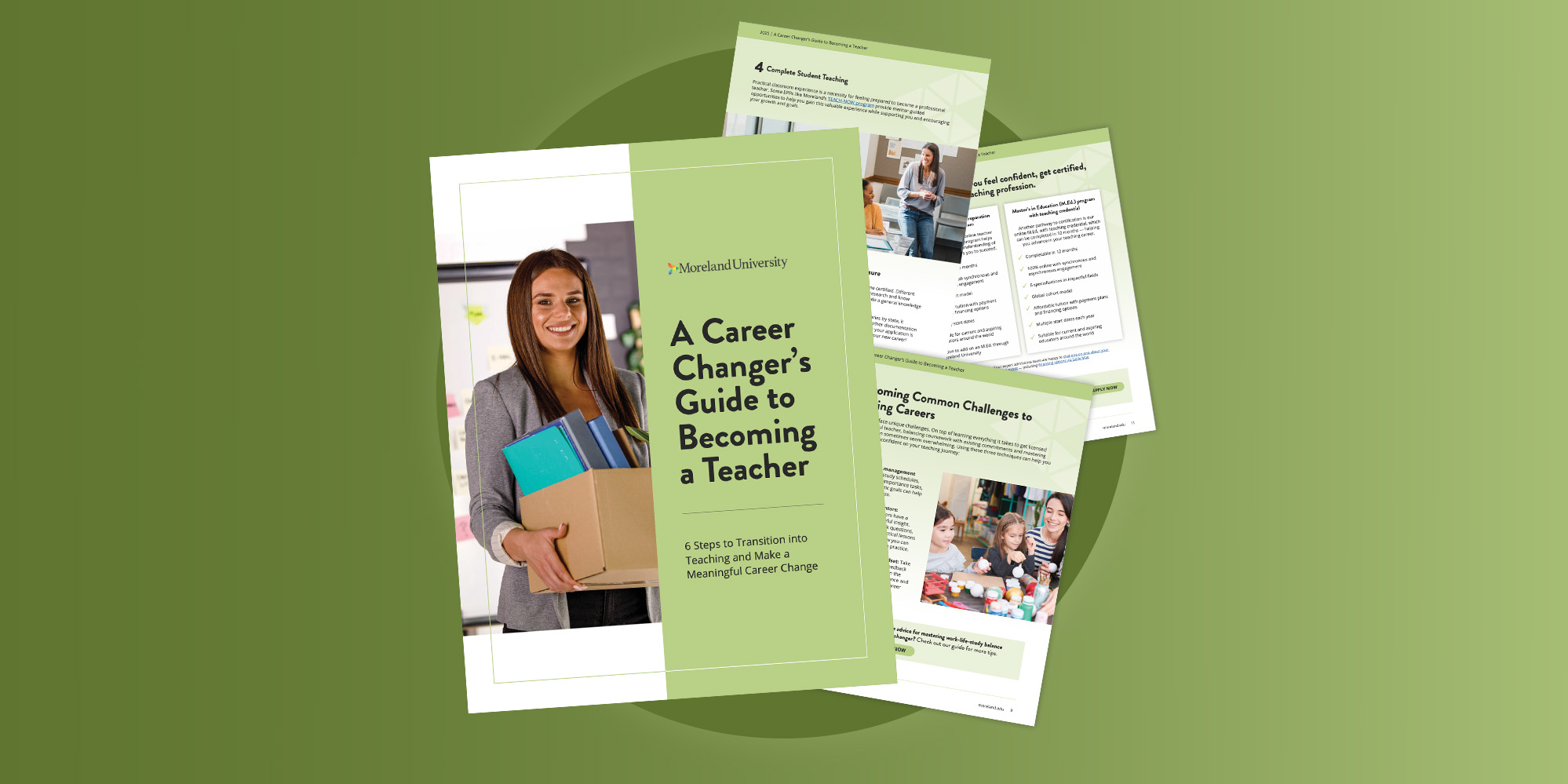
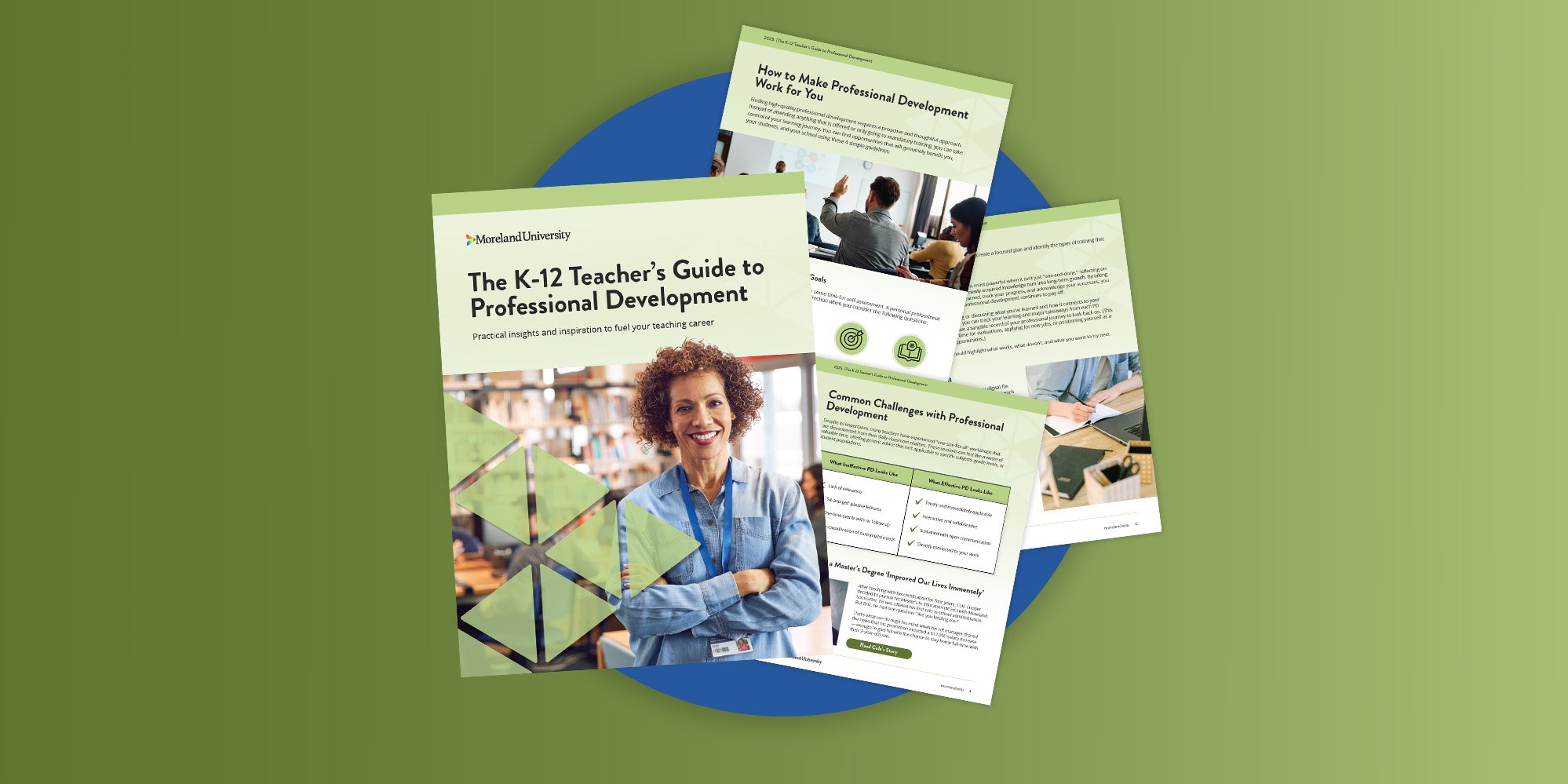


Moreland University can help you take your teaching career to the next level.
Whether you’re looking to get professionally certified or earn an M.Ed., our 100% online programs can help.
Complete your no-cost application (it takes less than 15 minutes!).