
.png?width=300&height=74&name=MorelandU-logo-WH-RGB%20(1).png "Moreland University Logo")
Front of the Class Podcast | Feb 5th, 2026
“Go Slow to Go Fast” with 2026 North Dakota Teacher of the Year Frannie Tunseth
In This Episode
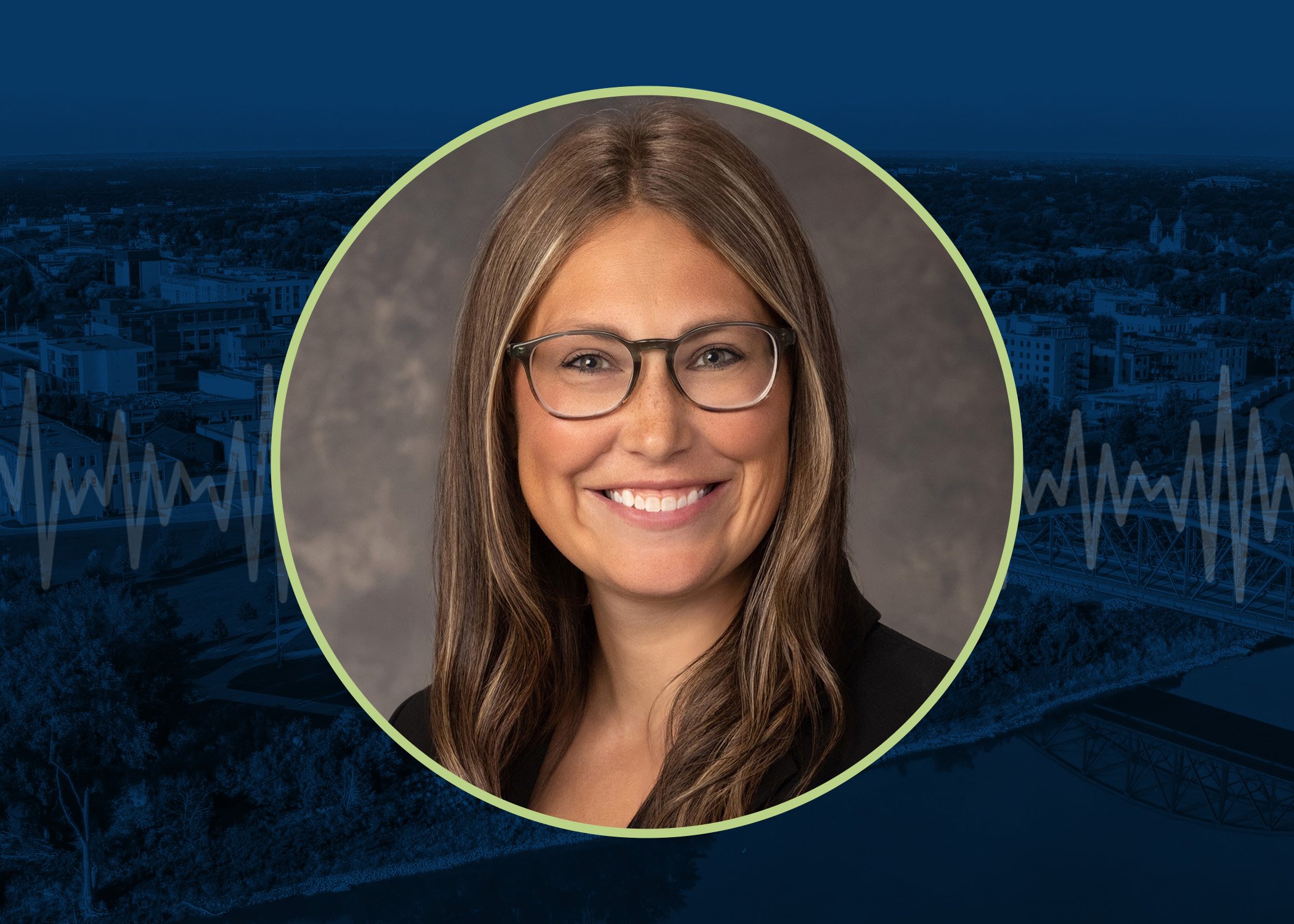
Frannie Tunseth is the 2026 North Dakota Teacher of the Year and a math and reading interventionist serving grades 4-8 in a small rural community. With experience as a kindergarten, first-grade, and fourth-grade teacher — and even as an elementary school principal — she has a unique perspective on what students need to succeed, especially those who arrive in her classroom feeling discouraged or behind.
In this episode, Tunseth shares how she helps students reignite their passion for learning and make academic gains through trust, out-of-the-box writing lessons about early-2000s music, and data-driven instruction. Her insights can help teachers at every level more meaningfully celebrate celebrate academic progress and change the way their students see themselves as learners.
Key Topics Covered
- Setting clear expectations with families and students
- Using shared experiences to make learning meaningful
- The role of data and a-ha moments in measuring success
- How a “go slow to go fast” approach can drive significant results
- Using strong relationships to build student confidence and willingness to engage
- And more!
Episode Guest
Listen Now




Episode Transcript
Please note, this transcript is generated by AI and may include some errors.
Spencer Payne: Okay, here we are live again with another episode of front of the class real stories from real educators our real educator today Frannie tons of and Frannie how do you introduce yourself to other educators? What do you teach? Where do you teach? How long you've been doing it fun facts? How do you introduce yourself?
Frannie Tunseth: Yeah. Well, I'm Frannie Tunseth that I'm really excited to be here today. So thanks so much for having me on. I am a current in-service teacher. I currently work as an interventionist at the May-Port CG School District, which is a really small rural school in Mayville, North Dakota. I've kind of bebopped all around. I've worked in urban schools. I've worked in urban schools. And I've been in this job business for 12 years, which is really hard to believe. I've done a little bit of everything too. I've taught in the classroom as a kindergarten teacher, a first grade teacher.
Gosh, even been up in a fourth grade teacher I taught, or I was at Gosh, I was an elementary principal for a few years. And then this job opened up in my home, rural town and community. And it just kind of was a perfect fit. can kind of take a little bit of all of the things that I love most about education and really work with students who have some at risk or below standard work in reading and math and try and help make learning joyful for them. And so I'm very excited to be here and I love, love, love serving students in my hometown.
Spencer Payne: So for those who might be thinking, being a teacher means I'm going to teach the same grade and the same thing over and over again, based on your example, that's obviously not true. You've been big city, small city, principal, teacher, interventionist. Can you share a little bit about, for those who maybe are not familiar with interventionist, what does that mean? Who sees you? What does a typical day look like for you?
Frannie Tunseth: Yeah. Mm hmm. Absolutely. So I always say that I have a privilege, but also a responsibility of working with students who come in with some lagging skills. So typically reading and math are a little bit difficult. They have some either grade level content that they aren't able to successfully work through. Sometimes I work with students who are three or four years behind grade level in reading and math. And so my job is really to try and number one, figure out where what can we work on? How can we help support them? But then also, how can we make learning or learning joyful for them again?
I think that the students that come to me often sometimes have some really big feelings about school and they aren't always positive experiences that they've had. And so I always really want to take the time to make sure that we reignite that passion for learning through building relationships and talking about how they can be successful and trying to figure out like, how can we make learning an area where they're succeeding again? And then what does that look like? And I think it really looks like how helping students feel safe and valued and really getting them genuinely interested in content. And so currently what that looks like, I'm sorry, Spencer.
Spencer Payne: I would say, how do you do that? Like, let's say there's a child who comes to you and they're three years behind in reading, school's not fun, everyone tells me I'm not good enough, I don't like reading, no one's ever made it fun. Like, doesn't sound like the easiest thing in the world to be like, no, it's gonna be fun within a month. I probably, like, how do you do that?
Frannie Tunseth: I know. Yeah. Well, a couple of things. Number one, I think it comes down to getting to know students as people before students. And so I take a lot of time at the beginning of the school year to really make sure that I understand who my students are before I even learn about who they are as learners. I want to know their likes, their dislikes, their personalities, their interests, so that I can then use those things in our lessons. And then I think it's really making it bite size and manageable for them through really exciting ways.
And so one specific example that I have is, and I'm gonna talk a little bit about some work that we did today, but we're currently working on some writing standards with some of my students and writing is something that a lot of them don't like to do at all. It's hard, right? We're trying to figure out like how to spell words and how much content we have to have there. And the grade level expectations are really intimidating. And so something we started doing this year when we're looking at opinion writing is we took, I'm like, we are doing throwback Thursdays every single week.
And so I bring in a bunch of old music from when I was a middle schooler and we listened to those and like today was Lizzie McGuire's, what dreams are made of. And we watched the video and the kids were like, this is the most cringe thing I've ever seen in my life. And they're laughing at me as I'm bebopping around. But I think that taking these engagement opportunities to get students excited and then really trying to tap into their learning potential is what makes it fun for them, right? Like I want students at the end of the day, Spencer, they're not gonna leave my classroom and remember when I taught them how to use transition boards, but they are gonna remember the memories that create create together And so I just try to figure out like how can we tap into their potential in ways? That's gonna make it exciting and joyful for them and then help them feel success every single day and it's gonna be different, right? It's not always looking at just the content standards or the data It's looking at who they are as human beings and did they offer to raise their hand and share an idea for the first time and we're gonna celebrate the heck out of that
Spencer Payne: there's a few details I want to dig into there, but first you talked about helping kids get better at writing and then watching videos. How in the world are you making the transition of watching music videos to help with writing? Like if, if I'm listening, I might be like, wait, how would I didn't hear anything about writing? heard watching music videos from your middle school days. Like how does that transition into helping them write?
Frannie Tunseth: Mm-hmm. Mm-hmm.
Yeah. Well, I think it gives them real world examples, right? So like we are watching these music videos or sometimes just looking at the lyrics and then we're responding to it in a way that talks about how did it make us feel and using that opinion writing piece. And so we talk about topic sentences, like how can somebody who's reading your writing and they have no idea what the content is or what you even did, how can they know how you feel about that? So it's talking about like good topic sentences and going into examples and giving reasoning and finding ways to like make your writing argumentative and persuasive and having somebody go, gosh, I actually want to go listen to that song or I'm going to never listen to that song again. But I think it's finding really out of the box ways to get them to tie into it. Right.
And so, yeah, it's a very untypical thing to do. It'll be like, we're to listen to some songs from the early 2000s and then think about how we're going to write about those. But I think it's one of those things that's going to make learning really stick for kids. And it makes it meaningful because they have an authentic task. Right. Like we're not just sitting to talk about your favorite food. we are having a direct conversation about something we just did and something that we just experienced as a group. So we're having shared meaning behind it. And then we're taking it a step forward and to really talk about some of those writing standards in ways that are directly applicable to what we're doing in the classroom.
Spencer Payne: So how do you translate that to a successful writing exercise that day? You mentioned a little bit of like, we watched this music video and now there might be, hey, now write three sentences. How did you make you feel? How did this make you feel? Just a couple of very quick ones, specific examples of like, what are some of the specific questions you're asking? And then what's the dialogue that you're fostering in class to help them with like, you've you want to know how to spell that word or like there's you mentioned spelling is an issue. So how does that music video and how does that make you feel translate into maybe them writing five sentences miss misspelling a word asking you like what happens next?
Frannie Tunseth: Mm-hmm. Well, I think what it comes down to is having a safe environment, right? Like we are, we talk a lot about making and taking risks together. And so, yep, after we listen to our throwback Thursdays, the prompt is always the same. Like you're going to respond and tell me how you feel about it. And so there's a lot of scaffolding that has had to happen all the way back in August, where in August we were simply talking about topic sentences. I want you in one sentence to tell me how it made you feel. And so once that was really solidified and my students were showing me four out of five times that they were having success with this, and it was like, hey, we're going to take in and we're going to have...
One example, they can tell me why you feel that way. How can you back that up with reasoning? Because that's a life skill. Being able to engage in a conversation back and forth, whether it's in writing or it's just in a conversation, being able to give reasons to support your claims is really important. And so we talk a lot about how, like, how can you make these claims very persuasive, but also rooted in truth? And so we have those different conversations. And after it was like we added one, then it was like, that's a really great argument.
Now, how can you explain that argument? And so there's been so much scaffolding that has had to happen throughout every single week with this group of students. And we're finally at a spot now where we can have, like you said, like those five sentences where we have a great topic sentence and we have, you know, we're citing examples from the music and then we're explaining it and then we're actually even ending with some sort of closing sentence. But those other mechanics are happening so organically because as we're walking around, we're having conversations, they're bouncing ideas off each other. You know, in my classroom, it's very common for a student to like...
just yell out and say, hey, how do I spell this word? And other students are helping them or raising their hand as I'm walking around and having those conversations as well. I think that it really goes back to like taking the time at the beginning of the school year to create those expectations and those boundaries of this is a safe space and we're here to support each other and take risks. And we're not going to get it right all the time. But what we are going to get right is the way that we treat each other and the way that we're going to take risks together. And those are the things that are going to pay off. And so I think that, know, especially when you're working in really small groups, Spencer, of like four or five kids. Those are things that just happen very organically, but you're also able to really make sure you're tapping into each student's individual needs because you're working in such a small group.
Spencer Payne: And let's go back to that scaffolding now at the beginning of the year, because another way I could see someone potentially trying to poke holes in this is like, wait, wait, these kids are behind sometimes one, two, three, four years in reading, and you're going to take the whole first month and you're not even going to try to progress. You're just going to, you're just going to like get to know the kids. Like, isn't that, doesn't that sound backwards? So can you, can you help explain a little bit more of how did you stumble on this and what's the importance of building that kind of foundation of concrete that maybe allows you to build the house that much faster later, but because you took the time in that first month to really build that foundation upon which you could then go faster later.
Frannie Tunseth: Absolutely. Well, a couple of things. I have said Spencer since I used to teach kindergarten, right? And it was a really formative year in my own experience because I student taught in fifth grade and then I went down to kindergarten. I was like these kids aren't able to do anything by themselves, right? And so one of my models became like we have to go slow to go fast. You have to take the time to do things right before you're just throwing things at kids. But I think most importantly, when the students take, when I take the time at the beginning of the year to set the expectations to get to know students, they know that I sincerely care about them beyond the classroom. And I think that that trust develops, which in turn makes them more willing to take academic risks or to accept any feedback that I'm giving, which is sometimes not always great feedback, right? Or to really push them through challenges. And so I think those strong relationships don't make, if we don't take the time for that, students aren't gonna feel supported.
And then, you know, when they feel supported, they're gonna directly impact their growth or their confidence or really just their willingness to engage in the classroom. And so I would argue back that if you're not gonna take the time to do those things, we're not gonna see the output long term. And so yeah, you know what? In my classroom, we probably do go a little bit slower, but also there's a reason why they're coming to me and I need to figure out where are these gaps and how can I help fill those before just like pushing a lot on them. And also, like I had said, these students, once they're sometimes come to me and school hasn't been a place where they've experienced a lot of success.
And I want to make sure in my classroom that they feel that success, which means sometimes taking the time to make sure that they have those skills really solidified before we move on. And so I think that those are just really important things to be able to do.
Spencer Payne: Any particular examples you can share of building that trust where maybe you were even pushed to the limit of like, feel like I've given this kid everything, every reason to trust me and they're still not there yet. I'm gonna keep trying, because again, sometimes these kids, they haven't had a great experience in school. They might not believe the things that you're doing in week one or week two of like, why are you getting to know me? So like any examples that you might be able to share of like really impactful, proud moments of breakthroughs of building that trust kind of early in a school year, especially if you have kids who maybe are especially resistant. And then especially part two to that, any of those breakthroughs that you can then share like, holy cow, their development was incredible after maybe we got there, after maybe I wanted to give up. And any particular examples that come to mind that you might be able to share on that.
Frannie Tunseth: I think the first example that comes to mind Spencer is actually a little kid that I had in kindergarten and he came to me and like you had said like not only a school sometimes not necessarily a fun place because learning is hard but I think we have to remember that sometimes these kids come to us a lot of stuff in their backpack right like there can be trauma abuse just really big things that had happened and so I had a little kid that came to me that quite frankly did not like me a whole lot
And one time I remember like we were having free play time and he came up and had drawn a picture of him killing me. Like it was very severe. Like he did not like me a whole lot at all. And I remember going into the bathroom like bawling because I so badly wanted to make a connection with this kid. And I'm like, you know what? I actually need to back off a little bit because the methods that I'm trying is not working. Right. And so sometimes I think it's going on their terms. And what I really found with this particular student is with the more that I backed off, the more he was actually like, actually, like I want this relationship.
And so it was really reading that student and figuring out like how does he want to be approached? And for this particular student, it was more so in those quiet, subtle ways. Like it was a gentle, like as I was walking around, giving them a little like thumbs up and a wink or walking around and just giving them the quiet praise. And pretty soon we were sharing ideas and something that was really hard for the student was actually writing. You know, when they come to you in kindergarten, not knowing their letters or their ABCs and all of a sudden you're expected by the end of the year to write like four sentence writing.
I think it was so remarkable because by January, this student was finally able to put sentences together. And I'll never forget, he came to me one day during independent time and he wrote, I'm a writer. And just seeing that solidify that he felt and he saw himself as a writer was so impactful for me. But I think I learned a lot from working with that little guy that sometimes we need to back off and let students go at their own pace too. And as we're trying to form relationships with them you know, sometimes we can have the best of intentions. I so badly wanted to get to know the student, but he needed to know first that I was going to stick around. And I think sometimes they push those boundaries to see and like, how far can I get away before this person is going to give up on me and like just not try anymore. And so I think some of that is that perseverance and that consistency that I'm going to show up every single day. And at the end of the day, I'm the adult and I'm going to maintain my calm, even in those moments that aren't maybe very calm.
Spencer Payne: that's a great example. Thank you very much for sharing that specific example. as a side note, I have a three year old. He has just started becoming a three year old where he likes to say, I'm not going to do that. And he started, there's a little bit of the pushing back right now. And, on your point of, you know, how I was raised, many of us maybe were raised before was, well, you know, if he escalates, I'm going to escalate cause I'm the adult and you're supposed to listen to me.
Frannie Tunseth: Yeah. Yeah. Yeah. Mm-hmm. Mm-hmm. Yes.
Spencer Payne: And holy cow, did that not work at all. All it was, was just more firepower going up and forth, back and forth. And on this note of like, you you're trying a bunch of things and you're trying to figure out ultimately what works, not what's supposed to work or what people are telling you to do. But like, you're like, ultimately the goal here is like, how do I reach this child and develop trust and help them? I don't care how I don't, I don't know that I care how it happens. And sometimes it's counterintuitive. And right now it's like, actually the thing that's seems to be working. So I'm very slowing down.
I'm calming myself down. Like, is that how a good boy talks to their mom? No, you already know the answers. No, right? And like all of sudden I'm like, my gosh, this is like, this is actually helping diffuse the situation. Like, okay, like I'm after something that works here and it's not, it's sometimes it's counterintuitive. Sometimes you try a couple of things, but ultimately it's like, well, what is ultimately getting the result to build the trust, help the child learn and help them get to a better place?
Frannie Tunseth: And I think piggybacking off of that too, Spencer, you know, I've been in education for a long time, 12 years, I've seen a whole lot of kids and every kid is a little bit different, right? And so you have a bag of skills that maybe work really well with one student and you can try that same bag of tricks with somebody else and it's not gonna work at all. So I think that's why it's so important too to like take the time to get to know these students because different things are gonna make them tick. And I have four children of my own too. And it's so different how even children born in the same household, like my four kids are so different. And even things that I try to work with my oldest on.
Spencer Payne: Yeah, yeah.
Frannie Tunseth: You know, I can do the same thing with my youngest and it's not gonna work. And so I think it's just making sure that you get to know those students so you can try and figure it out. And then when something doesn't work, I think it's just that persistence of like, well, I'm gonna throw that one away and I'm gonna try something else, right? Like it's just never giving up on these kids.
Spencer Payne: 100%. And so thank you for sharing that one specific example. And now I'd love to zoom out for a second of over being this interventionist for multiple years. Now it's more than just one child every year. Now you've got a, you know, again, small town. So you might have five kids a year, seven kids a year, four. It sounds like you're kind of alluding to how many kids you're kind of tackling at once. But over the course of multiple years, now you might have 20. Like on some level, how do you judge for yourself the results of 20?
Right? Cause anyone can pick like that one thing I did work for that one time, but leave out the 15 it didn't work for, but at a macro level, like how do you kind of judge success quote unquote for yourself, um, over all of the kids who have kind of come through your program as an interventionist? what are, what are, I'd love to actually, if you want to go and brag, what are some of the results that you've seen? And then I'd love to dig into again, a little bit more of the details of how, how'd you get there?
Frannie Tunseth: Right. Well, I think a couple of things, know, Spencer, in my role too, I also am the MTSS coordinator. So like I look at data for a living and I really love data. Like I love numbers and I love being able to look and see like, oh my gosh, like we have growth and we've gained. You know, I think of this year, my math group came in at a 2.1 grade level, what you think second grade, first month. And I'm working with sixth graders like we're significantly behind. And we've been in school for three months and Spencer, we've made like 1.4 months.
Spencer Payne: Wow. Yeah.
Frannie Tunseth: growth, like one whole year, four months, like we made some significant growth. But I also am a firm believer that at the end of the year, I have to look at both numbers and the moments, right? And like that can sound kind of corny, but I think that for some of our students, they might not make a lot of growth, but it's looking at those like the soft skills too. You know, I care about the measurable growth. I care about the reading progress and the writing scores and the math scores and how far students are moving from where they started.
And while that data matters, also, like, it helps me guide my instruction, right? It helps me know, like, where I need to target next and which individual students I need to work maybe more with or give them more intensity or frequency. But I think, honestly, what matters just as much, maybe not even more, is it's stuff that, the spreadsheet doesn't show us. And it's like, are students taking risks? And are they beginning to see themselves as capable learners? And did they find joy in reading? And are they going to pick up a book over the summer because they finally feel like they can do it? You know, I think of students that finally stop saying like, I can't do this, right? And they're starting to like take those risks. And for me, I think a successful school year is one where students are growing academically, but also emotionally. I think where relationships are built, like you talked about, these are students that I do see consistently every single year. I also in my rural town, these are students that I'm gonna be in their lives for a very long time. They're the students that babysit my kids or that I see at the local park or the pool or the grocery store. Like we are in each other's lives.
And so, I really think that I want students to leave my classroom believing in themselves more than when they entered. And so if students are leaving believing in themselves, I'm gonna feel very successful, but I also very much care about the numbers and making sure that we are trying to fill in those gaps too, because at the end of the world, these kids, or at the end of like middle school, high school, these kids are going off into our community and off into our world. And I want them to be able to be successful with the skills that we're providing them as well too.
Spencer Payne: Yeah, well, congratulations on 1.5, almost 1.5 grade levels of advancement in three months. Like, that's incredible.
Frannie Tunseth: Isn't that crazy? I'm so proud of them. mean, Spencer, we threw a party. Like I had teacher goosebumps. They always laugh at me because they can tell like, you know, when I get really excited, like I was like, my gosh, my goosebumps are coming. And I like, I had some tears and like, I just told them like their perseverance, right? Like you have to think of like, these are kids that are working their absolute tails off to make that amount of growth in three and a half months of school. And it's like, we called the principal down and I didn't tell him it was a good thing. was like, I need you in my room right now. So he came down, think, thinking like we had to do a room clear, you know, like he was like sweating, he was like out of breath, he's like, what's up? And I'm like, no, no, it's good stuff. You have to look at our math data. And so they were so excited to share that with him too.
And just to celebrate that moment that they are just working so hard. And so I think obviously, I think the sustainability of that too, of like when you get the ball rolling and when students start to see that growth, I think it becomes easier to then be like, now we're gonna try and do this and set some really hefty goals. Because when I start feeling that success, it really helps the momentum grow of like, this is what we're working towards and you're able to see the growth.
Spencer Payne: Yeah. Um, and on your point of kind of data with story or the feeling or the, the event that's hard to characterize in data. Um, even going all the way up to Jeff Bezos, CEO of Amazon, maybe the richest man in world. I don't want to, one of them, I don't know. There's a famous quote of him of like, as he's asking. When he, when he was CEO, as he's asking people, how's this, how's that right? When the data and the anecdotes don't match, I'm going to go trust the anecdotes.
And there was an example of something like, Hey, we're our, our, you when people call our customer service, whatever, like they answer within 13 seconds on that, or there was something, there was something like this that he was sharing. So he pops his cell phone calls and he's like, I'm on hold for two minutes. I don't care what your data says. Like it's obviously wrong. and so that's, that's where you like, you don't want to be all in on just data. You don't want to be all in on just feelings and stories, but there's, that's where they, kind of meld of like you gotta have a little bit of both to kind of figure out like, hey, how are we doing and how are these kids performing? And one thing you mentioned there was around, you know, if a child, especially maybe early in the school year says, I can't do that, or spell something wrong and maybe in the class before that, maybe that got made fun of. How do you set a new tone, again, on that building that foundation in what's expected in your group? How do you set a new tone that...
Frannie Tunseth: Right. Right. Mm-hmm.
Spencer Payne: Hey, we don't say I can't. Or when they finally do something that they said they couldn't do, how do you celebrate that? Or when someone spells something wrong and a child is maybe making fun, how do you reset the stage if that's not how we're gonna do that here? What are some examples of how you kind of set that stage to create that space where they can fail, where you celebrate when they thought they'd fail, but then they win? What are some examples of how you bring that to life?
Frannie Tunseth: Yeah, I had a student the other day I was talking to and I had been, during our collaboration time, we had just had a conversation that a student was really, really struggling in math. And just saying, like some of those self-deprecating things, right? And so I think that whenever those things come up, I think number one, it has to be handled privately, right? Like you're not gonna call attention to it in the entire class. And so I had really good relationship with the student. I was asked if I would talk to him, so I brought him out and we were sitting down. I was like, hey, tell me about this. Like this makes me feel really bad because it's not how I view you.
Can we talk about this? And he just said, like, it's really hard. Like, it comes so much easier for my friends. And I just said, you're right. I think it's validating, right? Like, we need to validate that these things are true, and it's how they feel, and how students feel is OK to be validated. But then I think it's challenging them, right? I so what are we going to do about it? Like, you're right. Math is hard. But how can you and I work together to make it a little less hard? Because I know that you can do this.
And so there's a little bit of challenge there too. And I think it goes back to knowing your kids, right? For some kids that wouldn't work at all. That challenge is instantly, their walls are gonna come up and they're not gonna like it. But for this specific student, he took it head on and he was like, you're right. And so we come up with a plan and he comes in every day during seventh period and we work for 15 minutes, just me and him one-on-one. And he's starting to see some success. So I think number one, we're talking to those kids, I think there's danger sometimes Spencer and like trying to make things all rosy, posy and like, oh, everything's okay.
Spencer Payne: Yes.
Frannie Tunseth: That's not true. Like life is hard for some of these kids. Learning is hard for some of these kids. And I think it's important to name that, but then to give them the supports to make it a little less hard. Does that make sense?
Spencer Payne: I mean, a hundred percent. and thank you for even just saying, sharing with that student of like, you're right. It does seem like it comes a little bit harder than you, or to you than maybe it does to your friends. I think, I think in many of these instances, sometimes people don't want to have the uncomfortable conversation, or put in that extra work for 15 minutes a day on, on seventh period that you're willing to put in to go like, put in the reps needed to get to where they want to be and where you feel like they can be.
Frannie Tunseth: Ahem.
Mm-hmm. Mm-hmm. Yep.
Spencer Payne: And they just say, no, that's you're you're fine. Like that's, I feel like that is one of the most well-intentioned, but actually in reality, like is one of the most poisonous things you can do to people is just, you're, no, you're wrong. can like, sure. Yeah. If you feel like it is harder, maybe it is harder, but that doesn't mean we can't do it. I'm with you. I'm with you. Let's, let's go get after it.
Frannie Tunseth: Right. I think too, if we're going to have those conversations, Spencer, we need to make sure we're following through on the back end too, right? Like if we're going to have these conversations with students and if we're going to talk to them and say, yes, this is hard or, hey, I don't like the way that you just talked to this friend or whatever the conversation is going to be, you have to be willing on the back end to figure out how are we going to do to fix it, whether that's having a one-on-one conversation or giving them the additional time that they need.
Spencer Payne: Yes, 100%.
Frannie Tunseth: I do think teachers are very well-intentioned people, right? We have so much on our plate. Like, I will be the first one to admit it. Like, I worry about my own bandwidth and like, gosh, when I go home at the end of the day as a mom and I put my mom hat on, like, do I have enough emotional bandwidth to continue on the day? Because we take all of these things home and we so sincerely care about our kids. And yet, we're in this profession because we want to make a difference and we want to make life better for these kids. And so I think that it's thinking about, okay, what can I take off my plate then to make sure that I'm providing those opportunities for these students? And so yeah, I think it's just by having those conversations and validating how they're feeling, but also through having high expectations. Like just because my students come to me and they have some legging skills doesn't mean that we do easy stuff all day. We work hard and having those high expectations of how are we gonna treat ourselves and how are we gonna treat each other, our conversations that happen every single day organically.
And I think it's not letting them spiral out of control, right? Sometimes like you said, we don't wanna have the conversations because it's uncomfortable or because we don't have the time or whatever it is. But if you don't stop and have those conversations in the moment, I think we're just pushing the can down the road for bigger problems to arise.
Spencer Payne: Agreed. And on that note of setting that those expectations high with not just your students, but also maybe with their parents. Can you share a little bit more about how you go about doing that? Because if I'm listening, I might be thinking like, OK, well, in my first month, I'm going to tell these kids that are four grades behind math that like I have high expectations. And by the end of the year, you're going to be on grade level or like that's the expectations I have. And if I'm the student, I'd be like, you're out of your mind. So there's a little bit of an art here of like, do you go about kind of setting those expectations, not just with the students, but also with their parents that, you you're gonna step back at the beginning of the year and really get to know them. Your expectations though.
Frannie Tunseth: Yeah. know them. Your expectations though. Sorry Spencer I lost my earbud it went flying.
Spencer Payne: you're all good. Good. Good. Because we're just so excited and emphatic about how we're talking about this. Yeah. Can you share a little bit more about how you thread that needle and kind of set those high expectations with the students and with their parents, especially when that sometimes if you set that bar too high, it can feel so unachievable that kids kind of don't even bother trying. So how do you kind of thread that balance for yourself and your students and your teachers? Excuse me, and their parents.
Frannie Tunseth: I know, I was so excited about it. Yes.
Mm-hmm. Well, I want to talk about parents first, then I'll go into students. You know, I worked for an incredible man by the name of Patrick Maralton, Minnesota, which was such a full moment. I have to tell you about this. So he was actually my principal when I was in fifth grade. It was his very first year there. And then when I went to the University of North Dakota to get my undergrad degree, he was my intro education teacher. And then I had the opportunity to go and work for them for a year. And it was just this really like meta moment of like, this is so cool. I've seen you in so many different avenues.
But he has an expectation of all of his teachers that they call every single parent in their classroom the first few weeks of school to start building positive relationships with them early. And that's something that I've consistently done throughout all of my years of education. I think it's really important because when you are able to share something really personal and unique about their student and let them know that like, I'm very honored that I get to be a part of your child's life and, you know, really start that relationship off early and, you know, really wonderfully. I think that it's such a simple practice, but it really sets the tone and that trust from the very beginning. And I'm really often surprised that actually more teachers don't do this because I think it makes a really big difference in how families and students engage throughout the year. And I think that those early connections really help when challenges arise later. Parents already know that I care about their students. They know that I'm going to support their students both at school and in the community too.
And so I think that first of all, having positive interactions with parents early and often is essential no matter what grade you teach. But specifically in my intervention role where school hasn't always been very positive for kids and by proxy for their parents too. And so that's the first thing I do. The second thing I do is I talk to them very honestly and openly about where their child is at. You I had some conversations this year with some sixth grade parents that weren't very great because they were hearing for the first time really how low their student was. Yeah.
Spencer Payne: Wait, wait, I'm sorry. They're hearing their child's sixth grade and they're hearing maybe for the first time that their math score might be the equivalent of second grade. They don't know that until now.
Frannie Tunseth: I think they have heard, the conversation that I've had, Spencer, and not to put the blame on anybody, right? Those are uncomfortable conversations to have. The conversations that I heard from parents were like, we knew they were low, we didn't know it was this low, right? And so maybe it's like, hey, my student has had intervention in the past, hey, I my student has had a level one on the NDA plus assessment, whatever it is, but they've never been told, no, your child is learning at a second grade level as a sixth grader, right? Or as a seventh grader, or whatever it is. And so I think that
Spencer Payne: Yeah, no doubt.
I see, yeah.
Frannie Tunseth: for these parents, I think it was by having those really open and honest conversations and sharing like, is where your student's at, and here's how we're gonna help try support them. And just laying that off very clearly, you our parent teacher conferences weren't set until like the end of October, and I talked to my principal and said like, I feel like I need these parents in earlier. I want them in at the end of September or early October to really give them a well-rounded view of where we're at with all of our students.
And so they were just able to have that information. I think that there's power in information. I think that it helps us create a plan. It helps us create a partnership. Because I also tell parents, like, I can't do this all alone at school. I'm going to need some help at home. And here's what you can do at home, right? Here are the resources that you can use. I'll continue to send resources home. We need to have a partnership. And so I think with parents, it's really, you have to have a really good partnership. You have to have clear communication. But you also have to celebrate the great things. And so like, when we had just done our reassessment and we had students that were making 1.5 grade level leaps. I we stopped everything in my classroom. And like when I said we partied, like we called parents at work and we're like, we are sharing with you, like your child made this amount of growth. And I think it's just taking those opportunities. It just really makes a difference, right?
Like, and I think of as a mom too, like I, as a mom, like my whole idea of education has changed. When you become a mom and you realize like how precious your children are, like you want them to be valued as people and you want them to be supported and so I think it's really changed who I am as a teacher. But yeah, we stop and we celebrate everything and I think for children, I think it's really taking it in bite-sized pieces. I'm not talking to a seventh grader and saying, hey, by the end of the year, you're gonna be reading at grade level expectations when you're four or five years above. It's, let's see if we can get five months worth of growth. Let's see if we can get six months worth of growth. And then when you do that, we celebrate it and then we make another very achievable goal. I think it's taking it bite-sized pieces.
Because like you said, Spencer, like, yeah, if I'm going to have those conversations with people, it's going to be like, holy cow, it's never going to happen. And you're going to have them disengage and shut down before you even start. So manageable break size, bite size pieces that you can take off a little bit at a time. And once you start having that success and you're celebrating it, I think that then, like I said, you know, the ball gets going rolling and it gets more exciting, but I think nothing's going to happen if you don't have a positive relationship.
Spencer Payne: And I'd like to believe that out there right now, one of these parents or maybe your principal is sharing a story of like, you know, usually when I get a call from school during the day, it's because bad stuff happened. Or when a teacher is like, you need to come to my room right now. It's always because bad stuff happens, except for Franny. I got that one call. I got that one call at work from school and was like, congratulations, this is what your child did.
Or when your principal comes in, like, look what our students just did. That's one of those things that a lot of people don't necessarily, sometimes it can feel, I don't know, braggy to like celebrate something like that. But I bet every single one of those people remembers that phone call more than probably every other phone call they've ever gotten from school in the last five years because it was unexpected and it was celebrating a win.
Frannie Tunseth: Gosh.
I sure hope so. You Mel Brown, I was just listening to a podcast the other day and she was talking about how you're right. Like we can share things about ourselves and it feels kind of braggie or boastful and it feels really uncomfortable. But if we're not going to do it, who is? And I think that there's some truth to that. And so like, I mean, I myself have a really hard time with it, but I will break the heck out of my kids and the way that they work and the progress that they make and making them feel good about themselves. then like, you know, like, yeah, we're going to go and we're going to tell everybody because they work so hard and I want them to be proud of themselves. I think at the end of the day, I want them to feel that pride. That sense of like, worked hard, I achieved a goal, and now I want to set another one. And I think the more that we celebrate it, I think the more intuitive it's going to become too.
Spencer Payne: Yes, yes.
Well, thank you for doing that. And with all these years in the classroom, principal, all in the wide range that you've had in education so far in your decade plus in this profession, I'm to step back and hear some stories. Any wildest, craziest, I can't believe that happened. I can't believe they said that. It could be funny. It could be wild. It could be, again, a proud moment. Any stories that strike you that are just like, still can't believe that happened. Or I still laugh at that. Or I still smile at that. Or I'm still like, I put my head down in shame because of that. Any wild, crazy stories that you can share.
Frannie Tunseth: Spencer, there's so many of them. I think that I have learned in education to never expect or unexpected anything, right? Things just happen all the time. Not in my current school, but I was asked out by a middle schooler in one of my old schools. And then he was so disappointed when I said no. And I said, well, I'm actually married and the age difference not gonna work. And he's like, well, I kinda like older women. And I was like, I appreciate that, buddy. I mean, the wildest things. You know what, you gotta give it to the kid.
Spencer Payne: Gosh, persistent.
Frannie Tunseth: You know one time as a kindergarten teacher I was teaching and all of a sudden we could like hear this like really strange noise and my parent my classroom and I were going back like what is this and could never figure it out and At the end of the day a student came up and was like I brought my pet frog today for show-and-tell Can I share it and I was like you what and so went to the backpack and this poor frog was in the backpack all day long and then the frog escaped and my pair was terrified and up on the counter and the little girl's crying because her frog has escaped and we're all like on this frog adventure. And I mean, the most outlandish things happen in education. But I think that's what makes it so great too, is that like you never know what's going to come up in your day. And like you just have to be willing to like smile and laugh through it and just keep on going.
Spencer Payne: And thank you for sharing those. And then for those who might be thinking, okay, I've heard a bunch of positive stuff, but sometimes this is just hard. How do you deal with some of those hard times or those, I don't know if I have the energy for this today, or how do you kind of tackle when you're feeling thin, tough day, a student is pushing you, it's October and you still haven't broke through and you still can tell they're not quite trusting you yet.
Frannie Tunseth: yeah. It is hard.
Spencer Payne: Any tips or things that you can share with others of how do you go back and kind of re-energize, refill your own cup? What are some tips or tricks that you might do when the going just gets tough?
Frannie Tunseth: Well, I think number one, teaching isn't a silo. And think sometimes we can get into our classrooms and it's like you just get going on the grind and you can forget that it's not a silo. So I think it's you need to have your people. You need to have your people that you can call, the people in your school that you can go to and you can share a laugh with or you can share the really hard things with and then ask for support. know, Spencer, in my career, I've lost students, right? Like I've had students that are here one day and have passed away. And that's so hard as a teacher, you don't expect that to happen.
I've had students that have came to me and shared struggles of like abuse and trauma or self harm and it's really hard because you sincerely care about these kids. And so I think my number one advice, especially for need teachers is you need to take care of you too because you can take a lot on and like you feel so deeply about these students that you can go home and it can be really hard to like take off the teaching hat and be a human being. But you have to take care of you too because you can't pour for an empty cup.
So I think it's finding your outlet, finding what makes you and brings you joy. And for me, it's my kids, right? Like I'm a mom, I have a very full life, don't have a lot of downtime for a lot of things, but like I love to go to their events. I love to just sit down at the end of the day and snuggle them or read them a book or talk with, my husband's also an educator. So I think that really naturally helps that we're able to talk with each other and share the struggles and share the fun things too.
But you need to find your people and you need to do something for fun and you know I try to say to you like you need to find one thing to laugh about every day and whether that is like hey you know what like this lesson totally flopped and I thought it was gonna be so much fun and I'm just gonna laugh about it because we'll come back and we'll try again tomorrow. I think you need to do it and I think you can't take yourself too seriously in this career either.
Spencer Payne: Yep, 100%. And this is going to be a little off the wall, but snacks. Sometimes it's hard to get a quick bite during the day. What are your go-to snacks during the day?
Frannie Tunseth: Yeah. Oh my gosh. Oh gosh, you know what? I have a sweet and salty tooth and so like I love nothing more than like a Reese's Peanut Butter Cup. I love a bag of chips. I live off of Coke. You know, some water when I can down it down too. But yeah, I mean there are many days where I don't get to eat during the day and it's just like filling whatever I can as I'm going and continuing to go and the kids always laugh. They can tell they're like, oh, it must have been a late night for you when I'm like drinking Coke at like 8:30 in the morning, right?
And I just kind of laugh about it. I'm also going back to school right now, Spencer, for my PhD degree and teaching a little bit at a college too. And so, you know, I have lots of hats and it's just trying to figure out like, how can I do it all but maximize my time? We all have 24 hours in a day, but it's how do you use it and maximize it and just try and be creative with it. And sometimes that means I'm up a little bit later and I'm downing some caffeine very early in the morning and the kids are laughing at me.
Spencer Payne: And maybe it's finishing that PhD program, but what if anything are you really looking forward to over the next three, six, nine, 12 months? What's coming up on the radar that's got you particularly energized?
Frannie Tunseth: Yeah. Yeah.
So I think a couple things. Yes, I'll be so thankful when I'm done with my PhD degree. you know, I always joke that my brother is also in education and he's the only one that I will ever make call me Dr. Tunseth. Everybody else I'll just be frowning to, but I'm also starting in January, I'll be the 2026 North Dakota Teacher of the Year. And so I'm really excited and looking forward to that and looking forward to advocating for teachers. You know, I think one of the things that is kind of placed on my heart right now is there's a lot of really incredible things happening.
There's also lot of incredibly hard things happening. And I think we need to amplify and just give some examples to the people that are making decisions about education, know, lawmakers, legislation, community members, and just letting them know about what's happening in our schools. And so I'm really looking forward to that advocacy piece and just being a voice for educators and really amplifying things that are happening right now.
Spencer Payne: well, big congratulations on both of those teacher of the year and PhD. And I, as an aside, my, my cousin was an educator masters PhD principal. And I just saw her over the holidays and there were a lot of, there were a lot of jokes at the table of, the doctor would like more water, please. There was a lot of those jokes around the table because she's the only one in the family who's got a PhD, right? so there's a lot of those, so you can, you can have a lot of fun with that. At least we did.
Frannie Tunseth: Thank you. Yeah.
For sure, yes.
Spencer Payne: A couple more more quick hitter type questions as we get closer to wrapping up here. But one thing, know, we're for new teachers who might be in their very first year and they might be four months in and thinking, my gosh, what did I get myself into? I didn't know it was gonna be this hard or I didn't know I was gonna have this little time or whatever it might be. What advice might you give to some of those teachers who might really have it and they might be doubting themselves and they might need a little bit of the Frannie positivity foundational experience that you give your students. What advice might you give to some of those teachers who are in that first year who might be kind of questioning themselves right
Frannie Tunseth: Hmm... Uh-huh.
I think my advice for them is keep going and it is hard, right? I think it's important to reaffirm that education is hard. I'll never forget. was a first year teacher and I remember a student in my classroom one day bawling because I'm like, this is so much harder than I ever thought it would be. And my husband, who we weren't even dating at the time, had walked by and he'd come in to ask something and saw I was bawling and like slowly did the like walk out. Like I don't even want to try step into this. And I'm like, wait, I need help. And I'm like, tell me it gets better. And he's like, it does. But like take off the things that don't need to happen.
And I really reflected a lot on that, because I I used to write like Spencer five page newsletters to families, because I wanted them to see all the things we were doing and like, sure, that's a really nice, but is it a need to know thing, right? And so I think it's number one, you have to take care of you. Teaching is hard, but you're going to get through it, find your people, and just make sure that the things on your plate are the things that actually have to be there. And anything that isn't a need to know right now, go ahead and take it off. And I think the other thing is too, is like as teachers, I think a lot of us are perfectionisms.
We're perfectionists and we want everything to be perfect and teaching isn't going to be perfect because it's messy. And we're dealing with students who are so unpredictable and so give yourself grace.
Spencer Payne: How did you approach your masters? When did you get it? Why? What were you hoping that was going to unlock for you and did it?
Frannie Tunseth: Mm-hmm. Mm-hmm. Yeah, I actually, Spencer, I had this very unique opportunity that I know a lot of people don't have, but after I graduated with my bachelor's degree, the University of North Dakota had this incredible program called the Resident Teacher Program, and you had to apply to be a part of it, and there was like a five-step interview process, and I always say it was the most intense interview process of my life. But at the end of it, if you were selected as one of the six teachers, you were a first-year teacher in the district of Grand Forks, North Dakota.
and then you got your masters paid for by the university and you got a small stipend every week or two weeks or whatever it was. So I went back immediately. I got my bachelor's degree. I went and I was a first year teacher who also got their masters in an accelerated one year program. It was an absolute ride. It was so insane. And yet it was the best experience of my life because for me, I went back and I got my masters and I was learning about all of this theory and I was able to go directly into my classroom and practice it all.
I think that my master's is just in elementary education and it was really a well-rounded view of just making sure that I could see education in a different light and make sure that like my practices were aligned with like best practices. You know, I think I'm a lifelong learner. I wouldn't be going back to school for my PhD if I wasn't. I often say I could go to school forever. I just absolutely love learning. And yet I think it's really important that we're learning the things that are most important, right? And so I feel very fortunate that I went back and it really just unlocked that potential of like, golly, we need to make sure that we're up to date with the best practices and that the things that we're trying in our classroom are proven. They have science behind them, they're research based, and that we are doing what's best for kids.
Spencer Payne: What to you is the single number one best thing about this profession, education?
Frannie Tunseth: gosh, it's the students, right? I mean, don't know if you'd be in education if it wasn't for the students. I just think they're the heart of everything that we do, know, their growth or their resilience, the funny things that they come and say, you know, now working with middle schoolers, like they're wild. The things that I hear every single day are just absolutely insane. But I think their questions and their breakthroughs and like those positive moments, that's what makes this work so meaningful. And I think it's the reason why me and all of us continue to show up even on those really hard days, it's because we're here for the students.
Spencer Payne: and what's the single toughest thing about this profession? Or if you had a magic wand and could change something overnight by pointing that magic wand at it, what would you change? Where would you point that wand?
Frannie Tunseth: Mm hmm. You know, I think it goes back to Spencer and especially as a mom right now, I don't think it's the worst thing, but I think the hardest thing is just how much we give ourselves or how much of ourselves we give to the profession. know, teaching isn't something that we just do from eight to three or eight to four. It really takes your heart and your energy and sometimes that emotional bandwidth. And I think that so many teachers, you know, we pour so much of what we have into our students because we deeply care about them and we worry about them. And I just sometimes as a mom worry about the version of myself that's left at the end of the day for my own family.
You know, but I think it's a constant balancing act between showing up fully for my students, but trying to protect enough of myself for the people that I love at home. And so I think that the single worst thing about the profession is just trying to figure out those boundaries. And for each person is probably going to be a little bit different, right? And so just trying to figure out like, what are your boundaries? How can you protect your emotional bandwidth? And how can you still have enough to give so you don't tap out? And I think especially in today's world of education where have so many teachers that are flooding the profession. I think we just need to make sure that the teachers that are left are doing a really good job of protecting ourselves.
Spencer Payne: And maybe that's the same answer for this next question, but is there any one or top two things that you think you wish you could convey to the public at large who's never worked in education and doesn't really know what it's like, what one or two things would you wish you could convey that, if they can actually spend 10 years in your shoes, they can't, but if you could just automatically implant that memory or that lesson into them who've never been in front of a class, never actually educated, never done what you've done, what would you hope to impart or share with the public at large about what it takes to be a successful practitioner in this profession?
Frannie Tunseth: Yeah, I think there's a couple things. think number one is that emotionally taxing work, right? Like teachers don't teach content. We really carry the worries and the struggles and the successes of our students with us every single day, even when we go home. You know, I sincerely care about each and every one of my students that walk into my room and sometimes that emotional investment. Like it just doesn't turn off when we go home for the day, right? I also think that I wish people knew how much of the job of teaching happens outside of the visible instruction and that eight to three time.
The planning, the problem solving, the supporting of the mental health needs of students, the constant decisions that are happening behind the scenes. So much of the work the teachers do are really invisible, but I think that it's so valuable and that's a really important work too. And then finally, I just think I wish people really understood just how deeply teachers believe in their children and their students that they have.
You know, I think sometimes we believe in them even before children believe in themselves and teaching is really just built on that hope and that commitment and just those relationships and that's what keeps us going on the hardest days. So think those three things I wish that maybe more of the general public fully understood just how much of an investment teachers have in their children.
Spencer Payne: Yeah. And anything that you were hoping we were going to get a chance to talk to today that we just didn't have a chance to, because unfortunately we only had 45 minutes here. Or anything that you shared that is just so important that you want to restate. So any final new or repeated words of wisdom.
Frannie Tunseth: golly. You know, I just think I'm so thankful for the space Spencer and for being here to talk with you today. And I just really thank you for giving me this platform to have this conversation. I could have talked to you all day long. You know, I think that for me, you know, I think that the final piece that I would like to just give for maybe just all teachers, right? Like when we look at so many teachers are leaving the profession, we have teachers that maybe aren't coming into the profession at all. think for people that are kind of on the edge of like, gosh, should I be a teacher? Should I not right now? And they're listening to this. Do it. Go be a teacher. Do it.
But then for all of the people, just wish that I would let them know that like you can't do it all and that's okay. know, teaching is a very over, it can be very overwhelming at the start. It can be overwhelming even as a veteran teacher. And I think it's easy to feel like you have to be everything to everyone on every single day. And so I think it's just that validation that you don't have to be. It's okay to make mistakes. It's okay to show up and maybe just be like, gosh, like today this didn't go very good. Some lessons are gonna flop and some days it's gonna feel like we're in survival mode no matter how many years you've been in education, but that doesn't mean you're failing. It means that you're human and you're learning too, and you're here because you care and the world needs you here.
Spencer Payne: Well, Frannie, thank you so much for sharing your story. Congratulations on being the upcoming 2026 Teacher of the Year and hopefully getting that PhD done so you can get a little bit more time back in your day for the family. So thank you so much for sharing with us. I appreciate what you do.
Frannie Tunseth: golly. Yep.
Thank you so much, Spencer. It's been really fun to be here and have this conversation with you today.
Spencer Payne: You too.


Moreland University can help you take your teaching career to the next level.
Whether you’re looking to get professionally certified or earn an M.Ed., our 100% online programs can help.
Complete your no-cost application (it takes less than 15 minutes!).