
.png?width=300&height=74&name=MorelandU-logo-WH-RGB%20(1).png "Moreland University Logo")
Front of the Class Podcast | Feb 19th, 2026
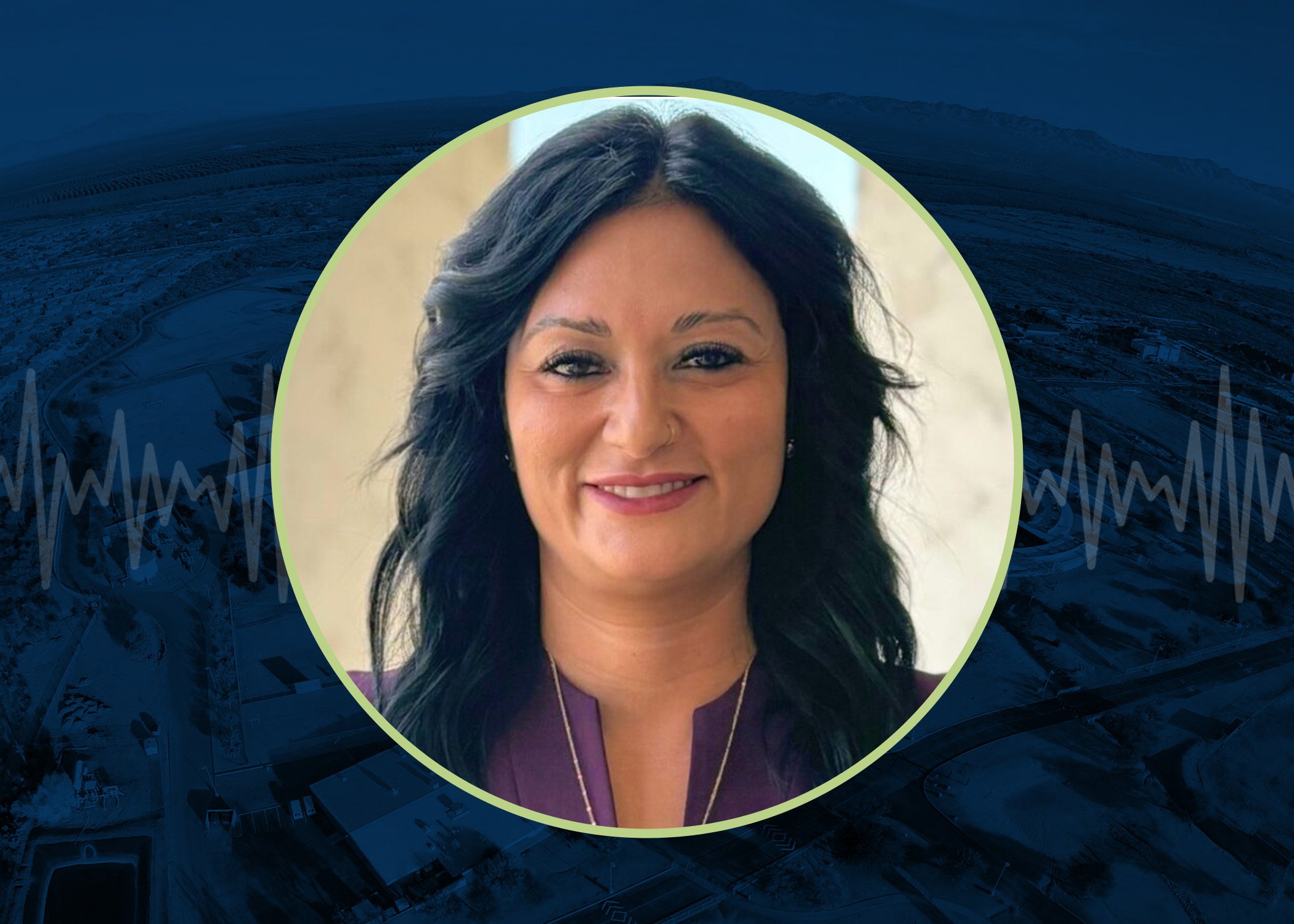
“Choose to Include Every Student” with 2026 Arizona Teacher of the Year Tiffani Jaseph
In This Episode
Tiffani Jaseph is a veteran educator with 16 years of experience and a clear purpose: meeting each student’s individual needs. A former general education teacher who transitioned into special education, she now teaches in an extended resource program, helping students with the highest support needs from kindergarten through fifth grade.
In this episode, Jaseph — the 2026 Arizona Teacher of the Year — discusses how she builds trust with families, and what it means to turn the smallest of progress into the biggest of victories while opening up about the emotional realities of the work, the importance of paraprofessionals and aides, and the power of creating an inclusive culture.
Key Topics Covered
- Why celebrating small student milestones matters
- What inclusion looks like for students with high support needs
- Strategies for creating a safe, supportive team culture
- The emotional realities of teaching
- How long-term relationships with students can produce real growth
- Advice for new teachers navigating tough moments
- And more!
Episode Guest
Listen Now




Episode Transcript
Please note, this transcript is generated by AI and may include some errors.
Spencer Payne: Okay, here we are live with another episode of front of the class real stories from real educators our real educator today Tiffani Jaseph and Tiffani can you Share how you introduce yourself to other educators which could be things like what do you teach? Where do you teach? How long you've been doing it? Maybe any fun facts or what people might expect in a class that you teach Can you take it away and give a little intro for yourself?
Tiffani Jaseph: Absolutely. My name is Tiffani Jaseph. I am a elementary school special education teacher. So I work with students, kinder through fifth. I am originally a general education teacher turned special education. So I have been doing special education for over 10 years now. And I start, as I said, I started in the general education classroom.
Once I started special education, I have just fallen in love with it. So now I teach students who have the highest support needs. So I get to have an amazing classroom with aides, my paraprofessionals and students who have any kind of need you might think of under the sun, they get to come to me. If they need that extra support, they come to me. So I just absolutely have fallen in love with what I do. And I am now in my 16th year of teaching actually.
Spencer Payne: And how did you make that transition? So you're in the general education, it like for about six years, then special education for 10 years. That's a big switch. is that something you sought out? Did they, did a school system say, we need people who wants to raise their hand? Like how did that transition happen?
Tiffani Jaseph: Well, I love that question because it was a really cool transition. When I initially started my education at the University of Arizona, my heart called me to teaching, but something inside me said, try to pursue special education. But I still was very interested in the general education classroom. So I met with my advisor and she suggested, if you're interested in higher education, maybe get your master's in special education. So I got my bachelor's in elementary education, started teaching second grade, loved it, just kind of knew I wanted to challenge myself. one of those people who loves to challenge myself. So I went ahead after a couple years, went back for my masters, got it in special education, and then kind of kept that in my back pocket for a minute. And then I decided, OK, it's time for me to try it. And so I talked to my principal. And I think the next year is when I went ahead and tried it. And then I just honestly never really looked back at that point.
Spencer Payne: And can you share some background? any folks in your family with special needs was teaching that classroom kind of your first experience with kids with special needs. Like, can you share a little bit about what was your experience prior to stepping foot in the classroom that day with special needs children?
Tiffani Jaseph: You know, that's an awesome question, because I have met many special education teachers who kind of have like, maybe somebody they know who has special needs, or they just have like that really cool story. I'm actually one of those people who doesn't have that. I actually, for some reason, I don't know what it is. Maybe it's just that higher calling. I just was always drawn to wanting to help. And so then I just kind of felt like,
When I was teaching in the general education classroom, I just really zeroed in on the students who were in the special education classes and wanted to just make sure that their needs were met. So it was just something inside me that knew I needed to just do something for the greater good. And it's just brought me the most amazing experiences. So I just listened to that inner voice.
Spencer Payne: And can you share a little bit about what that first day or first week, first month was like when you transitioned from teaching, you know, just regular second grade classes to now your first experience. You don't have any family examples you could draw on. You don't have experience like family experience or anything like that. Like, what was that first day or first week or first month like? Were you kind of, was it one of those where you're like, this is great? Or what did I do? Or a little bit in between? Like, can you share a little bit about like, about how you felt in that first day, week or month.
Tiffani Jaseph: Yeah, I mean to be completely transparent, it was a big change. I went from loving working in the general education classroom to something completely different, smaller classroom sizes, a ton of paperwork, just not your typical day that you would have in the general education classroom. So I will be honest, I wasn't sure if I loved it at first, especially the paperwork. But I just kind of knew that any kind of change is scary. So let's just stick with it, let's see where it goes.
And I really just kind of started to fall in love with the small groups, meeting the individual needs of the students. I still got to work with general education teachers, but then it was like I was learning that I got to be the voice for students who really needed it. And I think slowly, but surely, and there were some times where I wasn't sure. And I'll be honest, there was a short period of time where I went back to the general education classroom for a little bit.
I had come back from my maternity leave and my principal at the time asked me to cover a third grade classroom and I did and I was like, yep, I'm not staying here. I need to go back where I belong. And so it was just kind of like I fell in love with it slowly but surely to a point where like I could just really never see myself doing anything different.
Spencer Payne: And what are some of the for someone who has not done both? What are some of the biggest differences between both of those teaching experiences and maybe some of the biggest similarities? And maybe and maybe further on that? What do you even mentioned going back to kind of the general classroom and then say, Nah, I'm going back to special ed. Why? Like what what what drew you back? So what are some of the differences and similarities between the two? And what drew you back to where you are?
Tiffani Jaseph: I would say the biggest similarities is in both settings, just have, there's a huge workload. Teachers are just the kings and queens of multitasking. And there's just always something that needs to be done. We are ever evolving, we are ever changing, we're monitoring and adjusting. We're always doing that. So those things, they don't change. And I would say the workload is equally hard. It just might be hard and it's and that's where the differences come in. So in the general education classroom, you might have 20 plus students. In a special education classroom, you tend to have smaller classroom sizes and the ability to work more one-on-one. It's just more of an individualized environment. So that's kind of where it's different. The one thing that is also different that makes special education kind of, where people might feel like it's harder in some ways is there's a lot of paperwork.
But once you kind of get on top of it and you learn it and you become confident, and the paperwork I'm talking about are individualized education plans, then it becomes easier. just have to kind it's a learning curve. And I would also say that one of the bigger differences too is you have to really, and this is the part that I love, when it comes to special education, I really see that the children genuinely come first. Not the curriculum, not the assessments, the children come first because our job is to make sure their needs are met and that families know when they drop off their child to us that they're safe and that they're loved and that they're cared for and their social emotional learning needs are met before the academics. That's where there's a, in my opinion, a big difference.
Spencer Payne: And on that note, can you share a little bit of a really quick question and then a little bit longer question. But when you see these special needs kids, are you there for one year? Are you with them for a longer time? Can you just share a little bit about what's the span of time that you're with the same group of students in its current format at your school?
Tiffani Jaseph: So with my program, my program is the extended resource program. So as I mentioned earlier, I service the students who have the highest support needs. What's really cool about that is I have children who come to me in kindergarten who might stay with me all the way through fifth grade. So I have two students this year that this is my sixth year working with them. That's really cool.
Spencer Payne: Okay, yeah, so you have the potential to see kids for as long as six years. And on that note, can you share a little bit of how do you think about kind of judging success, so to speak, when you have a six year window with a certain child and you have all of that long length of track record where you can see a lot of progress in six years more so than you can in one necessarily. And you alluded to maybe not necessarily being about test scores, but other factors.
So can you share a little bit of what does success feel like to you after six years being spent with as much as six years? Maybe it's a little bit shorter for some people, right? As long as six years with one child, like what, what is, how would you define success? How would you tell their parents or your principal or others? Like, I did a great job with this group because of X. Like what is that X?
Tiffani Jaseph: That X usually tends to be the smallest of progress, which in the end are the biggest of victories. So I have students who have come in with little to no words, and we tend to call that non-speaking, and that they are leaving in fifth grade speaking in almost full sentences, are able to maybe make some eye contact that they were uncomfortable making before, able to write sentences, or maybe they were not able to do that before. So I see the most amazing growth. have a student who came to me in kinder. He repeated first grade, so this is my sixth year with him, and I will have him another year next year. He used to not be able to stay in his general education classroom for more than maybe half an hour a day, and now he comes to me for only about half an hour a day.
In his case, it was a behavioral need and we have seen significant growth in his ability to regulate his emotions to make better choices. So now he just kind of checks in with me versus before he was with me pretty much all day because he couldn't handle the general education classroom. So those are the types of examples that I see as huge growth and I've just built relationships with families and it's just, it's absolutely amazing.
Spencer Payne: And that growth, I'd imagine, and correct me I'm wrong, sometimes it can feel like nothing. And then all of sudden there's a, whoa, what just happened? How do you also get on the same page, I with parents of what expectations to have? And correct me if I'm wrong, I imagine there might be some parents who might be feeling like, whatever you can do is great. Or there might be some, they're like, let's prove we can do this as fast as possible. So how do you also get on the same page with parents regarding the wide range of...
Maybe expectations that they might have for what they would love to see for their their children
Tiffani Jaseph: I do generally try to start with just kind of like the informal conversations with parents. I'm very comfortable giving parents my personal phone number. So it might be like starting a couple of conversations in person. Sometimes those conversations might happen through text. So sometimes we'll just kind of address them informally. I want to let them ask me questions and we know give them some examples, kind of talk to them about my experiences. Sometimes we have to have more formal meetings. We might have to have an actual IEP meeting where we all sit down as the team and talk about concerns. But I find that if you really try to meet the parents where they are and just talk to them like, listen, I get it. Like, this is scary. You are giving me your child who has special needs. Let's talk about it. And so I just try to make them, the parents still heard and just kind of start there.
And I find that that tends to make all the difference because I will get resistant sometimes, but if I just remind them, you know, we can do this. My student who I referred to earlier who came in with severe behavior problems, you know, I would have to call mom and have some tough conversations on some tough days, but I would always finish with tomorrow's a new day, it's gonna be okay. So the parents always knew that just because one day was bad, we get to start over the next day. And I think those kinds of things make a difference.
Spencer Payne: And on the note of like some days are maybe bad or tough, et cetera. And again, no need to share names or anything like that. But are there any examples that you're able to share just generally? Like here's something that we had to deal with or here's something that we dealt with every single day. We didn't know what would get better. Like, can you share a little bit about some of those tough days, tough times, maybe tough weeks, tough months of.
Wow, are we gonna start to see progress? Like, do we need to have more conversations with parents? Like, can you share a little bit about some of those tough times and maybe how do you handle those? Right? Because it's not the same situation as it might be with a general classroom, second grader who might, you know, there's different ways of handling that type of a situation. But how do you handle when there's just a consistent issue in that world? And how do you feel? How do you handle that personally? And how do you kind of navigate that world of improvement with them, you coming back the next day, getting on the same page with their parents.
Because I imagine, you know, it's hard sometimes when a normal kid in general classroom is acting up for three straight days. You might see that for three times as much, four times as much, five times as much. Can you share any particular examples and how do you bounce back and how do you kind of, you know, practice patience with the parents? Like, how do you approach a situation like that where you might see some behavioral challenges that just seem to be consistent and they're not getting better, but you just stay in the course and sticking it through? How do you approach that?
Tiffani Jaseph: Yes.
I think the biggest thing that I have learned is that I've really tried to grant myself grace. I have seven, I call them inclusion assistants. I also refer to them as paraprofessionals or another word is aid. So I have seven inclusion assistants who I work with. And what I have learned and beyond them, I have other team members. I've learned to grant myself grace and to teach them to grant themselves grace too. I have learned that sometimes I cried.
Sometimes I've vented, sometimes I've called coworkers to get some advice. So I just lean on the people that I know are gonna hear me and see me and understand. And I also have just really, I'm just a very determined person and I just don't give up easily. Sometimes it's a good thing, sometimes it's a bad thing, but in this case, I think it's a good thing. And I've just learned to just kind of let the bad day be bad, admit.
You know what, there's days where I feel like I don't know what I'm doing, but I'm willing to continue to show up. And so we've just really built that in my classroom where we have that team camaraderie where we can vent and it's a safe place and it's OK. And I can talk to parents, but listen, you know, I think I might have made a mistake. think I might have added to the behaviors today. I don't think I was my best, you know, and I'm sorry for that. And I think showing that we're human allows the parents to be like, you know what, it's okay, tomorrow's gonna be a better day. And so we just kind of have that kind of relationship. I'm open, I'm honest, and I'm not gonna sit here and tell you it's all pretty, because it's not. There's ugly, ugly days sometimes, meaning students might be having a hard day, or I did something wrong to where I might have triggered a behavior. And so it's just like a learning thing. But I will say, my students are so smart and they pick up on the energy.
And I think deep down they know that they're loved. And so they're willing to let me make a mistake, you know, because they still show up the next day too. So it's really just believing that the mistakes don't define us and we're going to show up and we're going to keep learning. So what I know now is so much more than what I knew five years ago.
Spencer Payne: And yeah, if you do have one of those tough days, tough conversation with the parents, are there any things that you do to kind of bounce back? are there any, that means that night I'm watching this movie or I'm making sure I go out for a really long walk or like are there any things that you do to kind of refill your cop after a particularly tough day or things that maybe your aides do?
Just things that you can share for others of like when you have those tough days What are some of the examples of things you do to just like I calm down or get back to grounded or get your energy back?
Tiffani Jaseph: Absolutely. One of the first things I will do after a day where maybe there was some significant behaviors and I'm just drained as I just kind of sit down, I just tell my team like, this is a rough one and I'm very hard on myself. So I just need to almost like, as we jokingly say word vomit. So I just kind of then, then I'll ask them to tell me, can you tell me if you saw something I can do better? Because I want to learn from this.
After I kind of get that out, I know that day I'm probably gonna either veg on the couch or I might go for a run. It kind of just depends on how mentally exhausted I am that day. And then usually I'll kind of talk to my husband about it, but I do actually really try to just like frame it in my head of like, today was just a bad day. I know tomorrow is gonna be better and I'm gonna learn something from today. And I almost always do, like if I feel like I could have said something or did something better with a student.
That next day, I might even still talk about it. It takes me a while to process things, so I have to verbally process it and then just incorporate a little bit of that self-care. Like, I might need to watch, like as you mentioned, sometimes I'll just know I'm gonna watch a funny movie tonight and kind of get my spirits up, send my team a funny meme. We might joke about it a little bit and then, you know, the next day is a new day and it almost is always better.
Spencer Payne: I'd love to dig into this example of asking your aides and teammates and others of, that didn't feel like maybe the best way I could have handled this today. What did you see? What suggestions could you have? How could I have handled this better? Because that can be such an impactful way to get real feedback if there really is a genuine desire and honesty on all parties that like, well, are you sure you want me to say what I really think? Yes, I do, because I want to get better, right?
Can you share a little bit about maybe how you have fostered that culture of open and honest communication and feedback with your aides where they feel like they can tell you what they think that they saw because you're inviting it and you're acting on it. And like how have you kind of created that little bit of a culture because that can be a tricky balance for people to try to go ask for feedback. And then sometimes they hear it, they're like, well, I didn't want to hear it like that, right? So how have you fostered that feedback loop with you and your aides?
Tiffani Jaseph: I just really tried to model the honesty and the really important part of forgiving ourselves and granting ourselves grace. So that is actually part of my decompression process. And this just recently happened. A student had pretty severe behaviors and I had to do some, a little bit of restraining and I'm trained in how to do that. He left safe, everything was fine. I communicated with mom, but those are the days that hit me the hardest because I hate seeing my kids upset and I hate having to do any kind of you know, physical intervention. And so that day I talked to my aides about what I feel like I did to escalate the behaviors before the behavior started. I think I might have said a couple of things in a tone that didn't make him feel happy and he got upset. And so those are little things that we talked about. And so I was very, I'm very open at modeling my self-reflection and like, I think I did this wrong and I think I did this wrong and next time we're going to try this.
And so I model that all the time. And so when I talk to my aides about it and they sometimes, then they start to feel comfortable and like, okay, so, you know, did this work or, you know, and sometimes they'll ask me, you know, what can I do to help or what can I, you know, and so we just, we just kind of go back and forth and they know like there's no judgment. We are all here doing a job that some people would just never do. And so we all have the right mindset here. So let's just, this is a safe place, you know, nobody's going to get hurt. Everybody's going to be safe.
We love these kids. It's okay if we make mistakes once in a while. And so it's just a lot of modeling, that self-reflection. I will ask him, like, tell me, what can I do better? And most of the time they're like, oh, you didn't do that bad, it was fine. But I'm like, no, I think next time we need to do two people in this situation. Or next time I need to be like, you know what, I need you to cover. Because I try to do all the hard stuff, and sometimes I need to lean on them to do the hard stuff too.
Spencer Payne: Yeah.
Yeah. And I like what you said there about it sounds like you kind of went for, you kind of went first in a way of like, in a recap, like, Hey, I think I could have handled this better. I'm going to try doing it neck this way next time. That way it's not. If, especially in the very first time, if you're trying to create a culture of that type of open and honest feedback where you're all trying to improve, right. You're opening the door of like, I don't think I did this well. I'm going to try this next time. Do you agree? What do you think that way? You're not, you're not kind of criticizing, I use that term loosely, like giving feedback to somebody else first or asking them for feedback first.
And they're like, well, do I tell you the truth? You're just going first, right? I could have done this better. I want to try this tomorrow. Can you make sure I do it this way tomorrow? And also what did you see? by you going first, you're kind of opening the door because you're making it available, safe, whatever word you want to call it for others to be like, well, she actually means it. And she actually did it the next day. Like by you going first, you kind of open the door for that feedback to keep coming, which is what you want because you want to keep getting better, right?
Tiffani Jaseph: Yes, exactly, exactly. And I can't do this job without my aides. There's just no way. And so I want them to just feel comfortable and safe physically, but also emotionally. Like it's OK. We can talk about hard things.
Spencer Payne: On the note of the aides, out of curiosity, are some things that you do to help make them feel like they're wanted or help make them want to stay and sign up for your class again next year? What are some of the things that you do to try to increase your retention of them to want to stay with you, especially if they're people who you really like and trust and appreciate? How do you go about that process or think about that or, I really like Sally. hope Sally signs up next year. Like what are some of the things that you're doing to foster that?
Tiffani Jaseph: I do like to do a few different things. One of the little things, and I feel like are the easiest things to do, is I'll get them little gifts sometimes just to tell them that they're appreciated. Specifically, beginning year, end year, thank you notes, things like that, a treat that I know that they like, I might buy it for them. That part is like the easy part for me, but I know it goes a long way because they can see that I'm paying attention to them. Another thing is I do make sure that their home life is valued, and so if there's a sick day or a personal matter that they need to miss, I don't ever make them feel guilty for that. I just tell them, just communicate with me. We're a team. We can cover it.
And I think that that's a huge balance. I do have all women that work with me. And so they're almost all moms. And it's important that they know that I understand that if their kid is sick or if they need to do something for their kid, if they need a miss or leave for a little bit or whatever it is, they know that they can come to me about that. That's something else that I do. And another thing too is I think just kind of explaining to the camaraderie we have in our room, the kind of environment that we have. And we laugh every single day. We joke about things. If we had a hard day, sometimes we joke about it just to kind of lighten. Like it doesn't have to, everything that's heavy doesn't always have to feel so heavy. And another thing that I do too is I just, I don't look at me as their boss.
Like we're just all friends. And I think that they know that. And sometimes it's a text saying thank you, or it's just, you know, like, I got this because I thought of you, just those little things that they know that they're cared about. And I do tell them that all the time, that this wouldn't run without them. And so I like for them to hear that.
Spencer Payne: And on the note of funny, and sometimes you just need to laugh, over these 15 years in the classroom, does anything rise to the top for you of...
really funny, wild, crazy, I can't believe they said that moments that you're able to share. And it could be in special ed classrooms in the general ed classrooms, or maybe, but you know, a lot of lot of teachers have these stories of like, can't believe they said that I can't believe this happened. Can you share any of those? Any of those stories that might rise to the top for you in your 15 years in education?
Tiffani Jaseph: I mean, there's so many that the kids generally they do, they make us laugh. I think one of my favorite stories is we do have a small community out here. And so one of my aides has a student that she's maps to work with him most of the time. So I map my aides to work with different kids, but she works with him the most. And she very, we joked about it of course, but she found out one day that they are in the same neighborhood because he came to school the next day and he's like, you live at 1421 house, don't you?" And she looked at him and she was like, I sure do. And so that's when she realized he's in her neighborhood and he must have saw her walking into the classroom. And he's autistic, so he has like one of the most amazing memories. He's a visual learner and he doesn't speak a lot, but when he wants to speak, he will. And so we just all laugh because she just didn't know until that moment that he knew exactly where she lived. And he memorized her house number after seeing it like one time. So a lot of things like that happen in our classroom. mean,
Another funny story is one of my students that I've had for six years. He likes to joke with us all the time. And we asked him where he got something. it was, I think it was like a silly toy or something. He's like, I got it off of Scamazon, like Amazon. And so they just come up with the most. They're just so witty. And they just make us laugh all the time. And it helps us to laugh even when they're being difficult. We learn how to just laugh things off. So yeah, it's just amazing.
Spencer Payne: And any proudest moments in 15 years in education that rise to the top? There are things that still kind of look back like that was a really cool moment or experience or still makes you smile because it was just like that was a great moment. Any proudest moments rise to the top for you?
Tiffani Jaseph: Yes, so one of my students who graduated our school last year, she moved on to sixth grade. I had her since first grade and she had pretty significant behavior some days. She's autistic and she didn't have many words at first. And then I would say about year two or three into working with her one day. And by this point, she was talking a little bit more. She was sitting at the desk and all of a sudden she just started telling us jokes, like just started just rolling the jokes off. And there was about
Three or four of us who were just sitting with her and we were just laughing and she just had the biggest smile on her face. And to go from hardly speaking at all to kicking and screaming some days because she was so emotionally dysregulated to be able to sit with us, joke with us, continue to tell us different jokes, it was just like a full circle moment that they're gonna get there. They're gonna make progress. That's awesome.
Spencer Payne: You mentioned for your masters that that is the time that you chose to kind of go more more deep in special education Can you share a little bit more about your approach to your masters? You know, when did you decide to get it? How many years were you already teaching at the time? Why you chose that specialty what you were hoping it unlocked for you? And did you get what you thought you were gonna get out of it?
Tiffani Jaseph: I did, I think I was in year two or three of teaching in second grade when I decided to go ahead and go back and it took me about two years to get my masters and I just, felt like, it really felt like it was just like something I needed to do, a calling as I mentioned. So I just felt like I need to do this and I like the challenge of learning new things and I liked the idea of getting my masters, hiring my education. So I just went for it.
In that process, I was invited to participate in an immersion program where we did some learning for English as a second language, basically. And so I did this almost bilingual portion. And so I was able to go on a trip to Mexico City and Guanajuato. And so that was an extra perk. And so I just learned a lot about students who are identified as special needs who also English as their second language and how sometimes they're over identified. And so I got to learn a lot. And then beyond that, I was just exposed to just so much more information and literature and I just, I learned a lot. So I really felt like I just, I was glad that I did it and I was glad I took that leap.
But I will be honest and say it probably wasn't until I actually got into the classrooms and starting working with the kids that I really was like, yeah, I'm really glad that I trusted my gut and did that because this is where I'm supposed to be.
Spencer Payne: If there for folks who maybe have never spent, maybe they knows there's the special education group in their school, but they've never actually led it on a day to day basis like you have. If there was one or two things to either those teachers or even the public at large that you wanted to share about what it's like to be in that room every day, every day to people who've never been in that room on a day to day basis, like what would you hope to convey to people about what that experience is like?
Tiffani Jaseph: I think I would want people to know that there is so much learning that's happening in our environments even when you don't really see it. And so just our classrooms just run different. so learning might be happening on an iPad. Learning might be happening because they're watching their favorite show on our big screen. Learning might be happening when they're on the floor lining up numbers or playing with their favorite toy. Learning might be happening when they're on the playground because they're getting their sensory needs met. So learning just, it's just, it looks different in our classroom.
And I also think that I would just want people to know that our classroom is just a big community and that our students really, really do have a place to come to where they are given a voice where they otherwise might not have that. And we've really extended that into our whole school. I'm just really big on promoting that inclusion piece. And so our students are part of classrooms. They don't just stay with me. They're integrated into the general education classrooms as well.
So I think the biggest thing is just knowing that learning just looks different and it just happens in many different ways.
Spencer Payne: And you recently won an award that we haven't talked about yet, but I have to bring it up. I'm going to brag for you. Miss 2026 Arizona Teacher of the Year. How did that feel? How did that feel when the nomination happened and then when ultimately it's your name that you are the winner of this? How did that feel?
Tiffani Jaseph: I mean, it was just amazing and truly surreal. Like it might hit me in a couple years. I don't know that it's hit me yet, but I'm just so grateful. And also like it kind of was just like kind of just a reminder that people see us, you know, like we, a lot of people feel like our job is thankless and you know, and we're dealing with the difficult kids and you know, all these things that people think and a lot of that is true or might be true, but I just feel like people see us and people just see the value of what we do and they just, they see our kids as important. And so I just feel like being given some kind of a platform as a special education teacher, specifically of high support needs kids, it's just amazing. And I just, I just feel like humanity is like at its, was at its best in that moment for me. So just amazing.
Spencer Payne: Well, congratulations. And one more on 15 years of reflection in the classroom, in two very different worlds in the classroom. Is there anything that you've consistently done over the years that just seems to work really well for you? And maybe you're surprised more educators don't do that thing also. Is there anything that's kind of uniquely you that you just do that comes natural and it works really well? And you look around and you're like, huh, that's weird. I wonder why more people don't do this because it works really well for me.
Tiffani Jaseph: I think like it sounds kind of like silly, but I can explain it more. I think it's just kind of really meeting the kids where they're at and just allowing the joy and the humor that is involved in everyday life just to be a part of like your classroom and your teaching. I've been in classrooms where it's just so serious and people aren't allowed to joke. And I just feel like I want my kids to come and just know like we can joke. Like it's okay. Like, know, I...
kind of just get on their level. And there's different levels, know, some of the kids might not be able to joke in the same way as others or whatever it is, but it's really just like finding their interests and just playing on that. It's just really like making them feel like, like they're kind of paying attention to me or they listen to me. And it's just like those things just make such a difference and it just, makes kids feel comfortable.
And if kids are comfortable and then they respect you, they want to be good for you. So it's not flawless, but I just feel like it does work just kind of just getting on the kids level.
Spencer Payne: Yeah, perfect. Thank you. And a couple more like quick hitter rapid fire questions as we get close to wrap it up. But if let's just say there's a brand new teacher in your school or maybe a brand new aid in your room. And maybe they're a month or two in and they're wondering, don't, is a lot, this is harder than I thought. This is right for me. What might be the number one piece of advice you might give to that new teacher or new aid in your room to help?
guide them, calm down, whatever it might be. What would be the number one piece of advice you might give to someone who's a new teacher, who's in that experience, who might be wondering, gosh, is this for me?
Tiffani Jaseph: I would say just to not let the hard days win and that I promise you your hard work is going to come to fruition even bigger than you can imagine in a general education classroom. I seriously feel like those small victories that we have in our classroom are so much more fulfilling than in any other environment because it is such a big deal. Like the little things are such a big deal. The fact that a student can now speak a full sentence where they were not even able to speak a word before. That's a huge deal. And so when you get those moments, you're just like, wow, this really is pretty amazing. It really is worth it. So it's just don't let the hard days win because there will be hard days. And just lean on the people that you work with because we're all here for the same reason. And just don't be afraid to make mistakes because that's how you learn.
Spencer Payne: Real quick on leaning on the people that you work with, you've already talked about AIDS, but can you share a little bit about your experience with working with kind of administrators at your school and making sure you're on the same page with them? What advice might you give to, again, maybe a relatively new teacher of, how do you make sure you're on the same page also with your administrators or your principal, your vice principal to make sure that, you're doing what they need you to do, but also that they have your back? How might you advise folks to go about with kind of making those connections and relationships with kind of the, you know, principal, executive, director, whatever, whatever title you want to call it level.
Tiffani Jaseph: I think it's just really important to not be afraid to ask the questions and sometimes if it's the hard questions. I've been very fortunate to have a very supportive principal. So when I wanted to try new things or instill new initiatives, she's always just kind of given me the yes just to go ahead and try it. But I've also been really good at explaining the whys behind it and also asking and telling her the tough things that need to happen.
Part of my job that is difficult is I'm an advocate for students. And so sometimes I have upset general education teachers, not intentionally, but it's happened, but my students are my priority. And so I'm willing to be the bad guy if I need to. So it's just kind of having the open conversations and the willingness to have those conversations. Like this is what's happening, this is where I'm at, and this is the why. And so it's just not being afraid to just explain yourself and your vision.
Spencer Payne: What to you is the number one single best thing about this profession? Education.
Tiffani Jaseph: The, I would say the single best is the connections. It's the connections with the students and the families because we become an integral part of these students' lives and the parents honestly sometimes just depend on us and look to us for help because they struggle at home and then the kids come to us and they just know that they're sending them to a safe place and that is so invaluable, especially in public education. And so to me, it's absolutely the connections that I make because I have little friends and my students and friends with the families as well.
Spencer Payne: And what's the single toughest thing? Or if you had a magic wand and you could just change one thing overnight, what would you point that? Where would you point that magic wand?
Tiffani Jaseph: I'd say as a special education teacher the biggest struggle for me is kind of when I have when I get pushback from teachers when it comes to my students and it happens sometimes because you know sometimes maybe the teachers need help or maybe they need to learn a little bit more about something but you know when I get when I feel like I'm getting pushback on something that is valuable to my student that that's where it's hard and I wish that I could just make that part easier. But I will say, you know, I think the teachers here know that we can talk about things and we can work it out. But that's just something in my experience that is difficult that I just, want every teacher to see the value of that inclusive model.
Spencer Payne: And are there any educators, specific names of people or approaches that they have or things that you have watched others like, Oh, I definitely want to do more of that or more of that any people you want to call out any systems you want to call out any anybody you follow out there to get tips on how to do things that you want to call out what we're gonna a little positivity here like who, who is a person, a podcast, a name, something who you're following who you appreciate who you are kind of, you know, using their ideas, maybe putting a little personal stamp on like what's someone that you follow appreciate or someone out there others can follow appreciate to keep on the bleeding edge or keep getting a little bit better every single day at this profession.
Tiffani Jaseph: So I'm kind of frustrated that I'm not remembering her name, but there is a woman that I follow on TikTok and Instagram. I think her platform is TikTok and then it gets shared everywhere. And she is an autistic adult and she reenacts strategies or she might reenact certain behaviors that kids do and then she kind of does a voiceover and talks about you know the strategies you can do to help with that, the good and the bad behind all that, the whys behind all of that and that is just so invaluable to me to hear it from a person straight from a person who has autism or you know or any special needs in any way but she specifically talks about autism and she also does her little her little skits on tough conversations too and tough things that we face.
And I just feel like I just learned so much from her and I will talk to my aides about it all the time like, you know, she says this about this, you know, like for instance, I even talked to them today about one of my students has a certain STEM that he likes to do. And so I talked to them of the importance of letting him do that when he's doing it. And as he gets older, we can redirect it if we need to, but that right now it's not causing any harm. And that's just something that she talks a lot about. And then she also talks a lot about too, that sometimes we need to allow our students to do things and other times we need to put boundaries on things. And so she just gives a lot of good strategies on how to do that. I just, I really just think she's, I'm just learning so much from her every time one of her videos pops up.
Spencer Payne: And last question, anything you were hoping we were going to get a chance to talk about today that we just didn't have a chance to as words of wisdom or anything that we did talk about that's just so important, we got to say it one more time. So any new or repeated final words of wisdom.
Tiffani Jaseph: I'd just say just remember the biggest thing is to choose to include you know every student deserves a place in the classroom every student deserves access to education every student deserves to be seen no matter what their abilities are I really want new teachers or any teacher out there who might be afraid to invite a student who has high support needs into their classroom just walk them with open arms, that's your first step. You don't have to know everything, just trust the process and just be willing to learn about kids that maybe you didn't know about before. And so I'm always gonna say just choose to include.
Spencer Payne: Well, Tiffany, congratulations on your 2026 Arizona Teacher of the Year win. Thank you so much for sharing your story. Appreciate you.
Tiffani Jaseph: Thank you so much.

Moreland University can help you take your teaching career to the next level.
Whether you’re looking to get professionally certified or earn an M.Ed., our 100% online programs can help.
Complete your no-cost application (it takes less than 15 minutes!).