
.png?width=300&height=74&name=MorelandU-logo-WH-RGB%20(1).png "Moreland University Logo")
Front of the Class Podcast | Feb 26th, 2026
Students’ “Behavior is a Form of Communication” with Megan Elniff
In This Episode
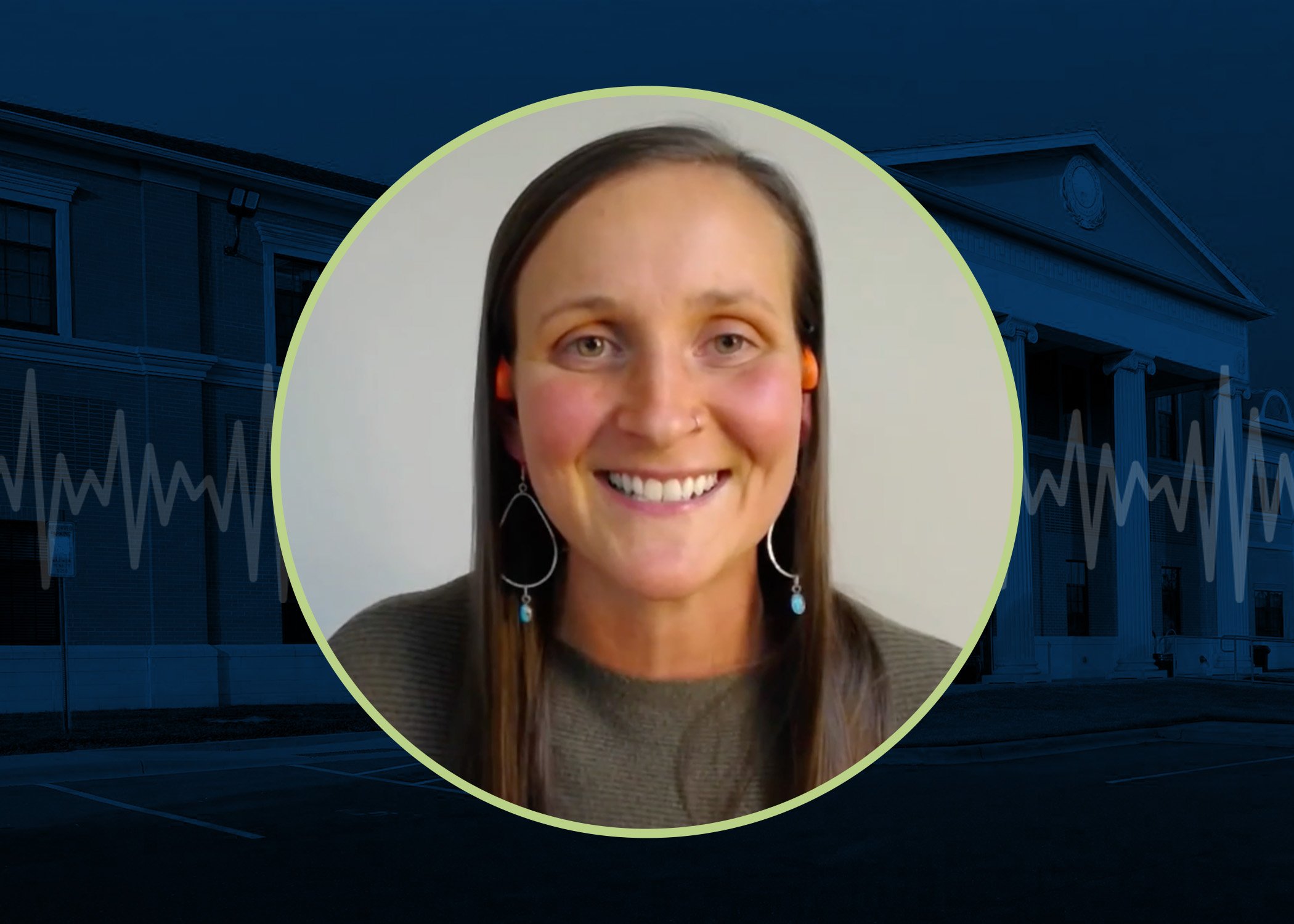
Megan Elniff is a fifth-grade science teacher at a Greek immersion school in North Carolina where the Socratic method is central to learning. Over 13 years in education, she has taught in multiple states and served in roles ranging from special education teacher to multilingual learner specialist, all of which shaped her dynamic, student-centered approach to teaching.
In this episode, Elniff shares how discussion-based instruction transforms her classroom into a space where students lead with curiosity and grow as critical thinkers. Her insights about teaching in diverse communities and continually refining her craft to better serve students will resonate with teachers at any stage of their career.
Key Topics Covered
- How student questions can shape instruction and deepen understanding
- Creative strategies for making lessons memorable and engaging
- Why “behavior is a form of communication” and how that mindset supports students
- The power of professional development and teacher fellowships
- Advice for early-career educators navigating their first years in the classroom
- And more!
Episode Guest
Listen Now




Episode Transcript
Please note, this transcript is generated by AI and may include some errors.
Spencer Payne: Okay, here we are with front of the class real stories from real educators our real educator today Megan Elniff Megan How do you introduce yourself to other people in this profession? What do you teach? Where do you teach? How long fun facts forks in the road? Whatever you like to share. How do you introduce yourself to other educators?
Megan Elniff: Well Spencer, thanks so much for having me today. I'm very excited. My name is Megan Elniff. I've been a teacher for 13 revolutions around the sun now. And I grew up in the great Garden State of New Jersey in America's first national preserve in the Pine Barrens. And I started my teaching journey in Kansas City. And then I moved to Baltimore and taught in Baltimore. I actually moved back to Kansas City, a little second go around in Kansas City. And now I teach in Charlotte, North Carolina.
And I have had just as many roles as I have had different states in my teaching toolkit. So I started as a special education teacher in a communication learning support setting. And then I was what's commonly referred to as a resource teacher. And then I was a multilingual learner specialist, fifth grade ELA teacher. And now I am in my current role as a fifth grade science teacher at Socrates Academy. And it's a public charter school here in North Carolina. And what's really neat about our school is that it is Greek immersion. And so our students learn Greek starting in kindergarten. We have an entire Greek staff at our school. It's really wonderful. But yeah, just bopping about the country and learning lots along the way.
Spencer Payne: Well, we're going to dig into a little bit about all these stops in different states and states and different licensing and all kinds of things. But first, how have all these different paths happened? Have you forced the issue? Are you trying to move to different states? Are opportunities coming? Like, can you just give us a little bit of a sense of, you know, it's one thing to maybe, I moved from, you know, physics to chemistry in the same school, but you're moving different subjects, different states. Like, how has that happened? Are you playing a proactive role in that? Are you just looking at roles in other states? How is that happening for you?
Megan Elniff: And that's a great question because when you look at it on paper, you're like what's going on? But it is it was all very organic. I started teaching with Teach for America And so if you know anything about the Teach for America process also kudos to Teach for America I'm really grateful for that program and everything that I learned along the way I Filled out the application. I did the whole the rounds of interviews you know across my fingers and then when I opened my
It's like, you you've been accepted to Teach for America. Congratulations. Take this exit survey to find out where you're going. And I'm like, okay. So I was an RA in college and I just remember sitting at the duty desk doing the survey and my eyes probably got the size of half dollars when it was like, you're going to Kansas City, Missouri. And I am in North Jersey. And I immediately just Googled how far away is that? And I look at it. I call my mom and I say, mom.
And I just start sweeping, you know. But it turned out really wonderful. So I started in a communication learning support classroom, kindergarten to first grade. And after three years, felt the urge to try something new. And I wanted to be a little bit closer to home. Going back and forth was pretty difficult, particularly around winter when snow's really bad. So I found a very similar role in Baltimore taught there and then Teach for America actually had started a fellowship program. It was called the Green Fellowship and it was for Teach for America alumni, the leadership development.
So we did a lot of different cohort discussions. We learned from leaders, like superintendent, Kansas City Public Schools, came come and talked to us. Different like, it was really incredible. It was like a cohort of 15 really phenomenal teachers. I still follow all of them. I am inspired by all of them. And then I actually have Raynaud's which if anybody knows, it is a histamine response at temperature. So my hands get really, really, really cold and Kansas City is not for the faint of heart. It is very hot in the summer and very, very, very cold in the winter. So North Carolina just felt like a really good fit. And I've always really loved the American Southeast. And so that is where we are here. But each time it was not an easy move and telling all the staff that were my friends at that point that I was heading out was always one of the most difficult parts of that journey.
But I always felt that like, whatever was happening to me, there was like an internal calling to know that the students that I was serving needed me. And then if I felt an internal calling somewhere else, that means that other students need me other places and that I can, you know, maybe inspire some other educators and they can inspire me. So.
Spencer Payne: And then can you share a little bit more about this last move to the Socrates school in Charlotte of how did you like, again, now you're looking for a warmer climate. That could mean a lot of things. Maybe you've focused on Charlotte. How do you pick this particular school? Like, can you share a little bit more about, you know, for a teacher out there who might be trying to move states or move to a different school, what was your vetting process? Right. Like, what did you want more of? What did you want less of? How close did you want to be to school? What was important to you?
Can you share a little bit about kind of what was maybe on your checklist of must haves or must not have or would like to have, but I'll sacrifice this. Can you share a little bit more about your process in the hopes that others may be able to learn as they might be wondering for the first time, it's time to move. How do I even think about going about getting a new job at another school? Can you share what your process was like for this last exam?
Megan Elniff: absolutely. that's, you know, it's exactly like the way that you worded the question was kind of like the thoughts that run through my brain as this is happening, like, okay, are we actually doing this? But when I went, when I taught in Kansas City, round two, you know, the second time, I taught at a school where the students came from like 30 different countries, spoke 17 different languages, we had 17 ish, you know, the numbers, these numbers always kind of changed a little bit depending on enrollment, but 17 full-time translators on staff, and it was the most beautiful environment. Just kids from all different cultures, all different backgrounds, literally all over the world, just coming together to learn.
And you could hear multiple languages being spoken in different classrooms. I had several students that were refugees. As a multilingual learner specialist, that was one of the coolest and most rewarding experiences of my life, just learning from all these different kids, just things, eight year olds teaching me things about the world that I would never would have known before. And so when I moved to North Carolina, one of the biggest things that I was interested in was a school where language was a big focus. And so I found, I stumbled upon Socrates and I'm so fortunate and glad that I did because it really is an incredible environment and there is so much culture at this school.
And even though we are a school where Greek is being taught and the Greek culture is, everywhere around us, it's everyone's individual culture is also really celebrated. And so I really love that is that, it's just a really wonderful community in that sense. But yeah, language was one of the biggest things that I I just found myself fascinated with. have a graduate certificate in teaching English to speakers of other languages. That was part of becoming multilingual learner specialist. And once I, added that area of endorsement, that certification, I just realized how interesting and fascinating different languages are.
And so that was what kind of pulled me in. So I would say for any educator who's, you know, it's like, where do you even begin? Start to think about like, what interests you? It's almost like when you pick a college, right? Different schools are good at different things, right? Like Stanford University, if you want neurobiology, you know, Harvard Medical School, like, just look at what the school is really known for. And schools have personalities just like, just like people do kind of.
Spencer Payne: What is your current school's personality? Can you share a little bit more about that?
Megan Elniff: Sure, my current school, one of the biggest things at our school is that we focus on our school is called Socrates. So the Socratic method is really big in our instruction and the Socratic method is dialogue based and it's very student led. And so that's kind of at the forefront of what I would say is like our culture of our school is that you walk into classrooms and you will see examples of the students ownership in the classroom and like their role in the classroom is at the forefront. So the teachers are very much facilitators for learning. But the students are definitely the ones doing the heavy lifting. And it's the thing about the Socratic method that is so impactful is that it's not a mission to be right. It's like a mission to develop like a mutual understanding.
And so when we do like Socratic seminars where we're discussing and you can do them in any classroom, it doesn't even though science is very data-driven and factual, it doesn't mean we can't have these open dialogues about different topics. And at the end, when we debrief, one of the questions that I really enjoy asking is, did anybody have an opinion that was changed by something one of your classmates said? And I think that flips the script a little bit because now kids, instead of fixating while someone else is talking on what they're about to say, they're...
really listening to what their classmates are saying and going, yeah, huh. Because I will say that sometimes when I even pose a question in my head, I'm thinking of like what I would say and a kid will say something and just knocks me off my feet. And I'm like, you know what? I never thought about it that way. So it's it's kind of interesting too. Cause then the teachers have like a lot of buy-in cause then we're like, well, we can learn from the kids too, you know? And so that's what's really cool about it is that it feels like there's a lot of all the stakeholders have like an equal share in the school and I think that that's really cool.
Spencer Payne: For a teacher out there who might be thinking what do mean? It's all student-led. I'm the teacher I'm supposed to be up there at the front teaching. Can you share a little bit more about? What that looks and feels like like especially maybe after the first month or two when kids know what that means like When you say it's more student-led in the classroom, like can you can you give us a little bit more of a feel of like? What does that mean? What is what is the class sound like and feel like how much are you speaking maybe versus how much they're speaking compared to other classes. Like how can you paint us a picture of what that looks and feels and sounds like?
Megan Elniff: Sure. so what it looks like for science at least is that we have, the kids have a lot of input in sort of like what instruction will look like, what's the most impactful for them. So we do a lot of surveys and kind of get a sense of like what's helpful for you, what wasn't so helpful for you. And so I try to keep a very, I'm trying to think of a good way to like the...
amount of time that they're speaking versus the amount of time that I'm speaking, I try to keep a threshold where I'm like, I have been talking a lot or I haven't been talking a lot. But their questions guide the way that I design my slides and my lectures and what they feel is the most impactful for them. So I try to make sure that I'm constantly getting feedback because I don't want to keep doing something for three months and then be like, hey, this really wasn't that helpful for us. Because the goal is that they walk away with understanding of what the content is, but also not just what to think, but like how to think and how to like think about the topics that we're talking about.
Because I mean at carpool when, you know, the kids are waiting to get picked up, I have like four or five of them coming up to me trying to ask me questions. Like, you know, I was thinking about what we were talking about in class. And then that kind of like jumpstarts my ideas of like, oh, you know how I could change this lecture a little bit to be more geared towards the things that they're naturally gravitating towards. And so I guess that's kind of like the crux of it is like I'm following their lead on the questions that they're asking. And I teach four sections of, I teach four sections of science a day. And so what's kind of nice is like my first group of students get the most coffeeed, freshest version of me. And then my last group of students get the best version of the lecture because I vetted it three times at that point.
But it's interesting because I mean, the same question will come up in like, three or four classes sometimes. And I'm like, that is so interesting that I have this topic that I'm talking about and all these students kind of their brains are going to the same place. And that like is very telling for me of like how they're thinking and like letting this marinate. I think that that's really cool to witness. And then I try to like lead off of that.
Spencer Payne: Can you share any examples and maybe even something that happened today or this past week of what's an example of a question that was asked in a science class for fifth graders four times in one day or something that again, you learn from the students or can you share an example of some of the quality of these questions that are being shared as a result of this Socratic method that is very different maybe than how a lot of other teachers are.
Megan Elniff: sure. And so something that's really interesting is we try to make instruction really engaging. I think that's like the name of the game in 2025 is like, what are we going to do that's more engaging than the things that they are doing outside of school? You know, because we have to make sure that they're attending to what's happening and they're attending to instruction. so starting on December 1st, we will to backtrack. I noticed that a lot of kids are very interested in the periodic table.
And so I have some around my room and that's technically not a fifth grade standard, like knowing the different elements of the periodic table, but they are just so drawn to the idea in these concepts. And there's a couple of words in there that they're familiar with, like they see tin, they see aluminum, they're like, so one day I see a kid just copying the periodic table. And so I'm like, hey man, actually, you know, the fourth unit of the year, we're going to be doing this. And so I give you guys all a laminate copy. I'm just going to give you yours now.
And so that kind of jumpstarted an idea to have starting December 1st that there would be these little, not elf on the shelf, but kind of like a science play on that, of these little creatures that would be around the room. And so on December 1st, it was a star on a car for hydrogen, there was one star on a car. And on December 2nd, it was helium. So I have this like moon in the back of my classroom. And so there was two balloons on the moon for helium. so every day there's been another set of creatures.
And then every class of kids that I had was like, Mrs. Donoff, when you have, why does aluminum make or aluminum, why does helium make your voice sound like that? When you, you inhale it. And I'm in the first class that asked them, like, you know what, I'm not sure, but if you write that on a post-it and you put it on my desk, like I can look that up and I can get back to you. And then I have a back to back block in the morning. So the next group of kids are like, Mrs. Donoff, when you have a helium in your voice. like, my goodness, that's really interesting. The last class just asked that. And then when the third class of the day asked, I'm like, are you guys like talking to each other about this, about this, we're talking about in class? And it was just very interesting. So then we started to kind of like go off of like, why does helium make your voice sound like this? And then we talked about like the different, the densities of different elements and things like that.
They naturally had this question that they want an answer to. And I think that that's like to loop back into the Socratic method is they start to come up with the questions that are like the next question on the slide. It's like very interesting. So I'll show a slide and it might be something about the difference between mass and weight. That's what kind of we're doing right now is physics. And so the difference between mass and weight. And then I can't think of a specific example off the top of my head, but like the next slide will be like the answer to a question they ask before I can even jump to the slides. They'll raise their hand and ask a question. like, actually that's on the next slide.
And I just find myself saying that a lot. And I think that that's just a testament to the fact that they're going through the content in their head, thinking about it, letting it marinate, and then coming up with the questions that would be the natural inclination for like a scientist to think about. Like, I have this information. What's my natural next question based on that? And I think that that's really cool to see.
Spencer Payne: How does that get fostered? Like at the beginning of a school year, and I realized this is a Socratic school, so it's probably being fostered not just in your class, but the grade before and the grade before and for multiple years. how does the school foster that and how do you foster that in your classroom of this concept of, I'm not up here to lecture, I want you to ask questions of where you're curious.
We're going to follow our curiosity. How do you, how do you encourage that? cause you know, sometimes kids can be very inquisitive and they want to learn how all this stuff works. And sometimes they can be, you know, bored. Like, yeah, like I'm off on something else. so how do you, or, or maybe someone asked a question, you're just like, that's so not relevant. Like I'm not even going to answer. So I guess, how do you foster the, I don't know, I know. I hesitate to use the word the right, but the right level of kind of questions point out when that's a really good question or maybe, that's off topic. We'll get to that in a couple of months or whatever it is. Like, how do you kind of foster that level of engagement so you keep the tap on and also kind of direct it when the questions are maybe not quite on point? How do you go about that?
Megan Elniff: Yeah, sure. And so with Socratic Seminar, our school in the past has partnered with Paideia Institute. And so we have a PD on Socratic Seminar. And there are five agreements of like a Paideia classroom that they provided to us. the first is like, I have the paper here just to make sure I get them right and I do them justice, is agreeing to keep an open mind and to be light in your thinking. And that's kind of the, you know, this is not a debate. It's we're not, you know, there's not podiums and one person gets up, they have a timer. It's like helping to build a shared understanding and trying on new ideas.
So like the whole goal is to try on new ideas and be like, you know, I didn't think, let me, let me like, let that settle a little bit and like, see if I have like, you know, questions about it, or if I like want to give some feedback on that or understand it a little bit better. and just finding value in the discussion. That's like one of the biggest things is like the discussion itself is almost the process over the product.
Right? Like the process in Paideia and in Socratic Seminar is way more valuable than necessarily the product because the whole goal is to develop these habits of conversation that are going to help these kids no matter what classroom they're in, what boardroom they're in, whatever, you know, amazing adventure that they have in their life when they one day leave our classrooms. Like whatever they choose to do, Socratic Seminar and like the idea that like you can have a dialogue about something that you and I completely disagree on. And that can still be amiable. And we can still both walk away feeling like our voice was heard, like we had a, you know, we were, we were respected and valued. And I think that's the biggest thing is like seeing each other, hearing each other.
And then the whole goal is to grow as a thinker. So that's why I really liked that question at the end, you know, did your, did your opinion change based on anything a classmate said? Cause then it's kind of cool. It's a little bit like a shout out session. Like, you know, I didn't think this, but then so-and-so said something and I was like, that's actually really interesting. Or, you know, I didn't think about it that way first. Cause then like, kids love to participate and they love to like share their opinion. And so then they're having to draw on times when their opinion was changed and it's normalizing that your opinion can change in light of new information and that you don't have to be like in a rut in your thinking.
And I think that's just healthy for everybody, adults included. My opinion changes on topics based on what these kids say, because they come up with things. And my experience teaching multilingual learners and kids that came from very different places than I grew up, completely tore down and rebuilt how I understood the world. And I think that that's kind of where my foundation of this is. Even though the kids were seven, eight, nine years old, they still taught me a lot of things that I didn't know it. 32, 33, 34, you know.
Spencer Payne: Well, given that you've said you've learned a lot from your students and you asked that question, what's something that you changed your mind on as a result of what something here said? I'm gonna just steal your question and ask that to you. So can you give any specific examples of what are things, one or two examples, or just one, whatever it may be, where you've changed your mind on something as a result of your fifth graders?
Megan Elniff: Something that my fifth graders have said that made me change my mind. We did do a Socratic seminar today, and this was just, there's a little bit of like a rapid fire around at the end of like kind of fast questions. And one of them was like, you know, if you had to think about all the different natural disasters that could potentially occur on earth, which one do you think is like the most significant or could be like the, you know, the most difficult to handle like whatever you want to interpret that as that, which one do you think is the worst and why? And in my head, like I had an answer that I was sitting there thinking like, you know, that's, that's the one I would think of because of X, Y, and Z. And then some of these kids just, they, started talking about, you know, forest fires because then, you know, we learned about the human body and like that can impact your respiratory system and there could be lasting effects of that. You know, we learned about ecosystems and who knows if that could destroy an ecosystem.
And I'm sitting there thinking like, this kid is integrating every unit we have done this year which is really cool because that's like one of those DOK level four things where they're synthesizing all this information in there. And I'm like, you know what, I actually, that is not the one I initially thought of. Another student talked about volcanoes and was saying, you know, if the ash in the sky, what impacts that could have on weather, which is meteorology and other, you know, we do. I'm like, this is really cool to see them, just pulling in all of these different things that we've learned and talked about and making very, very valid points that I myself was like so sure of my answer. And then they were like, nope. But that happens. mean, often it's just like being light in your thinking and being like, you know what? Just because you are eight or 10, 11 doesn't mean that you are not very bright and have really good ideas.
Spencer Payne: And I got to ask, what was your answer that you had at the start that you were so sure of? I got to ask.
Megan Elniff: Well, okay, so I did live in Kansas City for seven years. So my answer was tornadoes, because I'm like, they just come out of nowhere. You don't know that they're going to happen. Like you don't really have time to prepare. But I was like, you know what? Yeah, I guess some of these other answers that they equally to forest fires can happen. Volcanoes can erupt. And, you know, the kids are like that Mount St. Helens has been active. And then some of these kids come out with facts that I'm like, okay, it wasn't sure. I didn't know that. But yeah, I mean, kids are little encyclopedias, they'll just spit out things and you're like, I didn't know that and you go check and they're 100 % right and you're like, that's my favorite part of day when kids teach me new stuff.
Spencer Payne: And you mentioned also kind of bringing science to life and making it fun and you know, your elf on the shelf kind of play on the periodic table. Can you share any other examples that you have done that seem to work really well for you of making something like science, which can be maybe dry if done the wrong way and bring them to life and make them fun. So you shared that example, but can you share any more? How else do you make science fun for fifth graders?
Megan Elniff: gosh, yeah. And you know what? I actually told the students today, I was like, you know, I'm going to be on a podcast and they asked what it was going to be about. And I said, we're going to talk probably about some of the things we do in science and some of the fun things that we do. And they just started spitting out things. They're like, you should talk about this and you should talk about that. And I know there's going to be two different types of kids tomorrow. going to be like, they also asked what the name of the podcast was. So I told them and then I was like, I don't know.
Now they're going to all research it. They're going to watch it. But there's going to be kids who are going to no matter what I said, I could totally flop and they'd like, you did a great job. I'm so proud of you. And there's going to be one kid or two kids that are like, you know what you should have talked about, but you didn't. And I think that you need the kids that are going to gas you up, but you also need the kids that are going to humble you and be like, you know, bring you down to like back to earth. And I'm like, I love that. That's what I love about kids. But some of the things that they said that were their favorite things.
And this is partially my fourth grade teacher, Ms. Gardner, she, when we first came into class, she gave us all a beanie baby. And that beanie baby was like the jump star of our ecosystems unit. And so we made a diorama for that beanie baby's habitat. And I remember this so vividly all these years later. And so when I was, you know, I got to teach fifth grade science, I was really excited. I wrote a Facebook post and I said, hey, I want to do this thing that my fourth grade teacher did. She gave us all a beanie baby and we did all these projects and I'm really excited. There's about 110 kids in our fifth grade class, so I need about 110 Beanie Babies. I have some, but I'm looking on Facebook Marketplace. If anybody has any Beanie Babies, I would love if you could donate those to my class and we'll all buy them from you. And somebody commented and they're like, hey, actually I know Miss Gardner's contact information. They tagged her. So she sent me...
All 25 of the Beanie Babies that were once our Beanie Babies. So now I open this box and there is my Squiggly the squid. And after it has been through, no, no, no, that one is, he's in a little trophy that a kid gave me one time that says basically perfect. Like a kid gave me this, I did not buy this for myself, but a kid gave me this trophy one time that said basically perfect. And so Squiggly is sitting in there.
Spencer Payne: And did you actually put that back in the classroom or did you take that? That's mine now.
Megan Elniff: But I told them that I literally opened the box and I'm not kidding. I started to cry because it was like seeing an old friend. That was one of, I did not realize how emotional that would be. so we, so Ms. Gardner, she sent me all these beanie babies. So I thought that was so cool. And so they did the same thing. And then for their dioramas, when they had to make their babies habitat and they had to put, know, that their beanie baby was a consumer, that it was a heterotroph, different other organisms that would be in the same food web and they were only allowed to use recycled materials. So if it was something that was brand new, they weren't allowed to use it. And they would come in, they're like, but can we use sticks from outside? I'm like, no.
And they're like, but, and I'm like, nope, I think you can be more creative than that. And so I think that that's, that was pretty cool is that they could see the purpose, like repurposing things and seeing new potential and things that would have once gone in the trash can or the garbage. And so that was kind of like,
The litmus test, I told them, said, I want you to hold the item in your hand and go, if it wasn't going in my diorama, would I put this item in the recycling bin or the trash can? And if the answer is no, you can't use it. And they love, they come up with the most clever, incredible things. And so when I first gave them the Beanie Babies, I put on this Australian accent and pretend like they get this box from the Australia Zoo and there's a bunch of holes poked in it. And then I'm like, you know they open these little bags and they're super excited. So they pick up Beanie Baby at random. And that one's like, kind of like matched to them. The other things that they said that were very fun, they've seen pictures of this, but they haven't done it yet is when we do chemistry, we do a periodic table of elementary students. And so they all randomly pick an element and they have to dress like it.
And so last year I had a kid come in a giant thing that looked like a can of tuna. There was a kid in a rocket ship someone was dressed like a cell phone, some of the most creative, somebody had the EDM gloves with the mask for like lithium and I was like, this is so cool. And they absolutely adored that. I've actually, one of the things we did a weather explainer videos. So they had to pick a topic in weather and do a one minute video. And these kids just like love YouTube and like all the little explainer videos. So you could definitely see.
You know, at the end, they're all like, follow me, you know, make sure you subscribe to my channel and like these little videos. But that was actually something that was really cool. I did a fellowship in 2018 and it was a National Geographic Growth Center Teacher Fellowship. And it's really remarkable. I got to meet some of the coolest teachers and what it is, it's a partnership between National Geographic and Lindblad Expeditions. And they send teachers on field-based expeditions, professional development for free, completely for free.
And so they send teachers to Antarctica, to above the Arctic Circle in Arctic's fall bar in Norway, the Galapagos. And so my expedition was to Alaska, British Columbia and how to go away. And so before you take off on your expedition, which is a different periods around the year, you go to the national geographic headquarters in Washington, DC, and you get to meet your cohort. And we do a week long and it may be a little bit different since 2018, but this is what it was like when I did it.
And I can viscerally remember this quote that someone said, and it was, kids don't care about Antarctica until they see a picture of you in Antarctica. And that was like one of the biggest light bulb moments. Cause I, I love to travel. I love to go to different national parks. I can tell you that if I put a picture of myself on the screen in a place, even the kid who's drawing, all over everything all day, or the kid who's just sitting there eating snacks, like counting the minutes down till recess. Even those kids are just staring at the screen like this. And then there's a million questions. it's because they care about you and you're like an important person in their life and they want to know more. And that's really cool when you share a part of who you are with them. And so I try to incorporate lots of things that I've done, lots of pictures of places that I've been.
So we have the creatures, have lots of Mrs. Elniff, we're in the world, we actually have an activity where in the USA is Mrs. Elniff and they have to like guess the state. I try to take songs sometimes, I feel a little inspired to take songs and reword them for like the concepts we're learning in science. we, yeah, so recently it was The Monster by Eminem
Spencer Payne: Okay, so we got a little weird owl thing going on.
Megan Elniff: and we were doing ecosystems and I do not ever even cosplay as a singer. I am not good at singing, but it was like, yeah, those decomposers, they break down what's dead. We need our producers so we can stay fed. You're trying to make food, stop holding your breath. Consumers can't make food, consumers can't make food. Yeah, that's science.
And like I'll hear them singing it and I'm like, yeah. So when you take your EOG at the end of the year, you're going to be like, yeah, those decomposers. And I mean, it works. That's how the brain learns new information. but yeah, it's just, I try to think like in my life, what are the things that I remember doing in school? And I think about, it wasn't just like those assignments. It was the way that that teacher made me feel.
And those are the two biggest things. It's like, what are you actually doing? And how does the teacher make you feel about what you're doing? And do you feel safe to try and fail in that classroom? And so we do a lot of vocabulary skits. Miss Gardner, I can also credit to that one. So I give them the word and they have to come up with like a one minute skit. And then the other kids have to guess what the word is. But that's, mean, that one is always like, the kids are like intently listening to what their peers are saying, because they want to be the one to guess the word right.
Spencer Payne: Mmm, nice.
Megan Elniff: Yeah, and just like little small things, we write the date and elements on the periodic table. So like today was 12, so it was December's magnesium and then 16 is sulfur and then 20 is calcium, 25 is manganese. So like 12, 16, 20, 25. And so every time it's the 26, they know it's iron, because I pull out like a little Iron Man action figure. And then every time it's the 11th, I like hang a little thing of salt and they're like, oh, it must be the 11th because it's salt.
The first time that happened, was like, you remembered it was sodium because last time that it was the 11th, I put up a little thing of sodium and that kind of was a light bulb moment where I was like, okay, that's how the brain learns. You link new information to existing schema. Like, you know what salt is. Every time it's the 11th, I hang up salt. Now, like when you're in seventh grade or sixth grade and you're doing chemistry and they're like, what's, you know, which element is number 11 on the PR table? You're going to be the first kid that's going to go sodium.
And then in the back of your head, you're go, thanks Mrs. Elano for making that cool. And so yeah, there's lots of different ones. Last one that's pretty cool is that we do, like for the human body, I do a day where it's kind of like Grey's Anatomy. They have to pretend like they're doctors and they're in the ER. And then a patient comes in with like a real actual, like documented medical.
Spencer Payne: Exactly.
Megan Elniff: condition and but they don't know what it is and it's like this patient is presenting symptoms X, Y, and Z. And then they have to, oh yeah, it's, that's one of my favorite ones. But yeah, they decide which like, would you send them to the circulatory specialist or the nervous system specialist and why would you do that? And then like the cheat answer is technically you could say the nervous system for everything.
Spencer Payne: great opportunity for Socratic questioning right there, right? Yeah.
Megan Elniff: brain controls everything. And like some kids will pick up on that. They'll say that. And I'm like, yeah, but like who specifically would you send them to first? But yeah, I feel like I could go on. just try to, yeah, I don't want to be bored teaching. So I don't want them to be bored learning, you know? Like I think it kind of works a little bit both ways is that my joy is a derivative of their joy.
Spencer Payne: I love the Australian accent example. For my little three-year-old, I love to do fake accents when we're reading books. My go-to is Boston, because it's just really fun. Anyway, it's also really fun when sometimes he's like, dad, don't do it in Boston. Okay, I'll do it in regular tonight. I'll do it in regular. Going back to the National Geographic kind of excursion, can you share just...
Megan Elniff: Cackies and cackies.
Spencer Payne: very briefly a little bit more of how did that happen? Again, is that something they do every year? Can teachers out there who are listening apply? Where do they go? Like, what was the process like for being selected for something like
Megan Elniff: I could sing the praises of this program every day for the rest of my life and it wouldn't be enough. And there's a couple, there's a couple of programs like that that I think exist out there. And one of the biggest things that like, I feel like I talk about a lot to my family and stuff is like, we know that every kid needs a champion, but there are organizations out there that believe that every teacher needs a champion too. And that's like the coolest thing is like when they want to make sure that this experience
So essentially it's a fellowship from National Geographic. It's every year. And every year they pick a different number of educators. And so if I get anything wrong, I'm sorry, not to you. But my expedition was in 2018 and there was 40 educators at that time. there was four different locations that they were sending educators to. so this is a really cool story. But Sven Lindblad expeditions gifted Gil Grovesner who was chairman of National Geographic, a previous chairman, for his 75th birthday, said, you know, I know that education is really important to you. And so I'm going to dedicate a cabin on every ship for every one of these certain specific expeditions for teachers to be able to go on these expeditions for free so they can bring geographic knowledge back to their classroom.
Because there's nothing more eye opening and there's nothing that can teach you more than actually experiencing something. And we know that you know, some of these trips, you know, the price tag is like a little bit out of a teacher's range for what they would be able to afford. and so they, it's completely for free. mean, up to the point that like my expedition, the embark, embarked out of Seattle. And so they paid for the flight from Baltimore, I was teaching Baltimore at the time they paid from the flight from Baltimore to Seattle. I was like, I'm a little bit nervous to go the day of. And so they're like, okay, well, we'll get you a hotel room for the night before.
There's incredible food on the trip you do. And it's an expedition. So it's not like you are on an expedition vessel, but you're getting out and going in those zodiac boats, kind like the ones you see on Survivor, every single day that you can. mean, the teachers go into Antarctica. I'm sure they probably had a couple of days where they were just at sea. But yeah, and they swag you up with a bunch of gear. And one of the coolest things was going to the National Geographic Headquarters in Washington, D.C.
You sit in the chair room where like the original, you know, founders of national geographic were. and so there is an application, online and it was, I remember, it was over a winter break. I was, I found this, you know, I'm always been kind of like a nat geo nerd. And so I just stumbled across this, fellowship and I was like, you know what? I'm going to apply. And I remember that we had a snow day in Baltimore and I got a phone call.
And they were like, hi. So we've selected you for this expedition. And I was like, speechless. And so I hang up the phone and I was like, wait, can I call my principal right now? It's like the day off, but like, cause my principal had to like approve the trip. I'm like, and I'm like, just like anxious. Like I could not wait to go back to school. But yeah, my principal, she like worked it out for me. Thank you, Ms. Fort Camp for helping me be able to do that. And yeah, but it's, that's one of the highlights of not just my teaching career, but my life. mean, that was one of the coolest things I got to. How to Gawai is an island off the coast of British Columbia where the First Nations peoples live and it is home to the world's largest totem pole. So we got to go to like their potlatch ceremony and just learn about their culture and their art of storytelling and go meet a master craftsman and just things like you read right out of a National Geographic magazine like there was a National Geographic photographer on board and we got to borrow equipment from the equipment locker.
So I had a $5,000 lens on my little tiny kit camera and I was shooting in 600 millimeter because that's how big this lens was. And I was like, are you sure I'm allowed to borrow this? Like, yeah, it's fine. I'm like, this is so cool. But yeah, so I highly encourage people to apply. I still follow lots of those teachers. I am inspired by them all the time and the stuff that they're doing in their classrooms. It's really amazing.
Spencer Payne: Well, congratulations. Thank you for sharing that. And a couple more kind of quick hitter rapid fire questions as we get close to wrapping up here. For a teacher out there who might be thinking, gosh, that sounds fun. You've been to all these different states. You've taught all these different things. You've got all these kids who like your classroom. You've been on national Nat Geo expedition. I'm in my first year and I'm drowning. Can you help me out with this first year? What advice might you give to a teacher who is early on in their career, maybe their first year, they're about to start their first year, whatever it may be. What do you think would be the most impactful piece of advice you'd give someone who maybe is in that stage.
Megan Elniff: I think that something that, and I feel like really fortunate that all of these different principals and all of these different school leaders like believed in me and let me kind of move into these different areas. Cause it, it always came out of like a need. And so when I moved to Kansas city for round two, again, I think about that a lot. I asked my principal, said, you know, a lot of my students that, at that point I was a resource teacher. A lot of my students, like most of my caseload are also multilingual learners and I need to, I feel like I'm not equipped to understand how, what is maybe a manifestation of their disability and what is maybe a manifestation of the fact that English is not their first language. And I feel like I'm not serving them as best as I can because I need help here.
And I feel like the, I mean, like the biggest part of a problem sometimes is identifying what the problem is. And I think that that's, like there's people in your school and in your community that, in your education community that they would want nothing more than to share. People love sharing expertise and things that they feel like they're doing well because that's what a community is and that's what learning in a school is. We could all learn in a silo if we really wanted to, but learning from other people's experiences and getting advice, that's one of the most incredible parts of being a part of like a school community where there is a lot of dialogue and there are a lot of conversations like that. And so that first year teacher, I would say that is like, don't be afraid to ask for help. The other thing, and I will sing this song every day of my life that I'm a teacher is that behavior is a form of communication.
And I like believe that with like every part of my soul is that if a student, know, behaviors are meeting some unmet need. And no matter how much you can will the need for attention out of a kid, that kid has a need for attention. So if they don't meet it in a way that you would want them to meet it, they're going to figure out a way to meet it no matter what. And so I think that seeing behavior as a form of communication, it kind of flips the script in your own mind to say like, okay, I'm not seeking to... The goal and then initially like it shouldn't be to... It should be to change the behavior.
But the first part of that goal is understanding the behavior. Like why are they doing it? Because behaviors, a lot of times, like I've never seen a behavior plan work that didn't address the function of the behavior. And that's, know that that's, because like a challenging kid can kind of like, rack your brain, because like you love these kids and you want everybody to thrive and succeed. And that is probably equally hard, but 10 times more rewarding than anything else you could possibly do in the classroom is helping a kid learn how to self-regulate and learn how to meet a need or just seeing like that transformation in course of one year, that like gives me goosebumps thinking about it. So that's one of the things that I would tell a first year teacher is like, see behavior as trying to talk to you.
Spencer Payne: What is something after 10 plus years in the classroom that you've had, what's something that you wish you could convey to the public at large who's maybe never set foot in a classroom after you spent 10 years there? What's the number one thing that you might wish to convey to the greater public about what it means to be an educator today?
Megan Elniff: I think that this is just kind of like, I tell the kids this too, is that the easier thing for, if, you know, if a kid is struggling with something or like, you know, they, they make my job a little bit harder with like talking while I'm talking. That's like an example, right? The easier thing for me to do would technically be to just like ignore the kid and say, you know what? At end of this year, you're not my problem anymore. And that is not what good teachers do. And so the teachers that hold your students or you if you are a student to the highest expectations love you the most. would say that's like, or not love you the most, but that is the greatest form of love that you can share with a student is that I care about you enough that I don't just care about how you perform on my EOG. I care about you for the rest of your life. And 10 years down the road, I'm gonna think, I wonder what they're doing right now. I wish them on. hope that they're, you know.
I hope that they're succeeding in whatever brings them joy. And that's what good teachers do is that holding somebody accountable is, I don't how to say that in the best way possible, that's a sign of somebody that cares about your student or about you if you are a student.
Spencer Payne: and anything that you wish we were gonna get a chance to talk to today, but we just didn't have a chance to. Any last words of wisdom, either new or potentially something that you already shared, like that last word of wisdom, that's so important you wanna say it one more time. So any new or repeated final words of wisdom.
Megan Elniff: I think just to like all the teachers out there, just make sure that if you can, that there are, there's lots of organizations out there that are doing really cool things for teachers, like lots of really cool things you can apply for that would allow you to travel to become like to sharpen your craft. There's another program that I wish I got a chance to talk about a little bit more because it's one of the other ones right up there with the Nat Geo program. It's a program called Team TCS Teachers.
And this program is sponsored by Tata Consultancy Services. And so if you're a runner, you might notice that TCS is the title sponsor for New York City Marathon. And so TCS every year, they take a new cohort of teachers and they give them guaranteed and free entry into the New York City Marathon, Chicago Marathon, the Toronto Waterfront Marathon. And so I have run, I've been very fortunate. It's like, one of the highlights of my life is that I have been able to run the New York City Marathon, the Chicago Marathon, the Boston Marathon, and the Toronto Waterfront Marathon with Team TCS teachers. They treat you like royalty. You get really, really cool. And you just meet more. And I know that like, I'm just like a fan of teachers. I, know, teachers are incredible and I love meeting teachers because they're all doing really cool things.
And I feel like being a resource teacher and being able to go into different classrooms to observe students for like the purposes of evaluations. Like in that process, I have seen so many cool things happening in people's classrooms that I feel like my teaching is now like a beautiful tapestry and like a mosaic of all these different teachers. And they're teachers from, you know, the Nat Geo program. There's teachers from Team TCS teachers. There's teachers from all these different schools that I've taught in. And I think like, get a little bit emotional thinking about it because like my teaching is the result of so many people that have no idea how much they impacted me and they have no idea how much they inspire me. And I wish I could like personally name them all.
But yeah, I think that that's like beautiful. And I think that that's like what our community, I guess that's actually what I want to say to the public more than anything is like, you know, we always want to be better for your kids. Like the goal is never to change them. It's always to change us and to make us better are very hard on ourselves. So we care about them a lot. That is long-winded. I don't know that was the answer to that question.
Spencer Payne: Yeah, and I'll leave a quote that actually my high school baseball coach left with us a lot, which was, if I've seen further than other men, it's because I have stood on the shoulders of giants. And that's the concept of like, learning from so many other people. If it looks like I'm doing something well, it's because I've stood on the shoulders of giants. Ahead of me, the teacher with the beanie babies that you referenced earlier, you stood on the shoulders of giants to go be a great teacher in the classroom. So thank you so much for doing what you do.
Megan, appreciate your real stories from Real Educator and appreciate you so much for doing this.
Megan Elniff: Thanks so much for having me. This was really, really fun. And yeah, go be a teacher. It's really the most rewarding job there is.


Moreland University can help you take your teaching career to the next level.
Whether you’re looking to get professionally certified or earn an M.Ed., our 100% online programs can help.
Complete your no-cost application (it takes less than 15 minutes!).