
.png?width=300&height=74&name=MorelandU-logo-WH-RGB%20(1).png "Moreland University Logo")
Front of the Class Podcast | March 5th, 2026
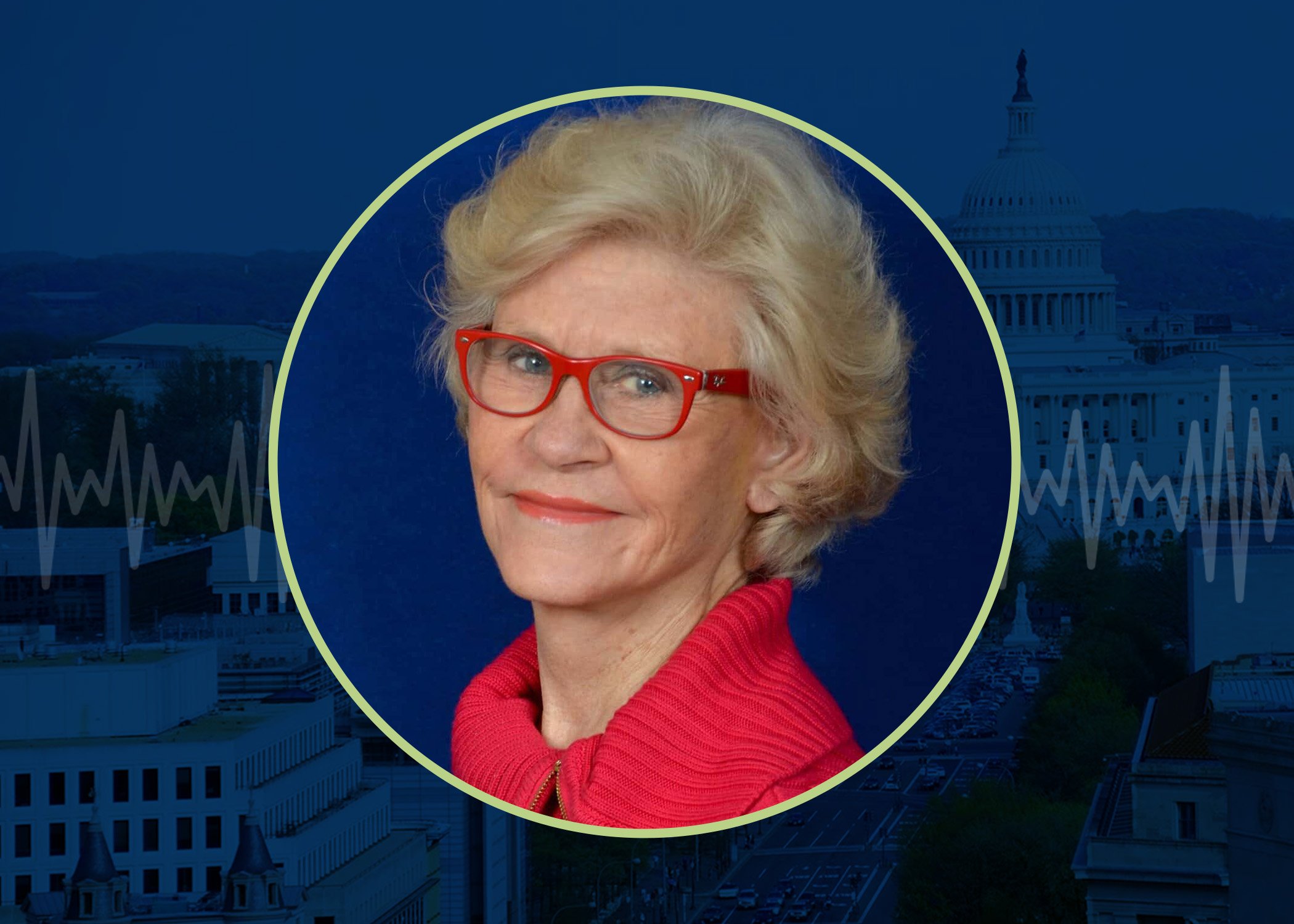
The Future of Education with Moreland University Founder Dr. Emily Feistritzer
In This Episode
Located in Washington, D.C., Dr. Emily Feistritzer has spent more than six decades shaping the field of education. From leading high school science and math classes as a 19-year-old to founding Moreland University and creating its innovative educator preparation program, she has dedicated her life to elevating the teaching profession.
In this episode, Dr. Feistritzer shares insights from her unique career journey and reflects on the enduring purpose of teachers and why she believes artificial intelligence represents one of the most exciting opportunities in the history of education.
Key Topics Covered
- Why teachers should be defined as “facilitators of learning”
- Why AI is the most exciting development in education during her lifetime
- The importance of keeping schools as places for human connection and collaboration
- Rethinking state-by-state teacher certification requirements
- Advice for new and experienced teachers
- And more!
Episode Guest
Listen Now




Episode Transcript
Please note, this transcript is generated by AI and may include some errors.
Spencer Payne: Okay, welcome to another episode of Front of the Class Real Stories from Real Educators. Our real educator today has spent more than my life in this in this profession. And she is Emily Feistritzer. And Emily, could you share a little bit I will not do justice to your introduction. Could you share a little bit about your background when you meet other people in this profession? Education? How do you introduce yourself? What are the things that you like to talk about?
Emily Feistritzer: Well, I've been in education since I was born. My grandmother, my mother and my aunt, who are the greatest women I have ever known, were all school teachers. So they really introduced me to formal education. My grandmother and mother and aunt all taught in a one-room schoolhouse. So, you know, it sounds like ancient history, but it was a little over...80 years ago. So I come from education. It's been my passion, my love, I'm dedicated to it. And I've had a wonderful, wonderful ride, particularly around the teaching profession.
Spencer Payne: And can you share with that that kind of family dynastic lineage? Can you share a little bit about some of the highlights of what was passed down to you? And then maybe what have you hoped to pass down to the next generation of teachers? Can you give us a little bit of a sense of that?
Emily Feistritzer: Absolutely. What was passed down to me is that the primary role of teachers is to be facilitators of learning, of course, but also the adult in the room with learners. And if you go back to when we had one-room schoolhouses, those teachers didn't know physics and chemistry and history and geography but they knew how to help young people learn. So I remember my mother buying the set of the Encyclopedia Britannica so that we at home could look things up in a homework assignment, for example. So the role of teacher, I still believe, is a facilitator of learning. It's the adult in the room who helps young people learn, grow, and develop.
And the context in which that happens has certainly changed many, many times over the decades. But the essence of what teachers do is help young people learn, grow, and develop. And I think the context in which teachers find themselves teaching can continue to change. Because as long as we stick with what they're there for, which is not necessarily to disseminate knowledge. I think where education over time really got off the rails and continues to from time to time is with a lot of external regulation and a lot of demands about, you know, teach this subject this way has really inhibited the robustness of actual learning with young people.
Spencer Payne: And I'd love to explore that a little bit more. Can you share more about that? there any particular regulations, policy changes that you have seen over the years that you feel like have, maybe they had good intentions, but maybe the results have not been not lived up to maybe the intentions, especially as it relates to how you described the purpose of education and the educator is not to, you know, force feed fact one, two and three, but to facilitate kind of the art of learning and help students, you know, kind of foster the art of learning and make learning interesting and fun and be the adult in the room.
So given that context, can you share a little bit about more specifics, if you will, of like, what are some policies that you've seen that you thought maybe this just seemed like it was a good idea, but it just hasn't had the quite ramifications to the positive that people maybe thought that that particular policy may have had.
Emily Feistritzer: That's an easy answer. I think the testing requirements over the years and even today are unrealistic because they're really content-based. you know, who says that, I can't give you a specific example because I don't have a test in front of me right now, but they're so detailed around knowledge acquisition.
You know, so you get tested on, you know, when the Civil War was and who fought who and where were they and, you know, which battles did the North win and the South and, know, all of those things. I, it definitely doesn't fit in the world we live in now. But I think as time has gone on in the history of education in my lifetime. That has been one of the biggest handicaps to real student learning is this emphasis on content knowledge acquisition. And I think now with AI, you can just forget it, you know, because I use AI all the time. I mean, I got AI to diagnose what was wrong with my car when the car dealership couldn't do that.
So I think the AI is the most exciting thing that I've seen in my lifetime for education because it really does redirect what the focus should be in learning. And it's way beyond acquiring bits of knowledge that you have to keep in your brain until you take the test that indicates that you're ready to go from grade four to grade.
Spencer Payne: I'd love to dig into your perspective on AI in a second, but to add to that, remember, I still remember this. I don't even know how long ago this was, over 20 years ago, AP US history in high school. And there was a couple of specific dates that our teacher just, I mean, he made us memorize because just because he knew they'd be on the test. What year was the Magna Carta side? 12, 15. What year was the Spanish Armada defeated? 1580. I still remember this stuff just because it was so drilled into our head. But you know what I can't tell you without looking it up or without doing my own kind of, you know, separate storytelling research analysis today is like, well, why was the Magna Carta so important? What was the significance of this Spanish Armada being defeated in 1588? Or even something as simple as, hey, after the Civil War was over, how did we reunify and become the United States again? Like a bunch of countries just said, no, we're out. And then they got defeated and now they're in. It's not that easy. How did that actually happen?
I don't, I don't really remember exploring a lot of that stuff, right? And that's the more far more interesting aspect of learning is, Hey, how, do we do this character arc from we're at war to now we're now we're, unified again. How did that happen? That's way more interesting than what year did it end? so anyway, I just want to highlight that point of like, you know, facilitating learning is some of these how questions, why questions, why would a person react that way? What were the, what were the signs of the times, how does that correlate to today? Those are far more interesting than what year did this thing happen, which anybody can look up on AI today. We got a dog who agrees, obviously, with this assessment. But with that background, right, and with AI today, now I can look up on my phone anytime I want. When was the Magna Carta signed? Why would I be tested on something like that? So I'd love to transition that into, yeah, why are you so excited about AI?
What do you think this allows maybe teachers to...and students to be able to do that they couldn't do 10 years ago and to embrace this technology with optimism instead of with fear. What are you seeing there?
Emily Feistritzer: I see tremendous opportunities for homo sapiens, our species, to really grow and develop because we're up against AI now. We created this. It didn't come out of the Neanderthals. And I keep reading and hearing about and quoting. We've only been on this planet about 300,000 years. And so for our species to think that we are the end and be all and looking around for whether there we've got any relatives on Mars and other planets. I just heard Elon Musk the other day said, if we did, we would have found it by now.
So we're really at a place in our livelihood, literally, of dealing with AI, artificial intelligence, in a way that keeps in mind that it exists because of us. We did create it. So I think it and its future is robust. I feel very, very positively about it.
I think it provides opportunities for us to use the brains that we have that no other creatures have yet to really analyze facts and figures and data and what AI spits out and really deal with the fundamental questions of, you know, what do we do with this? You know, what do we do with this information? You know, what do we do with the fact that we don't have to buy textbooks anymore, you know, and we don't really have to use lesson plans the way we always have. And we really don't need maybe to have a student go home with a homework assignment that they have to look up anyway, you know. So why are people so upset that they, that teachers are saying,
I interviewed teachers a couple of years ago and decided they all say the same thing. So I threw in the towel on finding out what teachers think because they're in, they're all in, you know, for the most part. And they love the fact that they can say to their students because now schools are giving out iPads instead of textbooks. You know, tonight, go home and look up such and so and do the homework assignment and we'll talk about it tomorrow. I think that's a fabulous way for education to move forward is to use artificial intelligence, which we did create. And I think the robustness of ways that it can be used in formal and informal education are just phenomenal. My only regret in life is that it ends. I would love to live another 80 years, see where the trouble goes.
Spencer Payne: And if you did, what are some things that you'd be most excited for to see unleashed in education? And what are some things that maybe you'd love to see, again, policy changes, whatever it may be that you'd like to see, that you think are kind of steering us on the wrong course that you love to see changed? So again, if you could go spend another few decades in this profession and really help steer where you think you'd like to see it go, what are some of the things you'd like to see more of or some of the things you'd like to see less of and why?
Emily Feistritzer: Well, I think we should keep schools. I think we really should keep buildings and places where young people, when they get to be, you know, five or six and they're in first grade or kindergarten, because we've already got preschools doing these kinds of things. So I'm very much hopeful that we will keep these buildings and these places where young people can go during what we call a school day and learn from and with each other and be guided by a teacher who cares about those kids and their learning. I don't think going forward that we're gonna need, I don't think that the school textbook publishing businesses are gonna fare too well because I think there are ways online for knowledge to be acquired.
And I would like to see teachers trained as does the Teach Now program, which I created in 2011, and your organization now runs. But that program was designed to equip, enable, and empower teachers to go into any classroom anywhere in the world and diagnose where those students that they're responsible for being a teacher of can actually design learning experiences that enable each one of those kids to learn, grow, and develop. And teachers have always played that role, but I think we should make it front and center that they are facilitators of learning. They're not dispensers of knowledge. don't have to go to school anymore to acquire knowledge. There's no question about that. Nobody has to step foot in an educational institution anywhere in the world to acquire knowledge. So why are those places important? They're important because we are human beings.
And we are very species interacts with each other. And so learning from and with each other and while you're acquiring knowledge is just logical. It's not unusual. It's what we do. And taking the emphasis away from, you know, what's in a textbook that somebody wrote much of which may even be outdated. And people say, you can't trust what AI says. Well, what about all those textbooks that have data and information that we have found out is actually not accurate. So it's a mutual, it's not mutual meaning even by age group or even level of education. It's the process of learning, which is collaboration and talking and sharing and discussing and problem solving together.
Spencer Payne: And on that note, there's a lot of, especially since COVID, right? There's been a lot of new approach, a lot of growing and falling of homeschools and microschoolers and pods and alpha schools saying, hey, we can get all our work done in two hours a day. And then after that, we're to go work on like real world social problems and how to maintain a car and how to balance a checkbook and like real world skills, because the school part we can do so much faster. So curious amongst homeschools, pods, microschools, alpha school, all these things that are kind of relatively new. I homeschool has been around for a long time, but like really exploded in COVID. So relatively new in terms of scale. there any of these new or approaches that have been around for a while, but have seen increased popularity that get you particularly interested or excited in terms of what they might unleash or what they might allow?
Emily Feistritzer: Well, it's already unleashed. mean, parents are the ultimate decision makers about their children, and they should be. And teachers and education people, you know, come along a little later than when the kid is born and raised by its parents. So one of the reasons that homeschooling took off was the pandemic.
And during it, over 10 % of kids were doing homeschool. So that tragic, tragic, tragic time in our lives really enabled us to sort of, I think, view things differently. And one of those things we have been viewing differently is how kids get educated. So parents were able to see during the pandemic that kids could learn online, you know, and that they could help them do that. And then when you throw in all the, you know, the social, religious and other concerns that people have and find scary, parents want more control over what happens. You've got, you know, kids with getting killed in school. And so the parents are the primary caregivers of the children they bear have had a lot to say about the direction that we're now going in. I think it's terrific. I think as long as I think there need to be buildings that young people go to during the day. I'm all for that.
But what they do there should be learning how to learn, learning how to make decisions learning how to analyze data and information. And that's different than acquiring facts and figures that you can regurgitate on a test that the state requires that you take.
Spencer Payne: 100%. I've often thought of like just silly little examples that you can kind of unleash for kids. I got a three year old and a one year old. So this is all hot for me too. Like, all right, what do want to do? How do we want to teach that? Like, what school do they go to? How do we add to that experience? And just as a dumb example that can relate to kids on a, you know, on a playground is, everyone sees some, we had bullies. I mean, I'm sure there's still bullies that happen, right? And there's some interesting things that you can play with a classroom.
Like, let's take a theoretical example where there's Alan and Fred in the in the in playground, and Alan hit Fred. Who's at fault? Well, Alan hit Fred, it's obviously his fault, right? Well, now, now, okay, okay. 100 % say that Alan's at fault. Okay, well, now let me add an additional piece of information. What if Fred has been making fun of Alan and stealing his lunch money for the last month. And Alan has said, if you do this one more time, like I'm going to hit you.
And he didn't do it. He didn't do it. Do it. And finally, Alan, Alan went to his mom, like no one helped him. And so finally he, he hit Fred, but Fred had stolen his lunch money and made fun of him for a month straight. Now class who, like who's at fault? And just like, keep the point. The point I'm making here is like, let's just keep, keep adding a piece of information and just have a collective understanding of like, Hey, I guess who's at fault. What could they have done instead? how could this have been, the worded off earlier in the process. What could Fred have done? What could Alan have done? Again, I'm making up an example, but the point being is this has nothing to do with memorize a date. This is like, this is a real world actual situation of like, what could each kid have actually done? As you hear selective facts get answered, how does your opinion change on who's at fault or what the punishment should be and why?
Because this is thinking at scale of like, what do we do for criminal justice? What do we do when someone does something wrong? Who's really at fault here when someone provokes someone to do something like even you see in like sports games, right? Like one guy kind of gives a shove and then the next guy really pushes off. That's the guy who gets the foul call. Is that fair? I don't know. There's there's the point being is there's a lot of interesting ways to unleash real world scenarios where the kids can start to actually think critically instead of just memorize dates.
And I think that can be really, really interesting way that teachers, regardless of AI, whatever's happening, can infuse a little bit of real world reality scenarios into the classroom in a way that I don't recall seeing that when I was growing up. But there's a creativity there that you can always do. I don't know if something like that in a one room schoolhouse, right, where you don't have tests to take and you don't have a curriculum. There may have been more of that training type going on 60 years ago because you had the freedom to do it. And there's real world scenarios.
And so on that note, I am curious, like what are some things that you have seen in trends in education that are just the biggest differences compared to 60, 70 years ago when folks in your family were teaching in a one room schoolhouse where there might not be curriculum, there might not be a textbook at all. What are some of the biggest differences that you've seen over the span of those decades?
Emily Feistritzer: Well, actually there were textbooks, the textbooks and the encyclopedia were, and there was a lot more fact and figure acquisition and learning in the one room schoolhouses today than there probably are now. But it's the vehicle, it's the way that those facts, I think it's important that we America and you can be in Great Britain or China or wherever you are in the world. I think it's terribly important for young people to know from whence they came. I think it's important to know that Columbus came over here in 1492 and these facts I think are really important. But it's the emphasis on grading acquisition of knowledge that bothers me, you know, because you may suppose some kid lost the fact that it was 1492 in Columbus, but knows everything else about, you know, the diseases they got and, know, where they landed. so it's, it's the emphasis on the minutia of learning that bothers me.
And I think that AI is gonna help with this if teachers really are allowed to use it in their classrooms because you will, we are finding that you will get a different answer sometimes. So it presents itself with an opportunity to actually discuss the topic and really learn whatever it is that you're trying to teach those kids, that they really can internalize and learn what really is going on with landing and the discovery of America or whatever the topic may be. I was a science and math teacher and I taught, I was a Catholic nun at the time and you got to, nuns could teach without having a teaching license in a Catholic school.
So I never had to jump through those hoops. I excelled in science and math when I was a student. So I was teaching science and math. And I was teaching physics as a 19-year-old person, none. And I'd never taken a physics course in my entire life.
And those kids, they were all boys, I remember, taught me physics. I mean, we learned physics to get enough. Physics is a tough subject, mean, content wise. But we learned that together. And I still get, I have chills on my back now. I still get notes from some of those people thanking me for what I taught them. And what I was in that physics class and all of my classes, because those kids knew as much as I did. I was teaching from the textbook and they were learning from the textbook at the same time. And we both learned a lot.
Spencer Payne: Can you share? I would love to hear a little bit more about this. Can you share a little bit more of, you know, how did you approach that? and when you're in a world where you feel as a teacher, I don't have any background in this, I might be one chapter ahead of the kids, but it's all still textbook knowledge. I mean, in that instance, how, how you mentioned, I didn't really teach them. taught me. Can you share a little bit of like, how did you do that? Like, for example, you know, does a boy ask, Hey, why does it work this way? you say like, don't know, why do you think it works that way? I mean, you just kind of throw the questions back and try to have an in like an interaction and then go back to the textbook and then try to use examples like how do you remember how did you facilitate that? Because I could see a lot of teachers today who might be maybe they're teaching a new class, they've never taught before. And they might be wondering, gosh, how in the world am I going to do this? How what advice would you share for them? How did you go about
Emily Feistritzer: and it's a long time ago, but my memory is, I think I was really very transparent about we're learning this together. We're learning this together. Here's the textbook. You you have to learn. You're gonna be tested on your acquisition of knowledge of what's in this textbook. And I'm here to help you do that.
I taught biology, chemistry, physics, and upper level math to high school students when I was two years older than they were. So we did this together. It made it easy. But they, and they're scientists and mathematicians today. You know, they're probably retired. But the point is there's nothing wrong, bad, or incompetent about a teacher who says, let's learn this together. You know, let's...we're in this together and I'm here to support you and make sure that you pass that exam because that's required. So there's nothing wrong with that. Teachers don't have to be walking on water. You know, they don't have to know all the content they're supposed to be dispensing.
That's why defining teachers as facilitators of learning. They've been doing that for centuries. mean, look at Plato and Aristotle and Socrates and all those people. I mean, they people surrounding them and they just talked. So I think this emphasis that teachers be experts in the content fields and the, you know, what's on the test to make sure that the student passes it is a lot of unnecessary effort and noise. And I think I will still get to live to see all of this change. And thanks to AI, which we humans created. I'm very proud of us for doing that.
Spencer Payne: And I would love to turn into a little bit more some policy type questions and conversations, if I may, specifically around kind of teachers unions in the Department of Education. if you'd love to explore a little bit, if you had a magic wand or you were the zarina of all what you might change, but Department of Education, right? There's a lot of talk now of disbanding it, shrinking it, et cetera. And for those who aren't aware, right?
We've only had a Department of Education since 1980, so it's not like it's been around since the beginning of time. We've still had public education since before it was around. So, Curious, what is your opinion, what is your take, on what basis would you kind of judge, hey, the Department of Education has been good, bad, neutral, and or what should it do differently? What are the functions that it's serving well and what are the functions that it should serve?
potentially differently. your take on the debate that's going on around the Department of Education?
Emily Feistritzer: Well, actually, I was around when Jimmy Carter signed it into law on October 17th, 1979. And I started a newsletter called Department of Education Weekly because I figured the rest of the world needed to know what that department was doing. What's interesting about the US Department of Education is that it didn't start anything new. There was an office of education and another agency in the federal government. And what they did was take several of those programs and put them in this new US Department of Education. The role that the Department of Education that has played that I think is most significant is its data collection work because the Institute for Education Sciences, which houses the National Center for Education Statistics, and the Department of Education in terms of like civil rights and several other issues, nothing that the department did or still does was new.
The biggest contribution and reason why it or something like it should exist is we still need a place that's collecting data and information that we all can use to make better decisions about education. So I don't worry about, you know, handicapped children so much and civil rights and things like that because that will always be taken care of. I mean, they can put that back over. I can't remember if it came from HHS or HUD, but it's not frightening to get rid of the US Department of Education, except its primary role, which is to provide hard data and information about what's going on in education throughout this country. And without that, we're gonna, you know, the only decision-making that should be happening is data-based. You you can't just keep mouthing off. I mean, we have a lot of people mouthing off about the way things ought to be. Well, on what basis?
You know, what's your rationale for requiring such and so or not doing this or whatever. But facts and figures are important. You can look at what's going on in our world today, look at Minneapolis, I just pick anything. What's changed is people have technology, they have handheld devices. I mean, look at what happened in Minneapolis. Without day-to-day people walking around with iPhones and cameras taking pictures, where would we be?
Spencer Payne: a lot of he said, she said, which still exists. Yeah.
Emily Feistritzer: Yeah. Yeah. So to answer your question about the Department of Education, I'm not terribly worried about the parts of it that affect the lives of children as much as I am the parts of it that affect the decisions that decision makers in this country make. And without that national state by state analysis of data and information, I don't know where we'll be. Does that answer your question, Spencer?
Spencer Payne: Yeah, then similar question on the role of teachers unions. I love your perspective on, you've alluded to this a couple times, kind of defining what the purpose of a teacher is, or on what basis do we make this decision, which are great groundings for what is the purpose of this organization? What is the benefit we're trying to achieve? What is the cost we're willing to bear to achieve that benefit? Curious to get your take on, similar, on teachers unions, right, of, you
What do you believe is the purpose of teachers unions? What is the cost that we're willing to bear to achieve that? Are they doing it well? And if so, why? And if not, what would you do differently? Just curious to give it again, your expansive knowledge of the educational space. I'm curious to get your take on some of these big kind of macro policies, just because you're much more uniquely qualified to have an opinion on some of these things with multiple generations in education. You spent over five decades in this profession than a lot of other folks who just don't have that historical context. So curious to hear your take on similar on teachers.
Emily Feistritzer: Well, I've had my run-ins with teachers unions. You know, I've done a lot of studies on education that they weren't very happy about, but I think they're important. And I hope they don't go away. I hope both of them, AFT and NEA both survive because they do have teachers backs and teachers know that. And teachers know that. So having, call it a union, call it whatever...an organization that exists for no other reason than, I mean, they may get pulled off into some political things that happen, but they fundamentally exist to represent teachers. And I think that's important. I think they've done a great job in keeping the profession a profession and keeping it alive and fairly well.
And they do have teachers' backs, especially when it comes to fighting for higher pay and health rights and all of the things that they do for teachers. So I don't, and I don't see that going away. I think I hope that doesn't happen.
Spencer Payne: And if you had had such, again, czar, czarina type authority over all aspects of education, the department, teachers unions, whatever it may be, is there any one or two things that you would just stand by as we're gonna do this now or we're not gonna do this now?
If there was, if there were one or two simple things, you would say like, these are things that we're just going to go change overnight. Does anything come to mind for you? Like, is there anything that you would like, kind of, kind of almost a magic wand situation, if there was anything within the educational world that you could point your magic wand at and change, either for the better, stop doing, start doing, is there, where might you point that wand?
Emily Feistritzer: It's an easy answer for me. And that's to stop the what I think is unnecessary state by state requirements for becoming a qualified teacher. I think the the the state entities that say you can be a teacher in this state if you do this, this and this, and you can't go to the neighboring state because that state doesn't recognize state A's regulations and requirements. And those regulations and requirements, I know them well. I've written about them, I've done studies about them. I started TeachNow, I dealt with them. Those requirements are not the kind of standards and requirements that I think we should be using to ascertain whether or not a grown adult with an education can be a qualified teacher. So I would really get rid of that.
Spencer Payne: And if you got rid of it, on what basis or what standards might you hope to apply to all 50 states? what if, all right, so that's now gone, what would replace it? Like a national kind of standard, and if so, what would that look like to you?
Emily Feistritzer: Well, actually, I would go global. The world is a big place. There are 69 million teachers in the world. 3.4 million of them are in the USA. That's a fact. You can look it up. And I'm concerned about all of those people because people are moving around. I mean, one of the things we learned in TeachNow is that we had American citizens who lived in Minnesota or DC or Florida and they went abroad because they wanted to just live over there for a while and they had to pay the rent. So they got jobs teaching English as a second language and fell in love with teaching and said I'm gonna go back to Minnesota and be a teacher.
Well, in order to do that, you've got to jump through all of Minnesota's regulations and rules. So you can never mind that you've been teaching English as a second language in Beijing for five years, successfully. So it's, it's, you know, it, so I, what I would like to see, you know, I have a nonprofit called Future Teaching Institute, and we're actually working on what I'm talking about right now.
First of all, you have to find out what is before you know what you're replacing. So there's a lot of research that needs to be done. ideally, we would have a set of criteria for what makes for an ideal competent teacher. And it would not include half the things that are now required as hoops that a young person or an old person has to jump through in order to be a qualified teacher. So I would, I would, and I think that's doable. I think, I think we can get rid of all of that and come up with a set of criteria that are measurable. You know, there are measurable things that make for a good teacher, like empathy and caring and knowing how to use resources and knowing how to equip, enable, and empower students to learn on their own. I mean, there are things that teachers' qualities and traits and competencies have to have. But the state regulation requirements for that are getting further and further away from what actually is required of an adult to be a good teacher.
Spencer Payne: We'll transition now to some rapid fire quick hitter questions as we get close to wrapping up and you may have just said the answer to this, but I'm just going to ask again just to make sure I heard it. But what to you is the number one single most important trait that a good teacher needs to possess?
Emily Feistritzer: empathy and caring for them and the ability to really communicate with young people so that they feel valued and empowered to learn.
Spencer Payne: Any proudest moments you have had in your six plus decades across the educational field? Anything rise to the top that is just still still makes you light up or smile?
Emily Feistritzer: I really have to, I mean it's sort of emotional for me because I really have to go back to my beginning days of teaching when I was about the age of the people I was teaching and didn't know a whole lot more than those kids did. And I think that's true for so many teachers of all ages.
But the parents, the students, they just overrode all that feeling of, I'm not good enough. I don't have the papers that are required. So I really mean that. Those are just emotionally. I wouldn't be where I am today if I hadn't had those early experiences modeled by my grandmother and my mother and my aunt and my own experience as a really uneducated, non-credential. The only reason I got away with it is I was a Catholic nun. that is a true story.
And all the young people in the world, you know, just dream big and don't believe in failure. Because all failure is, is you give up and never give up.
Spencer Payne: And for a new teacher who might be in their very first year right now wondering if this is for them, what might be the number one piece of advice that you would share with that new teacher? And maybe you just shared it, never give up.
Emily Feistritzer: one ever given, but love those kids and remind yourself that that's why you're there. They need you more than you need them or their parents. And just give them a sense of belief in themselves that, you know, if they're having a hard time just learning a factoid you know, it's not the end of the world. But I think if teachers can just focus on their job of equipping, enabling, and empowering young people to grow and develop is what teachers should be doing.
Spencer Payne: And two more real quick ones. there, for people who are not in the educational field, maybe have never spent any time there, what is the top one, maybe two things that you wish you could convey to those people, parents, et cetera, who have never walked a mile in your shoes, they've never spent any time in the educational field, maybe they have kids in public schools, private schools, whatever it may be, but they've never done that, they've never done that job, what's one or two things that you wish you could convey to those people who have never worked in the education profession?
Emily Feistritzer: Trust it. Trust it. The people who are building schools, running schools, teaching in schools are good people, by and large. You don't go into education to become a billionaire, you know, or to become particularly famous. You you go. You're in education because you really believe in educating young people.
And so my plea to parents is recognize that. know, these school leaders, these regulatory bodies are not bad people. a lot of them are ill-informed. You know, put your support behind them and talk to them. You know, we just need to talk about our differences. And if something's going on in a school that you don't think is right, talk to them about it. Most people in education are good people, inherently good people, and they can be reasoned with. So rather than being pissed off or mad or think that they're all incompetent, let's talk about the commonality we have here, which is young people needing to learn, grow and
Spencer Payne: Yeah. And any final words of wisdom, anything that we, you maybe were hoping that we chat about today that we didn't have a chance to that you want to share as new or maybe something that you've already said, maybe even said multiple times. but want to say it one more time because it's just so darn important to re-highlight. So any new or final words of wisdom.
Emily Feistritzer: Every minute of your life, dream big and don't believe in failure. If you can dream it, think about this. If you can dream it, it can come true.
Spencer Payne: Well, thank you so much for sharing your opinions, wisdom, et cetera, after a family lineage that's gone back so long in the educational profession. So thank you so much for your real stories from a very real educator. Appreciate you.
Emily Feistritzer: Thank you, Spencer. It's been fun.

Moreland University can help you take your teaching career to the next level.
Whether you’re looking to get professionally certified or earn an M.Ed., our 100% online programs can help.
Complete your no-cost application (it takes less than 15 minutes!).