
.png?width=300&height=74&name=MorelandU-logo-WH-RGB%20(1).png "Moreland University Logo")
Front of the Class Podcast | March 19th, 2026
Building Student Leaders with Paddy Bailey
In This Episode
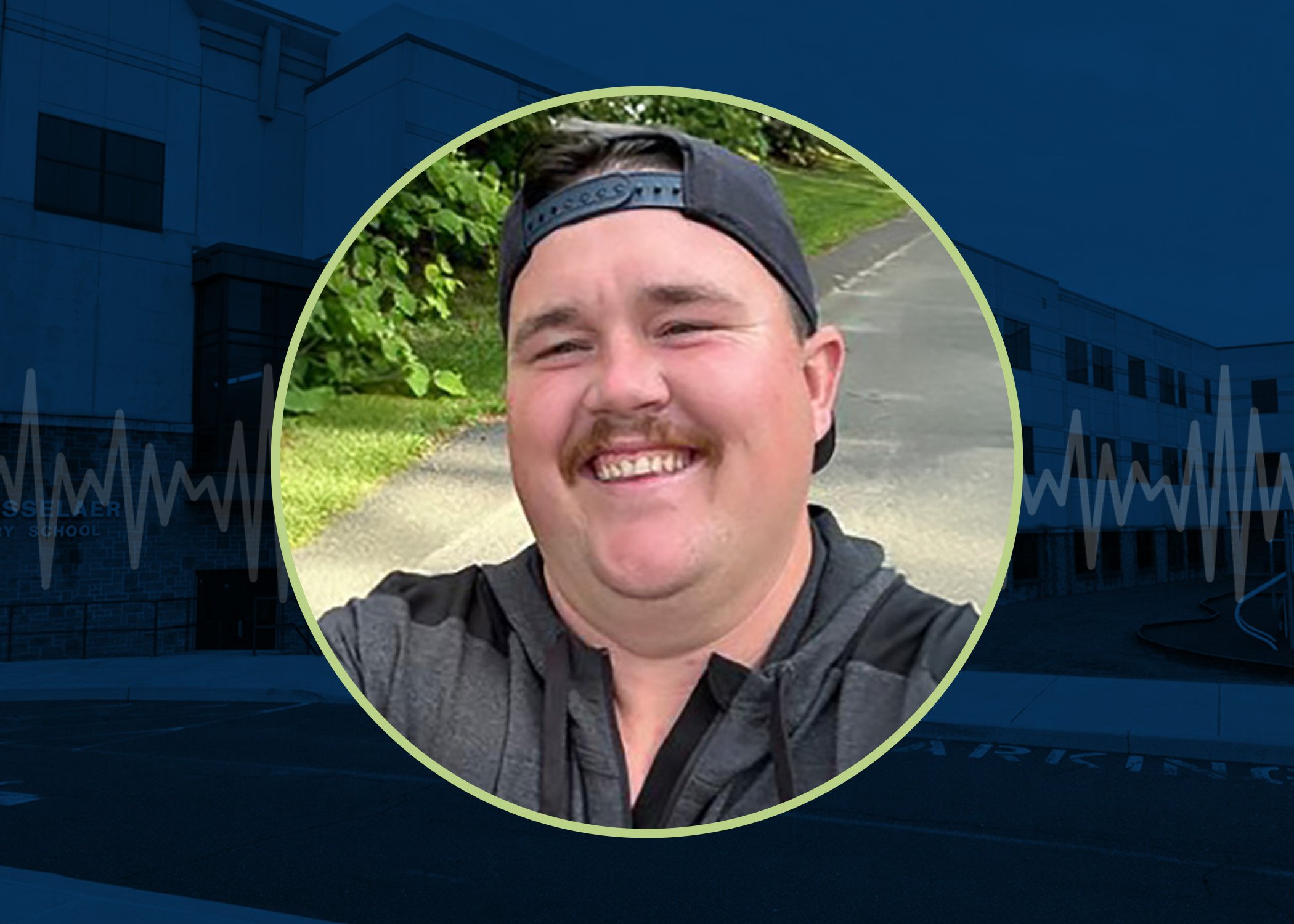
Paddy Bailey is an elementary teacher in upstate New York who believes physical education can have an impact beyond games and competition. Teaching kindergarten through sixth grade, Bailey focuses on building relationships, providing leadership opportunities, and helping students grow through both success and failure.
In this episode, Bailey reflects on why he prioritizes “process over product” and how he structures his classes to challenge advanced students while uplifting everyone. From celebrating small victories to helping secure a $10,000 bike grant so kindergartners can learn to ride, Bailey shares how passion and purpose fuel his work — an inspiring story that will resonate with new and experienced teachers alike.
Key Topics Covered
- Why relationships are the foundation of effective teaching
- Teaching students to value effort and growth instead of perfection
- Balancing competition with inclusion in P.E. classrooms
- How to cultivate student leadership and ownership
- The power of positive phone calls to parents
- Getting involved in professional organizations and securing grant funding
- And more!
Episode Guest
Listen Now




Episode Transcript
Please note, this transcript is generated by AI and may include some errors.
Spencer Payne: Okay, welcome back to another episode of Front of the Class Real Stories from Real Educators with Paddy Bailey, our real educator today. And Paddy, can you introduce yourself? How do you describe yourself to other educators in the profession? Maybe things like what do you teach? Where? What grades? How long have been doing this for? Fun facts. However you want to take that question. How do you introduce yourself to other educators,
Paddy Bailey: Sure. I'm Paddy Bailey. I am a elementary PE teacher. I teach grades K through six. I've been doing this for about 10 years through a couple different buildings. I'm at my current building for three years, Rensselaer City Schools in upstate New York. And a fun fact about me is I did my student teaching in Australia. So that was a really fun experience for me. And, you know, I guess if I was introducing myself to other educators, I would just say that, you know, make sure you're saying phys ed instead of gym class, because otherwise we got a problem.
Spencer Payne: I don't want any problems. So we're going to keep calling it phys ed for the rest of this the rest of this episode. No problems with Australian Patty Bailey from down undone. All right, well, perfect. Well, I'm curious, what got you into this profession in first place? What what drew you to it? How did you end up here?
Paddy Bailey: No, it's okay. Yes. So actually, I think it kind of starts with people different ways. But for me, was always, we always see this in education, like that one person that made you fall in love with education. it wasn't even what they had to do with teaching, but how they taught and how they cared about you. And I think specifically about a few teachers, but the person that comes to mind most for me is Scott Sabrin. He was actually a football coach of mine. He wasn't a teacher. And he...
Uh, he was a teacher, just not my teacher and, uh, he taught history. So I think when I was like probably 15, I was like, I'm going to teach history. Like I really like helping other people. I have always had a knack for it and I'm going to go teach history. And then as I got a little bit older, I was like, well, maybe I want to be, you know, in PE or maybe I want to just, I was thinking about coaching college football. was like, you know, maybe this is, I find it funny because as I got older, we always talk about how, don't use education as a path to coaching.
And when I was younger, I always had thought it that way. And as I got a little bit older, I was like, whoa, this is way different than, you know, me coaching on a football field and me teaching is way different. So I think that, you know, those people along the way helped me get into education. And then once I, I had some amazing professors at SUNY Cortland, out to any red dragons out there. So it's just an amazing place. And they taught me, you know, what this profession can be.
Just ever since then, you I fell in love with being my own advocate and I love what I do, obviously, that's why we're here. But, you know, I think that PE has a special place because you can teach things outside of the classroom. You you teach people how to be better people. Not only, you know, I don't care if you're a good basketball player, I care if you're a good teammate, care if you're a good person, I care how you treat others. And I think that in a gymnasium is somewhere that you don't get to, or somewhere that you get to see those things that you don't in other places in the school building.
Spencer Payne: And what can kids expect in your PE classes? what's, is there, you know, what do you do differently or what do you do similarly that you've stolen from maybe other people? If I like that, I like that. So maybe what, anything, how would you describe, what does a Patty Bailey PE class look and feel like? How is it different? How do you put your unique stamp on
Paddy Bailey: So I think it starts with building relationships. And I think that starts day one. I think it starts anywhere. But I think that it starts with building relationships because if you want people to do things that they're a little bit uncomfortable with, they need to be able to trust you. So I think that me, you know, earning students trust and saying, hey, we're going to do something that you like, but you're going to also have to do things that you might be uncomfortable doing or might not love. Because for the sake of it, I always have this saying, say like.
Every unit isn't going to be your favorite unit, but it might be somebody's favorite unit. We're wrapping up jump rope this week and there's, we had like 83, you know, black belts, which, know, like it's like the highest honor you can earn and stuff like that. All those kids obviously really love jump rope and there's people that might not pick up on jump rope the whole unit, but they're going to still give the same effort. If I build a relationship with them, then other people.
And I think what my unique stamp is, is that I have always, you know, found a way to love things for how they develop students out like we just talked about outside of you know the X's and O's or outside of the athletics of a game like yes we're doing jump rope and learning how to jump but what I'm really looking to see is like do you push yourself can you you know can you figure yourself out when you're tired can you work through your emotions if you fail how do you handle success how do you handle failure and I think that teaching those things intentionally to kids
And we talk about those things a lot. We talk about, you know, like I had a big talk with my third graders today about how our goal this unit was like, we had some issues in the beginning of the unit of like kids not getting along at a certain station and saying like, I'm not at recess. There's other people that aren't at recess. Like you're going to have to grow up to be a person that either somebody wants to play with on the playground or somebody doesn't want to play with on the playground. I can help teach you those things, but you have to do it. So I think, you know, giving students ownership over not necessarily what we're doing, but how they handle themselves is a big staple of my classroom.
Spencer Payne: And I'd love to hear some of the how right? I'm a lot of teachers probably like, yeah, I want to do that too. But sometimes the how can be really hard. And I'll give a dumb example, right? Like I got a little three and a half year old and you know, we just built his bunk bed. And sometimes, you know, as going to bed, he'll take his shirt off and he likes to try to throw it and land it like on the curtain rod to see if he can like, can I get it to land right in that spot? And sometimes he doesn't do it. And then sometimes, you know, it's a three and a half year old who's, I can't do it. Right. I'm like,
We don't, we don't, what do we, do we say that? No, we don't say that. What do we say instead? I haven't done it yet. We're just practicing. Do you want to try again? cause again, I'm trying to also help cultivate that mindset of like, okay, so didn't try, you can get, get it on the very first try. That's okay. Like we're practicing, trying to build that muscle. so I'm curious, like how, how do you go about that? It's easier said than done. If there's a kid who it's jump row class, they're tripping over their feet. They don't like this.
Mr. Bailey, do not I don't want to do this anymore Like how do you actually approach that and encourage that and encourage them to keep trying and especially doing something that Maybe they aren't gifted at or they don't like or they don't want to do like how do you actually how do you actually encourage that trust? Like how what are some examples like anything even come up this week of like how did you approach that with one of your students?
Paddy Bailey: Yeah. I think that it's not to sound like a broken record, but again, for me, that really comes down to like developing the relationship. Like if kids know that you care about them, they're going to try harder things. Like I have a student today who was like, I'm never going to get over, you know, 10 jumps. And I just reminded him, I said, I walked up to him and I said, Hey, listen, I said, I don't care if you're a white belt or a black belt. The way that you work is what I care about.
You know, like, so I think that falling in love with the process over the product, especially like the way that youth sports is, and I don't want to get into that discussion, you know, too much with being an education, but like we're so obsessed with winning tournaments at eight years old. We forget that like the goal is to make a well-rounded individual. So I think that getting kids in PE, especially to fall in love with the process of like, Hey, you might not be able to get 10 jumps, but two days ago, you couldn't get five jumps and now you have five jumps. So I think setting those small milestones. And I think the second thing that is really powerful in my classroom, and I think that a lot of other educators can take away, find students you can trust to be the good to other students.
So like today with my fifth graders, it's the end of the unit. Normally I would count their jump ropes for them and they would, you know, wait for a minute or two and then I'd count. I said, hey, find a partner. If you're a black belt, go find somebody and count for them and work with them. And if they need help and stuff like that. just finding, and that might change from unit to unit. Somebody that's really good at basketball is going to help somebody that's bad at basketball. Somebody that's really good at gymnastics is going to, you know, and I think that putting the leadership in students' hands sometimes and saying, hey, and even if they fail, like that's the hard part. And I get that, well, I don't want to go through all this. And then the product doesn't come out the way.
But the product was never the goal. The goal for me was never to have 100 % of black belts. The goal for me was to have 100 % of kids that feel better about their goal setting and feel like they accomplished one thing. And I think that sometimes, especially you know this as we get older, and I have a three year old too, so, are about to be three year old. I feel the same way. like, you don't see it until you have kids and you just have to remind yourself that like, small victories, especially to a smaller person, are such a building block. Like, I would be willing to bet that any of these Olympians that just competed, you know, weren't perfect when they were eight, but eight-year-olds don't know that. So you have to really be explicit about, like, failing in here is expected. Like, it's going to happen.
If you make, if you're making 100 % of your shots, we're playing basketball in a couple of weeks, if you're a...if there's a fifth grader, makes every shot. Like I'm going to go call somebody and say, Hey, he needs to go be on a basketball team or something, but it's not going to happen. Like we have a big talk all the time. Like Steph Curry is one of the best shooters in the world. shoots 43 % from three. He misses six out of every 10 shots. We need to start focusing on the process and that can carry over to the classroom for anybody that's listening to this and isn't a PE teacher. Like, yeah, see your final goal, especially, and it's harder in the classroom because there is state testing.
I don't have to deal with things like that and I understand those barriers that you may have, but when you have some time, like set up a project, even if it's a group project, have them create something, but your goal isn't to get them to create whatever it is. At the end, your goal is to see how they work in those groups, how they push through, what is their goal setting, what is it like, and what that looks like in your classroom might be different, but watch the process of what they're doing and that's what you're grading. Don't have any rubric for...
You know, do I have summative assessments at the end where I'm like, Hey, can this kid throw a baseball? Can this kid? Yeah, of course I do. But for me, what matters is, you know, like how were they to their group mates or teammates? What did they look like when they failed? What did they look like when they succeeded? Were they the kid that cheered on their teammate when they scored or were they the kid that was like, you know, whatever. Like, so to me, those are things that are really important to me in that you can put it in the classroom when you start focusing on the process of where you're going rather than the product.
Spencer Payne: And you alluded to potentially some answers there to this question, but I do want to be very direct with this question because I think it applies not just to PE, but also to every class, right? In every class, a teacher is going to inherit students who might be great at that particular subject and who might not be great at that particular subject. You're to have kids who love that subject. You're to have kids who don't like it at all. And you're trying to go conduct a classroom where you want to encourage the kids who like it and love it and excel and don't hold them back but you also are trying to bring up the level of the kids who maybe don't like it or aren't as skilled. And that can be a very tricky thing to balance. And so in your PE classes, like how do you go about kind of striking that balance?
And again, you kind of alluded to maybe a couple things that maybe can help you there, but how do you structure your class in a way that everyone can kind of get what they're hoping to get out of it, which for some kids is, wanna go be elite and I wanna go run around like a crazy person. And some kids might be like, I just want to try a couple things and maybe have some fun and I don't want to get made fun of, right? Like there's a very wide range of things that you're trying to account for. Like how do you go about doing that in a way that, you know, hope people are still trying and respecting the process and the kids are kind of getting what they want out of it, but you're still kind of elevating everybody along the way. How do you do that?
Paddy Bailey: Yeah, I mean, it's always a hard balance and it's especially hard nowadays because you are trying to find ways to challenge the elite of the elite without, you know, marginalizing kids who might not be where they want to be or where they don't want to. They just don't want to, you know. But at the end of the day, for me, I think that comes down to two big things. think one, structuring my units.
Spencer Payne: Great.
Paddy Bailey: so that those things exist in it is important to me. When we do basketball, I don't care if you're the best of the best or the worst of the worst, we're gonna learn passing, dribbling, and shooting the first week. We're gonna do it. Now, what that might look like in differentiation is at the end of class, when I say, you can have five minutes to go shoot around, the harder kids, I'm gonna say, hey, take deeper shots, take running shots, take moving shots, do things under control. And kids who aren't necessarily there are gonna do different things.
But I think that structuring that into your lessons, I love stations. I know that's not, that's a big, I know we call it centers in the classroom teaching world, but for me it's stations. We just got done with, like I was saying with jump rope, but like for gymnastics, for instance, we do four stations. We do rolling, we do like handstands, we do a vault station and we do balance beam. You know, those can all be separated by skill in a class.
When you go to rolling, if you're really good, I'll teach you how to do, you know, we teach like back bends or walkovers or stuff like that. And if you're not so good, you can do simple rules like a log roll or a forward roll. So you're still achieving a goal. You're still achieving what you would want to get out of it. And you're still challenging the higher end when you can. So I think being as, you know, implicit as you can with putting things into your lesson that help you challenge them and saying, Hey, you know, that might take an extra minute sitting down. Hey, I know that this class is coming and Johnny's going to get mad if he's on a bad team. So I'm going to make a game that would be a, the first team to finish this wins and we restart. I might make it a continuous game in that class so that when Johnny's team wins, he can say, Hey, I was first, but the team with Susie and Brandon on it, who aren't bad, who aren't that good can still work towards finishing the game.
You know, I think that in the PE world, what we have to be, you know, more cognizant about is like, this isn't 20 years ago, this isn't 30 years ago. And I grew up in that time and I'm the most competitive person alive. I tell kids that all the time. If my daughter wanted to play me in chess tomorrow, I would kick her butt up and down the chess board because that's the kind of person that I am. But when it comes to working with a teammate or if someone says, hey, this is, you know, how things are gonna go, then I'm also gonna tone it back and figure it out.
So I think that we have to be so specific in the way that we teach kids and say, I think too many times we take that competitiveness and dull it down. But there's a time and place for the competitiveness. I'm gonna give you your time to go play two on two with the two best boys at some point in this unit, but you have to give, again, the relationship, but you have to give me the time where you and you go and work with you go and work with Susie on passing because you're a leader and you need to help when it's time to help. So kind of that ebb and flow of like, I'm not going to give you six days of five on five basketball that's not appropriate at the elementary level, but I'm also not going to give you six days of we're going to stand around and dribble. And like I do with the kindergartners.
So I think that when you develop that relationship, especially with older elementary kids saying, if you just get through what we need to get through and you help be leaders, I can facilitate the high-end and the low-end.
Spencer Payne: Yeah, that was perfect. And one more on that note, like some of those kids who are, you know, maybe your leaders in that particular year. Yeah, how do you go about ensuring that they are uplifters of maybe some of the other kids in class? Because again, thinking back to old elementary day, right? Like it could very well be that some of those kids get frustrated by the kids who...
Maybe aren't as good, aren't as fat, whatever it is, right? And that's not the culture that you're trying to create. So like, how do you go about maybe having that initial conversation? where again, like what you're trying to do is build trust, build the relationship, free them for that last five minutes. We're like, all right, we'll put the best four together. You got to go nuts, right? We can't do that every day, but here, here's the deal, right? I need to see some of this from you. Can you share a little bit about like, how, do you, like, how do you look an eight year old in the eye and have a conversation like that?
Paddy Bailey: Yeah. I think that it's, you have to be, to use the model that I use, you have to be selective and you can't, I hate to say you can't be afraid to be wrong. And I don't mean that in a bad way. mean, like if I say that Johnny's going to help out and he's acting like an idiot, then I'm never going to ask him to help out again. Or I'm going to ask somebody else, but I'm not going to be afraid to try that at first as a solution.
But I also think what that comes down to is, you know, developing the culture of what it means to be in your classroom or in your gymnasium or in your time. I actually have a good colleague, his name is Reese Meredith. He's on Twitter and a couple other things. He teaches overseas and what he does is he actually has each class make their own class rules at the beginning of the year.
So he sits down at the beginning of year with his phys ed classes and says, hey, these are gonna be the rules. You're gonna come up with them. I'll write them down, but every single one of you is gonna come up and sign this at the end and acknowledge that this is what you want the gym to look like. And ever since I heard him say that, I was like, I haven't done it personally yet, but ever since I heard him say that, I'm like, wow, that's amazing. So I think that developing that idea of what...
does your gymnasium look What should I feel like when I go to Coach Bailey's class? I think that even those highly competitive kids can say, well, I want to feel respected. I want to feel challenged. I want to feel important. I want to feel heard. And when you remind them that, hey, just because they're not as good as basketball as you doesn't mean that they don't want to be respected, challenged, you know, heard and seen. And they say, you know, well, I guess you're right.
And some kids get that. I'm not gonna sit here and say I use every kid as a leader. I certainly don't. But I think that there is also merit to be had in people wanting to be a leader and help other people. I think there's something, you know, a lot of kids, they wanna feel helpful. They want to feel like they're doing something towards something. So if it's the unit that you know, you're, know, Johnny gives you problems during gymnastics because he doesn't like it, but you know, he loves basketball. I'm going to, during basketball, I'm going to use him as my demonstration or as my example every time that I can, because he gave me the effort in another unit. Now, if he was acting a fool and it comes to basketball, then I'm not going to reward him.
So I think that again, it's just letting kids known that they have ownership of how things go. I'm just there to facilitate how, you know, what it should look like to them and to me.
Spencer Payne: Yep. Perfect. And at the start of new school years, especially if parents don't know what to expect with a Patti Bailey PE class, how do you kind of set the tone with parents of what to expect in your class and make sure you're kind of on the same page upfront? And then also as you flash forward to the end of a year, like how do you kind of judge for yourself? Like, all right, did I live up to the standards I set? What do I want to do more of less of next year, how do I want this parent conversation to go next year when I've got my new class? So I guess this is kind of like front end and back end. Like how do you kind of set those expectations upfront also with parents?
And then how do you kind of judge for yourself at the end of the year? Like, did I live up to them? How'd I do? What do want to do more of and less of next year? How do you approach both of those, the front end and the back end for yourself?
Paddy Bailey: So I think the front end for me, I've been trying to, you know, now that I'm kind of settled into my new building and everything like that, be more upfront with monthly newsletters, especially in the beginning of the year, you know, introductory letters, you know, at the end of every month, it gets a little hectic during the winter time, but I try to keep up with them. I think what I do, especially on the parent end is, you know, if there's an issue early in the year, I'm going to make the call, you know, I'm not, and I'm to make the good and the bad phone.
I've been trying to get better about the good phone calls because I feel like as educators, we don't make them as much as we should. But I want to know, I want parents to know that I'm an open line of communication. Whether they want to respect that or not is, you know, up to them at that point. But I want them to know that, you know, this is how we're going to do things around here. And, and this is a deal. And I think the way that I structure my units, I think when we get to the, like our...before Christmas break, you know, is always bowling. And it's like the big, like, I call it the big section because we do bowling in December, gymnastics in January, and jump rope in February. And that's like the huge, like, we go together for a lot of classes and stuff like that. So I think once parents like hear like, they're doing bowling or like, we post a lot on our, like, we have a really great IT guy. Shout out to you, Jason Adams, if you ever listened to this.
He posts a lot on like Facebook, on our school page, whenever we have an event or we actually just hosted an after-school jump rope event. Two weeks ago, we raised 250 bucks for our program. So second year doing that, it's been awesome. And I think on the back end for me, the biggest reflection is like, I try to talk to parents when I can, but just reminding them and saying to myself and to them in that this isn't.
You know, and if it is you, it is you. I'm not here to like talk ill will on any teachers and how you do things. What works for you works for you and what works for me works for me. And I hope one thing I do can help you. And I hope one thing you can do to help me. But at the end of the day, like I'm not the teacher that's going to play dodgeball every other day. I'm probably not going to play dodgeball maybe once a year, if that, and I'm not going to play basketball every day. And I'm not going to do like, because again, I care way more about students becoming leaders and becoming constructive members of our team than I do for them to be elite athletes. I'm the varsity baseball coach here and the offensive coordinator for varsity football. Do I get in kids' ears that are really good at hitting and dribbling and catching a football? Absolutely I do. But I'm not gonna like them more than somebody else. Like, I like some of the girls better than...
give effort than some of the boys that give me attitude. And there's some boys that give effort more than the girls give me attitude. Like for me at the end of the year, I think the hardest part is like, there's so much good content. There's so much good things that you can do. And I struggle to fit all of them in. And we love jump rope. We have to do it for three weeks because of how much kids like it. Like I love that. But then that's another unit that I, you know, might not be able to do here or there. And like, there's so much you want to do.
At least that's how I feel as a phys ed teacher, but like I see kids every other day. I'm not doing a one week unit. Like I want to do two or three weeks. So kids get, you know, five or seven classes or something, because you're not really, if, if I teach you volleyball for a week, you're not really going to learn striking. You're not really going to learn, you know, how to be a team or how to do this or anything that I'm trying to teach you in a unit. So I think that sometimes the length that what I have to teach things, and I'm sure it's similar in the classroom. Like when you're teaching math to second graders, you're not gonna spend, I don't even, this is bad, because I don't know what math they're teaching in second grade, but you're not gonna spend one week on fractions and then be like, hey, you fractions now.
So I guess that would kind of be like the description for me is like, I always find it hard at the end of the year, reflecting back not on how we did, because I always feel like we did pretty well, with the exception of a year or two. But it's always like, what could I?
Spencer Payne: Hahaha
Paddy Bailey: Like I taught tennis for the first time last year and I have since last year I've been like, okay, how can I do this differently? And those are always the things that get me, especially with parents at the end of the year where they're like, well, will you do this or can you do that? Like I would love to, I just got to figure out how to squeeze it in and stuff.
Spencer Payne: Cool.
Yep. And early in that, you mentioned, especially early in the year, having phone calls with parents. Sometimes when there's something bad to report, but also sometimes when there's good. Can you share any examples of those good phone calls? Anything rise to the top that you have talked to a parent, especially because that's probably the best part of their day, because they're expecting, geez, what did my kid do? And then it's actually a good thing. Can you share any examples?
Paddy Bailey: Yeah, I called, you know, this mom the other day, she has two daughters in her school. And I just was like, Hey, I just want to let you know that, you know, such and such have been doing a great job in PE. Their effort is great. You know, they've been trying really hard and especially like one of the daughters is someone that might have a tough time every now and then. So to hear that is something uplifting and actually one of my favorite times of the year is coming up and...
We do, I'm part of New York State AFERD, which is like Alliance for Health, Physical Education, Recreation, and Dance. It's our state organization. You might know the national one as SHAPE, but I'm part of like our Capital Zone chapter. I'm our secretary and we've been for, I wanna say it's almost close to 30. It's gotta be a little over 30, maybe 40 years now we're doing, we do an elementary leadership awards. So 10 fifth graders from each building basically get selected by their PE teachers and go to an award ceremony. And that phone call is my favorite phone call to make.
And I know that sounds cliche because they're the leaders in your class anyway. I got to tell one of the leaders' moms the other day, we have not quite picked them yet, but I know I'm gonna pick her. I've already written it down and everything like that. I said, hey, you're gonna get an email from me. And she said, it's so funny that you say that. I said, hey, you're get email from me you what happened now? What do you mean? I'm going to get an email from you. And I'm like, this is going to happen in May. Go get a nice dress. Like, you know, and she's like, really? That's so, you know, awesome. That's so kind of you. And I'm like, I didn't do it. Like you, your daughter did that. Like, you know, and, and I think that I would always say if you're having a tough time, if you're in a rut, especially, you know, we talk about burnout all the time.
If you, you're in a rut and you want to turn your week around, make a Wednesday habit or make a Monday habit. you don't like Mondays. Every Monday, the second you are done with school, sit down for five minutes at your computer, pick one kid and just call them and say, Hey, you know, I just want to tell you your son, daughter, granddaughter, whoever is doing great in PE. And, you know, that's how we do things. like seeing parents come to our jump rope night and being like, I didn't know like my kid could like do this or enjoyed this and just things like that. You know, I think they kind of talk about the good moments in education. Those are definitely some.
Spencer Payne: Yep, make that call, spread the love, especially on whatever day you have a tough day or you're feeling down, just go spread some love. You mentioned that, and I don't remember the New York version, but the national, the shape kind of organization. And can you share a little bit about how did you get involved with that organization and maybe to other educators out there who were like, how do I tap into opportunities to learn and explore with other people in the profession or get grants or maybe shape policy or like
Paddy Bailey: Exactly.
Spencer Payne: How do I get involved in things maybe beyond just my school? Can you share a little bit about your approach to that and how you might share with others why that can be beneficial? Like what have the benefits been to you by getting involved in things beyond maybe just your class or just your school, but getting involved in some of these other organizations?
Paddy Bailey: as far as New York state, Aford goes, I can say this very bluntly and directly. There's not a single thing that I have done in my professional career that has meant more to me than being a part of that organization. And I can say that very bluntly. I think what. Yeah. No, no, I got you. Yeah. so, basically for me, it starts with.
Spencer Payne: And I got asked why, why, like that was a, that was an emphatic statement. What has been so great about that?
Paddy Bailey: When you're in New York, at least I can't speak to other states, but New York has a very close relationship with all of their professional colleges. So colleges that have physical education, Cortland, Brockport, Manhattan, Sage, and there's a few others. Sorry if you're listening, I missed you. But for me, when I was in college, I had kind of heard about it, but all it took was for me to get to one conference. Like I went to one state conference.
And you just see like the passion of the people that are there presenting. And you're like, Whoa, like this is way different than like my wife always says to me, she says, if I had a PE teacher like you, I would have loved sports so much more than I did. And, know, God bless her. love her. Like I, that almost tears me up because I'm like, I, there's so many educators that are like that. Anytime I go to these conferences.
So, you know, I had a lead, I had a student teacher supervisor, Barb worse. still very close with her. She's still part of our organization. She was like, come to a meeting, come to a meeting. She was on me come to a meeting and we have our local meetings, like the first Monday of every month. And I went and, I took a break for a little bit because I was actually not teaching PE. was coaching football somewhere and I, it was a while and I couldn't get there. And then the second I was actually thinking about.
I was like, I don't know if I'm cut out. then my, again, she called me, hey, I haven't seen you in while. Come to a meeting, come to a meeting. And you know, I just, there's so many amazing educators that can give you so much, whether it's not even just a letter of recommendation, but bounce ideas off of talk about what makes their programs great. What I've made access through grants. I've gotten over $1,400 in grants just from New York state, a for so far, like we haven't even talked about the big one that I know we're going to talk about soon, but like I've presented at state conferences. I'm presenting at our local conference for the third year in a row.
And I've always gone of it with the approach of like education. We do it. And it's been better with the development of social media. Now this, you know, podcasting and just Facebook groups or whatever, like you...the biggest thing with social media is like, I'm not going to take everything, but I'm going to take something. So these conferences I go and I'm like, oh my God, I could do this. I might not be able to do this. My students wouldn't be able to do that, but I can do this. So to me, the biggest reason is why is just because it has encapsulated everything that I believe down to my core that PE stands for in being an advocate and saying that this matters. This matters to me. This matters to people.
If you're an educator that I'm going to go drop my kids off at gym class and go run them around, I really would encourage you to look at some of these higher level, you know, PE teachers and, know, just, just check things out and talk to your buildings, PE teacher, because I'm sure there's not great ones out there, but I'm sure there's a lot of great ones. I know there's a lot of great ones and getting involved in your state, you know, if your state has a level, but also in the national level, I've never been to a shape conference. I'm probably going to go next year. I'm not going to this year in Kansas City, but I believe next year is North Carolina, like Raleigh, North Carolina. And I've been kind of like looking at that either presenting or just attending because now you're not just connecting with people from your state, but you're connecting to people all over like open phys ed.
I don't know if you ever heard of that. It's basically online physical education network. It's like a huge, you know, network of PE teachers and Aaron Hart, who's one of the founders, he actually like started it when I was at Cortland and I got to be a TA in a class with him. And now we're here 10 years later and I'm like, Hey, can you believe like what, how many people this reaches? And you know, whether one person hears this podcast or a hundred or 200 million hear this podcast, it doesn't matter to me. But if one person hears it and says, wow, I'm going to go join, or I'm going to go try something like that. That's what matters to me because it's infectious. You know that.
When you care about what you do and who you do it for, other people care. If I gave you a pitch about, like it's like the, the Wolf of Wall Street where he's like, sell me this pen, sell me this pen. Like, and it's like, I don't care about the pen, but if you're to talk about it like that way, then you have me interested. So that's how I've seen PE is I know that I love it. And if I talk about it like this, there's going to be people that I have people in my building already that are like, wow, I didn't know that you like, I didn't know that.
Spencer Payne: Yeah. Yeah.
Paddy Bailey: Could be that way or I didn't know that, you know, that could be taught like that or you would try to, you're going to do that with this. And when you're infectious, other people are going to be infectious. And that's what New York state Aford and these professional organizations have given me is just a continuous infection towards what I do and passion for what I do and trying to spread that to other people.
Spencer Payne: Yeah, that's beautiful. Thank you for sharing that. And you did allude to there, the big grant, which thankfully you did share with me a little bit ahead of time that you were able to go and raise a $10,000 grant to teach your kindergartners how to ride bikes and get bikes for them to be able to ride so that you could teach them how to do this. How did that come about?
How did that happen? How did that opportunity present itself? How did you go apply for that grant? How did you even learn about it? How did that whole thing, first of all, mean, congratulations, that's incredible, right? got, this was not just something you inherited that you were able to continue. You created a system where at school, your kindergartners can now ride bikes and learn how to do so because of something that you did. So congratulations and kudos, because that's awesome. How did that happen?
Paddy Bailey: Thank you. So I won't take 100 % of the credit. was, the ball was rolling on it right before I got here. So I did have a lot to do with getting it secured and making sure it was done, but it was actually something that was kind of rolling before I got here. But so basically, we have a health partner in upstate New York, CDPHP. I'm not sure if they're a nationwide brand. They might just be their healthcare provider in upstate New York.
And they had reached out saying like, they were going to give local schools, you know, funding for different programs. So when I got here, actually I had set, so I had another teacher come up to me and say, Hey, have you ever thought about, you know, doing a bike riding program? And I said, yeah, that would be awesome. So I started kind of like getting online. Yeah. I started getting online and like seeing like, would people donate bikes? How do they do this? You know, I kind of like.
Spencer Payne: But like, I but I need some bikes, right?
Paddy Bailey: Again, reached out to some people in like New York state, Hey, what do you do for this? We found a program called all kids bike. It's a nonprofit program that they do for, you know, kindergarten and pre K learned to ride. And so what we secured with our 10,000 is 24 Strider bikes. So basically what a Strider bike is, is it's a bike with no pedals and so you're teaching balance. whole idea of the program is you're teaching kids how to balance.
So basically we do two weeks of balancing or a week and a half balancing. And then we throw the pedals on. And, you know, I think that grant writing is something that is really cool and it's really hard. And I'm going to shamelessly plug Kate Davis, who is Phys Ed Girls on any social media platform, probably one of the most popular PE teachers. I just so happened to be one of her coworkers about five years ago and we've stayed close ever since she actually offers a course on grant writing and PE. So if you're a PE teacher, she offers a great, I think she's up to like something like $26,000 worth of grants over the last two years for her school or something like that. Like crazy what she does. So I'll plug her in here.
But yeah, I mean the program itself is amazing...was our first year last year. And, you know, it was funny because we were like, hey, are we getting the bikes? Are we getting the bikes? You know, cause they kind of put you in limbo for a while. And then finally in January last year, they were like, Hey, we're getting the bikes. I was like, all right, awesome. Like, so we got the bikes and actually got them for our pre-K kids too, but they get trikes. So our pre-K teach, we don't have pre-K PE.
So our pre-K teachers are just doing that with them. But what an awesome, another unit where you're like, I don't want to sound like, you know, super emotional, but like you watch a kid learn how to ride a bike and you're like, or you talk to a parent and you say, I have a parent who's an ENL parent. she like in English came up to me and was like, you know, I can't believe you taught my son how to ride a bike. And I was like, you talk about the power of something like, you know, I wish every school had you know, the funding or got the grant funding, you know, if it's something that you're interested in writing the grant for, or a lot of times they do like if you live in a more affluent district than I do, you can, you know, raise the money obviously and stuff like that.
But it's a program that I would highly recommend and we're hoping to do for lots of years to come. It's funny because I have like sixth graders that are like, why don't you have bikes for us? I'm like, where am I putting 24 full sized bicycles for you to ride around the gym and hit each other like bumper cars.
Spencer Payne: And you already know how to ride a bike. We're not gonna go ride to the local gas station and pick up some airheads. I know that's what I was doing when I was in sixth grade.
Paddy Bailey: Exactly.
I do see, would love to get there, but a lot of schools for their culminating activity for the unit do like a bike to school, which would be really cool. I don't know if we could, but that I would love to one day do that. So I'll put it in the universe. We'll see.
Spencer Payne: Well, congratulations on what you were able to secure for your pre-K and your kindergartners to then have that experience where a parent can have this experience of like, my gosh, my kid can ride a bike now. Like, thank you. Like, this is amazing. I'll transition now to some more rapid fire, kind of quick hitter questions as we get close to wrapping up. And I'll start with one that was a proud moment, but I'm curious, like...Do you have a proudest moment in education? And if so, what might be the one thing that you might want to share as just like a proudest moment looking back that maybe still makes you light up or smile thinking about it?
Paddy Bailey: I would just say my proudest moment in education is anytime a kid tells me that I'm their favorite class of the day. I will never ever, I will never get sick of that ever. And it makes me light up anytime that ever happens. So I don't know if I could pick one, but that's definitely one that brings a lot of joy.
Spencer Payne: That's a good one. What would be the number one piece of advice that you give to someone who is maybe navigating their very first year as an educator? Like, again, let's let's say you got you got one you got one shot. Like, what are you telling them advising them? What offer of helper advice might you give to that person?
Paddy Bailey: Take what makes you special and make that the basis of your program Don't try to be other people don't try if you don't want to do a lot of new things Don't do what works for you. If you want to be simple and plain Jane, that's fine There's effective PE teachers that do that There's effective PE teachers that cut and laminate letters and numbers and all this stuff every day But take what makes you special like I think me my ability to build a relationship with someone is what makes me special and that's the basis of my...so what makes you special and what makes you the person that you are, that's what you want to build yourself around, especially if you're struggling in your first year.
Spencer Payne: Thank you for sharing that. What do you think is the single number one best thing about this profession education to you?
Paddy Bailey: Getting to watch kids grow into like, I was saying to like the sixth grade the other day, like I remember her in fourth grade now she's about to leave and like it's bittersweet, but getting to see those small successes along the way and saying, wow, I can't believe, you know, this happened as quickly as it does. you know, I think that's the best thing. And if I had to pick a quick second best is anyone that comes back and says that you had an impact on them is an amazing experience. You whether it's coaching or teaching, you know, I have people reach out to me and say, you know, thank you for whatever.
And I don't need the thank yous, but just knowing that I was a part of somebody's experience in a positive way will always be something that I think is truly different than any other profession in the world. You're not going to go back and tell your accountant that they were a special, you know, part of your life for filing your taxes for 10 years. Maybe you do, but that's, think, what separates education is the personable aspect of
Spencer Payne: And what is the single worst or hardest thing about this profession or something that if you could point a magic wand and change it overnight, where would you point that wand?
Paddy Bailey: Public perception of what I honestly think to start as a joke, I think there should be jury duty for substitute teaching. That's like my hot take. Like I think there should be jury duty for substitute teaching. I think a lot of parents or age, you know, parent, parental aged adults would spend one day at a school and be like, okay, I get it.
Spencer Payne: Ha!
So that's a perfect lead in to my next question, which is for a parent, a person out there who has never walked a mile in your shoes, has never been a teacher or a substitute teacher, what would be the top one or two things that you wish you could convey? Or if they had that substitute jury duty experience, what's one or two things that you would hope that they would walk away from that after having actually done that job for a day?
Paddy Bailey: I think the first thing that I hope they would walk away with is the amount of detail that goes into what we do of every moment of, you know, like, I think they think like, hey, we put out a plan and they do the plan and they leave. And I think they would see obviously that there's, you know, kinks in the road or problems that come up and they'd have to handle them. And I think that's the first thing. I think the second thing that I hope they would walk away with is an appreciation for what you can do for somebody in a little amount of time. Because they would come in and substitute and there would be a kindergartener that said, you know, I love you, Mr. B. Thanks for helping me with this. Open my milk box.
And I think that that would change a lot of people's lives just to be like, you were five years old once you were you did believe in the world the way that you used to when you were five. And I think that seeing the world through kids lenses every day is something that keeps your perspective. And I think that if parents or the public had to do that, it would definitely turn some people's opinions around.
Spencer Payne: And last question, any final words of wisdom, which could be something new that we haven't had a chance to talk about yet that you just gotta get off your chest, or it could be something that maybe you already shared that is just so important, we gotta go re-underline and highlight that one and say it one more time. So any new or repeated last words of wisdom?
Paddy Bailey: I think my only word of wisdom is if you have a passion for something, go follow that passion. And that doesn't have to be education. It doesn't have to be anything specific, but like, if you're going to chase your dream, you better believe in it because you bet that you like, you better bet that the person that loves my phys ed program the most is me because I have made it that way and I believe in what I do and I believe that what I do changes kids' lives and if you don't believe that in education, A, it's not gonna be as fun for you and B, it's gonna be hard to get through the tough times.
I try to get through the tough times because I know that when I'm my biggest supporter that things are amazing and that's not to gloat or brag or anything like that but I know that I can be an amazing educator when I'm the driving force. So if you are in education and you think you're a good educator and you believe in what you do, kids are gonna follow you and you're gonna follow you and your building will start to see how much you care. And I can't promise they'll follow you, but at least they'll respect you for it.
Spencer Payne: Well, Patty, thank you so much for sharing your infectious in a good way, positive energy. Great real story from a real educator. Patty, thank you so much for sharing your story. Appreciate you.
Paddy Bailey: Thank you Spencer for having me on. Appreciate it.

Moreland University can help you take your teaching career to the next level.
Whether you’re looking to get professionally certified or earn an M.Ed., our 100% online programs can help.
Complete your no-cost application (it takes less than 15 minutes!).