
.png?width=300&height=74&name=MorelandU-logo-WH-RGB%20(1).png "Moreland University Logo")
Front of the Class Podcast | May 14th, 2026
Creating School Communities with 2026 South Dakota Teacher of the Year Becky Haenfler
In This Episode
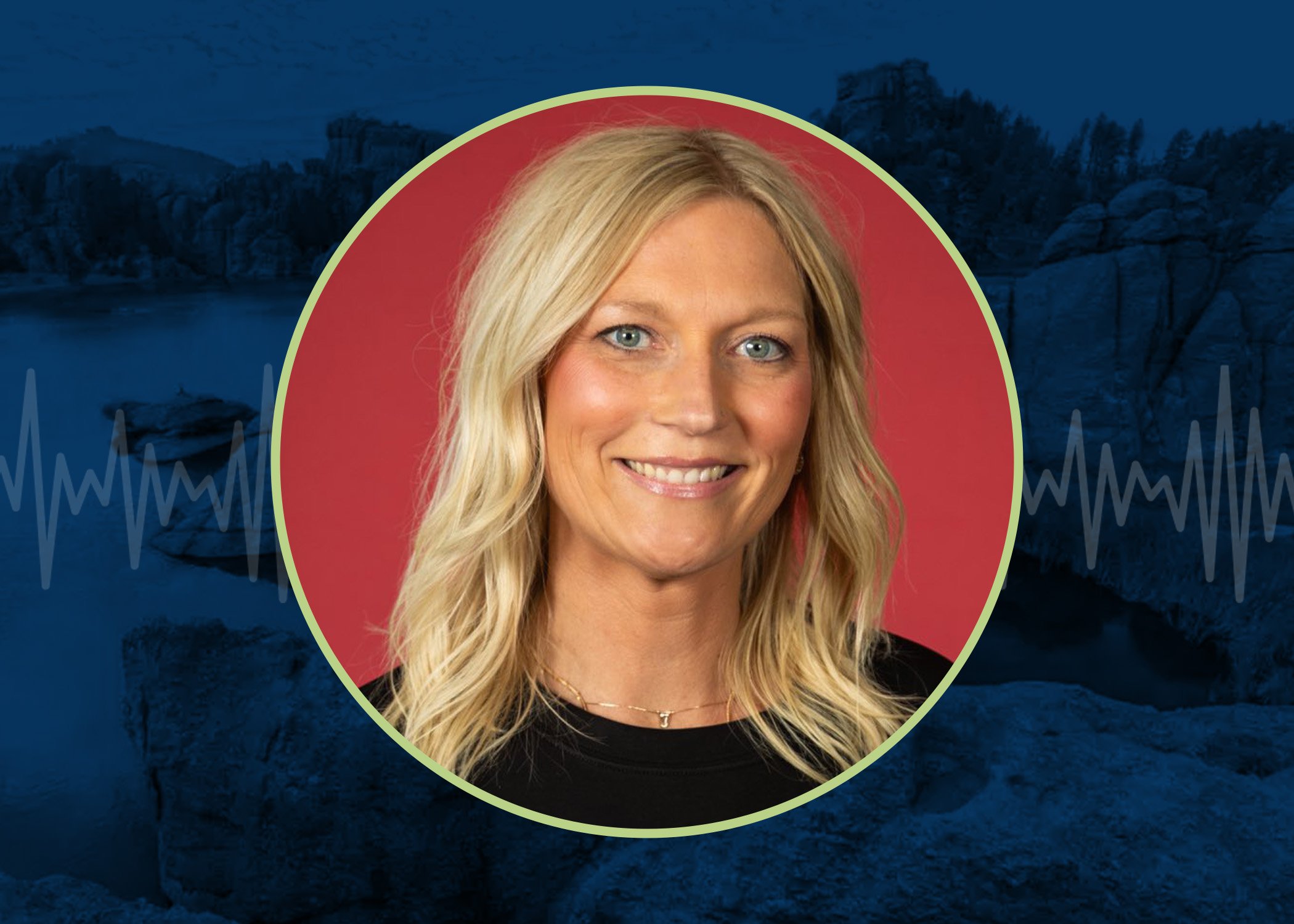
Becky Haenfler, the 2026 South Dakota Teacher of the Year, has spent 20 years building relationships and inspiring readers. Now in her role as a middle school ELA teacher in Avon, SD, she serves the same community that shaped her as a student.
In this episode, Haenfler shares how teaching in a small rural school influences everything from translating lessons between coaching and the classroom to lifelong student connections. Reflecting on her full-circle journey back to her hometown, she offers practical insights for educators seeking deeper purpose, stronger student engagement, and a sense of belonging in their profession.
Key Topics Covered
- What teaching in a rural community looks like day to day
- Helping students see the real-world value of reading and writing
- Balancing academic standards with developing good character
- How extracurricular involvement strengthens classroom relationships
- Advice for new teachers on building confidence and finding community
- Creating meaningful lessons that connect learning to real life
- And more!
Episode Guest
Listen Now




Episode Transcript
Please note, this transcript is generated by AI and may include some errors.
Spencer Payne: Okay, here we are with another episode, Front of the Class, Real Stories from Real Educators. And today our real educator is Becky Haenfler. And Becky, can you share a little bit about your background? How do you introduce yourself to other educators? Where do you teach? What fun facts? Maybe a recent award that you won that you want to brag about, whatever it may be, feel free. How would you, how do you introduce yourself to others?
Becky Haenfler: Sure. Well, my name is Becky Haenfler. I am a middle school ELA teacher at the Avon School District in Avon, South Dakota. Very small school. I'm in the southeastern part of the state and just recently in September, I was named the 2026 South Dakota Teacher of the Year. So that's been exciting and rewarding. I'm in my 20th year, so I actually taught first grade for four years, switched schools, taught fifth and sixth grade, and now I'm back in my hometown teaching middle school ELA, which is where I've always wanted to teach.
So I teach in the same community and school that helped raise me. And hopefully, you know, I'm inspiring the next generation of teachers to one day take over my classroom. So yeah, I loved to be involved in my school and my community. We were very small. When I talked to other teachers from around the United States, it's just a different setup than a lot of other teachers because of our size. So it's always interesting to kind of get other people's perspectives. But yeah, that's kind of my story.
Spencer Payne: Well, on that size of the school, et cetera, that you mentioned, can you just paint a picture for us? like how many kids are in your school, how many kids are in your class? Paint us a picture of like when you're comparing notes to some of these other teachers and they say, I have this many students or there's this many kids in a graduating class. What do you say after that? Just paint us a picture for us.
Becky Haenfler: Sure. All right. Sure, so there's only like 700 people in our community in our town, so our school population is 219 K12. So we are one building with kindergarten through 12th grade in our building, which really is so rewarding because I get to see the kids before I get them and I get to watch them after they leave my room. It's interesting because I talked to like some other teachers at our last conference and I said there's 219 students in our building and they said, we have 200 teachers in our building. So in South Dakota, there's double A schools, A schools and B schools. We are a B school, so we're one of the smaller schools. However, with that being said, we're a pretty proud small school. are, we're not co-op with any other school district at this point. We don't co-op sports with any other schools. So we're still standing on our own, which is really something to be proud of.
So like my average class size is maybe 16 is our average class size. I have a class of 12, a class of 16, and a class of 18. So I mean, that's kind of your average.
Spencer Payne: Yeah, and can you...Wow.
And then can you also paint a picture too for those who are like, have 212 teachers just in my building. What's the makeup of the kind of families, the kind of work that students do in your community? I'd imagine maybe there's some kids who maybe have already done three hours of work before they even come to school, or they're going right to work after their school. So can you again, paint us a little picture of like, are the types of, what is life like for the students that you're teaching in your community?
Becky Haenfler: sure. We are big farming community. So a lot of our students before they come to school, they might have already gone out and done chores on their farm. They might leave school to do chores. A lot of our students would like to work on the farm when they graduate. So yeah, heavy farming community. Lots of, you know, we have a lot of parents in the medical field here. We have a couple hospitals nearby, not in our town, but in the nearby communities.
So yeah, a lot of her students though live in that rural area, you know, out in the country where they're probably helping on the farm at some point during the day.
Spencer Payne: And then, you know, this will be specifically for like, well, how do you get kids excited about English when their desire is to go work on the farm and they'd be wondering, like, how am gonna use this in my everyday? And please teachers out there who are like, I don't know how that applies to me. The concept is still like, how do you help teach this lifelong skill to someone who might be resistant to it at the time? So just curious, like, how do you approach that? Like, how do you go about that? Or other teachers in your building, how do you mix and share of like, this is actually a really important thing. Like, kids need to know this. They might not understand why it's important or how it applies even if they want to do X job or Y job, like how do you approach that? How do you think about that?
Becky Haenfler: Right, I think that you know when you talk about science or when you talk about math they can very easily relate their lessons to the to the farm. Especially you math we talk about fractions. Well, you're going to need to know fractions when you're farming and I think a lot of the story problems that teachers bring in are very real life story problems for these kids. Science we have a really big science fair in Avon. I don't teach science, but our science fair is huge.
And oftentimes they're doing science fair experiments and projects on the farm. They're doing them about fertilizer and about soil and which would work better on the farm and stuff like that. So I think that that's a great way that our teachers incorporate that. As far as me, a lot of the stories we read whenever like we read Esperanza Rising and they were a huge farming community in Esperanza Rising. And so we make a lot of connections when we can.
And I always tell them, know, reading every job, every profession needs to be proficient in reading and writing no matter what you do. You need to be proficient when you order at McDonald's. You know, we have to be able to read and write wherever we go. But my main goal for my specific classroom with ELA is just getting them engaged in whatever it is for reading and then hopefully they can make connections beyond that.
Spencer Payne: And on a similar note, there's a balance of being a teacher of, know, hey, sometimes we're judged based on some standards come from the state, national, et cetera. But also, like, especially in a smaller community, they're also just like are we building good people who are then become productive, useful members of our community after school, right? And so on some level, I am curious, like, yeah, how do you think, is there a tension there sometimes between those two things? How do you navigate that tension? Yeah, and ultimately, how do you put your stamp on teaching kids things that they're supposed to learn according to the book, but also that actually helped them in life, especially if they're going to do things that are that are not what the book says. Like, again, I'm just curious, how do you how do you navigate that, especially in a small community? It's just different than how other people might think about that.
Becky Haenfler: Great. Right.
Well, I mean, that's one thing that I love that our superintendent and principal and all of our teachers are on the same page. We want you to be really good students, but we want you to be really good people because when you graduate from here, you're going to have that name Avon with you wherever you go. And when you meet people, we want them to, you know, be proud of you being from Avon.
But you know, we really talk about we want to raise good people. We want to raise responsible people, respectful people. We want hard-working people because no matter what you do, like if you're gonna be a farmer, you got to be a hard worker. So when you come into this classroom and maybe you don't want to give your best effort, well what's gonna happen on the farm if you don't want to give your best effort during planting season? So we really, really try to instill a lot of those life-long skills on just being a good person and a lot of it comes down to just grinding and working hard and being proud of the work that you do.
Spencer Payne: Yeah, nice. And you know, you mentioned, you know, you grew up in this community. It would be fair to say you went to Avon then, right? You did. And then.
Becky Haenfler: Yeah. I went to Avon. Yep, I'm actually sitting in the same classroom that like I decided this is what I want to do. So I was in fifth and sixth grade. I was reading the adventures of Tom Sawyer with my teacher and I'm like, this would be really fun to like read books all the time and talk about books. And so like I get to sit here every day and whenever I get like a new year comes on and I get a new batch of kids, I'm like.
Gosh, I hope I make at least a couple people feel that way and maybe they're going to be a teacher someday. So it is kind of like a full circle moment for me to be in the same classroom that I obviously was a student in as well.
Spencer Payne: And on that full circle moment, can you share a little bit about that arc of, you shared, you didn't just, your arc didn't just go from I'm a student here to immediately I'm a teacher here, right? You kind of went out, experienced some things and came back. Can you share a little bit more about what was that journey like from leaving Avon to coming back? What did you wanna go out in the big bad world and learn, experience, et cetera? And then ultimately, why did you choose to come back and teach in that exact same room where you said, this is what I wanna go do?
Becky Haenfler: Right? To be perfectly honest, I had a hard time even leaving home for college. I was so close to my family. I loved going to school here. I just loved, I just felt safe. I felt like this was home. I knew I was going to be back here someday. Went to college. There was a job opening where I student taught at. So I took it. Actually, it was a first grade position. And I said, I never want to teach kids how to read. Like at the beginning stages of reading, think that'll be, that just seems like too much work.
Looking back, really glad I had that opportunity because I know the foundational skills it takes now as a lower elementary teacher to prepare them for what I'm doing. So I taught for four years in first grade and decided to move back a little closer to home. So I took a job in a district that was only 15 minutes from my hometown. So I lived in Avon, but I worked in a nearby community, which was a great experience as well because the diversity in that building was a lot different than what I had experienced either as a student or as a teacher. And in that specific building, it was bigger. So there were several teachers teaching the same content. So I was able to work with other teachers and learn so much from them. And I think that that is so valuable. Looking back, I know I always wanted to be here, but I'm really glad I had my experiences elsewhere first, because it really does build you to be a better person. So when a job opened to come back to Avon, obviously I knew I wanted to be here.
And, you know, here I am. And I just think that everything led me to this point to be able to do what I'm doing now in this classroom.
Spencer Payne: and how does it feel to be back?
Becky Haenfler: You know, it's just home. And I think that every teacher that teaches here is going to say the same thing, no matter if you are from Avon or you're not. A good percentage of our teachers are actually from Avon. Some of the teachers were teachers when I went to school, which was really neat. But even the new teachers that come in to interview, I think one of the new teachers said, I just felt like it was home when I walked around in your halls. And I think that that's a really, really good thing for a school, for it to feel safe and like home.
Spencer Payne: And for maybe a teacher out there who maybe they've been teaching their first year, third year, fifth year, and they're like, that sounds good. But I don't think I've ever had an experience where I felt like this school feels like home. This is a hard thing to describe, but like how would you describe that to somebody who maybe has never felt that in their teaching career to even know it's possible or what it could see or smell or feel like or how the interaction sounds like? does that feel like to you?
Becky Haenfler: Great. You know, honestly, the day doesn't end at 3 30 for me because I'll go to practice with all my activities. But even going home, I go for a walk. I'm to see my students. I'm to see their families like you just you never get rid of each other, right? Because we're always around each other. But I think what makes this feel like home for me and I think what for a lot of the teachers here and in these situations is you're not just a teacher, you're probably doing some sort of extracurricular activity.
And when you get to spend that time with them outside of your classroom, you just form such different relationships, such deeper relationships, and that I think makes it feel like home. I have so many really, really good relationships with the teachers and the students in here, and it just, makes it so much more meaningful. It's just so rewarding.
Spencer Payne: and how many extracurriculars are you currently involved in right now?
Becky Haenfler: I start my junior high girls volleyball and then we get about a week off and we start junior high girls basketball, which for me rolls into high school basketball. I'm the JV coach, so I take those same girls and we bump them up to JV. So I do junior high volleyball, junior high basketball, varsity basketball, JV basketball, and right now I'm in track. So after school I'll be heading to track practice and. All year all year.
Spencer Payne: So all year, fall, spring, all season.
Becky Haenfler: So a lot of these kids don't get a break from me, which, you know, well. But yeah, it's fun, you know. I can go after school to practice and I can say, I never got that assignment from you yesterday. You better hand that in. And they're like, yeah, yeah, you know. So I can definitely piggyback off my school day to practice, but I can also piggyback practice back to my next school day. Like just yesterday, we were doing a track practice and we had the kids doing something. So this morning, we might've had a conversation about, hey, remember at track, you guys did this, that was so funny, you know? So I just think it brings in so many more meaningful conversations and it just allows them to see me in a different light and for me to see them in a different light than just a student and a teacher.
Spencer Payne: And again, for those listening who might be thinking, my gosh, a fall, winter and a spring sport, what in the world does she do for herself? So what do you do for yourself? When are there pockets where, you what are the things that you do that you're like, I do need some me time?
How do you kind of carve that out for yourself? What are you doing? Is that before school? How do you approach that for those who might be listening, wondering, like, my, I'd love to get involved more too, but how in the world am I carving out enough time for just me? How do you do that?
Becky Haenfler: Well, to be fair, all these activities that I'm coaching, I have my own kids that are in those activities as well. So for me, I'm just with my kids anyways, but a lot of family time. We like to just hang out as a family when I get home.
We might be going to another sporting event. might be going to the football game on that Friday night, or we might head out and just go out to eat as a family. But a lot of family time if we're not chasing our kids around to their next event as well, because in a small school, a lot of these kids are in multiple activities. So we are going to the volleyball games, the basketball games, and the track meets, and the golf meets, and now softball games.
We're kind of following our own kids around, which in turn I'm also following all my other students around too. So yeah.
Spencer Payne: which means, dare I say, and you kind of alluded to this a little bit, like, well, hey, when I've got the same students in track and in class, then at track, I can be like, but remember that assignment, and then in school, you can bring that up, remember we talked about this last night, or also good luck tonight, I mean, you can kind of have the two things kind of cross over a little bit. Dare I say, does that make potentially teaching easier when you also have this relationship with students outside of just the classroom, how do you think about that?
Becky Haenfler: Right, I think so. I think that I have the kids in fifth, sixth, and seventh grade and I can tell. So my sixth grade class is nine boys and two girls. So it's a way different dynamic than I'm used to. I can definitely tell that I can.
They are more engaged with me this year than they were last year because we know each other better and I know how to get them involved more. I know how to kind of hook them a little bit into my lessons. I know what I can say now, so I feel like we just build every year. But yeah, I just think that. It's so much easier to to teach them when I know them not only as a student, but just as a person. Like an example the other day.
My boys in my sixth grade class talk about this fort that they have. They created this fort in like the little wooded area and it's actually near my house. So we took a walk one day and I came upon it. So I just took a picture of myself in their fort and sent it to their moms. And you know, the next day you are in our fort and I can't believe that, you know? So it just, I think when you can build those strong relationships, the teaching just and the learning, it just comes a lot easier.
Spencer Payne: Yeah, similar but now going back earlier in your career. right now you've got extracurriculars, fall, winter, the whole gamut, right? And again, if I'm hearing this, maybe I'm a new teacher thinking like, my God, that makes teaching easier? Okay, maybe, but like I'm...
Drowning already like how am I gonna go coach a sport or three sports? Can you share a little bit about maybe your approach in your first one or two or three years of teaching like? Were you also doing three extracurriculars? Were you just focused on teaching like how did you approach those first couple years to kind of master the classroom? And then did you add on the other stuff after like how did you go about that? And what might you recommend for others who are wondering like I'd love to do that But I don't feel like I can right now like what advice might you give?
Becky Haenfler: Right? So actually my first year, I don't think I did anything. I'm in junior high girls basketball. But I went, I did my job. I stayed for an hour, hour and a half after school, you know, got ready for the next day. I just really invested in my classroom. And that is very important.
As I spent more time at that district, I did a little bit more and then a little bit more and then a little bit more. And I recognize that when I did those other things, I felt like more of a part of the community than I did just my classroom and my school. I think when you're a new teacher and you're in a new building, that's hard. It's hard to find kind of your family. It's hard to find where you fit in. And I think when I started adding on some things that made me more a part of the after school life that actually helped my school life too.
But for the first couple of years, I wasn't there. I wasn't able to do that. But I found once I got involved in some of those extra things, I felt like more a part of the school and more a part of the community. And then I think I felt just more engagement with the kids. And that's I was able to start having outside conversations, you know, after school or at games or at practices about things that maybe weren't in my classroom.
Spencer Payne: So maybe take it a little easy to start, get really good in the classroom first, and then you can layer on these other things afterwards once you've kind of nailed that first part. And then hopefully that also makes the teaching part easier and more fun because now those relationships are kind of crossing over.
Becky Haenfler: Right. Right. Yeah. Right.
Right, and I think having a mentor in your school, someone who maybe is doing some of those same things that you're doing or maybe has been in this experience would help too. There were a lot of great people that I talked to right away that I remember my first teaching job. I was in the teacher's lounge and one of the teachers just said, like.
You gotta get something on your calendar to look forward to all the time. You just need something outside of this building to look forward to or outside of your classroom. So put something on your calendar that you can look forward to all the time, whether it's a three day weekend, whether it's a vacation you have, whether it's a concert you're going to. So I think finding a mentor that really gets you and gets your, you know, your responsibilities will help too because they've been there like we've all been there.
Spencer Payne: And on that note, I'll ask this two ways. What is something that's on your calendar right now that you're looking forward to? It sounds like that's more personal stuff is what that mentor was advising. like, yeah, what's on your calendar right now that you're looking forward to?
Becky Haenfler: Right? there's lots of things. I feel like I'm so busy. This summer I get to go to space camp, a part of the National Teacher Organization. So that'll be fun. I get to, you know, be around all the teachers of the year that I met back in California a few months ago. So seeing them again will be super fun. I'm going to take the sixth and seventh graders or the seventh and eighth graders that I have this year to Washington DC on their DC trip and my daughter gets to go. So I'm really looking forward to spending time with my students and my daughter that way. You know, we have just our spring sports, just watching the kids play softball, run track. I'm going to try to up a couple golf meets. So there's a lot going on, but it's fun. You know, I'm one that thrives on being busy and I recognize that when I'm not busy, I kind of, get into a little bit of a lull. So I like a lot of things on my calendar.
Spencer Payne: Yep, that is a lot of things on your calendar. But an important thing to recognize, right, of like some people need their space and they need two hours a night to just zone out, right? Some people would go crazy if they had two hours alone by themselves. Like I need to be around people. So that's another important part of this is like kind of know yourself and then change your day, change the things that you're involved in so that you can be the best version of you and you're the better version of you when you're busy. So your schedule's busy. That might not work for everybody, but it works great for you. Yeah, yeah. I'm curious then at the end of a school year, how do you kind of judge for yourself? You've just won this great award and congratulations, right? Like that's a big deal.
Becky Haenfler: Right?
Yeah, thanks.
Spencer Payne: But you've also didn't win that award for 20 years, right? And so every year, and you seem like the type of person who's trying to hone and get better and improve. How, if at all, do you kind of judge for yourself at the end of a school year? Like, how did I do? What do want to do more of? What do want to do less of? Are grades important? Is relationships? What are some of the things that you look at for your own internal scorecard at the end of a school year to judge? Like, I had a really good year because of XY and I want to do more of this. Like how do you do that for yourself?
Becky Haenfler: I mean, obviously I look at some of our test scores, but that's not my most important thing. I think that that might help my instruction next year, like, we were low in this area. That might be on me as a class. So I'm going to maybe hone in a little bit more to that standard or that skill. But honestly, when my kids leave my classroom, I want them to have enjoyed reading more than they did when they came in. I remember having a student a couple years ago and we were talking about how you can read wherever you go. can read at home, at school, in the car. I said, but reading in the car might make you sick. He goes, reading makes me sick all the time. I said, I think I'm going to change that for you. I said, my goal is for you to enjoy reading more than you did when you came in here. I think he did. I think when I create kids who enjoy reading,
They're going to be lifelong readers and learners. I know all kids aren't going to pick out a book and read it in their spare time because they don't all enjoy it. But I want them to enjoy it a little bit more than they did when they came in because they were exposed to so many good books. so and then provided with informational text for those novels to expand their knowledge on those topics. And I just I want them to want to go, you know read a book or read an article for more information.
So I just, want to expose them to a lot of things. So hopefully they will be life-long readers and learners. So that's one big thing. The other thing is, is, you know, I get a lot of feedback from them. What did you enjoy? What, what didn't you enjoy? What do you think you learned the most from? What ways did you learn the most when we did our interactive notebook? When we did this, when we did this unit, what did you learn the most from?
So I get a lot of feedback from the kids actually too, because if they're not enjoying what they're doing, they're not gonna learn in my classroom. So I want them to enjoy what they are doing. And obviously I always look to my next group of kids, like what are they like? What are their interests and stuff like that? But yeah, I really try to get the feedback from the kids too.
Spencer Payne: And I'd imagine with the depth of relationship of seeing them for years and you you're not getting fluff nonsense answers. You're getting like real good, like actual genuine responses.
Becky Haenfler: Oh yeah. Yeah, they're pretty honest.
Spencer Payne: Yeah, sometimes good, sometimes bad. I'd love to explore some kind of stories that you might recall over your 20 years in the classroom. But any proudest moments, anything that you look back on, it's still just kind of, that was a great day, that was a great moment, that was a great experience with that student. Anything that rises to the top of just proudest moments in the classroom that you can share.
Becky Haenfler: Gosh. You know, I feel like I've been asked that question a little bit too, and I don't think I have like these big, big, big moments. Because when I think about what are some big moments in my life as a student, I don't think of the end of the year goals or like my graduation day. I think of the little things that happened along the way. And so when I think of some of my proud moments are when I find like, usually when we read our novels, I stop them at a really good spot and they have to wait till the next day to finish reading it, you know, they're in suspense.
And when I find that boy, right, yep, yep, close your book and go put it in the back of the room. But when I find that boy who tells me he would much rather go trap an animal or go do this on the farm or go hunt.
Spencer Payne: You're making cliffhangers like exactly what we do on all the TV shows like alright stop right there What do you think happens tomorrow come back tomorrow kids?
Becky Haenfler: and he's in the back trying to read the next page of the next chapter because he wants to know that is like a proud moment for me. He is choosing to try to sneak another page because he really, really wants to know. So that to me is like, I got you. And now, you know, like our learning is going to just fly from here. So it's those moments are when they say, can we read another chapter or
Why do we have to stop reading this? Can we keep going? Those are all really proud moments for me.
Spencer Payne: And how about any wildest craziest laugh out loud? I can't believe they said that, you know, feel free to take that wherever you'd like to without naming names. But any wild crazy, I can't believe they said that type moments that stick out over 20 years.
Becky Haenfler: Yeah, gosh.
You know, I think if you ask any student, they'll probably tell you the same story. I am really, really afraid of snakes. I do not like snakes. I am petrified of them. And they know that. Like, they know three things about me, and that is one of them. And our science teacher is Kitty Corner for me. And he, for some reason, had pet gardener snakes in his room in a little whatever, a cage watching them.
Spencer Payne: So we're talking like, know, little guys, like, yeah, yeah.
Becky Haenfler: Yeah, not very big, but it's still a snake. And we got an email one day, heads up, snake on the loose. I'm like, what are the chances that thing's in my room? I mean, I'm sure it can get in the crack in my door. so we came to school the next day and I told the boys in my room, because they love animals. If there's a snake in here, you're going to find it and you're going to you're going to find it right now. So tear my room apart and look for that snake. They didn't find it.
But later on that day we did, that thing was like coming out of the top of a bookcase just dangling. And I screamed and I ran out of my classroom. And I think someone said, she must have found the snake. But I came back in to make sure everything was OK, because I was out of there. But one of my boys had it wrapped around his hand and was going to deliver it back to the science teacher. But before that, he kind of showed it to me in my face and, it was the worst. So there has been a snake in my room.
That was not fun. He hasn't had a snake ever since. I think he knows better now that he cannot have those animals in his room. So.
Spencer Payne: Yeah.
No more runaway snakes. how about any moments in your teaching career? And maybe no, because in fifth grade...
Becky Haenfler: No, no. The worst.
Spencer Payne: reading Tom Sora, decided this is what you wanted to do. But any tough moments that kind of made you question or wonder like, geez, am I really cut out for this? Am I good enough to do this? Do I really want to do this? Because sometimes, you know, sometimes there's a hard day. Sometimes there's a hard week, there's a hard month in there. And any tough moments that you've had in this profession and how do you bounce back? Like, how do you kind of show up the next day and still be the best version of yourself that you can be? Because I'm sure there again, there's hopefully those listening out there who might be like, man, this all sounds really positive, but like, I just had a really bad day yesterday. Like, what do you do to bounce back when you have those tough days?
Becky Haenfler: You know, I don't think there was ever a time where I'm like, I don't want to do this anymore. I have, I think I've always known I've wanted to do this. I think it's just, you know, I think some of the tough times, obviously COVID was a really tough time, but that was because those relationships weren't there anymore. So that, that was probably at the top of my list. Just because the lack of seeing each other, that, was hard for me specifically, but.
I think the hardest part of teaching just in general is that you don't get to leave your job and go home and forget about your job. As a teacher, take part of your job with you wherever you go. If there's a student that maybe was worrying you that day or there's some red flags, you don't leave that when you leave the school building. You kind of carry that with you. And I think for me, that's the hardest part is being able to go home and you know, just be a mom and a wife or a friend and know that we still have burdens that we're bearing back in the classroom. So I think that's probably the hardest part. But again, getting to come back the next day and keep building that relationship and keep seeing each other. I think that that, I mean, is a reward and that makes up for, okay, yeah, that part is hard of teaching, but we're getting somewhere. I think that that's, you know, obviously the great part about it.
You know, just a couple years ago, a year and a half ago, my mother-in-law actually passed away from cancer. It was a really hard battle. And I remember going to her funeral and then walking out of the church. We didn't have school that day. It was a day off of school. And one of the other teachers and our high school basketball coach said, hey, there's a lot of girls here that came to see you. I'm like, what? And as the door opened, all these high school girls poured out, girls from the basketball team hugging, hugging, you get another hug. And I don't think I realized until then, and it took 19 years of teaching at that point, that although we give, give, give as teachers, and that's obviously we're used to giving, I don't think we realized that they give back to us.
And I think it was that moment that I realized that we are creating good humans. I mean, they're showing up for me when I needed them and they return that kindness to me. I mean, I just, it's such a profound feeling knowing that you're, you have an impact in their lives and now, I mean, they came for me when I needed them. So yeah, there are tough times in our lives personally and in the classroom, but I feel like it's a two-way street too. Like we show up for them, but I also think they show up for us. And sometimes you don't realize that until those bigger moments in life.
Spencer Payne: yeah, that sounds like a, sounds like a pretty darn, I mean, out of tragedy, a pretty darn proud moment also. which also I think goes back to a testament to this concept of, you know, going home smaller community feeling like the place is home is I don't know that that would happen. I don't know how likely that would be to happen in a school where there's a thousand kids in a grade and all those kinds of things. So again, as folks might be out there wondering like, where should I go teach, et cetera, like that aspect of community in a smaller community is very, very real where if that's something that's important to you, like that's a very real opportunity that exists in a place like Avon that might not exist in, you know,
Becky Haenfler: Right. Great.
Right. For sure.
Spencer Payne: Big city X or biggest school district in you know, why city or whatever it is So again pluses and minuses to all things but if that level of home and community is important You might just find that in a place like this Yeah
It's hard to go to the next question after that, but I'll try. in your 20-year career, are there any things that maybe you have consistently done that if other teachers are asking for advice or things, you kind of like, well, here's what I do, here's what I do. And maybe you're surprised other people don't pick up on that or don't do some of those things that you do. So anything consistently that you do in your career that just works for you, and maybe you're surprised that other people don't do that thing or those things more of as well.
Becky Haenfler: Hahaha. I really think that my day, like all of my classrooms are split into two different parts. Like one part is my very explicit teaching. It's my curriculum, it's what I follow, it's research based. But to be honest, if I did that the whole class, they would not be engaged. So we kind of, we hit it hard and we get through it, but then we try to go apply it to real world things...they're not going to read a textbook when they graduate from our school. They're hopefully going to read a novel. So whatever we learned in that textbook that day or that week or that lesson, okay, we're going to read our novel now and let's see how we can apply those skills to our novel, something that you would read outside of the school day. Or let's bring in an article that goes along with the novel. My seventh graders are reading Fever 1793 about yellow fever in Philadelphia.
So they're reading this story, a fictional story, but we have lots of articles of information about yellow fever that we're also reading. So they're getting informational texts, they're getting fiction, and they're putting those together, but we're still working on the same skills that we did in our reading book. So I think, yes, we explicitly teach skills, but we also apply them to things that are meaningful to them and that they can connect to.
And I do that for writing too. We just learned about like ethos, logos, and pathos, different persuasion techniques. And my sixth graders are going to have to write a letter to their parents and persuade them to take them on their dream vacation. So next week they get to research all about their dream vacation, but they have to use all three persuasion techniques to convince their parents to get them to go. So I don't, I try to make as many meaningful assignments as possible while still pulling in the things that we're learning from that research-based curriculum.
Spencer Payne: that I like that a lot, right? Instead of go make a pathos argument. Okay. Okay, teacher, right? Now, now go embody these traits. And again, I'm not promising that your parents are going to go take you on this vacation. That is not what I'm saying. But let's just practice making the argument with this backdrop or that backdrop or that backdrop. Again, parents, you might say, don't ever do this exercise again because I don't want to have to feel beholden to this. I get it. I get it. No promises being made. But let's practice these skills for something that you actually want rather than for just
Becky Haenfler: Right. It gets pretty wild.
Spencer Payne: a grade or for the sake of doing it because then it's in one ear and out the other and no one's going to remember it.
Becky Haenfler: Right. And a lot of my grading is the process. It might not be the product of what you made, but it's the process. Did you learn something through that? Are you getting better? The types of writers I have from fifth grade to seventh grade, it's amazing to see the difference and how independent they become. So I like the fact that there's explicit teaching and then there's application in my classroom.
Spencer Payne: Yeah, 100%. It sounds like you have some level of autonomy to go take the lesson plan and turn it into an application that you think is fun for you, fun for them, that's actually gonna nail home the lesson. That level of autonomy, have you, like...
Can you share a little bit for someone who's like, gosh, I want to do that, but they won't let me. Can you share a little bit about like maybe, hey, how have you approached that? Is this a, you've built this skill, you kind of follow the rules for a while and then kind of like, we're like, well, I'm going to try this. You're on the same page with say a principal. Like how, how might you advise someone who's like, I want to do that too, but are they going to let me do that? Like how much you advise somebody to think about how to infuse some of this practical fun stuff into, into their lessons if they feel like they can't.
Becky Haenfler: Great. I'm really lucky because my principal and superintendent, I mean, they trust their teachers and you teach your standards how you want to teach them. You get them to where they need to be. you do that. Of course, we have certain curriculums we use to be our backbone. But other than that, they really let us kind of just go. In the previous school I was in, there were four of ELA teachers and we all had to teach the same lesson, but however you taught it was up to you which was really interesting because we all did something a little bit different. And I think there is where I kind of found my niche on what I liked and I saw success with my students. I feel like there I saw and when they were really big on test scores and a lot of my test scores jumped really, really high with the method of explicit teaching application.
And so I think I got the confidence at my last school and I was able to kind of bring it in and say, no, this is what I want to do and this is how I want this to look and go ahead. I mean, if you feel like that's the best, then that's the best for your kids. You know, they were all behind it. So I feel really lucky that I don't have to fight that. But I think maybe if somebody does start off small, start off incorporating a little bit and, you know, just go from there.
Spencer Payne: Yep. And a couple more quick hitter, more rapid fire style questions as we get close to wrapping up here. And we hit on this a little bit on kind of advice to new teachers, maybe in their first year about to start their first year, but to grossly oversimplify. If you could just give one piece of advice to someone who's about to go in their first year teaching or in their first year, or maybe advice you'd go back and give yourself at that time, what would that number one piece of advice be?
Becky Haenfler: I think maybe just use your resources in the building. I am surrounded right now by amazing teachers like I can go down and I can learn something. I go down to first floor to the kindergarten and the first grade room and I feel inspired and motivated to do things that they're doing down there because of their style or you know. I just think use your resources. Use the people in your building. I wish I would have done that more when I first started. I wish I would have reached out a little bit more to the other teachers. But I think that would be a great thing, a great start is use your resources. And if I had to add one more thing, it would be do something besides your classroom to be involved in that school or community. Find just a little something to be involved, whether it's doing something in the town, like participating in some event or doing some extracurricular, do something besides your classroom that makes you feel a part of the bigger picture.
Spencer Payne: Yep. And how about your specific room or maybe your school's approach to phones, smartwatches, etc. Is that allowed, not allowed? Are there recent changes to that policy? What's your current policy and maybe like what are the results that maybe you're seeing based on that policy?
Becky Haenfler: Meh. So we don't have a state policy right now. We don't have anything mandated. It's a school by school choice. Our school, our response to this is we don't want them in the classrooms. Keep them in your lockers and we don't really have a problem with it. I guess our approach is they need to know how to appropriately use their tools.
And we're trying to teach them how to appropriately do that. Because when they get a job someday, we don't want it to be, my gosh, now all of sudden I have my phone. We want them to appropriately use those things. And we treat them like adult, I mean, somewhat like adults, our high schoolers. If they need to make a phone call and use their phone, they need to ask the principal, the teacher, hey, I have this going on. Can I go out to the hall and use my phone, get my phone from my locker and use it? And it's okay.
Because as a teacher, sometimes I need to leave my room and take an important phone call from my kid's doctor or something like that. we understand as long as it's not impacting their learning, they're okay.
Spencer Payne: and what to you is the single best thing about this profession, education.
Becky Haenfler: I mean, obviously the relationships, not just with the students, but with the other teachers. Some of these people that I'm working with were my teachers. I'm coaching with my old basketball coach. So it's relationships and you're building something. So I just think the kids, spending your days with them and getting to know them and the teachers, I just think it's the relationships are the best part of teaching.
Spencer Payne: And how about the single worst or toughest aspect or the thing that if you had a magic wand and could just point that at this aspect and change it overnight, where would you point that magic wand?
Becky Haenfler: Just the doubt that maybe you feel that, I reach every kid every day? Was I good enough that day for that kid? Did that one understand that concept? Are we doing enough? I think always feeling like we're doing enough is probably the hardest thing for me because you want to move mountains for everyone and that looks different for different kids. So I think that's the toughest part is knowing did I reach every kid in every lesson or every day.
Spencer Payne: If there was one or two things that you wish parents, folks out there and the public at large who has never set foot in the classroom as a teacher, never been an educator, maybe there's no educators in their family. So they really just are like, they have little understanding or empathy for the profession. If you had to pick one or two things to just educate the public at large or wish they knew about what it's like to be a teacher today, what would you hope to convey to folks who really just don't really have a good understanding?
Becky Haenfler: I mean, I think one thing that I think they forget is they don't come into the room in our classrooms and we just start teaching them content. They're coming in with all sorts of different baggage from home or friends or whatnot. And we have to get through that to get to what we need to teach them. And I think that's one thing that I wish they knew that, you know, we're.
We're trying to reach them as a person before we can reach them as a student. Sometimes that takes a little bit and it looks different for different kids. I mean, that would be one thing I think I would want them to know that sometimes the learning doesn't happen the same way for every kid.
Spencer Payne: Yep. And last question, any other final words of wisdom, words of advice out there for other educators or perhaps something that you've already shared, but it's so darn important that like, let's just say it one more time because it's that important. So any new or repeated final words of wisdom.
Becky Haenfler: I always try to end any speaking things that I do or I always try to incorporate. I love Kobe Bryant. He's all around my classroom, his quotes and stuff like that. My kids know I hate snakes. I love Kobe Bryant and I love the Backstreet Boys. But anyways, one of my favorite quotes is, most important thing you can do is inspire kids to be great in whatever they want to do. I think that's the gist of, what we have going on. just I want to inspire them to be great and whatever it is they want to do. Hopefully there are a few teachers in my classroom that I'm inspiring them to do that. But I think just the main thing is I want you to be great in whatever it is you want to do. Let's get you there. So and I think that's a lot of teachers in in general in my building for sure.
Spencer Payne: Yep, that is great advice. We don't all need to be a lawyer or a doctor or this or that. Like there's a whole bunch of jobs that need to get done and they need to be done well. And we need people who are going to do those jobs and do them well. Well, Becky, congratulations on your Teacher of the Year win. And thank you so much for sitting down and sharing this with us. Greatly appreciate it. Appreciate you.
Becky Haenfler: All right. Thank you.
Yes. Thank you too. Thank you so much for the opportunity. This was fun.
Spencer Payne: Yep, agreed. Thanks so much.

Moreland University can help you take your teaching career to the next level.
Whether you’re looking to get professionally certified or earn an M.Ed., our 100% online programs can help.
Complete your no-cost application (it takes less than 15 minutes!).