
.png?width=300&height=74&name=MorelandU-logo-WH-RGB%20(1).png "Moreland University Logo")
Front of the Class Podcast | June 11th, 2026
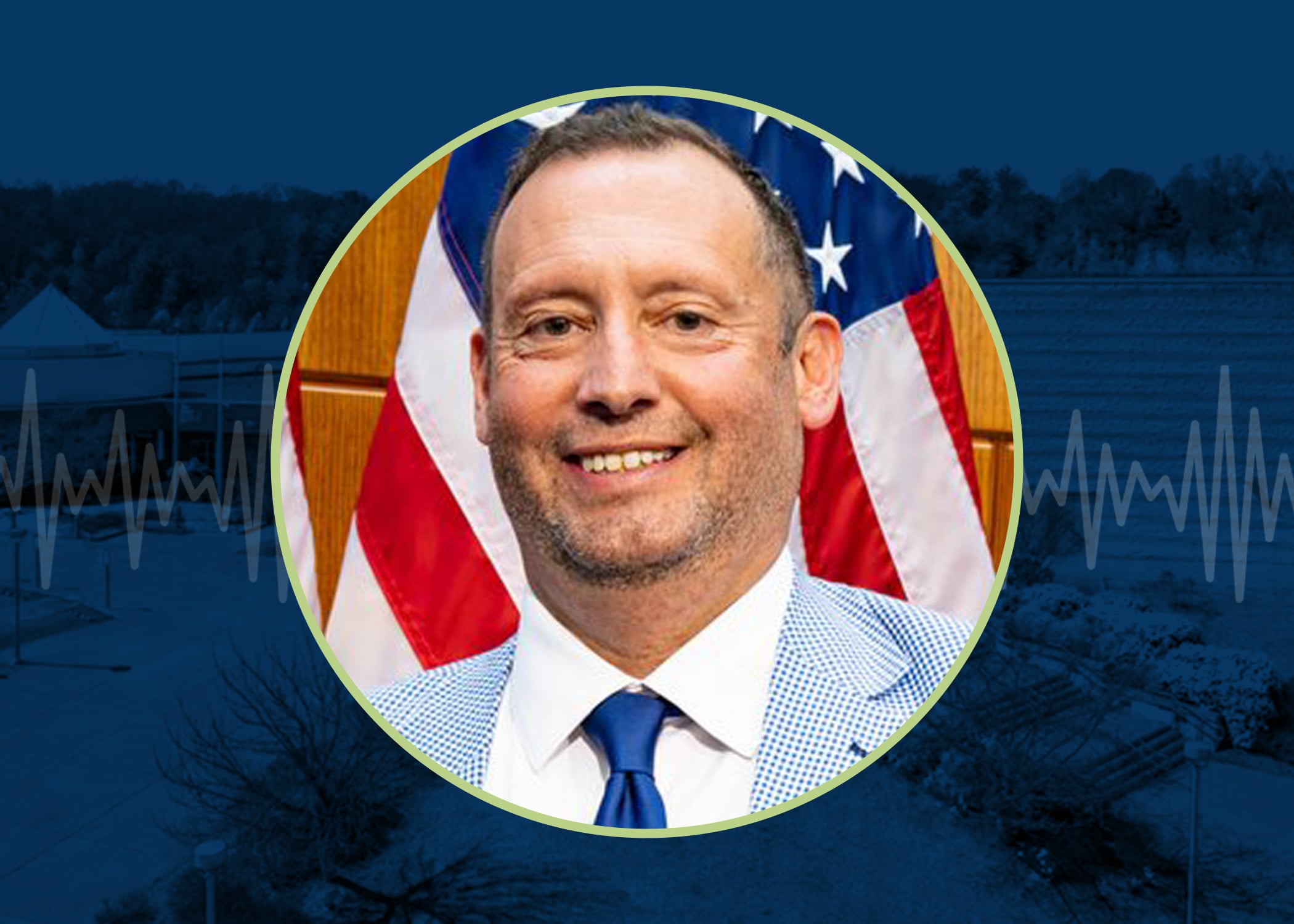
The “Psychic Income” of Education with 2026 Virginia Teacher of the Year Matthew Neale
Content Warning: substance use and death
In This Episode
After beginning his professional life as an attorney in Las Vegas, Matthew Neale made an unexpected career shift, moving across the country and into the classroom, where he was named the 2026 Virginia Teacher of the Year.
In this episode, Neale discusses the deep fulfillment and “psychic income” of teaching as he draws on more than 20 years of coaching soccer, building relationships with students, and launching community wellness initiatives that address real challenges in their rural community in the Appalachian Mountains.
Key Topics Covered
- The realities of changing careers to become a teacher
- What “psychic income” means and why it matters in education
- The importance of setting standards for educators
- Bringing community wellness topics into classroom learning
- Advice for building meaningful connections with students
- And more!
Episode Guest
Listen Now




Episode Transcript
Please note, this transcript is generated by AI and may include some errors.
Spencer Payne: Okay, here we are with today's episode of front of the class real stories from real educators and our real educator today is Matt Neale Matt. Can you introduce yourself? However, you like to introduce yourself to other educators out there in the world. Maybe what do you teach? Where how long you've been doing it? What kids expect from you in class? Maybe some recent accomplishments that you just got if you'd like to go that direction. How do you like to introduce yourself to other educators out there?
Matthew Neale: Well, first of all, thanks for having me on the show, Spencer. I really appreciate it. My name's Matthew Neale. Like I said, I have been teaching in the same county for 21 years, but two different high schools. I started my career at K-Spring High School, and then I've literally moved three miles across town, not very far at all. So I wouldn't even call it across town to the rival high school here in the Valley, which is kind of funny in itself.
And I went from coaching boys soccer to girls soccer, which is one of the reasons that I made the move. But also, you know, I just recently, well, not recently, last May received the 2026 Virginia Teacher of the Year Award. And, you know, I just love to say that teaching is the greatest profession. but you got to put the work in to get the workout that you want. And that's kind of how I introduce myself.
Spencer Payne: Yep. And I can share a little bit more about where in Virginia are you and how long you've been teaching.
Matthew Neale: So 21 years of teaching and it's all been in Roanoke Valley. So for everybody's trying to kind of put that, that's Southwest Virginia. It's fairly rural in this part. It's in the Appalachian Mountains. I'm in a valley in the Appalachian Mountains. So when you might've heard of that old timey song, the Blue Ridge Mountains of Virginia, that is where I'm at. And to kind of put it on a map for you big sports fans out there, I'm about 45 minutes from Virginia Tech, if that kind of helps any of those football fans out there.
Spencer Payne: And for those who haven't been, gorgeous, beautiful, green rolling hillsides and beautiful foreign country out there. So Matt, can you share a little bit about how did you get into teaching? And what were you doing before you got into teaching? Because this is not your first professional job.
Matthew Neale: No, it's not. I've taken a winding road to this profession, which I mean, people laugh when they hear that because they're like, you've been doing it for 21 years, which is a long time. But yeah, I wasn't always a teacher. I got an undergrad degree in teaching at Virginia Commonwealth University, where I majored in speech theater and English education. However, after taking the Praxis I exam, I decided, I always said I wanted to be a lawyer. And I went to the University of Kentucky (go Wildcats) for my law degree. And then I was trying to go to either San Diego or Phoenix, Arizona and ended up in Las Vegas, Nevada for about four years. About three and a half years were spent being an attorney. The first kind of three or four months there was spent studying for the bar exam and then getting the bar exam pass result.
But yeah, I went from being an attorney in Las Vegas to being a teacher in Southwest Virginia, which I think is quite a big jump.
Spencer Payne: Now, yeah, we got to like, how did that happen? Like for those three and a half years as a practicing attorney after you pass the bar, which is no small feat in itself, right? You go to law school, do all the studying, pass the bar, and then three and a half years later say, nope. Like, was that a slow, gradual kind of transition? Did something happen one day that you're just like, I can't do this anymore. I got my...Education undergrad, I want to go teach again, like what what happened? Can you share a little more about the evolution of this hard turn from three and a half year you pass the bar exam? That's no small feat to know I'm out. I'm going go be a teacher now.
Matthew Neale: Spencer, I wanted a profession with less paperwork and less stress. So I went into teaching. I'm just kidding. That's all. No, I drew it all. That was a really bad advice that was given to me. No, I decided that we had a life change. Essentially, I was out there with my first wife. I am divorced and remarried, but I was out in Las Vegas with my first wife.
Spencer Payne: Hahaha!
Matthew Neale: Roanoke is her hometown, it's where her family business is. And she got the call basically saying, we need you to come in and be vice president of operations for lack of a better title of the family business, which is restaurants for her. And we kind of decided that if I went back to Virginia, I would have had to sit for the bar again, because Virginia doesn't have reciprocity with Nevada.
We wanted to start a family. And the truth was that if I had been doing the attorney hours, which I was doing, which is quite a grind being a corporate attorney, civil defense essentially, that's where you're on billable hours. And we can kind of talk about that if we won't, but the long and the short of it is, is that you're only billed for the time that you're working with your clients. So you're not, can't, if you have a chat with a buddy in your office, you can't bill that. If you go to use the bathroom, you can't bill that.
When you're at lunch, you can't bill that. When you're just Googling about your favorite basketball team, you can't bill for that. So you can only bill the actual hours you work in the day, which turns eight hour days into 10, 11 hour days, basically. And if I had been doing that, and for anyone that has ever worked in the restaurant industry, especially owning restaurants, you know that's a grind as well. We realized that we would have been raising our child in daycare once we had kids. So we made the decision that I would go back into my undergrad major and teach. So that was kind of, it was a life change, but my gosh, am I glad it happened. I will say that.
Spencer Payne: Tell us more about that. Why are you so glad it happened? Like what has been, can you share a little bit of like, what are some of the downsides of this life change? And what are some of the upsides of this life change? Because almost nothing in life is like everything is better, right? Like, so can you share a little bit about some of the pros and cons and why, even when you weigh those pros and cons, why you say this is a great life change for you?
Matthew Neale: So let's just talk about the pros, right? I'll start with the pros and then I'll talk about the big con in a minute. But the pro is that one, you're on a schedule, especially with children, you're on your kid's schedule, right? I actually teach at a high, at the high school where one of our kids is. So I'm a blended family. I've got two step children and then one biological child...my biological child is here with me.
So we're on the same schedule, which is amazing for me because I have him 50 % of the time, but on the weekdays, technically I kind of have him all the time, right? Cause I get to see him all the time. So that's a huge personal benefit to me. mean that, but that's a very personal thing. The other personal, like the other benefit that I think in teaching is that we have kind of two types of income, right? And one of those is psychic income. And I think that teaching has the greatest psychic income of any profession.
Spencer Payne: For those who maybe are unfamiliar with how you're defining psychic income, can you just define that maybe for folks listening?
Matthew Neale: Yeah, to me, to put it in like the easiest form, to me, it is wanting to go to work and getting something out of it and enjoying it, right? And I can honestly say that I could count on less than one hand how many times I've not wanted to go to work as a teacher. One time. I mean, like, I mean, maybe three or four times over 21 years, I haven't wanted to go into work. And the reason it is for me is because the reward is so great.
Every day I get to watch somebody grow. Either grow as a person, grow intellectually, grow in maturity. I get to see a difference every single day. a lot of the times I'm part of that making that difference in that child. And it's really easy to get up and go to work every day when you know that you're gonna get that kind of reward.
So that's where I kind of really talk about psychic income, but the negative would be the pay, right? And I know I don't want to get into like, I mean, I'll talk about it briefly, but I know that it's hard. Like, to put it in perspective for people, I made more 21 years ago, well, 25 years ago in my first year as an attorney than I currently make as a 21 year veteran teacher. And I do think that that says, quite a bit. You know, do hear teachers talk about being underpaid and all those kind of things. I mean, I think there's a balance there. I do think that. mean, you know, we have time off, we get summers off and things like that. But I will say that the work that teachers are putting in during the school year is it's not contract hours, right? None of us are showing up at eight, 10, like for me, like we had to be here by eight, 10 and we're supposed to leave no later than 3.45, but we're 8.10 to 3.45 on contracted hours, right?
And although I'm here, like right now in my building, I love coaching, I love soccer. I'm still a volunteer. I still volunteer my time with the girls soccer program because I get so much out of it. But that means
Matthew Neale: that I'm working for free at the end of the day, you know, for an extra hour to two hours, depending on how much of practice I stay for, how much, you know, time I put in. I mean, today's a teacher work day for us in Virginia, because we have a special election that's going on. But I will leave here at about 3.30 and I will go home, which by the way, my commute is about 20 minutes. I'm on kind of the other side of town and I will let my dog out and I will do things and then I will come back over here for the varsity girls game and I'll be here around 6 15, 6 30 and I'll be here until nine 30 at night. And you know, that extra three hours that I'm putting in today, I'm feeling I'm getting no financial pay for it.
And I think that coaching is a big thing, but most teachers don't just show up and teach, right? They show up and they run clubs and they are involved somehow or other. So yeah, I mean, it is a lot of work and it can be stressful. I don't want to act like it isn't. mean, you've got to get kids through tests. You've got to get kids to pass. You've got to get kids to buy in. That to me is the most important thing. And that takes time and effort and relationship.
Spencer Payne: Yeah, and I'm curious more on this transition again, for a little bit more, a couple more questions on it, like that first year teaching. Do you did you go through any arcs of like, man, I think I made a mistake or Wow, why did why did I do this sooner because theoretically making a change and the reality of making that change sometimes can feel very, different. So now 21 years in you're saying like this, like, yeah, there's some pros or some cons. But on the whole, I'm wait, like, I'm glad I did this.
Can you share a little bit about like that first year or maybe those first three months of like, how did you feel at that point?
Matthew Neale: Yes. The first year I felt so alive and I still feel a lot to this day. It was like, there wasn't a lot of second guessing. There was, man, this is amazing. Like I get to be around kids. love it. And I do want you to like, even when I was an attorney, I still, I helped coach soccer and actually one of my partners in the building was, had a kid in the youth soccer program there. And then they found out that I played soccer most of my life.
And so they asked me to kind of get involved and I got involved with their kid and the travel program there. So I'd always, I've always coached whether it's swimming or soccer. So there was always that link. So when I went into teaching, it was like, I get to be around kids all day long. And I got to coach immediately. I was the JV boy soccer coach from year one and just got to be part of it. And I was so alive. I was doing it because
You know, I wasn't doing that attorney grind anymore, which is a grind, right? Just so you guys, so I can kind of explain what I did. I did a lot of what they call complex litigation. I did a lot of real estate construction lawsuits and a lot of kind of big lawsuits against builders and developers. represented, my firm represented the largest plumbing company in Las Vegas. We also represented a couple of developers.
And so in those times, like we would get sued and then through indemnity clauses, they would bring every single person that worked on that home into it. And basically a lot of Vegas is master plan communities. So you're talking hundreds of homes in a community and then it's construction defect litigation. And I mean, I think when I wanted to be an attorney, a lot of it, I was like, I'm going to be in the courtroom and I'm going to be, you know, arguing these cases and all these kind of things. Right, yeah, exactly. And I'm like...
Spencer Payne: What, this is what I see on TV. Yeah, Big shocker, the way things are portrayed on TV isn't real life.
Matthew Neale: Yeah, exactly. And that's like what I kind of got into being attorney for is like, I'm going to be, you know, a civil, you know, civil defense attorney, and I'm going to be arguing and I'm going to be representing these companies and I'm going to do them a favor. And the truth of the matter is like, we get sued for millions and millions of dollars, right? Like, let's just say you get sued for 15 million for, I think, and you settle for like 1.5 million. And that's kind of a win. But somebody still has to write a $1.5 million check and nobody's happy about it.
So when I'm in the teaching world, the wins feel like wins. And it's refreshing. whereas when you're working in lawsuits, day in and day out, nobody's really happy, right? Somebody's angry about what's happened to them, so they're suing. Somebody's irritated they got to defend against something they don't think it is. And so I was just in this world where everything was happy. But I also want to be very clear, we were financially comfortable too, right?
So, and then you have life changes and you're not as financially comfortable anymore. And that's where, you know, as a teacher, you know, you, you do have to start thinking about, okay, the psychic income is amazing, but my financial income like my need adjusting, right.
Spencer Payne: And I'm curious on that note to dig in a little bit, like, were there any things that after, you know, after your first year, five years into teaching, like, what are some of the things materially that you gave up, right? Like, we didn't go out to eat as much or we went on two vacations a year, now it's one or just just out of curiosity, again, of what did that financial impact actually mean in terms of your day to day life or in your yearly life? Again, you're I don't want to harp on this too much because you're sharing like I made up for it so much because I actually enjoy what I do. I wake up and I actually want to go to work, which I don't, that's hard to put a price on that.
But just to shape the full picture of the story, just out of curiosity, if you're willing to share like, what are some things that again, in lifestyle that did change as a result of going from this, you know, I'm negotiating settlements on $15 million, like lawsuit allegations and I'm working my, I'm working my, my, my tail off, but can afford this, this or this and then you go to teach you're like, I guess I can't do that anymore. Right? What were the or some of those material impacts?
Matthew Neale: Well, I mean, first of all, just working in Las Vegas alone, right? I mean, had, you know, I got to meet like several really cool celebrities. I mean, my firm actually was working for them, had some things that involved like Nelly the rapper, Sugar Ray, Smash Mouth. I met Shaquille O'Neal, I've met Dennis Rodman, I've met like...Andre Agassi, Stephanie Graff, like all like tons and tons of people in the industry. I was getting to go to Wolfgang Puck, like soft openings for restaurants because one of my buddies handled all of his business. So I mean, I got to do like amazing things and then also like going to Cirque du Soleil shows and eating in amazing restaurants. And I mean, you know, I was in my 20s. I didn't have children like late 20s, early 30s. Didn't have kids like we, we lived a pretty good life out there.
And, you know, I mean, it's a change going in the Roanoke Valley, but yeah, you're 100 % right. Were we eating out as much? Maybe, but not at the level of restaurants that we were. I mean, you know, there's some really nice restaurants in Roanoke, but there's also not like as many, obviously, as there is in Las Vegas. And the price tags aren't really the same. But yeah, you're right. I mean, I wasn't in...you know, I wasn't spending money on entertainment and going out and doing really cool things like Cirque du Soleil shows and things like that as much in Roanoke because they don't exist. But also there was a cost associated with it where there were salary cuts, right? I mean, our combined income was less than it was in Los Vegas when I came into teaching initially. So yeah, and it was tough.
And when I went through my divorce and became a single dad, and you know went from living in a kind of 3300 square foot home to living in a little 1700 square foot three bedroom home in an older part of town. Yeah, that's when it got real, right? And that's when I started to have to really kind of start thinking about some of the stuff that I was doing. Did I have time to do it? Couldn't and also like, you know, I had to pick up other gigs like I became a travel coach as well. I'd already been doing that, but I kind of really kind of dug into it to try and get a little bit of extra money and doing those things and picking up things in the building as well that pay a little bit more and getting more stipends and putting in more work. So yeah, it was significant.
Spencer Payne: Yeah, and on the restaurant note, I will I will share. Man restaurants seems to have gotten a lot more expensive after COVID sure feels like and my gosh to if you if you know how to cook. Man, you can make some really really good meals for really not that expensive at home and I'll shout out one of there's a chef Andrew gruel who has a cookbook and some restaurants in Southern California and I just I just followed his like stew recipe. It was wintertime recently.
So was just like, oh yeah, I want a good hearty stew. I followed exactly his recipe and my God, like inexpensive meal and you'll buy the cheapest cut of beef you can, right? And it's just like, it is fantastic. So anyway, there's some ways that you can make restaurant quality meals at home. Like you can do it, especially if you follow the right people or you get the right ingredients, like you can make some really, really good meals at home for not that expensive.
Matthew Neale: I always see the Trader Joe's people, right? That like, are like, I just bought this at Trader Joe's and spent this money for five meals this week. And I'm like, man, I wish I had a Trader Joe's at Road Oak, but I don't. Like, I just want to think I genuinely miss. I wish we would get a Trader Joe's here. So Trader Joe's, if you're listening, put a Trader Joe's at Road Oak, please. I love it. Yeah, a little plug there.
Spencer Payne: Yeah, there we go. We got that plug going. And one of the things that you hit on is on the, you know, psychic income and seeing the growth in your students, you know, making this concept of kind of like making a positive change in your community. Can you share like, you share a little bit more about some of the other things you have going on beyond just, you know, teaching teach in the classroom and coaching soccer.
Can you share a little bit more for the audience of, know, what is kind of making that positive change in the community look like for you? Again, Roanoke is not a big, it's not Vegas, right? So it's a smaller town. It feels more community driven. Can you share a little bit about some of the things that you're working on kind of in the community? What are you seeing in the community and how are you trying to help and impact your community positively after living here for 20 plus years or so now?
Matthew Neale: Yeah, so first of all, I kind of have a teaching philosophy, right? It's called Ask ASK. And it's about being approachable, it's about setting standards, and it's showing kindness. And one thing that I think kind of that I use, you know, that's how I kind of teach every day. That's actually how I try and live my life as well. And, you know...it's not always easy, right? I mean, we have to really kind of stick to a philosophy and think about it and work hard on every aspect of our life. And some of the time, you know, we run into, you know, bumps in the road and tough things, and it's not always easy to be approachable. And it's not always easy to be kind. mean, you know, nice is easy, kind is not. And I do think that there's a big difference between those two because I think kind is a lot deeper than being nice.
But one of the big things for me is several years ago, well actually about eight years ago around 2018, I read a book called Dope Sick. It is a book about the opioid crisis and the cover of that book features a neighborhood that I can literally look out my classroom window and see. And when I read that book, I found out for the first time the true story of a couple kids that I had taught that were in my classroom. One that I had taught, sorry, and the other one who I did not teach but was a frequent visitor to my classroom because her best friend was in my class. And then later on down the road I also taught her sister who would come by a lot. In fact, I mean, I specifically remember I'm an SEC guy. Like I said, I went to Kentucky for my law degree.
She was very excited to tell me that she was getting ready to become an SEC person because she was going to Ole Miss and she always says that I was the first person that she told outside of her family that she got into Ole Miss to talk to me about. But anyway, her older sister and another student that I had taught who was actually a younger brother of another one of my students both died as a result of the opioid pandemic. Couple different reasons, couple different stories. One was an overdose of opioids. The other one was an entanglement in under, unfortunately, the underbelly of Getting Street opioids and ended up dead in a trash can in Las Vegas, which, you know, it's obviously clearly linked. That murder has never been solved, but pretty awful. And I was reading the real story for the first time because the stories we had been told weren't the same. And I think a lot of that has to do with stigmas and things like that. That kind of launched me into like, what happened? Like I felt to a degree that like, I had, like, I didn't know enough about this cause. didn't know about, I mean, the cause when I talk about, I've talked about prevention, right? Of opioids, but I didn't know enough about the opioid pandemic. I didn't really know what was happening, why it was going.
And you know, there's a lot of stigmas that people often associate with drug abuse and drug addiction, right? We're getting way better at that as a society, right? We're actually starting to really kind of understand it a little better. We're not sitting there just going, you know, cause I think there was a time where a lot of people were like, you're a drug addict, like, you know, and I don't want to use a term. I like, hate to use this word, but like people would just be like, you must've been a loser or you must've done right. Well, newsflash, one of these girls, one of the girls, sorry, was a boy and a girl, but the girl that ended up dead in a transplant, she became addicted because she was prescribed opioids when she had the flu at university. So this is like an amazing child, like she was an amazing athlete at our school, she was a great writer, she wrote really good poetry, she was a rock star and went to university, got sick, got a cold got prescribed a ton of opioids as kind of did back in the day and becomes addicted and then he was over it.
So like when you start to frame things like that, people start to realize, okay, wait a minute, like this could have happened to someone I know, could have happened to yourself, right? And things like that. I realizing that like Southwest Virginia is, you know, kind of one of the epicenters of the opioid crisis. It's probably linked a lot to the coal industry in kind of like Bluefield, Princeton into, you know, Southwest Virginia. So that's those kind of West Virginia into Southwest Virginia where they kind of meet even Eastern Kentucky, right, where the cold country is there too. And I think that that's kind of been an epicenter of the opioids because there was a lot of pain medication and pain management relief prescriptions to a lot of people that worked in the mines and did the labor and also run into a railroad town. So.
you know, when you've got a lot of manual labor, it's there. It's very similar. One of the other opioid epicenters is up in Maine where the fishing industry is really big, So, ways having, so I kind of learn about it. And I will say that I started doing something at that school that was a really big scale thing. And we can talk about that in a minute if you want, but it really was a launching point for me to start to realize that like as teachers, I think that we have a responsibility to bring in community wellness topics into the classroom. And so that's become a passion of mine.
Spencer Payne: Yeah. So, yeah, so say, so you read that book, and you see now all of sudden, these two students who you've had, or, you know, you had friends that you knew these people, right? You knew them, you knew their names. And now you want to go like, be a positive change, as a result of kind of understanding the real story. So yeah, what did what did you do? What did you launch?
Matthew Neale: Right. Yeah.
So the initial launch was I got, I spoke to a woman named Nancy Hands. She's retiring right now. Like as we speak, she's in kind of the final months of her job, but she's amazing. She is the director of the Partnership for Community Wellness for the Roanoke Valley. She actually has an office in Roanoke County Public Schools. And I talked to her because she was obviously doing a lot and at the time was bringing in addicts in recovery to our health classes to kind of talk about things. And I said, well, what else could we do? And she said, well, we just really need to get this out to as many people as possible. So I said, well, what if we did like a week long opioid awareness lesson plans and she said, that would be great. I said, well, what if I organized a group of teachers to do this and then you help me bring in guest speakers? And I basically had two rules with that. Rule number one was no more than 50 kids in a room when we bring in a guest speaker. And my reasoning for that is I think all of us...
during high school probably sat in an auditorium with like 300 or 400 people and had like a mother whose child had died in a drunk driving accident or a person. I mean, I specifically remember somebody who had lost a limb in a drunk driving accident or something like that come in and talk to us. And it really made you think about it for a while, but it was very hard to get a personal connection or real conversation when you're sitting in an auditorium with 250 other students, right? And I wanted these kids to be able to interact with the people that we were bringing in the guest speakers.
Spencer Payne: And did they? Like when you brought in some of these recovering kind of addicts in a room of less than 50, maybe 20, 30, whatever it was, like, what did you see? What was the interaction that you saw? Yeah.
Matthew Neale: real conversations and also because I think when you are, you know, when you're a guest speaker and you come into a room and it's more intimate because there's less people, you can actually connect more too and maybe tell like, you know, a closer truth to your real story. You know, like get very real with them.
And we really saw that. I'm going talk about a statistic that will kind of blow your mind in a minute about this. But what was important is I had a Spanish teacher. I had ninth grade health teachers. I had our psychology teacher. I had two English teachers. I had two math teachers. And that all goes into my other role, which was you have to bring the story, like whatever you're doing whatever this guest speaker is coming in to talk about. And we didn't just have, we also had like, like psychiatrists come in. We had people who like was a specialist on addiction in the brain come in. We had someone even that came in who like used to sell the drugs and why they've had restrictions on the drugs come in and talk. Yeah, so we had a lot of different people come in, but one of the things that I really like want to argue is that we were very strict about you have to work your lesson plan into your curriculum.
So like, if you're a Spanish teacher, like our Spanish teacher was incredibly creative. She found out that they were like bringing the fentanyl that they were chopping in with the drugs. Like they would bring it into the US like secretly because and then smuggle it across the border into Mexico to mix with the other drugs, chop it all up and then bring it back over to the US to sell. And the whole reasoning behind it all was basically the mailing and the shipping and everything and the way like that they're bringing things in in the US was much more efficient than what they would have had in Mexico. it's kind of crazy like, but she like work like that. That was her lesson plan she did. But what was amazing is my statistics teachers.
So my statistics teacher in the high school and the math teacher together combined for an amazing lesson plan where they actually had a group of students go around and poll our kids a week before we started this week long lesson plan. And they polled them to ask them if they'd had a trusted conversation about either addiction or opioids with an adult. And from the time they did that, they then went back and did the same poll a week after the week long lesson plans that we did. And I think in the end I had about 10 to 12 teachers and about seven guest speakers come in across the way. So we reached a lot of kids during this week long of lesson plans. And we had a, I believe it was a 24.7 % rise in our student body of people that had had a trusted conversation with an adult from before to after.
So almost a quarter of our population, which is amazing if you think that we didn't reach every kid. So that means that like some kids that had this experience with, in our classrooms where we did it, went to other kids and told them about it and what they did. So we got people talking and it was incredible.
Spencer Payne: Yeah. Yeah. And yeah, what I curiosity like, what Yeah, what what if any? What if any results did you see or feedback? Did you hear from the students at the end of that week or at the end of that school year? In terms of, you know, wow, that that I never really thought about this before. Wow, I I didn't realize how bad this like what I guess what was some of the feedback you heard from the students? What was their reaction?
Matthew Neale: Well, yeah, well, first of all, like the lesson I did for the kids is, and it was really powerful. Um, and you know, it's a day I'll never forget, but, um, it was actually two days in a row, but I read the portion of the book of Tessa Henry, her story, Tessa's story. Um, and you know, you can Google that there's actually a podcast about Tessa's story that Beth Macy, who was the author of this book, wrote on the mother. But I actually had my students read the portions of the book over a couple days, like 20 minutes at a time, right? Just her story in there. And then I stopped, didn't get to the ending. And then I had the mom come in and tell the ending. Which, like, to my kids, like, they were already kind of like...
into the story because at the time I'm a Hidden Valley, but like that was a K-Spring high school student and she was across the way. And that's the other thing these kids when they read, like when they're reading about this book and they're hearing about it, they're hearing about stories of people that are from our area, from schools that they play against or their own school. Cause my school here was impacted. There was a student at this school that was kind of very woven into it. It wasn't a student I'd had because I'd been at KSpring at the time. But yeah, I mean, I think our kids were like, whoa, this is real. Like, you know, this is my community. And let's be honest, like every community has some sort of community wellness issue. I mean, they just do. mean, it just, you know, we were none of us have a perfect community. Like we all have something that we need to work on. I mean, you know, whatever.
And so to me, like this was really, really close to our community. So, so we worked on it and it was something that I thought we needed to draw attention to. We actually got recognized by the state by BOSAB, which is the Virginia Office of Substance Abuse Prevention. We got to go to Richmond and sat in a meeting with a few politicians, people from the National Guard, people from the police force and have a conversation about what we did but I'm gonna be very real with you.
I always talk, when I talk about, I kind of mentioned being approachable, setting standards, showing kindness. I talk about standards and setting standards. A lot of people when I talk about setting standards think I'm talking about, my classroom management skills, right? I'm gonna set a rigor standard, I'm gonna set a behavior standard, I'm gonna expect the students to live up to it. Actually, when I talk about setting standards, I'm actually talking about setting standards for ourselves as teachers, right? We can't get comfortable teaching certain ways when our students are capable of so much more. I think this is really, really important. And how I was taught, you know, I'm 51 years old tomorrow. So like literally tomorrow's my birthday, I'm 51 tomorrow. How I was taught in the early 90s in high school is different than how I taught when I first started teaching 21 years ago and is different than how I taught today.
Right? That's how I teach today. So our kids, they're developing, technology is changing, brains are developing. But when I talk to teachers about being creative, especially new teachers, when I talk to them about being creative, I'm saying creativity is, you have to be creative. It's really important, but you have to do things that are sustainable as well. So you've got to find that balance of creativity and sustainability. And for me, like what I did bringing 12 teachers together, seven, guest speakers, like that wasn't sustainable. It would be hard to sustain that of my own school, let alone get something like that out to other schools. Right. And that's when kind of I realized like this was amazing. It was great. But if I want to have lasting impact, I have to be willing to scale to put it in a scale of something that I could take to other places. And then also something that could change with the issues.
Spencer Payne: So how does that program that you launched eight years ago look today? What's changed? What's evolved?
Matthew Neale: So yeah, it was completely different, right? First of all, I've got an amazing county. And when I had this idea, I went to them. Then they were like, yeah, I think we can make that work. Let's start with your school. actually, and obviously what you also have to realize is we had COVID and that really kind of slow things down. So this past year, I was able to ask my county, we...
Our standard of learning, our state testing, has a writing component. Some schools do it in 10th grade, some schools do it in 11th grade. My school does it in 10th grade. There's two ways you can do it. You can either do an end-of-course test, or you can do a writing portfolio throughout the year. We do the writing portfolio. And it's three papers. It's a persuasive essay, an argumentative essay, and an analytical essay. So for the persuasive essay, I asked if I could present a community wellness topic and do a community wellness lesson plan. Now I still had to give them the other option, but I asked if I could create a different prompt that's supposed to community wellness, do a lesson plan that went along with it, and then give the kids the option to write about which one they wanted to write about. And they said, okay, all that has to happen is you have to write that prompt, and then we have to get it approved by the Department of Education for Virginia.
This year, I kind of talk what's really important, what I wanna talk about, and we settled on Predatory Marketing by THC and Vape Companies. So what we did is I brought in a couple of recovering addicts to sit on a panel. I also brought in a gentleman who kind of goes around to grocery stores, gas stations, things like that for the state. He works for the state and he makes sure that their advertising and placement is in compliance with what the state laws are. So those are kind of the three people. And myself, I would sit on a panel if we needed, right? And I'll talk about that, like how we had to pivot to that one day in a minute. But basically every single one of our sophomores had this presentation. Every single one of our sophomores takes English in this building. Obviously we have a few online kids and then we also have people that are a specialty center from ASCOM that don't take English in this building. But every 10th grader that takes English in my building got this presentation, this lesson plan. We did a gallery walk of vape companies and like vapes and...
THC companies advertising a lot of those products look very similar right like there's THC Doritos, there's THC nerd rope. There's you know, so we looked at a lot of that right We also looked at vapes. There's vapes in the shape of highlighters, right? Why would you make a vape in the shape of a highlighter? Okay. Well, so somebody can smuggle it into school and work and not get caught using it So we kind of did all that but we also had the addiction component of it, right? Which still kind of ties into, you know, opioids and things like that as well. But we had like how some of the time a lot of this stuff is a gateway, right? Into I'm gonna try this. Okay, now maybe I'm gonna try this. And you know, that's kind of where our people in recovery talked to our students.
But it was a much smaller scale, right? It was two days. And then everybody writes the essay afterwards and they can still choose their other topic and I'm going to tell you what the other topic was in a minute because it is kind of an interesting topic kind of goes into community wellness but what was surprising is I want you to think how easy that topic would be to write about and how 65 % of our students chose to write about the community wellness topic.
Spencer Payne: So 65 % of your students after having this kind of, you know, this panel on vape THC products, how they're marketed, etc. 65 % chose to write about that good, bad, what they're seeing, etc. versus what was their other choice.
Matthew Neale: Right. Cell phones in the classroom. You don't...
Spencer Payne: which one would think every person who's in 10th grade would have a very strong opinion on that. But still, right, yeah.
Matthew Neale: Right. So it's easy, right? And that's where I think like, wow, we had 65 % of the people talk about it. So and it was really powerful. And it was one class period, right? It was it was and we're going to do it differently because I've been really lucky just on Good Friday this year. It was a day off here, but I got to go to Halifax County, which is another county in in Roanoke in the southwest of Roanoke. And I got to go to Halifax County with a guy that I've worked with who's an addiction recovery guy, a specialist and he's amazing. He and I got in the car early in the morning. got, picked him up at 5.45 AM and we, know, so we could be at this high school at about 7.30 and we drove together and we did obviously not the essay writing portion, but the lesson plan portion to every junior, like the majority of juniors and seniors at this high school. And that was amazing.
Like, cause like, you know, run a county has kind of told me where I work. Like I can start growing this at different schools. If the schools are willing to take it on. And I do think that there's another school that's willing to take it on. I'm to work with them this summer to get it all set up and do it. But I got to take this to another county. So like that's growing. And they were like, wow, this is awesome. Like, and the, the lady there who help bring us in was like, maybe like you come to the other schools in this area next year, maybe you come here again. And so like now this impact is rippling out, right? And because I've gone with something that is creative still, but it's sustainable.
Spencer Payne: Yeah. And kudos to you for reading a book. So many people read a book and think this is awful and actually doing something, trying to do something about it. and you know, sometimes the first, the first thing you do is like, that was great. And I was a lot of work. I don't know if I can do that again, to, then kind of keep improving and riffing and getting to this point where that, where, you know, the success you can look at it, say is like, this, this topic after we, you know,
We want to talk about this thing that is actually important to people and like how we think about this, this THC vaping marketing, et cetera, to get almost two thirds of your students to talk about that as opposed to, should we have cell phones in class? Which you would think 100 % of people would want to choose that one. just shows that you can, you can kind of redirect some of that energy. If you make it real interesting, make it, make it personal to people, to hopefully make that community better off, and make the kids realize that, Hey, yeah, this stuff like, why, yeah, why are we marketing vape pens as highlighters? Like for what what purpose does that serve? So thanks for sharing that kudos to getting that started. couple more just Yeah, go ahead.
Matthew Neale: It's not just that, it's also like the portion control of like when you look at like the nerd rope, right? That's 40 milligrams of marijuana. THC, sorry. And like how many kids are gonna stop to read the packaging that says that that's supposed to be like eight portions?
Spencer Payne: Yeah.
Ugh. Yeah. Yeah.
I'm only supposed to eat I'm gonna open up the whole package, but I'm only supposed to eat this much. Who's really gonna do that? Yeah.
Matthew Neale: Right. And then also like with the teenage brain, even if I do read the portion, I take one and then I sit there and go, well, I don't feel anything after one minute. So maybe I need to take another one and maybe I need to take another one. And then we have, you know, I mean, the kids call it a green out, right? I mean, that's kind of, you know, what the terminology is, you know, where you can have like a psychotic episode, like because of things like that. So yeah, it's important. And I do want to say like the other thing we're to do is we're going to...
We're going to change this topic every two, every two years to something that maybe is, is more relevant. Right. So maybe not, maybe not next year when we're, only going to be in our second year, but maybe we do cell phones and distracted driving in two years. Right. So, but the great thing is for me as an English teacher, I'm working this into my persuasive essay assignment. So I'm, I'm still talking about, you know, ethos, pathos and logos and you know, all those kind of things as well. so it is very important that I'm staying to my rules, right? No more than 50 kids at a time. No more than, I make sure it's linked to my curriculum, because that's really important to me.
Spencer Payne: Yeah. Well, just a couple more rapid fire quick hitter questions as we get close to wrapping up here. But going back to, you know, 21 years ago, knowing what you know, now, is there any one single best most useful piece of advice you might give to yourself back in your first year of teaching or that you'd give to others who are maybe in their very first year?
Matthew Neale: Yeah, you've heard me talk about the psychic income of that job. That doesn't happen without you putting in the work. like, connection to your students takes time and effort, but the reward is astronomical. So don't come in here expecting to just have this amazing psychic come in and this amazing job if you're not willing to put in the time to connect with your students.
Spencer Payne: Yeah, but you gotta put it in.
Matthew Neale: just want to make like that's something I tell new students like you've got to put in that new teachers you got to put in that work to be kind be approachable to your students and then then the reward is amazing.
Spencer Payne: Yeah. And you mentioned this earlier, but like cell phones, smartwatches, etc. in your school, are they allowed? Not allowed? Have there been recent changes in that policy? And if there have been recent changes, any any impacts that you've seen positive or negative?
Matthew Neale: So we're phasing into the policy. mean, over the last couple of years, it's kind of phased in. State of Virginia wants you to have a cell phone policy. It's supposed to be bell to bell. That's how it is. There's obviously leeway with school boards and the way school boards are allowed to operate and change rules and things like that. What you're seeing is like some states saying bell to bell means the beginning of class, the beginning of the first bell, to start the day, to the end of the day.
I think regard or some people are saying the bell for individual classes then can use them the hallways and have my lunches the point to me is we're seeing the best effects with where it's out of the teachers hands right where like the the kids are putting them in a locker or in one of these yonder packs that they have and I Think like if you want to truly make this as effective a possible and I do think it's a good thing I'm seeing more kids reading books when they have downtime in class, I'm seeing more kids congregate. Like if you kind of look over my shoulder, can I move my camera a little bit? So if you kind of look over my shoulder, I got like couches in my classroom, a little seating area. I'm seeing so many kids just sitting in the couches now when we have a little bit of downtime and have real conversations with each other because they're not staring into their phones. So yes, I do think this is a great thing. And you know, that's, I think we do to do it, but I think the less you put it on the teacher, which is, you know, the better it's going to
Spencer Payne: Yeah, helps and two more real quick ones here. What if if there was one thing you wish the public at large who's never been a teacher who's never been an educator, who's never sat where you're sitting, if there was one thing that you wish you could convey share, have them feel kind of to walk a mile in your shoes, so to speak, what would you want to share to folks who who have never have never been in the education profession before? What would you hope that they would they would could learn or understand what this is like?
Matthew Neale: Well, you know what they should think about is that they should think that they have a direct connection to it. And that's the thing. There's a great quote. It says, you know, why be a star when you can be part of a constellation? teachers across the country, across the world, we're all together in a sense that every single one of us had an amazing relationship with the teacher and almost every single one of us that are out there had an amazing relationship with the teacher.
And so why don't you think in your heads, what made that teacher? Why did you have this relationship? Why did this teacher change your life? Why did this teacher do something? Why did this teacher believe in you? And then think about like, how can I make sure that my children or our next generations or our grandchildren or whatever have those same experiences by giving the teachers the support they need to be able to build those
Spencer Payne: Yep. And anything else that you were hoping to share today that we just didn't have time for last words of wisdom or anything that you did share already, but it's just so darn important that you want to say it one more time. So any new or repeated final words of wisdom.
Matthew Neale: So final words of wisdom is, you know, we want to keep good teachers in the classroom, right? And I know we talked a little bit about income earlier. You know, if I wanted to get a master's in teaching, that would cost me 30 some thousand dollars. And that might be on the low end, right? For an extra year of schooling, right? And I kind of looked around and the stipend raising of salary is about 2,500 to 5,000 kind of in our area that you would get per year for doing that.
So that payoff isn't realistic, right? Whereas if I wanted to jump into administration, then I'm looking at probably at a minimum of $15,000 raise to, you know, it could be way more than that, right? It could be 15,000 to $50,000 raise. So that incentive, like monetary wise, right now in our system isn't to keep like a lot of great teachers go into admin.
When you listen and talk to admins, a lot of time those administrators will say the best time of my life was when I was in the classroom as a teacher and nothing can replace that. And so like as a country, like state by state, community by community, we have to do a better job of incentivizing great teachers staying in the classroom.
Spencer Payne: Yep. Got it. Well, Matt, thanks so much. Congratulations on your 2026 Virginia Teacher of the Year win and kudos for building these programs on the side that you get zero extra income from in terms of actual dollars in the bank, but that drive tremendous amounts of psychic income by genuinely trying to help your community. So thank you for doing what you do. Appreciate you. Thanks for sharing your story with us.
Matthew Neale: Thank you so much, Spencer. I appreciate it.


Moreland University can help you take your teaching career to the next level.
Whether you’re looking to get professionally certified or earn an M.Ed., our 100% online programs can help.
Complete your no-cost application (it takes less than 15 minutes!).