
.png?width=300&height=74&name=MorelandU-logo-WH-RGB%20(1).png "Moreland University Logo")
Front of the Class Podcast | June 25th, 2026
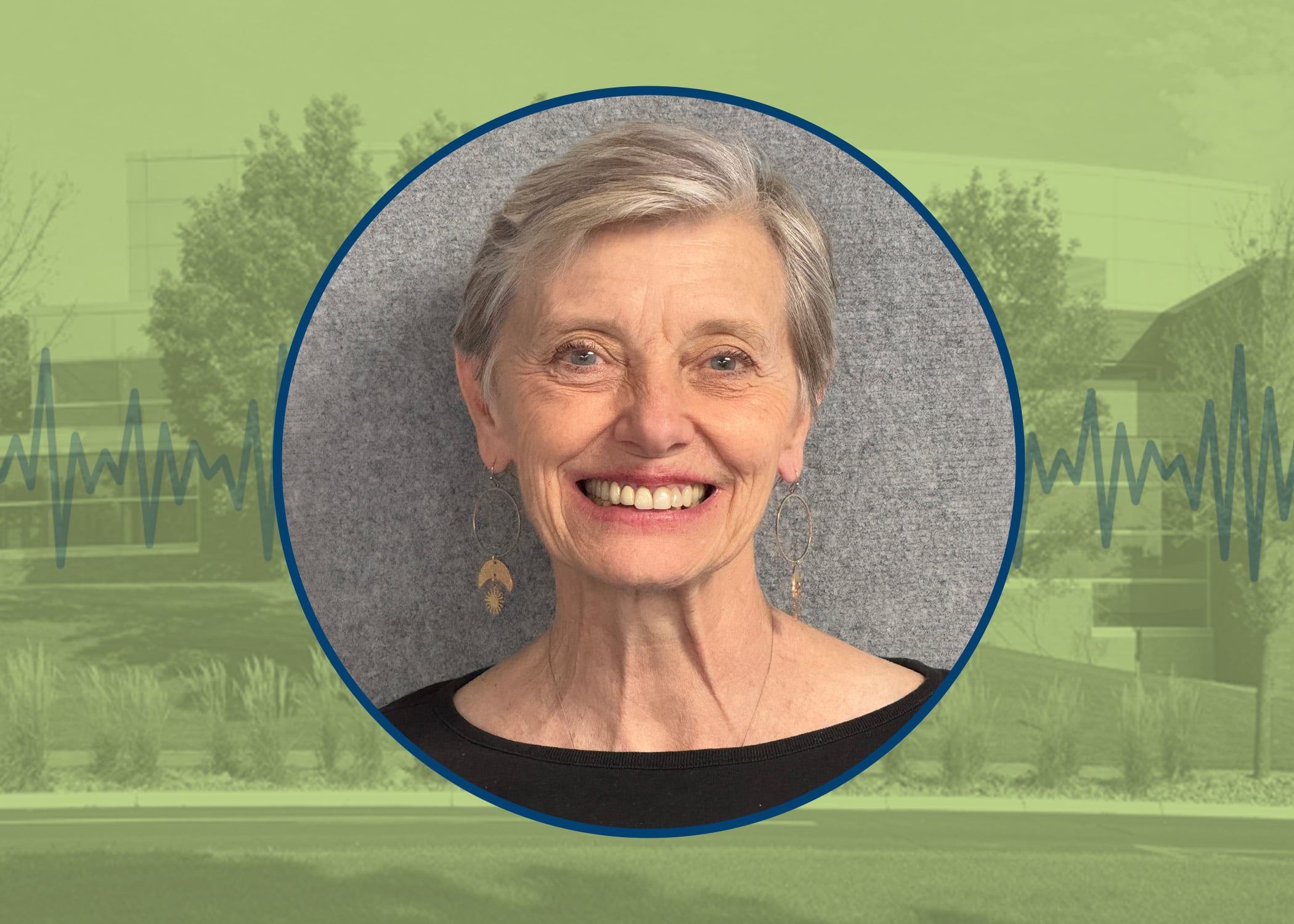
Harvesting Hope for Students with 2025 Minnesota Teacher of the Year Linda Wallenberg
Content Warning: mental health struggles and death
In This Episode
Linda “Wally” Wallenberg has spent more than 50 years helping students discover the joy of learning. As the 2025 Minnesota Teacher of the Year, she teaches English at Eden Prairie High School, where she blends literature, movement, and pop culture to create memorable classroom experiences.
In this special topical episode, Wallenberg shares how she has adapted to decades of change while keeping humanity and hope at the heart of her career. From using technology as a partner to spicing up Shakespeare with foam swords, her story offers inspiration for educators looking to make learning more engaging and meaningful.
Key Topics Covered
- How movement and active learning help students connect with content
- Creative ways to bring classic literature to life
- Using technology as a partner in the classroom
- Using pop culture and student interests to enhance their engagement
- The importance of making students feel seen and valued
- Advice for new teachers
- And more!
Episode Guest
Listen Now




Episode Transcript
Please note, this transcript is generated by AI and may include some errors.
Spencer Payne: Okay, here we are with Front of the Class, Real Stories from Real Educators. Our real educator has not 10, not 20, not 30, not even 40, but 50 years experience in the classroom. Incredible. Lindy, sorry, Linda "Wally" Wallenberg. And before we kind of introduce and give some background, can you share a little bit about the Wally nickname and how that happened on day one of your teaching career?
Linda "Wally" Wallenberg: Okay, well, I'm not the original Wally. The original Wally was my father, but it was the first year I was at Eden Prairie High School, which is 50 years ago, and I'm meeting and greeting the students, and one of the students simply said, Wallenberg? my gosh, that's such a long name for such a little person. As yet, I had not read To Kill a Mockingbird with my students where there's a line that goes, I'm little, but I'm old. Can we call you Wally? She asked, and it's been Wally ever since.
Spencer Payne: Incredible on day one on day one and and then and then Wally, can you share a little bit more than of how do you introduce yourself to other educators? So a little bit more flavor around again. Where do you teach? What subjects do you teach? Maybe maybe maybe a little congratulations on some recent hardware that you just won of a Teacher of the Year award. How do you introduce yourself to other other educators? How do you go about that?
Linda "Wally" Wallenberg: Day one.
I'm a learner, just like you. And not a day goes by when people ask me, Holly, when can you retire? And that invites an amazing conversation of, I can't because I'm still in love. And I know that you, as an educator, must be having this conversation with me because you fell in love too. At some point, you fell in love with the...classroom with the kids with curiosity and Become a teacher and you get to stay in school the rest of your life So I introduced myself as someone who's a lifelong learner someone who's here because another teacher believed in me and When people ask me that question when? Will you retire my answer is I'll know when I know I'm still in love
Spencer Payne: And what current age groups currently are you teaching? What subjects? Can you give us a little sense of, know, what are the students you're teaching and what are the topics that you're teaching these days?
Linda "Wally" Wallenberg: Well, these students are ninth graders and 12th graders. And I call them bookend kids because I get them when they come in from eighth grade so scared of a 3,000 student high school and a four period block schedule day that they're not used to. And they're scared and they want to belong. They want to matter. And then I am also very privileged at times if they dare to take kind of the capstone English class of the school, which is advanced placement English literature. And in some ways, I wouldn't tell this to my seniors, but they're very, very much like that, those freshmen again, because now they're about ready to leave that one step in childhood and move towards the journey of finding out what they're made for. And so they're scared all over again. So that's what I'm doing. And primarily, it's...
What you would usually think about in an English classroom, it's reading and writing and thinking and communicating and basically using the literature as a springboard to help them answer that, thank you for the Barbie movie, what was I made for question? And I have the absolute honor of helping them chart that journey somewhat. And I've been doing it for five decades, over 50 years.
Spencer Payne: Yeah. Yeah. And I'd love to dig into trends over those 50 years, but especially focusing on the last maybe five or so of, you hit on we're not just reading and writing essays. We're thinking, right? We're learning how to write, learning how to think. Can you share a little bit, especially in that era of smartphones in class, AI now, like what trends are you seeing in kids ability and desire?
Linda "Wally" Wallenberg: Yeah. Yeah.
Spencer Payne: maybe to think and how are you fostering some of those skills so that they aren't lost and we're just not we're not just reading off of a screen.
Linda "Wally" Wallenberg: Well, let me tell you, I actually have seen technology transform from ditto machines, overhead projectors, boy, there were film strips, Apple IIe, and then MacBooks and AI, and it's been transformative to say the least. But what hasn't changed, no matter whether they were listening to Led Zeppelin or The Backstreet Boys, Taylor Swift, Bad Bunny, K-pop is their hearts. So the integration of how to still tap in to those hearts, knowing that the devices are here to stay, AI is here to stay, has been one of the biggest challenge, my colleagues and I, and as I talk to other teachers across the nation, and that is, to have it be a companion as opposed to a threat.
And as a National Teacher of the Year finalist, we were able to go out to Googleplex and spend a week learning about some of the most innovative vibe coding and how Gemini is not just a way to look up a different word for a different word, et cetera, et cetera, but how to essentially partner with technology so that we can reach all students and find out ways that using the technology might even open up, especially for our special needs students, more opportunities than they ever would have before. So I've gone from thinking that, this has got to stop. We've got to get these pockets in every classroom.
They look kind of like shoe pockets to put the phones in, to no phones at all to, okay, how can I even, when teaching Shakespeare, use the technology to reach the students' hearts? So I'm learning, it's moving so quickly, but I think we're awakening to a way that the digital platform can actually be an asset rather than something that we're afraid of, or immediately assume that it's only for students to cheat.
Spencer Payne: Yeah, and how are what are some examples of how you're making that trend just and how that's how that's how that's transforming how you teach a class? Like how are you now looking at this AI, etc. from a threat to an asset? Like what are some tangible examples maybe that you've put into practice since going to that Google kind of teacher field trip, so to speak? Like yeah, what are some examples? If there's a teacher out there thinking, I like what you're saying, I want to do that too. How do I do it? Like what are some ways that you're doing that?
Linda "Wally" Wallenberg: Thank you.
Well, first of all, you have to start with where they are, right? They are getting a lot of their, what they know about life from their thumbs. And so knowing that they're going to walk in the door, whether the physical phone is visible or it's just sort of in the side of their pocket or in their backpack, zip it up, or even if some teachers have them put them in phone pockets. The question is now we're teaching Romeo and Juliet and we're talking about the famous speech, what's in a name? That which we call a rose by any other word would smell as sweet. And so we are brainstorming all the different ways to say Rose because that's the point. And we've exhausted all of the different languages, whether it's there's Spanish or there's Somali or there's Danish or whatever. And all of a sudden we'll say, okay, what language would you like to learn it in? And so some people are volunteering to look up, right, to use Google Translate or Duolingo or something.
So all of a sudden, there is this opportunity to learn along with students because I don't know how to say it necessarily in Danish, right? One of the first days of class, for example, was they're getting to know each other. I might say, and they're very surprised, make sure you have your phones with you tomorrow. And that invites excitement. Like, wait, why? An English class? And so I say, OK, go through your camera roll and look for a picture that is important to you or a place on a picture that you were going on a vacation with your family. And then I'll say, okay, you've got 30 seconds to say everything about that picture. The other person can't say anything at all, but is just absorbing and then will shift. And the other person will ask as many questions as they can about that picture and then switch.
And it has been...amazing rather than just starting out with a would you rather question, know, beach or mountains, that sort of thing, where I have essentially set the question to them. They have had the opportunity to actually bring up, bubble up their own lives to each other through the technology. We have myshakespeare.com which is so helpful for students when they're going home and reading Romeo and Juliet, let's say, that there are ways that they can click and then all of a sudden a professional actor is reading or click on a word that they don't know or maybe they're interested in what that scene looks like so they can go and watch a little video that's with it.
The partnering of the technology has been a real change agent and the kids really hooking into the text. Although the thing that they always say is the most, let's say, brings them in is when they're up on their feet with no technology, just the book, just a sword, just a crown, and they're actually bringing the page to life. There are so many examples of the ways technology can be integrated. Yeah.
Spencer Payne: So there you go fellow teachers out there get a get a foam sword and a fake helmet. And when you're talking Shakespeare have someone read out loud with all that maybe with a fake English accent, right? There's a lot of ways to bring this to life.
Linda "Wally" Wallenberg: Well, you can go online and have them watch videos where the videos have actually made the language as best as we can tell closest to the original. Yeah. Yeah. That's great.
Spencer Payne: on that note, you mentioned, you know, Shakespeare, Romeo and Juliet, et cetera. You know, these, these kind of the classics, right? Like how, how can you share a little bit about how, how maybe revisiting these in high school in, this age of AI, where maybe in education, one potential benefit is there's not as much usefulness to rote memorization. What year did this happen? Who wrote this? But maybe there's potentially more value in understanding the story, why would a person feel this way? What might you do if you were in a similar situation and really kind of getting into, you know, don't know, empathy strategy, like, you know, how to word things, things that maybe were glossed over, maybe potentially in a world of rote memorization school before. How do you how do you kind of maybe bring some of that to life or bring some of that context to life in a world of AI again, where this maybe is an asset, because maybe we can delve more into characters.
And what would you do in this situation instead of just memorizing a word or a year or this or that or things that were done in the past?
Linda "Wally" Wallenberg: Well, kids gotta move. Kids gotta talk. Kids gotta get up out of their seat and go from seat time to feet time. So instead of setting the desks up in pods, like I usually do, we'll do a big donut. So instead we've got these rooms with desks lined around the perimeters so they're an audience, right? And so bringing Shakespeare to life by having the students really get close to the character, even by starting out with this question, what Romeo and Juliet character am I? So again, there are from BuzzFeed to many, many, of these tests online where they'll ask the students like 25 questions and they're so intrigued because they got Mercutio. Well, who's that?
Spencer Payne: I was gonna say that sounds like a BuzzFeed article, yeah.
Linda "Wally" Wallenberg: Well, I know there's the word Mercury and there's Mercurial and there's, I didn't know that he was going to be the up and down character. But once they've taken these little tests that says number one, Mercutio, number two, Romeo, number three, Tybalt, they're intrigued and they're hooked from the very beginning. Then comes, out comes the big basket of the toys, of the crowns, the foam swords, et cetera, et cetera. And then pretty soon,
What happens within the first day or so is they're running into class and asking, I want to be this today. I want to be that today. Can I be this whatever? Hey, I've got a scarf at home. Can I bring it in and use it? I've got this, et cetera. So what we've done is we've made these the text to life, the plot to life, so you've got this understanding that you hit it right when you talked about getting to know the characters, right? Because when you ask students, what do you remember about of mice and men? What do you remember about the giver of these books that they've read before? Generally, what comes to mind are the characters, that they have a relationship with the characters. And when relationships lead, learning follows. So once they are into that character part, now we can talk about themes.
And so we can ask that question, why has Shakespeare still been so relevant that people are spending money to still make movies? Riz Ahmed just did a unbelievable new version of Hamlet. And I mean, this summer Dracula's coming out, Frankenstein was just done. Why are these age old stories, why is everything old new again, so to speak?
And when they begin to understand and they actually begin to feel the emotions at the end of Frankenstein that the creature and Victor have felt, they begin to have those connections and see that there's a reason that these works transcend time. And oftentimes it's a tragedy that deeply moves us, that speaks for us when we have possibly no voice about something. So it's bringing it, it really is bringing it to life and realizing that alongside with companion texts because when you are taking something that's a lot older, their initial response is, what does the 1930s have to do with me? And then we put the hate you give right next to it and they begin to see those connections. Yeah.
Spencer Payne: And two really quick questions. The time to feet time. just love that. That's just so catchy. I love that. Just real quick. Do you do that every day? Is that something you do a couple of times a week? Like how often are you getting kids up and standing up and kind of moving? Like how often do you do that ballpark in a given day or given week?
Linda "Wally" Wallenberg: Yep. Yeah.
I would say probably a couple, three times a week, whether even
Spencer Payne: Okay, perfect. So it's not like it's every 10 minutes, right? But like a couple times a week, like just get people moving a little bit.
Linda "Wally" Wallenberg: No, no, no, no, Like, well, I would say that we also have a brain break in the middle of a 90 minute class period. And at that brain break, then I say, OK, you can use your technology. And I put on, we have a class playlist on Spotify. Students say, I like this one, I like this one, can we play some of that? And so I actually put their music on. And during that time, and they can check their notifications, et cetera. And that has been such a deal breaker in terms of their ansiness about the fact that the phone or the buzzing they feel. And then I couple that also with a walk. So I privileged in this classroom to have a commons area and literally a loop that we can take around as a class. And sometimes we'll do a no technology loop.
Sometimes it's like, OK, take your phone. And what I see when they take their phone is they're not just doing this because they're moving, right? So they're not just focusing on the last Fortnite game. But instead, they're actually showing each other. Like, look at this picture. Look at that. So getting them up on their feet has been so rewarding to see that things just sort of start coming alive in them. And then the other thing, as I go by the mantra, 'Expect the unexpected'. So coming into the classroom with feeling same old, same old, mean, true, there are realities such as the Oxford comma rule and how do you use the semicolon and how do you do a work cited page, but there are ways to even make those things active.
And some of it's just turn and talk, some of it's solve this problem together, put the commas in the right place. But a lot of it is just simply finding where they are and then raising the bar. There was a great article in the Atlantic just recently that said, stop meeting students where they are. And when I had my seniors read that article, they were immediately alive with, yes, we don't need to be coddled like you think we do. We don't need to be told we can redo this five different times till I get that perfect A. In essence, they said believe in us, hope that we can raise the bar, and do it. I think these students are eager to become more in charge of their education than it was in the old days when the teacher had all the answers, apparently, right? Yeah.
Spencer Payne: Yeah, yeah. I mean, there's a couple ways I could go on that. But just to hit on that article and the students desire to basically say like, yes, give me feedback, hold me to a higher standard. But just let me know where I stand. Right. And let me know maybe some things of how what I what I can do specifically to get better. I love to hone in on that for a little bit, because sometimes that can be hard for teachers to do. It can be hard for anybody to do right of like how to give feedback when you know something isn't as good as it could be, or you know that student is capable of more, but so often people gloss over, great job. Everybody did a great job. And then that compliment kind of gets diluted and it kind of feels a little meaningless.
And it almost feels like, gosh, sometimes I think students feel this way. I've felt this way before. I'm almost like, I kind of wish you called me out. I knew that wasn't my best. And now, like, I know that you're not actually really checking me the way that I know you could be. So I'm just going to maybe not try as hard because I know the expectation are as high. So can you can you just share a little bit more about there's an art to this, right? Of like, how do you how do you kind of give that feedback without making it so over the top, it's unattainable that kids can never win, but also making sure that it's like it's an achievable stick that it's that they feel like they're getting real feedback. You care about them.
You want to see them get better and achieve the best version of themselves, but you're not so far out of line. Like this is an F and you're not even close. Right. So like there's there's ways to do this well and there's ways to not do this well. How do you kind of think about that? Like how do you balance that? How do you go about that? How would you recommend other teachers kind of think about this balance of high standards, but not too high and letting kids know where they are and setting a standard that's maybe a little out of their wheelhouse to see what they can do.
Linda "Wally" Wallenberg: Well, I start out class with a couple of quotes, and one is, when the student is ready, the teacher appears. And those teachers can take many different forms. They can because they do sometimes compete against each other. And together, when you've set up community in the classroom, instead of, can do it, it's we can do it. And I've moved from being sort of the...Well, because, I mean, if it's all about content and not connection, then they can find the answer in a Google search, right? But it is actually really working on those soft skills that bring the data, those other things into place. So the other quote from Hamlet is, readiness is all.
So what I really work very hard to do is, find out what is it that drives them, what is their passion, and where can we go with that to bring them to a place where they're very proud and I'm not needing to be the sage on the stage anymore, but more the guide on the side. And a lot of that happens. English teachers are notorious for bringing bags and bags and bags of papers home.
Now, a lot of the grading can be done electronically, but I still, maybe old school, don't just check the boxes when I read a paper on the screen. I take home their journals and I give them the chance to set their own goals, but also just by finding out what's important to them, what's important to their families, to their culture, and bringing those into goal setting means that this idea of what measures a happy life, what measures what students need to get into Syracuse or Madison or Harvard isn't necessarily what's on some algorithmic kind of look at these numbers to define a person. And so I think when you get to the end of a class where the longing and what you think matters about life is attended to, the rest of it really kind of takes care of itself. It's the idea that when we attend to the students and we ask them what they want to soar and to move beyond where they walked in the door, I think the testing takes care of itself, actually.
I have really, really taken a lot of the testing I did in my early career completely out of the system because I was so nervous at the beginning that I would be measured by the classroom next to me, the school next to me, the community next to me. But I found that people have been, a lot of it might have come from COVID, right? Where we had to open up the walls of our classroom and meet students right there in their living rooms, you know, with their pets, you know in their arms. I think it's a hard question to answer. I thank you for the question. I think a lot of it is based on looking at the student as not a student, but as a person. mean, humanity is my why. And so emphasizing humanity through all of it, I think, is the best course right now for us as teachers.
Spencer Payne: Yeah, and going back one more quick tactical question, because you just kind of dropped this line and I want to highlight this is the question, which character are you right in Romeo or Juliet? You're doing this before you actually start in on the book. That way, there's now all of a sudden, I whatever character I draw, right, I'm all of sudden now far more interested in reading this book because I'm like, well, why am I like this character? What's this character like? like, am I really like this? Because that's fostering an interest level before you even start reading that book.
Linda "Wally" Wallenberg: Yes. Right. Yeah.
Spencer Payne: And that I just wanna highlight, you're doing that before you actually start reading to try to foster that interest before we even start.
Linda "Wally" Wallenberg: Yeah, and they come in the classroom and they're sitting with all the other Romeos too. So I actually place them in these groups according to what they got. And now they're building community and they are tracing Romeo throughout the play with each other and not just in a silo by themselves. And that generates so much intrigue about the play.
Spencer Payne: Yeah. Yeah, yeah.
Yeah, so you're building interest before you even start the lesson as opposed to what are we going to do now? Right. You're building interest before you even start. And one more, you kind of mentioned this when we when we spoke a little bit briefly before about using pop culture and you already referenced Led Zeppelin and Backstreet Boys and some other things. Can you share a little bit about how, you know, maybe it's your Spotify playlist that your brain breaks. How do you kind of weave pop culture, the things that they're talking about and thinking about into these, you know, classic tales that are older than they are 1930s. How could the 1930s apply today? And then how do you weave that into maybe a song that just came out two months ago? So how do you kind of, how do you balance and weave that pop culture to draw people's interest into these things that are the classics?
Linda "Wally" Wallenberg: Well, first of all, it's not me. They bring it. They bring it. So honestly, they are lined up when I start class with their phones showing me that, did you know that in Taylor Swift's song, she says, it was the best of times, it was the worst of crimes? Do you think that maybe that could be anything to do with Charles Dickens, who we just talked about?
They bring that, just yesterday, some of my senior students are, believe it or not, into Gilmore Girls. And when that series came out, the DVDs came out, they actually published a little booklet with each of them with all of these allusions because they're just all over the series. And a lot of the people who are watching it, were frustrated because they didn't know those. And so we do an illusion a day. I'm looking at my board right now and we have up there Noble Savage. have up there, well, Best of Times, et cetera. So, the lights went on. So then they are finding these things.
I have a TikTok video I've got to show you, Wally, where I just saw somebody doing a parody, let's say, of Hamlet's To Be or Not To Be. So it's to graduate or not to graduate. And so that's one of the ways by inviting their world to come to us. And then kind of lifting them up by having sort of, we have a sort of chart in the room every time somebody does that. We kind of jot down a thing. They're all kind of like working towards having a class party when we reach 100 of these points.
Spencer Payne: Okay, so there's a little bit of encouragement, right? When we get to 100, we have a class party. How can you weave some of these classic quotes or themes or thematic elements into pop culture? So you're actively kind of asking them to look for them. Is that fair?
Linda "Wally" Wallenberg: I'm asking them, and I'm bringing my own. For example, we did John Donne's poem, Meditations, or 17, and it's For Whom the Bell Tolls. Well, of course, there's a novel, For Whom the Bell Tolls. Then there's Metallica's For Whom the Bell Tolls, right? And if you look up here, there are all of these, I call them quilt squares. So when they walked in the door the first day, these quotes, whether it's, not all who wander are lost, Tolkien, or to err as human to free you divine, or Carpe Diem, make your lives extraordinary, dead poets, Ferris Bueller, there's more to life. And right next to that is a quote, this too shall pass, or from Good Will Hunting, though this be madness, be method, though this be madness, yet there's method in it.
So these quotes are going to come up in class sometime. And you think, how is Carpe Diem going to come up when we're doing Beowulf? But it does. And we'll watch a clip from Dead Poets. And so all of this stuff is integrated. They made these themselves. And then the last day of class, we tear down the wall. And many of them send me pictures the next year. In their dorm room is that same quilt square, right? So I think really what all of this is an attention to building people and not just scholars, of putting community and connection above content, right? Not indoctrination, but inspiration, so to speak. And I think all of these, I mean, I don't want you to think that I'm a trendsetter. Hardly, by the time I actually know about that joke, you know, I mean, the Zoomers, I'm a boomer, right?
By the time I really get that, it's probably been there, done that. But I actually get a laugh if I use that word that everybody's using, right? Fetch or something that's not even popular anymore, but I finally got what it meant, right? So rather than I think being trendsetters, I think I am a table setter, right? I give the opportunity for every student, each student to be invited to be welcome for a seat at the table. And that community is probably what happens, that memory of it, when I run into Laura. I ran into Laura last week. She was in my class in 1987. That's 40 years ago, right? And I said, what do you remember about ninth grade English? And Laura did not cite the Oxford comma rule. She didn't remember that her ratio was Hamlet's best friend. She did still have her copy of Hamlet from 40 years ago, though.
But she remembered, she said, how she felt. That she felt seen, she felt her voice mattered. And so I think the most powerful antidote to those forces that tend to make us feel hopeless and think that this is the worst of times, not the best of times, that the classroom is the place. I can tell you after going through the last three or four months in Minnesota that my heart has been hurting. We've been so troubled. And during these times where there were actually students who didn't come to school, right, for some students this was the safest place in the world. And I saw teachers step in, bring groceries, walk students to bus stops. I saw things the teachers did that were never in any professional development in five decades, let alone last spring.
And when Manuel told me that instead of having a flute in his backpack like Salman had, or hockey sticks clipped to the backpack of another student, he had a passport deep, deep, deep in his backpack just in case. And this has been one of the biggest challenges. COVID, teaching in COVID, yes, but the last three or four months in these turbulent times has really made it so clear that teachers, this is the most noble calling that we have on this planet, is to harvest hope for kids in the classroom. Yeah.
Spencer Payne: Yeah, on that note of recent trend, all of this, over 50 years. And maybe it's these last few months for you, but I am curious to delve into over 50 years of being in the classroom. What stands out to you as some of the proudest moments, either for you or certain students or certain classes of what they were able accomplish, whatever it may be, what proudest moments maybe rise to the top over 50 years in education that you're able to share?
Linda "Wally" Wallenberg: Well, it's one student at a time. I've taught, somebody asked me, a reporter not too long ago, how many students do you think it could have possibly been who've had, know, Wally on their transcript? And it's probably about 15,000, let alone I teach for six weeks at Concordia Language Village, Swedish, summer. That's not counting all of those over 45 years. And I coach gymnastics three days a week as well.
So having so many of those students in this past year actually reach out and tell me and connect with me. My oldest students, get this Spencer, are 65 years old, all right? And hearing from these students, I have just a whole drawer of messages saying, I remember this, I remember that, or then of course, one of the probably most amazing things is to say, I became a teacher because of you.
I mean, this teaching life is not a sprint. It's a relay. It's the ripple effect. And I would say those proudest moments come quietly, gently. Sometimes they just come roaring back when all of a sudden I found out that in the past five years, four of those five years, students of mine have been finalists for Minnesota Teacher of the Year and one student who was a finalist as I passed on the torch so to speak to our new Minnesota Teacher of the Year, a music educator at a Spanish immersion school, elementary, David Davis. One of the finalists, Maria, was a student of mine and her principal was there to support her on the final days of deciding who was going to be named.
And he was a former student of mine too. So my first year I taught, a young man in my class, Con McCartan, he was my student. He eventually came back to be my principal for 14 years and he retired before I did. I think what I have to say to you is my proudest moments have been that I...
Spencer Payne: Wow.
Linda "Wally" Wallenberg: Like, I'd say about 80 to 90 % of people who go into teaching that calling want to make a difference. And I always quote Ralph Waldo Emerson who said, at the end of my life, to know that even one life breathed easier because I was in it, that is to have succeeded. And I have to think about Twain who said there's two most important days of your life. The day you were born and the day you found out why. And my why is love and humanity. And I get to do that Spencer every single day. I don't know what they walk in with. I mean, whether they're worried about Mr. Moss's chemistry final or whether the Vikings are gonna finally beat the Packers or maybe even whether or not they know if somebody will be home for them tonight.
But when they put down those backpacks, you see the same universal ideas that Shakespeare wrote about 500 years ago. You see empathy, you see courage, you see fear, you see struggle, you see pain. And essentially that people, I did a talk for aspiring teachers...my alma mater Gustavus Adolphus College just two days ago and I asked those young teachers, were 60 in the room, you know, why do you want to go, what do you think the challenges are? And they pretty much nailed what I hear teachers refilling their coffee talk about, you know, having enough money to not do a second job in the summer, right? Whether they can actually teach their passion or have to in some way meet the standard long before I can even get there. But the number one thing is teacher and student mental health. that we really have to attend to before we can think we can begin to teach them the quadratic formula.
Spencer Payne: Yeah, well, thank you so much for sharing that, Linda.
That's just such a great perspective again, after, I mean, for 10, 20, especially 50 years in the profession. So thank you so much for sharing that and still continuing to do what you do. And now as we get closer to, sadly, we could go for probably twice this long, but sadly we're getting close to when we got to wrap up. So a couple more quicker, rapid fire, quick hitter questions as we get close here at the end. But one thing I am curious about is what...
What would the number one piece of advice that you give for a new teacher? Someone who's maybe about to start their first year or in their first year who might be wondering, gosh, is this for me? This is harder than I thought. I don't know if I can last 50 years. I don't know if I can last 10 years to get really good. What's the number one piece of advice you might give to that teacher who's in that early in their career and they're wondering, can I do this?
Linda "Wally" Wallenberg: Love them first. Love your subject, but love children and love the humanity of what you get to do most of all. As I said, it's subject matter. A lot of it, if we just work with what could be shown on some kind of statistic, that's not what's going to make it matter. Love them first.
That's why I'm still doing what I'm doing.
Spencer Payne: And on that note, what is the single best thing about this profession education to you?
Linda "Wally" Wallenberg: To know that your existence on this earth makes a difference. To know that surrendering the classroom, leaving the classroom, not putting our whole, our all into what we can grow in the classroom is to miss the point of why we're on this earth. So I would say...knowing that we are indeed in this wonderful life we've given together, that it's a gift.
Spencer Payne: And on the other note, what's the single hardest or toughest thing about this profession? Or if you had a magic wand and you could make something improved overnight, where would you point that wand?
Linda "Wally" Wallenberg: The hardest thing for me over these 50 years has been loss and knowing that along with tremendous joy, there's also a tremendous amount of despair. And for me, that was when I lost my 24-year-old son to depression. And I can tell you that it was my students, it was my colleagues, my administration. It was my community that held me up. And Robbie, my son, used to say, a boat is safe in the harbor, mama, but that's not what a boat or a ship is for. And with the love of what I do and what my community, my teaching community did for me. I sailed back out on that boat.
And I have hope. My platform as Minnesota Teacher of the Year is that we can harvest hope. And that's what our young people want, to know that there's hope. And that's not what we can get from just a machine. Yeah.
Spencer Payne: Yeah, and there's still plenty of amazing, great, fantastic things to go hope for next year, next 10 years, 30 years for a better future, in spite of a lot of bad things that have also happened over the last thousand. The trend line isn't always a straight line. There's a lot of bad things, but the trend line, I'd still rather be here than a thousand years ago. Yeah.
Linda "Wally" Wallenberg: Absolutely, you know, I had an amazing thing happen in the first week of being named Minnesota Teacher of the Year. I was taken to the Capitol with our state senator, Steve Swazinski, a colleague of mine of 33 years, now a senator, and he introduced me to Ann Rest. She's 83, she's retiring, and she just heard I was a teacher and just hugged me, wouldn't let go. She said I was a teacher, and she said, you know, when I die, I don't want my dates, I don't want my name on my tombstone. The only thing I want is one word, teacher. It is the most noble calling on earth. And it is.
Spencer Payne: Yeah, and final final question anything that you were hoping to talk about share final words of wisdom that we just didn't have a chance to get to or anything that you did share. It's so important. Let's just talk about this one more time. So any final new or repeated last words of wisdom?
Linda "Wally" Wallenberg: In the classroom, there's perennials that grow, and there's a harvest to be made. And I think together we can actually remember that when Dickens said it is the best of times, is the worst of times, it does have that curve and eternal hope and love. Those are the reason I'm still doing this. So when people say when are gonna retire? I don't know. Carpe diem. I've got, I think about 27 years until I'm 100, so, why not? I don't know when I know. It is a calling. That's some records. Yeah, I'm so, so, so honored, Spencer, today. Thank you for giving me a chance to send my message and share. And to all those teachers out there, keep doing what you're doing. We have the most noble calling on earth.
Spencer Payne: Let's set some records.
Well, Linda, Wally, Wallenberg, thanks so much for sitting down with us and sharing your story. Appreciate you so much. Thank you.
Linda "Wally" Wallenberg: Thank you. Thank you.


Moreland University can help you take your teaching career to the next level.
Whether you’re looking to get professionally certified or earn an M.Ed., our 100% online programs can help.
Complete your no-cost application (it takes less than 15 minutes!).