
.png?width=300&height=74&name=MorelandU-logo-WH-RGB%20(1).png "Moreland University Logo")
Front of the Class Podcast | September 17th, 2026
Making Math Real with 2026 Kentucky Teacher of the Year Michelle Gross
In This Episode
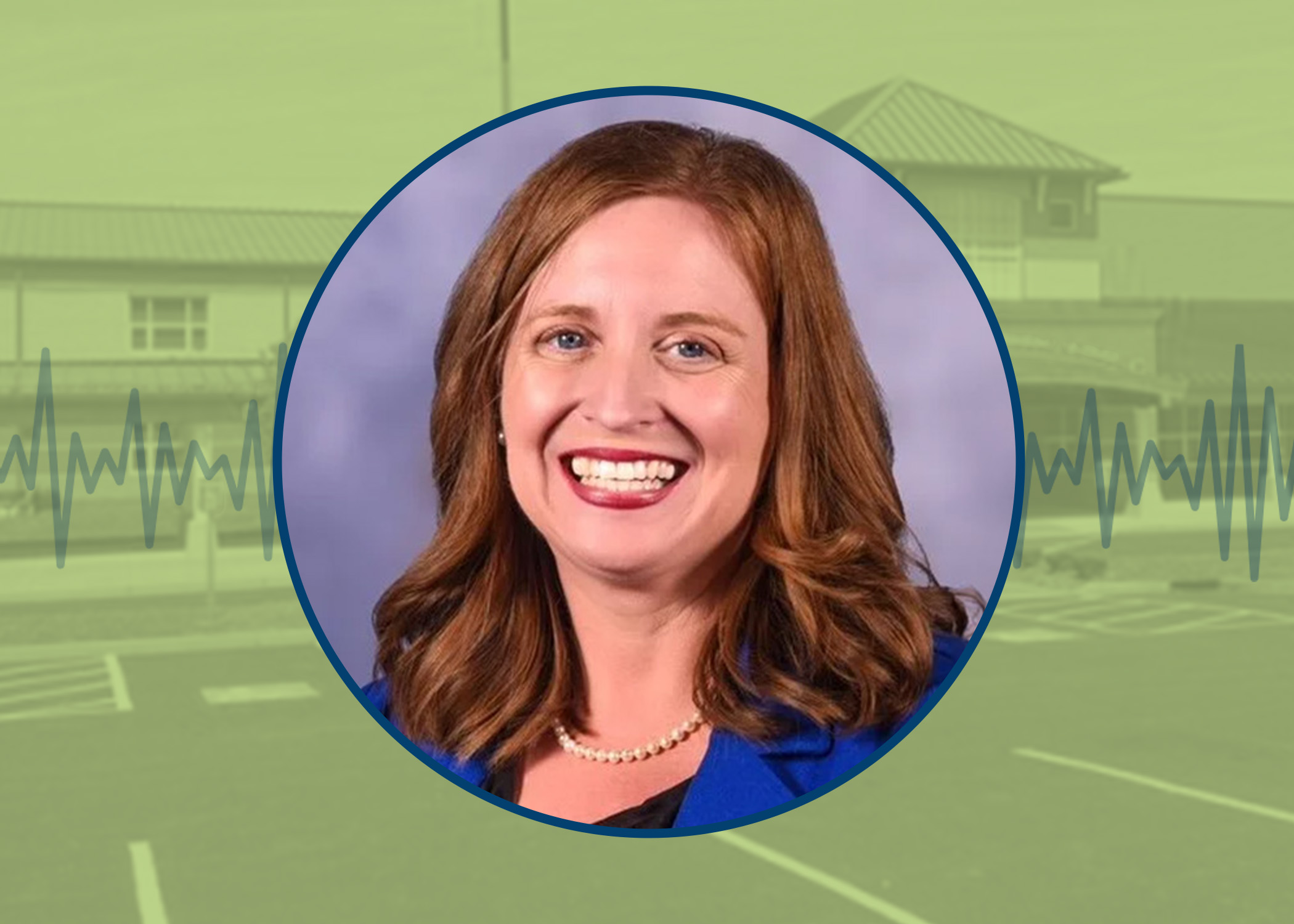
Michelle Gross, the 2026 Kentucky Teacher of the Year, has spent 22 years helping students discover that math is more than numbers on a page. Through project-based learning, she helps students connect mathematical concepts to real-world applications while improving their scores on state assessments.
In this special topical episode, Gross shares how meaningful learning experiences can increase student engagement, strengthen understanding, and leave lasting impressions. She also offers practical advice for teachers interested in bringing more creativity into their classrooms.
Key Topics Covered
- Making math relevant through real-world experiences
- Using projects as the foundation for learning
- Bridging the gap between classroom and community
- Helping students connect math concepts across units
- Building professional relationships and avoiding burnout
- Advice for new teachers
- And more!
Episode Guest
Listen Now




Episode Transcript
Please note, this transcript is generated by AI and may include some errors.
Spencer Payne: Okay, front of the class, real stories from real educators. Our real educator today is 2026 Kentucky Teacher of the Year, Michelle Gross. Michelle, hello, welcome. And can you share a little bit about how do you introduce yourself to other educators out there in this big wild world?
Michelle Gross: Hi Spencer, I'm so glad to be here with you today. And I am Michelle Gross. I am the 2026 Kentucky Teacher of the Year, but what I'm most proud of is I am a a wife, a mom, and a middle school math teacher of 22 years.
Spencer Payne: 22 years teaching middle school math, teacher of the year. What can what what can you share for those who might be teaching middle school math right now, thinking, I am I am I getting through these kids? I'm not sure. Can you help us understand maybe a little bit of your arc and like what's what's one thing that you try to focus on in maybe the first week of a new class to try to help set the stage of what to expect from from your class?
Michelle Gross: So in all my years of experience, what I've learned is what's best for students is providing those vibrant, meaningful learning experiences to students, something that will stick with them. And I think about that because I I reflect on my own education and I think about what do I remember? And it's generally, you know, project-based learning, things that stuck with me over time, valuable pieces that I were able to able to connect together.
And so I start my class off with a project and I end my c year off with a project and I build things in between to get the students to see math relevant in the real world.
Spencer Payne: math relevant in the real world. Now we're talking. How like what's an example of what's an example of how you do that? Like how do you connect these theoretical problems in a book that I I know I remember? Like, all right, let's go to the back of the book. Okay, did I get it right? Okay. But I I remember having very little like how am I gonna use this? So like how do you how do you combine the two of like getting through the curriculum with like practical application? What are some practical applications that you help bring to life through math?
Michelle Gross: Yes.
So I think about like I start the year off. seventh grade math is very heavy on proportional relationships, thinking through things proportionally. So I start the year off, we're cooking in the classroom. Rather than say, we're gonna do, we're gonna talk about the constant of proportionality today. I start the year off like, we're gonna cook in the classroom. Here's what we're gonna do. And so I get them excited about recipes, they're they're looking at recipes.
But then now we're gonna scale them up. We're gonna feed a crowd. We're gonna feed a hundred people or two hundred people or you're gonna put, you know, we're gonna half the recipe. We're gonna triple the recipe. And so I have them using math to manipulate it, but they're already bought in because it's it's a recipe that they've enjoyed, they enjoy choose. And then we go grocery shopping for it.
So now I'm bringing in how what is the cost of this adding decimals together and then we we kick, you know, we that's how we kick off the year, but then we end the project with bringing in the food. And that's that what they really enjoy is bringing in the food. So then throughout the year, I try to bring in more projects for the students and I try to look at the projects more like a an umbrella of the unit rather than teach, teach, teach, teach, teach project. I the the project serves as an umbrella for the unit. So for example, one of my favorite projects to do is our Dream Homerama. Dream Homorama sounds really cool, right?
But if I said, all right, we're gonna do scale drawings, you know, or scale, that's that sounds very different. So we do our dream home a rama unit where students are looking at a dream house that they want to build, they take the blueprints of that, they redesign it to their scale, they have a scale that they need to do. they are looking, I try to make real world connections and job connections like what does an architect do? What does a building specter do? What does a realtor do? They go and they go on Zillow and they appraise houses, look at houses comps in the area to appraise it.
And then we have our dream home aroma where students are showcasing not only their blueprints, but they have an opportunity to make a digital, a digital or physical 3D model of their dream home and they absolutely love doing that. And so when we bring in the community, they're getting feedback from them. So my students love the project-based learning because it's meaningful, it's relevant, it's authentic, but then they have some choice in the matter of it. So it brings in that, it brings in that sense of ownership.
Spencer Payne: so much so much can be won or lost in just how the topic is approached at the beginning, right? we're gonna learn about scales and proportionality, right? That doesn't sound nearly as fun as hey kids, who wants to have a dream home or rama, right? Like, so I mean, just that that just changes the whole like what what you get after how you kind of sell the project up at the beginning. now this this dream home.
Michelle Gross: Absolutely.
Spencer Payne: process. I I would love to share you. You mentioned bringing in the community. You mentioned maybe bringing in some real estate agents. Can you share a little bit? This sounds like it's more than just like a day of pencil drawings. Can you share a little bit more about what that project actually entails?
Michelle Gross: Yeah, so imagine the the day looking like this. So I would invite you, Spencer, and say, hey, you've got a vested interest, come in. And we have students who we have 25 240 to 280 seventh graders, depending on the year, with their blueprints that they have. they have their digital or physical models that they're showcasing, but this takes weeks.
And so I can't stop everything and say, all right, we're gonna work on this for two whole weeks because but the way I embed it is this is our project, this is what we're doing, and here's how the lessons I'm teaching go into that particular project. So we do talk about scale, we talk about similar figures, we talk about lots of elements of geometry in that. We talk about area, perimeter, surface area, but as the lessons are going on, my class is kind of split up. We're not we're not just working on all this project all day, every day for four weeks straight. We are it's kind of it they're working on a their a lesson and then they're working on their project or they're coming in and it kind of all fits together in the end.
So rather than because I learned early on in my teaching career, if I don't make time for the project and I just tack it on into the end, it's going to...It's gonna it you never have time. We you know we never have time. And so if it gets tacked on at the very end, then I won't be able to make time for it. But if it's the overarching umbrella for the entire unit, it hooks the kids in. And then as we're doing the lessons, they have something, you know, they're they're learning it. They see how it applies to that particular project or that particular career, and then they have something, you know, to work on, work toward every single day.
Spencer Payne: And and so like for example, that project, like can you share a little bit, like does that last a month and it incorporates these three lessons and then maybe three days a week for 15 minutes, you're taking what's in the textbook and kind of like the you know learning and that now apply that to this project. Can you share a little bit like how how are you kind of blending the two for those who might be wondering, like, yeah, I I've also wanna do a project and I never have time until the end of the year. How are you blending that in over maybe what time frame, for example?
Michelle Gross: So in the beginning, when we're first introducing scale, we talk about what that what scale looks like. And so maybe there's a worksheet of an apartment and then there's a scale model on that on that of the apartment on there, and they're answering questions and they're figuring out the perimeter and they're figuring out the surface area and how much paint might may be needed for that. And then I say, this is how this is going to go into this project.
And so you're right, we're we're doing about you know, 30 minutes of the lesson and then about 20 minutes of working on the project. And then, you know, we may have a day where w they're working specifically on can you afford your dream house? And so they're going in and they're going to a mortgage calculator and they're plugging it in. And so there's math that they're learning. Well, it's their own house that they're putting in. And so that's how it fits into it. And so just trying to make those connections of different math learning experiences.
So even though we're in the scale unit, they're still learning multiple they're still learning multiple things of math and how it all connects together because math is not learned in isolation. although we sometimes we tend to try to box those things in. You can't learn it in isolation. And when you learn those connections, it's easier to build on when they are when they're able to connect them together.
Spencer Payne: I love that you're even bringing in mortgage rates and you know how that impacts like again, maybe they have a theoretical budget, right? And now you can kind of play with like, well, mortgage rates just went up today or they went down. How does that impact what you can actually do with your house? Because again, that's that's that's real world stuff. Like the hope is that all these students at one point will actually have to interact with the with the mortgage calculator. So why have the real thing when they do that in 10 years or 20, whatever it is, be the first time that they're ever introduced to that concept?
Like, let's practice when there's no risk. can you share a little bit of the origin story of this project? Like, did you do this in your first year? Is this start five years ago? And especially a little bit of the like, you know, did you just do this? Was there an approval process with somebody? Like, how did you launch, how do you launch a big project like this that spans weeks over multiple lessons?
Michelle Gross: A really good question. So about I was about 10 years into my career when I started. I mean, I always had an interest in project-based learning, but I also was kind of bound by my textbook trying to get through the curriculum. And I noticed that I was teaching and I was working harder than anyone else in the room. And I was presenting content in the way that I best knew how, but my students weren't necessarily remembering it or making connections. I had gotten my na I had gone through the national board process and got my national board my MBCT and in that process I was learning how important it is to make math relevant and to really be reflective.
And so I am tend to be a more reflective teacher. I think through the lessons I'm teaching, is it making an impact on my students? And I wanted to make sure that it was making an impact. And so I started with a statistics project. My very first it was I started with something I was kind of comfortable with because I was comfortable teaching statistics, and that went so well. And so I started kind of small and then each year I added something new.
So when I tackled the Dream House project, it was because my students were struggling with geometry. I was looking at test scores data and I was like, this is where my students are struggling. They're struggling in geometric concepts, and I wanted to make sure that I was teaching it best of my ability, but with geometry, there's so much more spatial reasoning involved, and it's really truly about the students being able to see those connections, make those and understanding it's not procedural.
And so when I tackled, when I started with this project, it was pretty small. We were doing, we were just focusing on the skill drawing, and then the next year I added another layer, and then a couple years in we started inviting a couple of community members in to give the students feedback because that's where the relevancy piece come in. The students are seeing it. But then I saw, the people in the community, it was a contractor, and a couple of builders. They were like, Wow, seventh graders can do this. This is what middle co schoolers can do.
So them being impressed by my kids made me like, Okay, we need to bring more community members in. They need to see what cool kids what cool things these kids can do. And so that's what started the Dream Home Rama. We we invited and now we're up to each year. I invite over a hundred people to come in. And we had we had a we had several students presenting. I think this year we had like 75. We had the weather caused us this year to not be able to do it well. And so by the time it was come there, we had saw 70 people show up to give students feedback.
But the cool thing about that is the kids are learning where it matters. It's not about the grade. It really truly is about the learning through it. And the kids take more value into it because they're presenting it to somebody in the community, a realtor, a contractor, a interior designer. They're not necessarily presenting it for a grade for me to look at a rubric.
Spencer Payne: how do they know what to present? So like are is there is there some, for example, a real estate agent maybe coming in earlier in the process of like this is how I measure a house or this is why square footage matters, because when when this house sells for this per square foot, which is an industry standard metric, for example, blah, blah, blah. Here's how we calculate that. Here's some of the weird things that can happen. And this can mean a difference of $200,000.
And it's like are are people weaving in those real stories kind of along the way so that then at the end of the project, the students kind of have some of that I guess, background or that context when they're presenting their their dream home orama, like, and based on price per square footage, this ought to self or like are they kind of taking it to that level? Like how how are they how how are they learning some of these things along the way and then applying that in their final presentations?
Michelle Gross: So the the community comes in on final presentation day. It's almost like an exhibition day, but oftentimes the feedback that is given to the students, I'm hearing that and I'm taking that and reflecting on it to make the connections for the next year. Like the whole mortgage thing came from a mortgage, we invited a mortgage broker to come in and she was like, wow, your house is beautiful. I love it. do you know what your income would need to be in order to, you know, in order to be able to afford your house.
And so I thought this is a really good, you know, this is something that they need to learn. And it doesn't take that much extra time, but also even further makes those connections for the students.
Spencer Payne: And with this project as an example, does it like so you're get you're getting through your day-to-day curriculum? This isn't something that's over and above the existing curriculum, it's kind of woven in. So can you share a little bit about like compared to you eight years in to your teaching career before you were doing some of these things? Is teaching now easier, harder, about the same?
Michelle Gross: It is.
Spencer Payne: Like, do you is it actually feel less overwhelming now that there's real world application? Can you share a little bit about kind of if I'm a teacher listening to this, I'm like, I want to do that too, but I'm I'm already so overwhelmed. How could I add this one thing on? Does it even feel like adding one thing on or does it almost feel like it's actually making it easier because you're weaving in kind of real world concepts to the lessons? How's that feel for you?
Michelle Gross: Such a good question. It's both. There is more front work planning on my part. I have to make sure that I, you know, I'm a really creative person, but I need to make sure I execute it well. And so I do a lot of pre-planning and getting making sure that I have you know, kind of what I expect the project to look like. and you know, as...As the project goes along year after year, I'm getting exemplars. And so students are seeing exemplars from last year to make sure, you know, to and that it just keeps kind of ups the bar.
But when I'm thinking about a new teacher, you know, I understand that project-based learning can be pretty overwhelming. But imagine, like I've been doing this for over 10 years, and each year I'm adding another layer. So I think about, you know, I think about what you know, either start with something that you either enjoy that you're comfortable with that you want to take to that deeper learning opportunity, more, you know, project-based learning or more of a vibrant learning experience, whatever you want to call it, or take something that you think right now my students are currently they're like, huh, this is this is the unit I dread the most because I'm sitting here teaching this unit and they're not really getting it.
And I feel like I'm working hard, like I said earlier, like I feel like I'm working really hard at doing this and they're not making the connection. So it becomes so much easier for me when the students are actually doing the work because I can sit back, stand back, walk around, and the kids are the one the ones doing the work, not me. I'm not in the middle of the project. You know, I'm doing these little mini lessons here and there, but the students are the ones who are doing the ceating the working, they're exploring, they're problem solving, they're making mistakes, they're fixing their mistakes. I'm not going in micromanaging and doing this because there's so much student choice in it, and the students love it, so they're engaged.
So imagine the kid in the room that you know you teach, teach, teach, and they're sitting there, they're not really a distraction. Maybe they are a distraction. They're not, but they're they're the kid that's just sitting there, and then when it comes time for them to do the work, they ask to go to the bathroom...you know, or they're playing around with a toy or or whatever. Imagine that kid completely locked in, drawing their dream home. For me, last year my student was he he was so invested in his barn dominion that we had some we had a couple realtors come and say his project was amazing and he has like he wants to design that like he has plans of designing that later on and making that a reality for him.
But that's, you know, that's the kids that you want to like those are the kids that when you're struggling to teach because things are hard, a lot of times it's behavior management, right? And you're you're sitting there and you're you're wanting to get to that kid. But imagine this kid so completely excited about what they're learning that you're not dealing with behavior issues because they're all engaged. So it makes it so much easier that way.
And then there comes back work again because now we've got these projects so I do a rubric and the rubric is my checklist, but it but my students are working really hard because there's that community aspect piece of it rather than it's just for a grade, they're wanting to do really well. So when I go through to grade it, it's like, yeah, you've got all the pieces, you're doing a great job because the whole goal of it is for them to learn, right?
Spencer Payne: Yes. And and on that note, and I I don't know if if standardized tests have changed in the twenty years or so you've been teaching or, you know, ten plus years since you've been doing more of these projects and really investing in them. Do you do you see and I realize every gl every grade is also it also changes and like what's their kids' starting point when they get in your class? Blah blah blah. I I realize there's there's a lot of caveats to the question of like, hey, are you seeing any you know, hard improvements in terms of test scores, standardized test scores, et cetera.
And again, I realize there's a lot of caveats, but just out curiosity, like with engaging at this level where it feels real, there's a connection to the real world. There's engaging in kids' passions that they're excited about instead of just, yeah, I have to stare at these triangles again. I don't know what they mean. Are you seeing any any uplift in in actually any of the standardized test scores or things like that too? Hmm.
Michelle Gross: Yes, yes, yes, yes. And that's one of the cool things about it. Like this year, I'll take this sp you know, this last year that I just had, the students that I had that came in, they were a little bit below the state average on the state assessment. And they were exact average on the national test that we give them three times a year. So we'll take that national average at that we gave them in August. They were right dead on. But by the winter, they were a couple points above average, which means their percentile, you know, they grew more than that the students at Nation and they were above average.
And so, and then by the end of the year they had continued to sustain that. And so we are seeing it. And I think that that's one of those like I would tell a teacher, because a lot of teachers will say, well, I have to teach my content. I have to get through my content. You know, I'm like, but the what are they remembering? What are the kids taking away at the, you know, it this is learning that sticks with them. And if you can help them make the connections and something that they are invested and interested in, it's gonna stick with them longer. And ultimately, I mean I love that our test score data is showing, but what I love even more is I've been teaching this for so long.
I have adults who I taught who remember these projects and it's what sticks with them long term. I wanna be that teacher that when my students are in their twenties, thirties, forties and beyond. They're reflecting on my class with fondness because they remember, they remember the math that they were doing and they remember, you know, the projects that they were doing or how relevant it was to them.
Spencer Payne: And so so far we've got two that we've hit on. We've got kind of the cooking, which involves re which it does involve real world cooking. Am I right? Yes. Yes. And so with that, we've got again proportionality and fractions and maybe a recipe calls for making for four, but now you have to scale it up and make for 30 or whatever it is, right? So there's some real world application with the cooking examples that you're doing. Same thing with the Dream Home Arama.
Are there any...are there any other examples too where you're kind of connecting math to real world? What are what are some other things that you're doing besides those two? But those two are also awesome, but like please do share. Like what what else are you doing? What are what other examples?
Michelle Gross: Yeah. Absolutely. So I've got a couple others. We do tax tip commission. You have to do percentage increase to decrease in math. And so we do meal at a math cafe. That's a little bit more of a smaller scale. It only takes one or two days. but I transformed the classroom into a dining experience for the students and they have a discount. they they order from a menu, they get they have to tip and they have to do taxes on there and they have to split the bill evenly. one of my other favorite ones I said earlier, statistics. We do a statistics project. So seventh grade math, you have to compare two populations. And so it's building on not just taking surveys and looking at data, but it's building upon that to make comparisons, make inferences.
And so I let my students choose their own topic. The opportunities are endless. I just ask them to pick something that's kind of controversial that people have differing opinions on. They create a survey that has both categorical and numerical data. we they pick two populations, some you know, they might do males and females or adults and kids, or you know, they might want to do seventh graders versus eighth graders, and they collect their data.
They graph their data. I have multiple they have to do like a categorical data like on a comparative bar graph, but they also are making using digital tools to make box and whisker plots. and they are calculating measures of center and variability and they're analyzing the results. So there's so much critical thinking in that.
And then we end the year fund when everybody's testing. We're we're all like in this, you know, Kentucky, we take our state test at the end of the year. My kids are taking their state test, but they're also have their probability carnival to look forward to because in seventh grade we do probability, likeliness of events, and they develop a probability model. So they are creating carnival games and we host the carnival at the very end of the year and they go around playing each other's games. But before that, they have to test their...They have to test their project. They have to develop the probability model for it, determine the likeliness of the event. And so they really enjoy doing that.
And then this year, after I got an opportunity with the other state teachers of the year to go to Google and I learned how to vibe code, and so I taught my students how to use Gemini to code a game for them. And I had so many kids this year got so excited about coding their own game because I've got a lot of students who really enjoy playing video games. And they were able to create their own video game and test it out. And so I when I asked them, I'm like, what did you learn or what was the hardest part for you? So many of my students was like, effectively communicating with an AI tool because that AI tool doesn't listen. And so I was like, that's so funny and so perfect. I was like, you, you're learning so much. It's not just about math, but they're learning so much.
Spencer Payne: Ha ha ha.
Like now you know how I feel sometimes, right?
Michelle Gross: Ha ha
Spencer Payne: so we're sharing now some of these successes after you know honing your craft over over years with some of these projects. again, just just to put put ourselves in the shoes of a new teacher who's like, I want to do something like that. I'm not sure where to start. Or what if what here's my idea, but what if I it doesn't go wrong the first year? Can you maybe share a little bit about like when you first started implementing some of these things? Were there any like, gosh, that did not work well again?
And any learnings you could share of geez, that that was a failure. I'm I'm that doesn't mean I'm gonna stop. Maybe here's how I'm gonna tweak it next time. can you share any examples like that to help again hopefully inspire some other teachers not to feel like they have to like be perfect the very first time they want to try one of these potential real world experiences.
Michelle Gross: Yes, a lot of times when I started out doing project-based learning, I had the idea of what I wanted my students to learn, but I was so focused on making the project engaging for the students that the true learning lost it, you know, somewhere along the way. It was more about having fun and being engaged in it. And at the end, it was like, what did the students really learn?
And so I'm a math teacher. I want to make sure that my students are learning. I'm always wanting to make sure my students are learning. So I think that's something that a new teacher might fall into when they first start doing project-based learning is you know, they're like, they're trying to find that balance of yes, you want it to be engaging. Yes, you want students to have a sense of agency of their learning. Learning may not always look the same for each student, but putting those questions in along the way.
So my advice would be maybe your warm-up or your exit slip, be some sort of math question that takes whatever project you're doing and how that math is connecting to it and just try to be intentional about making sure that you if the students aren't making those connections themselves, because they don't always, the teacher needs to make those connections. So that's where I failed in the beginning was not necessarily that the lesson itself flocked or that the project wasn't fun and engaging for the kids, but that
Did they really truly learn what I wanted them to learn? And so I had to be very intentional about, and that's where that umbrella part came in too, is like rather than putting it at the end, it's weaved throughout and with little pieces, little nuggets in like how does this fit into my project? Or how does my project connect to something that I want to do for my future career or something that's gonna happen to me in the real world?
Spencer Payne: and how did you get buy-in? maybe did you just kind of just do stuff and beg for forgiveness if if something went wrong? Did you did you kind of go to principal, someone in administration of like, here's some things that I'm trying to do? Can I have your blessing? Like I'm I'm trying to make sure this aids in their learning and is doesn't take away. Like, how did you approach kind of just doing things or getting a pre-approval? Or like how did you approach that?
Michelle Gross: I wish all teachers had administrators like I have because I didn't have to ask for forgiveness. I had some autonomy in what I wanted to do. And in the last several years, there's been a whole lot of conversations about HQIR, high quality instructional resources, and making sure that you're doing your your math curriculum with fidelity and and hearing those words.
I think about my I reflect on my own experience. Like if I were tied to my curriculum and completely tied to my curriculum, I I wouldn't be able to give my students what they need because curriculum, I mean, especially a high quality instructional resource, it's a it could be a it's a good thing. It's a good, it's a good I I w I like to call it like the starter pack. You, you know, you bought the base model of of it. It's a good resource to start with.
But when you think about your students and what their needs are, or maybe necessarily even your struggles as a teacher, like what do you struggle to teach? I didn't struggle to teach algebra, but I did struggle to teach geometry. And so thinking those things through, bringing in you know, getting my coworkers to buy in to it, you know, like here we're gonna be doing this major project. thankfully I have a of amazing partner teacher who is extremely organized, by the way. I'm like the I'm the ideas person. Like I kind of like, I want to do this idea. It's so cool. And she's like, okay.
So and then she's got a little spreadsheet and she's like working it all out. So you kind of need that. So to have somebody who kind of orients those details that, you know, I'm not necessarily thinking through because before I had her, I was you know, making mistakes along the way and reflecting and and fixing those. But now we do have a we have a pretty good system. So I don't necessarily had to get extra buy in, but I will say this. In Kentucky, we have what we have vibrant learning experiences is one of our goals as a whole as a whole state. And we have something called profile of a learner or portrait of a learner where students by the end of their senior year, what
Do we want them to be able to know and be able to do like to showcase their learning? Like what are those durable competencies? Not did they learn how to solve two-step equations, but how are they being an empowered learner? How are they being an active collaborator, an engaged citizen?
And so when we started doing that as a district and the kids were defending their learning at eighth grade level and our students were all like picking projects because it's what they remember, then there was a lot more buy-in about, hey, this is important work. We we all need to be providing these vibrant learning experiences for our students. And so that's one of the things that our district is really and our state is really working on is providing more vibrant learning experiences for all of our students.
Spencer Payne: and if there's again teachers out there who want to want to hear more detail about vibrant learning experiences or some of the specifics behind examples of of how you're of how you're executing some of these project-based learnings that you're doing, is there anywhere they can go to find out more? Like w if they were like, all right, that sounds good, but like I'm trying to craft this, but like what do I do on day four?
Like, how is she doing that? How long does this take? Like, is there anywhere that you might be able to point folks to to learn more detail about how to effectively just kind of take what you're doing and expand on it.
Michelle Gross: There's several resources. I think Kentucky Department of Education has the United We Learn and they they lay out what vibrant learning experiences look like. But also if you're interested in project-based learning, PBL Works is a good place to get started in looking at different projects that you can do. I in fact my dream house project started out as something I bought on Teachers Paid Teachers and then I expanded upon it. Yeah.
Spencer Payne: Okay, all right, perfect. and one thing that that you've consistently done then is bring these kind of ri this real world application into math classes. is there anything else that you've consistently done over your career beyond the project-based learning, the real world application that just it just works for you? And you're like, my gosh, this works so well.
Why don't more people do this? Is there anything else that you're doing consistently over your career that you're just like, gosh, why doesn't every teacher do this?
Michelle Gross: So I'm not sure if you're familiar with the Modern Modern Classroom Project, but I started looking into the Modern Classroom Project a few years ago and I'm doing a pilot program with them. And the idea behind Modern Classroom Project is maybe students who want to accelerate their learning or students who are behind in their learning or students who are absent. That's kind of who it gears toward. Student, you create a learning guide for your students that they walk through like what to do. and so, and rather than me stand up in front of the classroom and teach an entire lesson, which oftentimes we have good intentions of teaching these little mini lessons, right? At least 10 minutes.
And by the time you're done, you're like, wait, I just taught for 40 minutes and stood up and my kids did nothing. Making videos and creating these five to seven minute videos for the students to watch. you know, and so they're...So you're spending the bulk of your time in class where the students are working on projects or they're doing inquiry based lessons or they're exploring. And so then they have a task sheet that they walk through. And so I did that and I really enjoy that. And then also I read a book fairly recently Building Thinking Classrooms, where it's more about students getting up and they're working together in small groups of three.
And they're working on whiteboards, vertical whiteboards that are you know, and rather than sitting at a desk, there's some about that engagement of them kids being up and moving. So I think a lot about, you know, on a normal day-to-day basis, yes, I could have my kids with a worksheet. Worksheets are appropriate. I'm not saying that they are absolutely appropriate and they're important, but sometimes I could take the same questions that I would put on a worksheet, put them up on the wall, put them out in the hallway on the lockers and the kids are walking around and it just changes the way and just changes the thinking for the students.
And so just start combining little things that I've learned. Like I go through a lot I love professional development. I'm a lifelong learner. But as I go through something I'm like what little piece of nugget you know can I take away from this and so it makes it work for me. So I don't do all you know everything all... I don't do just one thing really, really well. I do a lot of different things.
Spencer Payne: Yeah, perfect. And I could imagine there'd be many parents who are seeing the home Arama, Dream House Arama project come together, like, good. I'm glad my my my kids are learning some real world things. I can also imagine some parents going like, What is this? Like, where's the where's the fraction? Right, right. So I my I'm curious then how how do you kind of get out in front of at the beginning of the year with parents of, hey, here's what you expect in my class?
You might see some things you haven't seen before, but here's how that connects. Like, how do you kind of get out in front of some of that? to attempt to, you know, help showcase to the parents what you're trying to accomplish, get them on your side with some of these projects. Cause again, sometimes people just have a fear of the unknown, of like, that seems that's different. Therefore, what's going on in my classroom? So I guess how how do you kind of get out in front of that at the beginning of the year with the parents?
Michelle Gross: actually start out on open house night sharing what that our class is a project based learning class and I give them a handout that outlines some of the projects that we'll be doing and how it connects so I I'll put it like within the unit unit in the project that they're they're working on and then also when I send out weekly newsletters to my parents I let them know like here's what's going on I get them involved in fact with the Ratios Recipe project I encourage my parents to get involved with it.
So I just say here's how you know share with them how you're using math in the recipes and so just kind of extending the students thinking that way and also parent seeing I think parents love seeing the real world connections because they're that's what they want their kids. They want their kids to be productive members of society and be able to function and be able to cook and do these things.
so I think that there's a lot of buy-in from parents because of that. But if a parent had a question for me about like why are we doing this and why are we not doing more worksheets, I try to blend the instruction. Like I said, there is a time and place for a s series of problems to do. There's a time and place for you know, math programs that give you, you know, you're doing solving a math problem and you're getting instant feedback on it so it's just trying to blend that instruction in so it's not just completely all one, you know, project throughout the year or it's not completely just worksheets and math, you know, math websites.
Spencer Payne: Yeah. And and what kind of reaction do you get from parents? It seemed like you said there there seems to be a an appreciation for some of these real world learnings. But yeah, any specific examples of of what what kind of reactions are you getting from parents when they're seeing this that is very different? Frankly, like I I w we weren't doing these things when I was in seventh grade math. Like what kind of reaction are you getting?
Michelle Gross: Very, very positive. You know, the number one tell is I've had a couple parents reach out to me and said, my kid came home and was talking about what they were doing in math today. And at middle school, it's hard because I I now have a middle schooler. And so I'm learning. It's it's a little different parenting a middle schooler. And so when the kids are going home and they're talking about what they're learning, it's what stuck with them.
Spencer Payne: Yeah, that's incredible. Like I don't think I was talking about what I was learning in seventh grade math at home. a couple more more rapid fire quick hitter questions as we get closer to to wrapping up here. but for a new teacher, someone who's maybe in their first year or they're about to start their first year, any advice you might give? And and actually, what's the number one piece of advice you might give to a new teacher who's just starting out, trying to trying to find their footing in the world, in this, in this educator world?
Michelle Gross: The number one piece of advice that I would give a new teacher is make sure that you find people in your school that you can rely on. Don't close your door. Oftentimes it's so easy to get in and do your work and close your door and make sure that you're you're getting your work done. But I feel like burnout happens in isolation and your first year.
First 10 years of teaching, you're learning so much. So rely on the other people around you. Go to them for advice, but offer advice when you can, when you can because new teachers bring fresh energy and our veteran teachers need that fresh energy. And so become best friends. You know, if you're a if you're the new teacher, become best friends with the veteran teacher. If you're the veteran teacher, become best friends with the new teacher because you need each other.
Spencer Payne: Yep. and how about smartphones, smartwatches, et cetera, in the classroom? what what is currently the the expectation in your class or in your school? And just very quickly, can you share a little of like what has been the trend over the last three, four, five years? And is it is it is it better or worse based on kind of what you're you're maybe you're doing your class or what your school's expectations are in terms of allowing, not allowing process for smartphones, phones, watches, et cetera, in the classroom. What are you seeing?
Michelle Gross: For the last several years, my school has a not out, not on policy. and so we t I teach middle schoolers, and as the rapid increase of smart watches has arise, we've been, you know, we've just had that not out, not on for the longest time. And so the state of Kentucky actually adopted it the last couple of years, and so it was not a big change for us. we just, I mean, we we have our Chromebooks. Sometimes there can be some misuse of Chromebooks, but not necessarily misuse of phones. you know, like sometimes they will want to go to the restroom or whatever to use their phone. but as far as in the classroom goes, it's we don't have an issue with that. in it there's sometimes when, you know, phones are important to use.
Like there might be something that I I'm wanting to do with the kids and I want them to use their phones to look up something. but if they don't have their Chromebooks with them. But it's not been an issue in my classroom.
Spencer Payne: And compare that real quick to say five years ago, six years ago, was that policy still enacted, or was it kind of like do whatever you want? And what's been has it been a good change, bad change? What's your take on the trend?
Michelle Gross: I think that we got ahead of it early on. So we've not really had that issue, but I have some friends who did really struggle with with getting getting on it, especially if there wasn't buy in from the whole school. Because if you're on a team of teachers and you say these phones need to be put away, put on your backpack or put in the pouch or whatever, and you've got the teacher right before them, that's perfectly fine. So there has to be a lot of buy in from the whole district, you know, from the whole school or the whole district.
Spencer Payne: Yep. And what to you is the single best thing about this profession, education?
Michelle Gross: the relationships that you build. I have the pleasure of teaching in the last 20 years in the same school in a small community. And so our, you know, like we've got so many people who are coming back to our community to teach, work, live. And so being able to keep those connections with my former students and seeing the amazing things that they're doing with their lives, it just makes it all worth it for me.
Spencer Payne: And the number one toughest thing about this profession, or if you had a magic wand and you could change one thing overnight, where would you point that wand?
Michelle Gross: teaching can be exhausting, especially when you put your heart and soul into it. So it can be emotionally draining. And oftentimes it's hard for me to keep boundaries. You know, if I'm working, you know, if I get an email late at night, I want to respond to it immediately because I'm afraid I'll forget the next day, or if it's something that I receive that's not so good, I wanna like I'll dwell on it. So it can be emotionally draining, and so it's important to take time to care for your you know to care for yourself because it really can weigh you down.
Spencer Payne: And for say parents or folks who have have never been in the education profession, what's one thing that you wish you could convey or, you know, if if they could walk a mile in your shoes, like what's one thing you'd hope they learn if they spent a year or a day or a week in the education profession?
Michelle Gross: I think that recognizing that most teachers have the students' best interests at heart. they don't always make the best decisions or the right call in the moment. No one does, but we try to make the best decisions for the majority of our students. And we try, you know, we care about all of our students. And so I think it's important that they they know that because in the moment, like sometimes decisions are made that it's hard because you're making constant decisions each day, but you're just really, you know, like deep down you want to make the best decision for your kids.
Spencer Payne: And last question, anything that you were hoping we were gonna get get a chance to talk to today that we didn't as as in new final words of advice or any repeated final words of advice that you shared, but it's just so darn important. We gotta say it one more time.
Michelle Gross: well I I look thinking about the questions, like I think about teaching middle schoolers and how squirrely and funny middle schoolers are. I have a funny story. this past year I have a class that's split by lunch. And so before lunch and after lunch, like I had a group of students and I it was not, it was at the end of the class, and I was like, Where is so and so?
And I was I had a kid who had hid after lunch for about 30 minutes and to wait it to wait for me to find him. It was a joke for the whole class. The whole class knew and it wasn't I didn't even know until the end of the class. And I just think about how funny. Like I could have gotten mad at that moment, but he was hiding in the classroom. He ended up falling asleep. He was hiding behind a wall. And I think about how funny middle schoolers can be.
And so in those moments, I just reflect on my students and how just they're great kids. And deep down I just wanna, you know, like I wanna share with the world how cool middle schoolers are and some so important it is to treat them that way and help provide experiences for them where they can because we are raising our next generation. And so as a teacher, I wanna, you know...I want to do that the best way I can. But I had that funny story to share because I was thinking about it and thinking about how funny my students are. Like, you know, even in the moments when they are aggravating or you know, do stuff to kind of just drive you crazy a little bit, how fun they are.
Spencer Payne: Well, Michelle Gross, thank you so much for sharing your fantastic real stories from a fantastic real educator. it's been a pleasure having you on. yeah, just thank you so much for all you're doing and sharing all these examples. Appreciate you.
Michelle Gross: Thank you so much.

Moreland University can help you take your teaching career to the next level.
Whether you’re looking to get professionally certified or earn an M.Ed., our 100% online programs can help.
Complete your no-cost application (it takes less than 15 minutes!).