

Front of the Class Podcast | October 15th, 2026
Connecting Community and the Classroom with 2026 Georgia Teacher of the Year Rachel Kinsaul
In This Episode
Rachel Kinsaul has spent 15 years teaching high school agriculture in rural Georgia, where she focuses on real-world learning and helping students develop confidence and initiative.
In this special topical episode, the 2026 Georgia Teacher of the Year shares lessons about the importance of building relationships with students and connecting their learning with the local community. Kinsaul also reflects on why making small changes can help educators continue growing and finding energy.
Key Topics Covered
- Why small changes can make a difference
- The importance of building student relationships
- How real-world learning supports student growth
- Making the community your classroom
- Advice for new and experienced teachers
- And more!
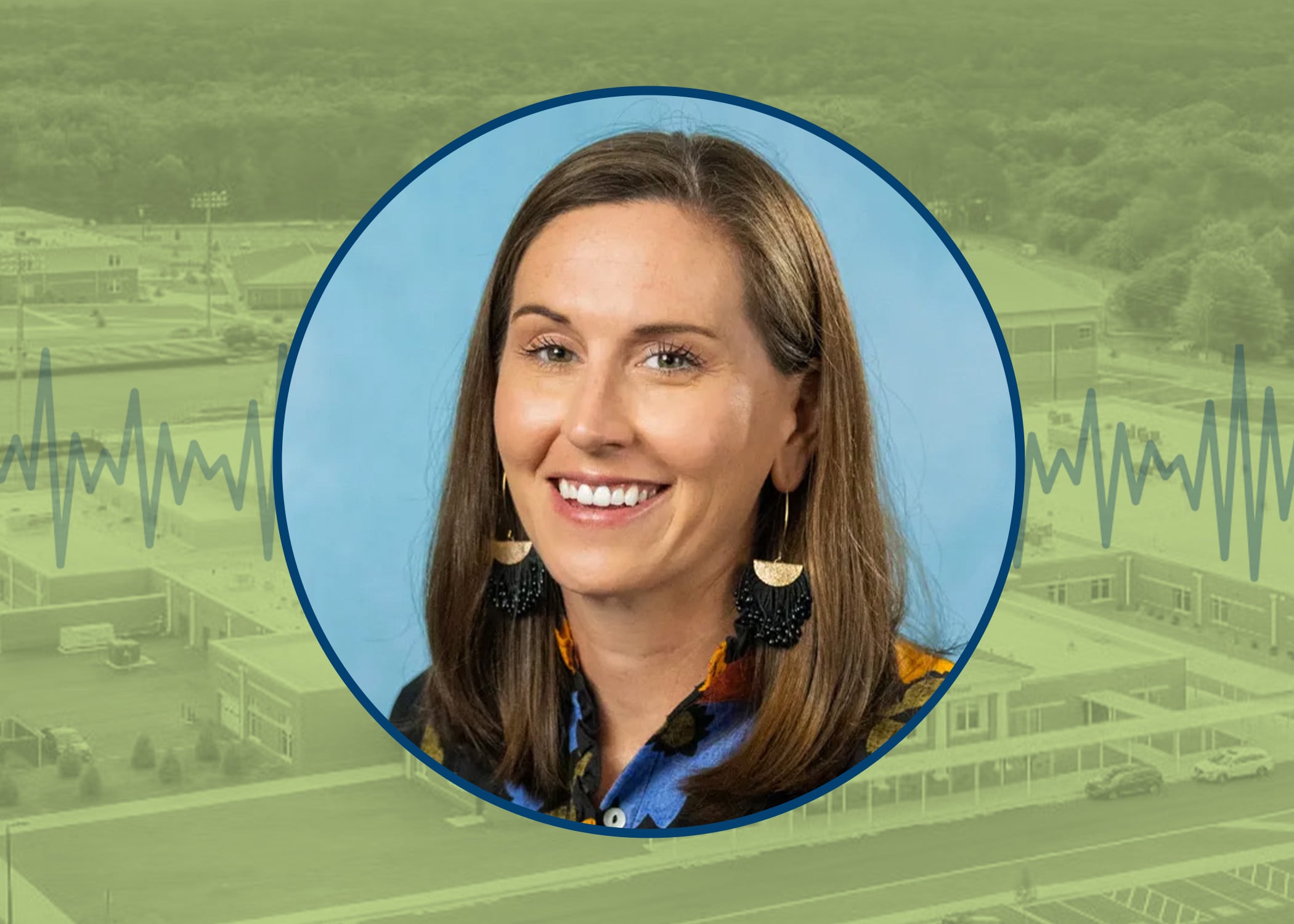
Episode Guest
Listen Now




Episode Transcript
Please note, this transcript is generated by AI and may include some errors.
Spencer Payne: Okay, welcome to front of the class real stories from real educators and our real educator today, Rachel Kinsaul. And Rachel, how do you introduce yourself to other folks in this educational profession? What do you like to focus on? What do you like to share?
Rachel Kinsaul: So I am an ag teacher through and through. I have spent the last 15 years teaching high school agriculture. I teach floral design, forestry, intro to ag and horticulture. And so I like to say I am just an ag teacher. this year I spent my year as the state 2026 state teacher of the year, and that is still how I introduce myself. I am just an ag teacher. so that's how I like to think of myself.
Spencer Payne: Perfect. And and congratulations. And can you share where are you teaching? Kind of what school and what grade or what grade levels are you teaching? What kind of what kind of kiddos are you seeing every day?
Rachel Kinsaul: Yeah. So I'm at Morgan County High School in Madison, Georgia. We have about a thousand students, nine through twelve. so we're at like a medium-sized high school. we are the only school in the county though. So we have 21,000 people in our community, in our county. And so we are the only high school. We're a pretty rural community. I teach nine through twelve, so it's a little bit of a mix of all. what I really love about kind of teaching in elective is the fact that like it's not a one and done with the kids. Like they're gonna come back to me year after year. And so I really get to to watch them grow as they go throughout their high school career.
Spencer Payne: And on watching those kids grow, one thing that you shared was really important to you was kind of immersing yourself in the community. So again, you can see that growth with your students, but you can also see that growth within your community. Can can you just just share a little bit more about like what does that mean to you? When you people say immersing yourself to the community, some people like, yeah, I do that one field trip every quarter, right? Like, what does that actually mean to you? What like when we say ingraining yourself and immersing yourself in the community, what does that mean to you? What does that look like?
Rachel Kinsaul: So I think that also goes along like on a personal level. Like on a personal level, we live in this community. My student my kids, my personal children are playing sports in this community. We go to church in this community, we're eating out in this community. I'm involved in lots of different nonprofit boards, like the Madison Morgan Conservancy and the Georgia Farm Bureau Association.
And so I do a lot of things like that too. And through those connections that I'm able to build in the community because I live and breathe and work in the community every day. I'm able to make a lot of commu connections. for instance, my child's soccer coach works for Georgia Power and is on the forestry management team of Georgia Power. And so just like getting to meet him in an outside environment, he found out what I did. I found out what he did. And now my kids are going on a field trip to see what Georgia Power does and how they operate in a forestry industry.
And so we go to local dairy farms. I have a CDL, which people always think is hilarious. but the big reason that I do that is so that I can like jump on a bus and take kids out into the community to see something because you know so many times like guest speakers can only do so much. So the kids get so much more out of it when I'm taking them to the farm or taking them to the business to learn a little bit about what's done, you know. I really want my kids to understand the opportunities that exist for them within their community. And so just finding any way that I can to connect them with community members or industry professionals is is a top priority of mine.
Spencer Payne: So you've got your CDL so that if there's no bus drivers available and you have a trip lined up, you can just say, Well, I'll just drive everybody.
Rachel Kinsaul: That's right. That's right. It makes it a lot easier. So we c we can get a bus a lot faster if we don't have to find a driver.
Spencer Payne: And can you share a few more examples of like over fifteen years? What are some of what are some consistent or maybe even some wild and crazy field trips that you have taken your kids on? What are some examples? You shared a couple, but I'd love to hear a few more.
Rachel Kinsaul: Yeah, so I had a farmer call us one day and he said, Hey, we're processing turkeys tomorrow. Do you want your c you want you want to bring your class out to see? And so we did. We jumped on the bus the next day and we went out to their farm and they we helped them process turkeys. And we have gone out to their there's a Stephan Thomas Museum of Art. It's you we're in a rural community, but we have a pretty like fancy art museum. And so we were able to go to the art museum and do this art and bloom exhibit with with the students. So they got to pick a an art painting. and then the kids made a floral design that kind of represented that. So that's another example of us going into the community. We have a local Christmas tree farm and I take my horticulture class there to really see how they're using horticulture and they're like ball and burlap operation too.
And we've got local feed mills. And so the feed mills are kind of walking the kids through all the different commodity exchanges that are occurring to in order to mix these livestock feeds. we go to nursing homes. We also do lots of things with like community service type aspects. So we're going to nursing homes and we're making floral arrangements with the residents at the nursing homes. So we do farm days at local preschools. So that there's always something going on, always jumping in to do whatever we can do to get the kids out and and help out.
Spencer Payne: I love this. I I'll one of my favorite books I ever read was called Not Fade Away, A Short Life Well Lived. And one thing this guy who's the author of the book shared is I I think maybe he was 45, 45, something like that. He had some kiddos. And he would he would go rent like a 15-passenger van and take his kids and their friends out for what he called real-world outings. And some of them were like going to the local factory and just understanding like how does this stuff work?
Like, all right, kids, like you better have your questions ready to go. Like he would just take them out and experience the actual, the actual real world as people see it with a whole bunch of questions. and one thing that I'm gonna do this with my kids once they're old enough, also. But one thing he had one rule, and he would say, What's our one rule, kids? And he'd have them all say in unison, no permanent injuries. It's like, all right, we want to be safe, but we wanna have fun. Like, no permanent injuries, all right? Like a little scrape is okay.
Any of these field trips, which ones have the kids most loved? Like which ones do they say, I wish we could do that again, or what have they liked the most?
Rachel Kinsaul: Yeah, so one of my favorite ones is we we have a Georgia Pacific plant here that makes plywood. And so you can see literally the log. They walk us through the whole thing. So you see the tree and then every process that goes into making it plywood. And so I think that is probably one of the one of the more impactful ones because the kids like like you like they see the entire process and how it's made. another one that is an all time favorite is going to the dairy and milk and a cow. Like I just like I'm a firm believer that like everybody should milk a cow at least once in their life. And so getting to take them there and letting them milk a cow, that's always a big hit. And they get to feed baby calves. Is anytime there's a baby involved, they're excited.
Spencer Payne: Yeah, yeah. Yeah. And then how about members of the community, when when you're going on on these field trips, which ones do you get the most praise, or my gosh, this is the first time anyone's ever done this? Can you come back again? Which ones do the does the community most love that you've gone to that they want you to come back?
Rachel Kinsaul: Yeah.
So we do a contest called Agricultural Issues, and the kids pick a topic within their community that's affecting their community. They have to research the pros and cons of the issue, and then they have to go do at least five community presentations. And that is the the thing that I think I get the most feedback from the community of the wow, I can't believe that these kids can take this complex issue, such as conservation easements or solar power or we did mass timber one year. So they're taking these really complex issues. They're learning the pros and cons of them. They're presenting them to a group of of adults. And then after that, they have to stand there and field questions from these adults. And normally it's a it's a pretty hot topic.
And so the questions that come at them are pretty intense. And so every time we do that, the community is like, wow, I cannot believe that high school kids can do that. I can't believe that they have the confidence to stand there and present and answer our questions.
Spencer Payne: And I think is a great reminder if these kids can do way more than probably most of us think that they can if we just set the expectation high and give them the tools to do it. so, and on that one, I'll I'll I'll highlight one thing that they're learning by do presenting those pros and cons is also not every pro and con is is equal, right? There could be one pro and seven cons to do something.
But maybe that pro is so impactful and so important and so big that you know what? There's a bunch of small stuff that's yeah, yeah, this is gonna happen and this is gonna happen and this is gonna happen. But look how much good things happen by doing this, which is I think a really important skill or trait to learn, especially young, is sometimes there's just like, here's three pros and three cons.
Rachel Kinsaul: No, I know.
Spencer Payne: and it's like, well, I guess these are even. It's like, well, not actually, all those things aren't treated equal. And the ability to kind of discern which ones matter more and asking people in the community, hey, which ones of these matter more to you? If you had to make a trade-off and you could get this thing, but you had to give up these two things, would you do that? Like the way the way to ask those questions and to try to ascertain and prioritize is an incredibly important skill and one that I don't remember learning in high school when you're just stating off facts.
Rachel Kinsaul: Not really. Yeah. Yes, you know.
Spencer Payne: So kudos to you for teaching them that. It's a really important skill to learn. one other thing you mentioned that I really want to highlight here is this floral arrangement class. there was a statement that was something like: For me to do this, I need $1,000 and I'll never ask you for another dime again. What's the story behind that?
Rachel Kinsaul: Yeah, so I started teaching in Morgan County 10 years ago, and I was teaching ag mechanics and which is the funny thing about being an ag teacher, like literally certified to teach everything from metal fabrication to floral design and everything in the middle. And so I was teaching metal fabrication in agmec, and we just like we had a high population of male students, like 72% of our kids were male. And so I went to my CTAE director and I was just like, I really think this floral design program could be really successful here. Like I'd done some floral design stuff through like FFA contest and maybe a centerpiece here or there for this or that. I was like, I think we can make money off this.
And I said, if you'll give me a thousand dollars just for startup fees, like I need to buy tapes and shears and vases and things like that, I'll never ask for another dime. And I knew that I could do it because we were gonna do a subscription program. And so people in the community pay up front for our subscription and then they get a flower arrangement delivered to their house once a month throughout the course of the school year. And
Spencer Payne: All all from all all created by the kids? Yeah.
Rachel Kinsaul: All created by the kids. Yes. And so it gives them one an opportunity when making that arrangement to work with real flowers. But I'm also taking you know, about half of what we're what the arrangement, what they're paying for the arrangement and putting that towards just like class supplies. So they're also getting to make a lot more things that they're just getting to take home. And one of the the big things that's been made this such a success is our delivery team.
I knew that like if we could offer delivery that it was just gonna open it up to a whole new group of people. Like I am one of those people who is super excited to support things, but like I'm gonna forget to go pick it up. And I mean that's the way most people are. And so I asked our special needs department if they would be interested in delivering our flowers and they have. we actually have I have I'm sitting here looking at 66 flower arrangements that are going out tomorrow from our with our special needs students.
Spencer Payne: So so how how does that how wait so how does that work? So they're they're going out in a in a van and like hand delivering these to every like how does that work?
Rachel Kinsaul: They're they're going out on a school bus. So, they go out on a school bus. There's a lady in town who lives on Main Street and she always laughs because she says there'll be traffic backed up a mile long and the bus just stops right in the middle of Main Street and one of the kids bebops off and knocks and drops it on her front door. but the kids are getting an opportunity to communicate with all of the people who are receiving these deliveries and a lot of times the people who are getting the deliveries will have treats for the delivery team. They'll make them cookies or cupcakes or have them candy and popsicle.
So I don't know if they like the delivery team or our flowers more, but that part doesn't really matter, I don't guess. we've really grown that. I mean, like we started the first year we did it, we were at thirty six. now we're at sixty six and really that's about all that we can handle. So we do sixty six a month. and that's that's a big part of it. And and really like that just kind of led to the community immersion piece too. Like so now the community sees what we're doing and they're starting to ask questions about our program, starting to see if we can help them out with parties or baby showers or weddings. We started to do some weddings. So all of those things kind of just came from that community of immersion portion.
Spencer Payne: So out of a hope and a dream, a thought process, and a thousand dollars to seed it, you now have not just your students involved in this, but also cross-functional other students in your school. You've got sixty-six members, and you're also with those members and others being asked to do weddings and maybe birthdays and other things. Like, I mean compared to what you thought when you started this versus what it is today, like how does that compare?
Rachel Kinsaul: It's so funny because like I I a lot of young ag teachers talk to me about this or like they want to start programs especially after last year because I traveled the state talking about this program and all of their administration heard about it and everybody's administrators came back saying, We want you to do this world design program and you know and especially when like after like we bring in about sixty thousand dollars a year. And that is that's a big number that is like very appealing to administrators.
So, but every time I talk to them, I'm like, this is not how it started. This is not how it started. No, we had 36 subscribers. we started doing weddings as like a class project. We do a fake wedding every year. It's like one of my most favorite days. And there's a a random bride, it's one of the teachers who's on planning, and she comes down and does a consult with them and they have to plan the wedding.
And they do flower orders. She picks a proposal and we execute that wedding. But doing that project is what gave me the confidence to be like, we can we can do this for real. And then our counselor, she came to us because she was getting married. And so she was the first real wedding that the class did. And then, you know, after that, it was just like little projects that like built like built that confidence. And then, you know, we even started doing community classes because
Spencer Payne: We could do this for real. Yeah, yeah.
Rachel Kinsaul: All the parents that walked into the building for open house night or like student registration were going, I wish we had this class when I was in high school. And so that led to us doing like monthly community classes. So we're and you know, while we're we're putting flowers together, we're not just promoting our our floral program. We're also talking about our show pigs and we're talking about the kids going to national convention. And so it's just been like this really amazing like PR piece of the community this bridge that's like really brought people in and interest been made made them interested in what we're doing and it's it's really highlighted our whole program.
Spencer Payne: and two more questions on this one. So one thing you alluded to earlier was that with what this brings in, some of it is funding itself and some of it is then funding additional programs that maybe you want to do or people are asking you to do. So as a result of this floral membership, weddings, et cetera program, what else have you been able to launch with the funding that that is creating for you to do other things? Like what else are you doing now that you couldn't do without that program?
Rachel Kinsaul: Yeah, well, it is purchasing a lot of like extra supplies for the classroom, for our livestock show team. We're able to buy new sets of clippers and a lot of like the smaller things that typically the kids would have to buy on their own. Like we're able to buy like kind of class sets of things like that so that the kids don't have to put their it's not as expensive as it could be. So that's like that's really mainly what we're using most of our money for is to try to keep the cost down in other areas. mainly for our our livestock team.
Spencer Payne: And then one thing that you started all this with was I'd like to get more females in the AG program. How how what's the result there? With the with the result of the floral arrangement class, like that was your initial purpose, right? Like what have you seen, what have you seen as a result of the floral arrangement class in terms of demographics of your students?
Rachel Kinsaul: Yeah. Yeah.
No, we still have a lot of boys. We're still but now it's like we're forty-four percent female. So it's pretty close to fifty fifty. and the whole I really think all the girls ask me all the time, like, is there a floral design too? Like, can we take this class again? And the a the answer is no, because the whole purpose of the class is to try to get more girls into our program.
And so once they take floral design, then I'm like, you would really enjoy horticulture or you should take animal science or you should take intro and so we're really trying to just pull those kids in with floral design and then get them into other parts of our program.
Spencer Payne: Yeah, yeah. And then one more on this, because it's always fascinating to hear the story behind. Do you remember your the first sale? Like the first cash or the first check that came in of like, my God, this is this program is real now, right? Because everything everything sounds good. so I'd totally pay for that. And then it's like, All right, it's real. It's now it I need your sixty dollars. Like, whoa, whoa, whoa, whoa. I didn't think you were actually gonna do that. So like, do you remember like that very first payment? And how did that feel?
Rachel Kinsaul: No. Well, I don't know that I remember the first payment, but I definitely have customers who I laugh she is the first one to sign up every single time and has been the very first one to sign up since the very beginning. And so I always laugh at I'm like, you're my OG. You're my OG, the one who believed in us in the very beginning and is stuck with us for the last nine years. So
Spencer Payne: Incredible. and with you being able to see these kids for kind of four years for an entire program, like what are some things that you hope they walk out with at the end of twelfth grade that maybe they didn't have or they didn't have to the level that at at ninth grade when you get them? Like I guess what what is the stamp you hope to make over that four year window on the kids who go through the entirety of your program? Like what do you hope they leave knowing, being able to do that maybe they couldn't when they started?
Rachel Kinsaul: So, I mean, obviously I I hope they can identify seventy different flowers and trees and, you know, I hope they can do all those technical things. but really what I hope they can do is like real world problem solving. And that's what I think is so powerful about our program and the fact that we're taking on like real events and they're raising real animals, like the problems come up with our greenhouse constantly or you know, we don't have enough of this or we don't have enough of that.
And like we have to fix the problem because a customer is relying on us. And so that it's that real world problem solving, that initiative. That's something I really work on. And you know, like I think it's so fast to say that like these these students these days, you know, they there's no real work ethic or there's no real initiative. And but like I am actively working to teach them that.
I don't tell them that I need them to clean up and just kind of expect everyone to do it. If someone's not, I'm calling their name and saying, Hey, can you grab this broom? hey, can you take the trash? Spencer, can you pick up these stems? And so I I mean it's a lot of work for me, but I also think that like they are learning, like I can't just sit here. Miss Kinsaul's gonna ask me to do something. Like I need to look around and see what needs to be done and get it done. And like that is like my biggest goal is teaching kids to find a little bit of initiative and like look for the job that needs to be done and fix the problem.
Spencer Payne: Hmm. That yeah, that real world problem solving is really powerful. And on that note of of you know, kind of no having the kids be in a position to know that I'm not just gonna be able to sit here because Miss Kinsall is gonna be like, hey, Spencer, can you go sweep up those stems? They're they're on the floor over there. do you ever s do you ever notice as a result of you kind of creating that culture that sometimes the students then even step in and s and and ask for the other students to help out before you even need to? Like, are you just
Maybe that's the ultimate, maybe that happens sometimes. I'm just curious. Do you do you see that happen much?
Rachel Kinsaul: Yeah. No, I this this year's thorough design class has been really amazing. Like I I I I catch myself like standing back and like looking around like, whoa, no one is trying to sneak into the classroom right now. You know? yeah, no, they've been great. The I have kids now they'll say, Can I take the trash? I will never tell you no. I will never tell you that you cannot take the trash to the dumpster. We make a lot of trash so yeah, no, I definitely see the kids like jumping on these jobs that they just now they know that they have to be done and and they do it.
Spencer Payne: And if there's a teacher out there listening thinking, you've got to be kidding me, you've got kids asking you to take out the trash. How how do I learn this superpower? Like, can you like, you know, like that doesn't just happen. Can you share a like you shared a little bit there too of like, hey, well, if if kids aren't doing anything, I won't say, Hey, Spencer, you're not doing your job, right? You said you said it completely different. Like, hey, Spencer, can you please take out the trash right now? Right?
Like, can you share a little bit about maybe what's the special sauce of...Of if you were to try to teach somebody else, if they were like, I want to learn one skill, how do I get the kids to ask to take out the trash? If you were to teach them like, well, I think here's what kind of goes into that, like how would you try to teach somebody else how to get to that level?
Rachel Kinsaul: Look, I think part of the problem t you know, part of the thing too is like, which we're Georgia just passed a new cell phone law. Like they can't have their cell phones out. But even before that, like I was real strict on that. Like we don't I don't let kids sit around and play on their phones. So like if they can't sit around and play on their phone, like most of the time they just as soon be up moving around and taking out the trash. And so like kind of that that's like one of my strategies is like taking away the devices that kind of lead to that laziness, for lack of a better word. then I think that has really helped. And and really that like name calling, like, hey, can you do this? Can you do that? really that that's been a that's been a win for me.
Spencer Payne: And continued on that note, like how how do you kind of set the tone? Let's let's just say for argument's sake, there's a kid who moved to ninth to move to to move to your area. They don't have any knowledge of you as a teacher. They they signed up for your class, it's ninth grade. Like, how do you set the tone for that student of like, here's what the expectations are in Miss Kinsel's class? Like how do you kind of create that?
Rachel Kinsaul: Well, I don't ask them to do anything that I am not willing to do. and I am not sitting and like grading papers and telling them they need to clean up the room. I'm not sitting on my computer and doing I like if if we're cleaning up, I'm cleaning up with them. And I think modeling that is is a huge part of it. Is is just being right there in the middle of it. I'm not asking you to do something that I wouldn't do. I will say, kind of on that note, like one of my favorite things about teaching ag mechanics and teaching a bunch of high school boys was being a pregnant teacher with high school boys because if I try to do anything, they jumped up and did it for me. And there were lots of conversations about you know, what are we gonna do if your water breaks in class?
So that was I I had a a a kid ask me too that sorry I kinda kinda got on a tie tangent but I got a I had a kid see me at Solomon Town the other and he goes, Hey, do you remember when you were six months pregnant and you climbed a fence? And I was like, I do n yes, I do remember that. I remember that moment. And I you know, I just laugh about like it's that's just an another example like I'm not even when I was pregnant, like I'm not asking you to do something that I'm not gonna do.
Spencer Payne: there's a the last dance, the Michael Jordan kind of like Bulls documentary. There's one scene. I think it's at the end of one of the episodes, and like the music is building and like there's this great energy to it. And like I think Michael says at some point, like, you ask my teammates, like he didn't ask me to do anything that he didn't, and then he swears, do himself. But like I I do think like there's an importance of that of like to be a leader, right? You need to be the model, right?
and I got I got two boys, two and four. And I've heard it said from others, and I I kind of see this, right? Of like they are little mirrors, right? Like they are they like my wife and I are who they see the most. So that's what behavior looks like, right? So like they are little mirrors and the do as I say, but not as I do thing, like, nah, nah, nah, no, no. Go do, go be the leader. If you want your kids to take out the trash, take out the trash and then say, Hey, Spencer, would you mind taking out the trash today? Right. Model that behavior. Yeah. Do you want to come with me? I'll show you where I'll sh I'll show you where it goes, right? but like those little things, like they add, they add up a lot. I can't believe you did climb a fence though when you were six months pregnant. Kudos to you. any any proudest moments over this 15 years in teaching that you're that that that you look back on and still you're like, man, that was a great day or a great moment or a great class. Any proudest moments that you can share?
Rachel Kinsaul: You wanna come with me?
Yeah. Yeah. I think about one student and her name was Sydney and she came into my classroom because of floral design. she was not ag kid, she was your typical cheerleader and loved Sydney, saw a lot of potential in her.
She was really good at floral design. She was great at talking to people. And I was like, hey, I need you to do this contest for me. I need you to do this advocacy and action contest for me. And she did it. They won. It's like, all right, I need you to be on my ag issues team. I need you to do public speaking for me. And so I was able to pull her into all these things. And then, like, it seemed like a little bit of confidence for Sydney, you know, gave her confidence, a little bit of success, gave her the confidence to do the next thing and the next thing and the next thing. And like, she applied to be one of our FFA officers the next year. She ended up taking two additional ad classes to finish her pathway. she was on state and national teams. She had she started her own floral business. So she had Sydney's Flowers, where she was doing weddings on her own and was like my work-based learning student. And so, like, Sydney is my floral success story.
She is now at the University of Georgia. She's a sophomore and she's working in a floral shop to you know, help pay her way through college. So like Sydney is my floral success story of a student who would have never set foot in an ag class had it not been for floral design and she found this like passion and this industry that she would have never experienced otherwise.
Spencer Payne: Wow.
Yeah. and I do wanna highlight one thing. Again, if I if I'm a teacher listening, I might be thinking, How are you doing all this? You've got kids, you're ingrained in the community, you're on a couple boards, you're running all these programs. Like, do you sleep? Like how how like can you share a little bit of like how how do how do you kind of approach your day or your week? Like, how do you balance all this? Do you feel like you're overwhelmed? Has or or similar to the floral program, when people look now and they're like,
This is amazing. I want that tomorrow. You're like, whoa, whoa. I didn't it didn't start this way. I just kind of start, I just kept building over time, just slowly just built the wall one brick at a time. so I guess with that, can you share a little bit about like do you again today, 15 years into teaching? Do you feel overwhelmed? Do you feel like no? I've just kind of slowly built up over time. I feel good. Like, how do you feel about how you spend your time? Like, do you feel overwhelmed? Do you feel good? Like, what's your take on the whole work life balance conversation?
Rachel Kinsaul: Yeah. So I mean it's so funny you asked this question. I literally just had a conversation with the teacher across the hall about how I'm a little overwhelmed right now. because I have also decided to start I'm going back to school to get my PhD. So I don't I don't really know what I was thinking. but I'm I'm excited about it. But yeah, I mean, I'm not gonna sit here and say that there are not times where it's it's not overwhelming. I mean, it definitely comes and goes in waves for sure.
I love what I do. So I'm we have a wedding to set up for on Saturday. I love setting up for weddings. I'm gonna take some students with me. I pay them on Saturday. So, but like that's not work to me. That's fun to me. my personal children have pigs at our show barn. And so take you know, that's an opportunity that's it's kind of like a family thing. I I really do think that being an ag teacher is not a job, it's a lifestyle.
And just trying to integrate, you know, my family is a part of that too. They're coming and doing a lot of different things. I try to take my kids when I can to different things. But I I I just really love what I do and like it doesn't feel like work. I love to taught to teach kids about forestry and about floral design. And so yes, it can be a little difficult to keep up with. Sometimes I do feel a little overwhelmed, but
For the most part, I just really love what I do. And and you know, like I always tell teachers that, like if you you can always make a little change. Like for me, it was asking to teach a new class. It was asking to teach floral design and like having that passion project to always be working towards and like always having some new passion project is like kind of kept me, kept the fire alive, I guess.
Spencer Payne: and on the note of kind of passion projects and really big ones too, you did you also shared the story of I'll give the headline away and then we'll dig into this of how you raised a million dollars to build a barn without even asking for it. How in the world did that happen?
Rachel Kinsaul: Yeah. Yeah. So, we had been talking about livestock barn. It you know, I my first job in Pike County, I taught at Pike County Middle School and I raised about thirty thousand dollars for a barn there and then left before it could get built. And so when I came to Morgan County, I was like, We need a barn, you know, this was always kind of our thing. And my superintendent was an ag teacher. A former ag teacher and he was like, Just like I have a plan, I have a plan. Well then he retired and I was like your plan. what about your plan? I need a barn.
And so it's like, okay, if I kind of said, if I can get the money, can we build it? And they said yes. And I feel pretty confident about the fact that they said yes because they didn't they were like, Yeah, if you can get the money, you can build it. Go for it. And so we kind of were talking about how we were looking starting to fundraise for a barn, but just the kind of buzz that's gone around, we hadn't gotten a dime for it yet. We were really just in the beginning phases of even like what fundraising would look like. And being on I was on the Madison Morgan Conservancy Board and the director was like, Hey, the the Meta has reached out to me because they're looking to do some solar projects in the community. I think this might be a good fit for the school and for the barn.
And so she wants to talk to you about it. And in my head, I'm I'm I'm thinking like I need a barn before I'm worried about solar panels. Like I don't even have a barn to to put these panels on or at or whatever. But I'll talk to her. And so she comes into my classroom. She met me at the school and tells me just straight up, like, we're we'd like to give you three hundred thousand dollars of unrestricted funds for your barn. She's like, You can we don't I mean, we'd like you to do solar panels, but you don't have to. And I was like, Whoa, like I think
You know, I tried to play it cool. Like somebody throwing $300,000 at me was like no big deal, you know. So I tried to play it cool. but I couldn't believe it. And it it was like almost like magic when we got that money, that commitment from Meta, then all of a sudden everybody in the community is like, Whoa, this is really gonna happen. This is gonna happen. And so we reached out to another family foundation who likes to do grant or or matching grants.
Spencer Payne: This is real now. Yeah, yeah.
Rachel Kinsaul: And so they told us we'll give you $100,000 in matching funds. And so I have a $100,000 match. I've got $300,000 for Meta. And then the money just started rolling in, like $1,000, $2,000, $5,000 from all these people in the community to hit that $100,000 match. And then the school system was like, whoa, okay, we get this special, this special funding every year and we're going to devote it to a project.
You've got all this money coming in. So we're going to put this money towards your project. So we ended up with a little over a million dollars to go towards our barn. Now it costs more than that. And the school system matched the other half. but they have been so supportive in the fact of like, you know, we want all of our organizations to have a little skin in the game. So if you've got some skin in the game, you've done the work to to raise some funds, then we're happy to support you.
Spencer Payne: Yeah. we're not gonna start it, but if you prove that you can go start it and you've got momentum, we'll help finish it. that's how many things in life go. How how long ago was the barn built?
Rachel Kinsaul: Yes. So this it it is done. We have just started our third show season in the barn. we got pigs on Saturday. So we got little baby pigs in the barn. And I mean, it really has been amazing too to see this program grow because the first year I think we had eight pigs in the barn. Last year we had seven pigs in the barn. This year we have fourteen. So it doubled in size in the last year.
Spencer Payne: Or is it still in process? Yeah.
Rachel Kinsaul: so we're getting ready to do phase two of the barn, which is a cattle barn. So this is a small animal barn for mostly pigs, but it could also house goats or sheep. And then right beside it, we're gonna put in phase two, hopefully in the next month or two, that will be a a pole barn for dairy cattle and beef cattle. And it's it's right in the outfield of the baseball field. So it's fun. You go to the baseball games and you can you see some animals out in right field.
Spencer Payne: as a baseball player, I'm slightly appalled. No, I'm kidding. what do you what do you hope that like what is this what does that barn mean to go back to five, six years ago before the barn when it was still a pipe dream to say 10 years in the future of like what you hope it could become? Like, like what's that 15 year like what does that allow you and your program to do that you couldn't do before?
Rachel Kinsaul: So the big thing is is like eat pigs are dirty, okay? And most people don't want to keep pigs in their yard. Like trying to convince a parent to put a pig in their yard for six months is difficult. And then a lot of kids live in the city where they can't have livestock or they live in a subdivision with an HOA. And so without the barn, we were really limiting the number of kids that could participate in our livestock program to the kids that had the facilities at their houses.
And then on top of that, the kids that did have facilities at their houses or makeshift facilities, we made something work. The animals had to be monitored every other week. We were checking weights and average daily gains and giving medications when needed and so forth. And it seemed to never fail that a kid would call me at like nine thirty on a Friday night because their pig was really sick. And
So it was exhausting for us. And then we're going around picking the animals up for the livestock shows. Like literally was in the road all the time checking on different pigs because they were just scattered all over the county. Like having this facility, one is opened up the opportunity for more kids, those kids who don't have the opportunity to keep them at their houses. But two, it's really helped us keep a better eye on the animals' health. Because I'm going in every day, twice a day, and just checking, like up.
That pig didn't eat this morning. We need to watch it. If it doesn't eat this afternoon, we're gonna check temperatures. We're gonna administer medications if needed. But we I feel like I need to knock on wood right now. But we really haven't had any major health problems in the last couple of years because I feel like I can really monitor what the kid what the animals are eating, how they're eating. I can monitor all that and like really be a better advisor to the kids on how to raise their animals.
Spencer Payne: Yep. And sadly, we're getting close to the end here, unfortunately. We could probably go twice this long, but unfortunately we just can't. So rapid fire kind of quick hitter question time here as we get close to wrapping up. as you look back 15 years in this profession, if there's a if there were and maybe there is a new teacher starting across the hall from you this year, what what's the number one piece of advice you'd give to someone who's just in their first year looking up to you, thinking, How can I even emulate?
A quarter of what you've done fifteen years from now, what what advice would you give to that young, bright eyed, starry eyed young teacher?
Rachel Kinsaul: It doesn't get easier, but you will get better at it. doesn't get easier, you get better at it. that's a that's a huge piece of advice for me. If you're not happy with something, make some minor tweaks or some minor changes and don't give up. I feel like so many times young teachers give up a little too fast without trying something new.
Spencer Payne: Mm. And what to you is the single best thing about this profession, education?
Rachel Kinsaul: Okay, I'm gonna I'm gonna specify it down to the best thing about being an ag teacher. There are so many times for conversation that I feel like a lot of other teachers don't necessarily get. Like we are in the greenhouse, we're planting plugs, we are waiting, sitting and waiting in a livestock show. We're walking out to the woods to measure trees and we're make sitting making flower arrangements, and we just get to talk to the kids. And like that is so instrumental in building relationships with them.
And having them want to do things like take out the trash for you. So that is my favorite thing about being an ag teacher is just all the extra time for conversation.
Spencer Payne: And what's the worst or hardest thing about this profession? Something you wish you could change overnight?
Rachel Kinsaul: Yeah. The hardest thing about this profession is really like getting to know the kids and then hearing some of the gut-wrenching stories about the realities of their lives. and th that is the hardest thing about this profession. If I could snap my fingers so that every kid had this perfect scenario at home, I would in a heartbeat.
Spencer Payne: and what's one thing that to the public at large or to parents out there who have never walked a mile in an educator's shoes, if there was one thing that you wish they could, you know, swap and experience or feel or know what it's like to be an educator today, what what would you hope that you could you could convey to those folks who don't know what it's like? Like what would you hope to convey?
Rachel Kinsaul: that educators like really have your child's best interest at heart. Like we are doing everything that we can to set your child up for a success. And a lot of times we just need a little support on the back end or backup motivation, anything like that. But really all we want is the best for your child.
Spencer Payne: And any final words of wisdom out there to any teachers listening, whether it be something new that you didn't have a chance to say or maybe something you already said, but it's so darn important we gotta say it one more time.
Rachel Kinsaul: one thing that I you know, like I really have tried to take like an entrepreneurial approach to fundraising. And because of that, I don't feel like I'm having to nickel and dime my community. However, we have the funds that we need to do the things that we need to do. And so like I guess that's a another piece of advice is is like trying to find these entrepreneurial ways to fundraise because the kids are learning a lot more from that two. so that yeah, that's my last piece of advice.
Spencer Payne: Well, Rachel Kinsall, congratulations on your well-deserved teacher of the year accomplishments. and you started with a statement of I'm just an ag teacher. You are obviously s so much more than than just a teacher in general. from raising a million dollars to go build a barn to starting up this floral arrangement program that has 60 plus members every month that's funding all these other things for your students to being truly an ingrained member of the community, truly a real educator with fantastic real stories. So thank you so much for sitting down and sharing your story. Appreciate the heck out of you. I wish there were more teachers doing what you're doing.
Rachel Kinsaul: Awesome. Thanks for having me. I enjoyed it.

Moreland University can help you take your teaching career to the next level.
Whether you’re looking to get professionally certified or earn an M.Ed., our 100% online programs can help.
Complete your no-cost application (it takes less than 15 minutes!).