

Front of the Class Podcast | November 12th, 2026
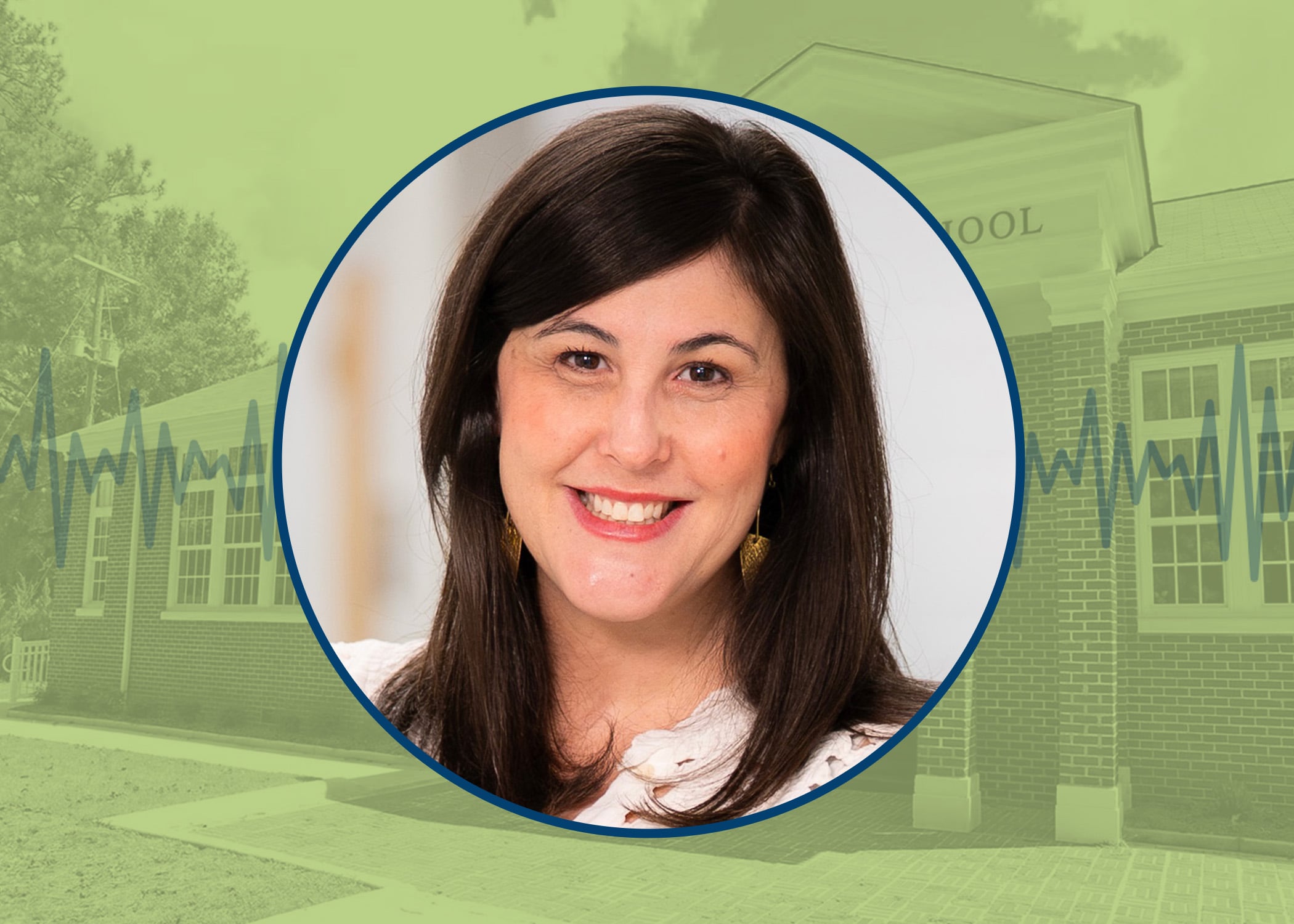
Burnout, Boundaries, and Finding Your Fit with 2025 Alabama Teacher of the Year Katie Collins
In This Episode
Katie Collins has built a career across different grade levels, subjects, and roles in education. Through those experiences, she learned that understanding your strengths and needs can help you find where you can make the greatest impact.
In this special topical episode, the 2025-2026 Alabama Teacher of the Year reflects on navigating burnout and career challenges, not saying ‘yes’ to everything, and rediscovering her passion for teaching. Her story offers practical encouragement for educators seeking a more sustainable path forward and a reminder that no one has to navigate challenges alone.
Key Topics Covered
- Recognizing the signs of burnout and setting boundaries
- Finding a teaching role that fits your strengths
- Advocating for yourself in conversations with administrators
- Rediscovering the joy and purpose of teaching
- How collaboration and community help educators thrive
- And more!
Episode Guest
Listen Now




Episode Transcript
Please note, this transcript is generated by AI and may include some errors.
Spencer Payne: Okay, here we are with front of the class real stories from real educators. Our real educator today, Katie Collins. Katie, can you share a little bit about where you're coming in from and how you introduce yourself to other educators?
Katie Collins: Well, yes, I love that we are talking to real people because guess what? Teachers are real humans. And I love that the what the your podcast. I love all everything about it. but my name is Katie Collins and goodness, how would I describe myself? I am somebody who loves education deeply. I have been a teacher at heart since probably age kindergarten or even younger. I am a first grade teacher at heart, who is also a meacher, a mom teacher. I have four kids. I have kids in high school, middle school, and elementary school. So I'm really living lots of schools here. but I found myself at a high school, not only a high school, but a career tech center.
But I love everything about education and what's cool about it is everything is connected. And so that is my work right now is helping to connect pre-K to beyond, to college and career post high school experience. so yeah.
Spencer Payne: And and you mentioned high school teacher, but first grade teacher at heart. You've made some transitions there in your career. Can you s just share a little bit about maybe some what's your just just the quick highlights? How many years have you kind of spent in all these different spectrums?
Katie Collins: Yes. Okay, so I'm not gonna start when I was a kindergarten, when I was actually in kindergarten, because I have been teaching since then. I won't yeah, because I will have to say I was always the door holder. I was always, you know, like clapping the erasers for the new teachers out there. You probably didn't understand what that means, but it was a joy to be the eraser clapper. but I have been, I started off as a high school French teacher.
Spencer Payne: Not yeah, let's not start how many years you taught when you started in kindergarten. Yes.
Katie Collins: J'ai un prof de Francy and I started this journey about twenty-two years ago. We or no?
Spencer Payne: Hum no, você vai, você vai.
Katie Collins: Ça va très bien. Et toi
Spencer Payne: And then I'll switch over to Spanish and say es toro. That's all I got. That's all I got.
Katie Collins: Well, man, you really hablo un poquito de español, porque fui a México por un mes para aprender español. I don't speak great Spanish, and if anybody heard that, you're gonna be Yeah, she doesn't speak great Spanish. but okay, so I was a high school French teacher, and then not only was I the French teacher, but I also was a first year teacher. And I taught, they were like, yeah, you're the French teacher, so you can also teach ACT prep and you can also teach computer science and you can also be the JB and varsity basketball coach. And also I was doing my student teaching in my own classroom.
Spencer Payne: And when when you were asked to do all those things, did you say yes to all of them? Did you push back? Can you share a little bit of like how did you feel about like, am I just supposed to say yes? Like what what do I do? Okay.
Katie Collins: I was fresh meat. You say you do what you told. You do because you're like, okay, well, I guess this is education. And honestly, guess what, Spencer? This is education. We have a lot of people who are doing in like crazy things. And I don't know. I like to say that like we're we we are learners. Okay. So did I know how to do any of that? No. Am I the best person for the job?
Probably not for some of these things. But I was a learner and I am a learner. And you know what? It taught me a lot. It taught me that that was too much for me. And I lasted two years. And this was 22 years ago. And then from that point I did love languages and I loved the process of learning languages. So I actually became certified to teach English as a second language or ESL or we call it EL English learners too. There's a lot of acronyms, they change all the time. But I actually took went from high school and I took a dive all the way down to elementary school. I was calling my high school. No. I mean, I was working with because I was an ESL teacher and it's like your certification is K through 12. So I was actually at an elementary school K through five. And so the first day.
Spencer Payne: Mm. Immediately to first grade? No, okay.
Katie Collins: Of school, I called my friends who were at the high school, and I was like, You're not gonna believe this. Bus duty is the hardest thing I've ever done in my life. Like these kids don't know their names. They don't know where they're going. Like, what is happening? And so it was again another learning experience. Do I know what I'm doing? Do I know this age? Do I know the developmental levels? No. I'm doing it again. We're learning on the job. and I fell in love. It was like I was.
Like high school was not like my jam because this was my passion. Getting kids at an young age. and so yeah, I gotta work with ESL students and their families. And that's when I went to Mexico and I I went to Mexico for one month to learn Spanish so I could welcome our fan our families into our school. And then I also yeah.
Spencer Payne: Yep. Well, there's there's two there's two there's two things I'd like to jump on there that that could be helpful for other teachers. One, one is this concept of your your first year, you're teaching high school French and they say, Well, what about this and this and this and this? Can you also do this and teach this sport and do this sport? And you just say yes to all of it. And over time, there's been an evolution of, you know, boundaries, no, that's too much. Can you share a little bit more? Like I'd like to go a little deeper on this one.
Can you share a little bit more about when did you feel like it was too much? And then like, what did you do about it? Like, how did you have that conversation with whomever it was, what did you stop doing? Was there guilt? Like, like, what was there like, well, geez, maybe she's not, Katie's not a team player. Can you just share a little bit about kind of like what that that first experience of saying no felt like? Like who did you have the conversation with? When did you feel that? Like I'd like to understand how others can maybe learn from that who might be feeling overwhelmed right now.
Katie Collins: That's a great question. Okay, so I think actually it was absolutely I was burnt out. I was burnt out at the start. I would wake up, my husband and I had just gotten married. and we were living in this tiny apartment and there was a washing machine dryer in like our bedroom. It was so tiny. And I was drinking from a fire hose. I was going to school at six in the morning. I was a first year teacher, and then I was also coaching basketball till like 11.
These games, high school games last a long time and it was so much. And I would go to sleep. And I mean, again, I was inventing all these things. And I was also inventing myself as a teacher. I didn't even know what I was doing. I didn't even know. I was student teaching in my own classroom. And so one time my husband said, I woke up, the dryer went off. And I woke up and I sat up in bed like half asleep. And I said, All right, guys, time's up. Turn in your test. And I went right back down.
Like I was not okay and I didn't say no. And I think I said no like at the end of my spring year when I was like, SOS, I'm getting a certification and I'm piecing out of this business because I don't have I don't know who I am at home. I'm learning how to be a wife. Like I just got married and I can't I don't have time for anything. and yeah, I I think that that's I didn't. I didn't say no until I said, I'm out, I'm done. And I really do think though that my calling was really that was important for my growth because it literally led me on the trajectory of where I am now.
Spencer Payne: Yeah, what when you when you say like you said you were done, you mean you were about to quit after your first year? Like like like help us understand that. And then what happened after that? Because you obviously you stayed. So what happened so second year in, you stayed. You say, you say, Yeah. Hmm. Next year, next year will be better. I'll figure it out, right? But then next year is still just as hard. So after a year two, like what happened? What changes did you make? Yeah.
Katie Collins: second year I stayed. Okay, second year, because I'm like, okay, well, that was my first year. I was like, I did it. I did the hard. I did the hard. And l and I got this.
If not harder. Year two is I want to say it's harder for teachers because now we know and we feel like we we we've had experience and like my my principal told me the first year, like, okay, if you make it to the parking lot, like you're doing a good job. And I was like, that's n that's the the metric. Well, so second year, I was like, well, man, I'm gonna do more than just make it to the parking lot, but was I making it well to the parking lot every day? No. And so I think that I was a yes girl.
And that was very, that was something I had to learn. And I think that we all have to learn this still. I still am a yes girl. And I have to tell myself, you have to say, you have to say no. So you can actually say yes to other things, like the r the really important things. And so I wasn't, honestly, my strengths were not to be a basketball coach. Just because you can play basketball.
And I almost played in college, but just because you can play basketball does not mean you can coach it. Okay. Just because you have experience taking the ACT does not mean that you are really feeling qualified to teach the pre-calculus and the calculus parts of that test, you know, especially as a French teacher. So I think it's also teaching you about your limits. But I did enjoy the language learning. I loved the classroom. And I that never thwarted. It just was like, I love teaching students how can I use my gifts. And so I shifted. I had to shift. If I was going to stay in this profession, I had to shift. And so I shifted and I took a dive and actually it was such a good reset for me because it reminded me, all right, we're not going to sign up for everything under the sun in this new new position. But also it it really showed me that I have a more effective teacher with younger students.
Like I just I just am. And I'm s I'm out of high school now and it sounds kind of crazy. But but me as a teacher, like being myself, my voice, I got to see students at such a young age. And that was so exciting to me to see like going from these kids that were honestly thrown into my ACT prep class who were they we they were not going to college, but I was like the babysitter, but also I also could see at that such such a young age that these students had gifts and talents that we were not accessing. And this is before career tech was really like in action in Alabama. I think it was there, and then it kind of slowly drifted. And I just kind of felt like we were those kids, like we're missing out on who they are.
And so I think that I saw that there was a lot of students that were jaded in the high school level and I was I was getting them, but it was like almost too late. And so I was like subconsciously, I think I was go I I mean, besides I was like just burnt out and I I couldn't see straight. I thought like maybe if I go to where it starts, maybe that is where I can really make a difference. And so yeah, I I did this ESL thing and then I actually got voluntoled to go to the middle school. And so I've been a middle school teacher, an ESL, and a French teacher, which I thought I will never go to middle school. Do not send me there. And actually they're hilarious. Those people are crazy.
But you know, it it was a learning experience again. And then I got tired of just bopping around as an ESL teacher. They're here, you're gonna come here. And I really value community. And I really started to learn about myself. Like, I really do value community. I value, I understand that teachers do make such impact. And so I got certified to teach K through five. And so I was a first grade teacher and I had my happy class of first graders where I could teach them French when we we sing everybody's birthday. We sing different languages. I was able to do the things that I love and fuse the just different..
I mean, I went to a liberal art school, so I was like, we're gonna make this as exciting and engaging as can be. But I was also able to teach my EL students and I was able to have them all day. And I was able to build a community. And so that's where I found myself in the elementary classroom. And I've taught fifth grade, like I said, but really the early ones, it's it's exciting to see these students and who they are come out.
Spencer Payne: So over time there's a little evolution here of new teacher, high school, say yes to everything, not working, like not working for you after two years, right? and and where where I want to
Katie Collins: Not not not for the you need teachers. You I just want to say this to teachers, we do too much, and we know like we it's come from the very, very, very best place in our heart because we want to make impact, but we do have to think about the things that we are saying yes to, and sometimes when we say yes to too much, we are really not able to do an effective job and then it really burns us out. So
Spencer Payne: And you know you're there. and so you make some changes, and over that time there's some ESL, but teaching you there's no community aspect of this middle school, and then eventually now you're teaching like consistently first graders. So the point I make here is like you've now had this high school experience, then this kind of bopping around middle of school school experience, and now this like consistent first grade experience. Like, so for teachers out there who might be a year, two, three in, this isn't working for me. The point I make is.
There's a whole lot of other ways to still go teach to find your kind of what works for you. so with that, can you share a little bit about as you as you make a a move to maybe the middle school, you're like, this is better, but it's maybe still not quite what I want. Like, what I'd love to understand, explore a little bit is how do you talk to your administration or others about this is better, but I'd still maybe I want to try this or I'd like to try this to try to proactively find something that's a good fit because there can be a feeling of like.
Katie Collins: Absolutely, absolutely.
Spencer Payne: man, am I just seen as a problem child because this didn't work and that didn't work? But I I still want to do this. I'm just trying to find the right fit. So can you share a little bit about like how how did those conversations go? Like, like were you just told to go do something else and you kept saying yeah? Like how how did you kind of how did you navigate that? Were you trying to stick up for yourself and find a fit that's great for you?
Katie Collins: Well, it's interesting
I think, okay, first of all, and I I want to talk about this too. Like, cause I think community can be everywhere. and at the middle school, I actually loved my French classes. and I even remember trying to recruit kids to take French. And my students, we did a flash mob. Like there were opportunities for community everywhere. But I think it was just like, hey, you're wearing all these hats. Like I think it's like..
It was more of a you're the ACT teacher hat, you're gonna basketball coach hat, now you're teaching French and you're in charge of ESL, which is huge. It is a huge responsibility. And so I could have taught the French classes with my eyes closed, truly. But it was like really knowing what the students need and being able to meet those needs. That was really difficult for me. And so that's what I say, like I wanted to have my own community so I could really give the attention that these students deserved and and
I wasn't doing it haphazardly. And so, okay, the question you just asked me, okay, so what were the conversations like? Okay, well, it's interesting you said that because I'm not gonna say names, but there was an administrator in my life who I actually got certified to teach elementary. And this is when I was an ESL and a French teacher, and I was meeting a need for the district. Like I was meeting a need.
I think they had one French teacher after me and like they haven't had French since. And that's been like 15, 16 years. So I know I was meeting a need and my gifts and talents were meeting this need. And I didn't hate it. I actually really liked it, but I knew myself better. I knew myself better. And I think that that's something that is so important for teachers is that we have awareness about what we like, what we dislike, what are our gifts.
What are our talents? What are things that we're weak at? And what do we need help with? Like I think that this started to really change. And it all it is is like metacognition. It's like that thinking about our our what we're doing. It's that reflection piece that's so important. We don't reflect. And so I think I started to actually like reflect. And in community and people were important to me.
And like not being spread too thin was important to me. And so I actually spoke to one of my administrators. And again, I was a valuable piece for our district because I had these qual qualifications that the district needed. But that my qualifications in that role were not what's best for Katie Collins. Being the best Katie Collins that she could be, not being the burnt out Katie Collins. And in fact, making actually more impact because of that. And so I had a courageous conversation. And I would like to say it went really well. It actually didn't. It actually was like this administrator told me, and I will never forget this. And so any administrators listening out there like our words really leadership matters. And we want we need to know what is best for the people that are working and doing the the work.
We've got to look at that too. And so she said to me, you know, it's not looking really good that like you've had, you know, I worked in this high school for two years. Then I worked and I loved being in the elementary and I got voluntole to go to middle school. Okay. And again, learned from it. You know, I didn't pout and stomp my feet. I just was like, hey, this is a learning experience. But I realized in all that, like, okay, I do think this is best for me. And she said to me, You think that if you go be elementary, like this is gonna be look good on your resume? I remember her saying that to me. And I said, You know what though?
Like I feel like this is what I'm called to do. Like I I really do. Well, after that conversation, she had talked to the administrators and were like, Katie cannot go because I had had several administrators when they found out I had passed my practice. And this is within my district. I could have left my district, but I really did love my district. And I just again I used it as a learning experience. I was like, well, I'm gonna really, really figure this out. I'm gonna try again. And she had talked to these administrators and they were like, you cannot hire her to come do elementary. Cause I had had some teaching administrators reach out to me.
And then she said for this year. Okay, well, after that year, they could hire me. And so I left. I left that. And I have thought about it and thought about it, especially in this crazy world that has just opened up for me over the last couple of years. and 2025, I was named the 2026 Alabama Teacher of the Year, which meant it was pull up me out of my classroom. And then what's even crazier is this whole journey of like you don't ever see yourself like honestly in these? Like, how, how did I what who nominated me for this? Okay. But I it's not like it's kind of like a beauty pageant. You have you get start from your school, then you go to district, and then all of a sudden you're in the state. You're like, what is happening? I was just on a carpet teaching first grade. Love, love my first graders.
And then this whole opportunity and then there's an even a next level with this this this thing and and I was finalist for the national teacher of the year and so like I don't think my resume like it's funny to go back to that conversation that my administrator told me because I absolutely think that my resume in the journey and my path like actually put me in that spot. I would have never seen it coming.
But I really do think my experience is broad because I don't think a path in education is linear, like at all. And we could be linear with it. But is there a lot of growth in that? I don't know. I would like to ask that question. There may be a lot of growth in that linear path, but I think the things that are really challenging actually grow us. So it's just interesting that that was what she said to me.
Spencer Payne: Yep. And you also shared even after all that growth, right? about five years ago, you were kind of navigating again, kind of this I've always wanted to be a teacher. Since kindergarten, I knew I wanted to be a teacher. But about five years ago, you know, even after navigating all these things and kind of, you know, st starting to feel this is where I want to play, right? But even still five years ago got to this moment of...
I don't know if I want to do this anymore. I don't know if this is teaching is really what I want to do. And then one simple coffee shop conversation and moment kind of changed that thinking and that trajectory. Can you share a little bit more about how you were arriving at that? I don't know if I want to do this anymore. And then what happened at that coffee shop?
Katie Collins: Yeah. Well, it wasn't just like all of a sudden I don't want to do this anymore. Like at all. And I think it had to do with again, like that burnout. I think that we had just gone through a global pandemic. I don't know if you remember that or not. Do you remember that?
Spencer Payne: I'm sure it was not imp impacting me with trying to teach online nearly as bad as it as as it impacted you, but yes.
Katie Collins: And like I told you, I'm a meeter. I am a mom. I am a teacher. I am a wife. I wear other hats besides Miss Collins, which, you know, I love it sometimes when my students are like, Mom, I mean, Miss Collins. But like I was not only teaching in my closet, I was also at home with five children.
Two my twins were in second grade. and they were actually like really they're about to go to third grade and just they had a lot of needs. But then I also had a preschooler who y'all, the little preschool group bomb groups that were starting to form were like really stressing me out because I couldn't even like, I wasn't there. I was not there. And then my son Grant was two...potty training and then my sister was an essential worker. And so she actually, I was like, just come on, what what's one more? And so now I had two potty training two year olds. I was it, you know, it was just a lot of confusion about what is happening, how is this happening? Okay, but we're doing it and all of a sudden I'm going virtual, like learning, drinking from a fire hose.
As a parent, I was like just not knowing what was happening. As a teacher, I didn't know what was going on either. It was a lot. But not only that, I think when right before the pandemic, I started to notice just more kids with trauma coming into my classroom. I don't know. I don't I mean, I I just saw more, I saw kids changing. I saw angry six year olds coming into my classroom throwing chairs. And then I went on this journey of this is before the pandemic. Like what does a trauma-informed classroom look like? And so then I was starting to learn and grow too about like, hey, the way you've done things may need a shift.
And so I was in that growth. And then COVID happened. And then there was more growth, even about like technology. Man, we've become really great at technology. We didn't know that we could do all the things we could do. But yeah, it changed my teaching practice. And then with all the just the stress of all the things happening, and then they come back, and the kids are not the same. Like they were it was starting to go really hard before and then it was even more difficult. And then we adopted a really awesome thing called the Literacy Act. And then we also have the numeracy act in Alabama, but it is a law. And then and then teachers are now becoming having years of extra professional development on the science of reading, which is very important for student learning and and reading and setting the foundation, there's just a lot of things happening.
And then I felt like my educator autonomy started to become taken away too, because our kids were behind, our kids are coming in not well. And then the thing is, is that like as somebody who's in the trenches seeing what's happening in real time, and then being told, hey, you need to read a script from a textbook that we just tried. We don't know about this, but this is what the expectation is. Like that was that threw me over the edge because I believe in odd that the teachers actually are are there for a reason. I believe that teachers are the difference. It's not a book, it's not a resource, it's the teacher and the student relationship that makes the difference. And I just felt inauthentic to who I am as an educator. Like my philosophy of teaching.
Everything I believe in kind of was very much challenged by this kind of directive to do this, and I felt.
Spencer Payne: And and what changed? So so something changed. What changed?
Katie Collins: Something changed. Well, you know what, y'all? We need each other. Teachers, educators. We cannot do this alone. And so again, I just felt overwhelmed with all the things coming at us. And I went to a coffee shop with my teammate, Megan. Megan Craig, shout out to you, girl. and we just sat there and we just talked about what we believe in...That our students can do. And then instead of really like living in the space of like, well, there's nothing we can do about it. We just took this time and we created a unit that we never even rolled out. But it was a cross curricular. It was a very much where we would students had agency in their learning. and we just created this.
And it was like, honestly, like the joy came back. Like I had lost joy. I had lost perspective of like, why am I even there in the first place? Am I there to read a manual? No.
I am there to impact students and to have a relationship with the students in my classroom. And so that was December. Like I had already called HR in December. Okay. At the start of December, I had called HR. I had talked to my principal. My principal is incredible. She is so great, but like sometimes directives come down from places and we all just gotta do our very best. So she listened as I sobbed in her in her room after Christmas, we went to the coffee shop, found out that I really actually that passion from kindergarten when I wanted to be a teacher was still there. And then in January, my principal had asked an awesome educator named Kim Beardon, who is from the Ron Clark Academy, to come speak with our faculty and several others from our district. And we were dressed in 90s gear because you know we need a theme. Listen.
Elementary schools, I'm just gonna say, like we we we believe in a theme and we go for it. So it was like 90s theme. We had I had my hair cramped. And Kim Beardon was talking and she talked about the time that she thought she was leaving teaching after her second year. And I mean, I was like, man, I remember that second year. It was it was tough. But she thought she was done. She went up to her administrator and said, Hey, listen, this isn't for me.
And she was that bright-eyed, like, I believe, like teaching teachers change the world, like, but she wasn't feeling effective. And I wasn't feeling effective. And she just said her administrator looked at her and said, you know what, Kim? No, you're not leaving teaching. You're not doing that at all. You're just gonna change one thing. And he said, You're gonna change hallways. You're gonna be with a group of teachers that Are going to instead of like when you bring an idea and like they're gonna shut you down, like you're gonna you're gonna be able to work with them and you're gonna be able to dream. And guess what? I had to change hallways in my mind. I had to be like, you know what? Instead of just dwelling on this right here, like I'm gonna be a part of the solution. And it when I tell you I had called HR and it was like the light was turning off, and then it was like all of a sudden.
After that meeting with Kim, and I went up to her afterwards with tears and I said, Have you thought about leaving the profession again since that? And she said, Yes, this is hard. But it is such a deep calling. And I was like, you know what? It is my calling. It has been my calling and it's gonna continue to be my calling. And so it was like somebody had dimmed this light and the light was about to go off. And then all of sudden, It went on. I walked into my principal's office that I had been sobbing in just a few weeks before. And I walked in with my crimped and crimped hair and I said, I just literally took three steps in and I looked at her and I said, she back. And I walked right back out.
And it was like honestly, like the lights came on. And then it was like, you know what? I do believe in my philosophy, like for a reason. Like, I do believe kids are capable. And so that's when I was like, you know what? Well, I'm in, they've given me this box. But let me tell you what, we're gonna be creative. And guess what? Six months later, guess what? Apparently the script doesn't really work. And all of a sudden they're like, well. Now that you can add some more autonomy. And it wasn't that the script wasn't working. Like our reading, we we needed alignment. And I understand why. They w the administrator said wanted alignment.
But it was really difficult to live in that space and to feel authentic. And so that's what I've done since then. I have really recognized and and been able to share with teachers. I had to empower it in my own heart first. And then honestly, that has been what I've talked about. How these students can do things. These teachers, we've got to dream big. We've got to believe in our students. We need students who know that that they are capable. As teachers, we have to believe our kids are capable and they are we can't have a ceiling. We cannot put the ceiling because it's so low for them. We've got to like give away some of our control and allow our students to shine and to thrive. And then we realize, man, we have really limited cuts. We've limited on what these scripts and all those things.
Spencer Payne: Yeah, this concept of changing hallways, whether it physically, like actually literally changing hallways in the building to be around a different group, or again, kind of metaphorically in your mind, between the stories Kim shared with you and your experience there, if there's a teacher out there who's like, I really want to do this, but just things just aren't clicking, like what advice might you give them to metaphorically or physically or both go change hallways? Like, what are some things that they might be able to do like literally this week that that can potentially change their perspective?
Katie Collins: Okay, well, I think I really am that's a great question. I think I'm really big on awareness, like awareness of self. Like if you don't know what's happening, figure that out. I took a strength, it's called like strengths quest or strengths finder personality test, like my second year, my best friend gifted me this for Christmas and I was like, Thank you. This is an interesting Christmas present. But you know what's interesting? I found out that my number one strength is empathy.
Which is a great quality to have if you're a teacher. But it's also a terrible quality to have if you are taking in everybody else's problems all day long and you don't know about that. And then the students that I would teach at high school, like their problems were like huge compared to the ones I saw small problems happening and they compile, like they compiled over time in elementary. And by the way, some of these problems that elementary students have are very difficult and very hard. So I don't want to minimize that at all. But like the ones that they were actually articulating to me as a high school teacher were were breaking me.
Like I was ineffective as like a human, like outside of school. I wasn't okay. And it was really taking a toll on me. So I think that like awareness, personality tests. There's one called high five. And it tells you your strengths. And then it also you can find out your weaknesses. Spencer, I admire that you are so organized. Guess who is not the most organized person?
But I find my type A people and I find them and I'm like, hi, we're best friends. Okay. And they actually need me a little bit too sometimes. But I think just having awareness of who you are, listening to yourself. I knew when I two years in, I think I need a change. I need to shift. Something's not right. You don't have to stay there. Like, listen to yourself. When that administrator told me, like, what are like this is gonna look not great on your resume.
Like I listened to that, but I also did not like I knew myself better than that. And so I'm so glad that like I heard her and I was able to go back and I was able to have a growth mindset and learn and be like, you know what? I can like stop my feet about this or I can actually grow in this moment. But you don't have to stay there. And I knew I was a better Katie because I was going to be with in in a in something in a space where I really valued being able to build deep, deep community and relationships. And so I think that knowing about yourself is really, really important. Asking people, ask teammates about you. Like, hey, what do you notice that I do well? What are some things that I need to improve on? And being able to have that feedback and realize that that feedback is not a verdict. We are not stagnant. We are not static and fixed. We are, we move and change.
I'm really into Nick Sabin right now. Okay. The Nick Saban documentary has just come out.
Spencer Payne: No way. That no way. Al Alab an Alabama teacher is into Nick Sabin? No way.
Katie Collins: Listen, I am just learning about the X's and the O's, although my father-in-law did play for Bear Bryant. I kind of married into this crazy Alabama family. But no, Nick Saban, it's not about that. It's it's about who like he is such a great teacher. And yeah, he's a coach, but I think that teaching is about inspiring people. Like I do. It's about can you get kids to like realize that they have something and then you're gonna like you are going to speak that into them and i i think like realizing like i'm watching this documentary right now on next sabin
Spencer Payne: What's what's the number what's the number one quote or thing about him that you're really appreciating or or wanting to incorporate into your own teaching? Does anything really stand out to you?
Katie Collins: The process. He talks about the process. And like he in the documentary, it talks about how he had this. this I think it was like a sports psychologist that came into his life and actually looked at Nick and said, you know what? It's not the players that the problem, it's you. You're the problem. And like Nick, listen to him. And it was that reflection piece. It was like, like I can do this better. Like I need to change my, I need to change my practice. It's like when I started having students that came in with with more trauma, like what I was doing was not being effective. I needed to change and shift. And so his mindset changed. He started looking, his this sports psychologist was like, when you look at the scoreboard, don't look at the whole game.
You're gonna look at nothing. You're not gonna look at a score. All you're gonna look at is six seconds because that's what it takes to do a play. You're gonna look at six seconds and we're gonna do six seconds really well. And then we're gonna do the next six seconds, but we're gonna reflect on what happened in that last six seconds. And so, like just looking at teaching like that, we can always change. We are not we are not a fixed mindset is that we're gonna go to the national championship, but we don't know how to work towards it. Like a growth mindset is we're gonna take this and we're gonna use this feedback as information. This is data. This is not a verdict, and we are going to move forward. And so this just I think a my a growth mindset too, like learn about yourself, but also realize that we are all learning. And if we like we can't model this for our students.
Like they are so smart. Six-year-olds can tell if you have a fixed mindset or a growth mindset as a teacher. If you are like, I am the teacher, everything I do is right. Well, you are so inauthentic to the learning process. And I'm sorry, but I'm like that psychologist that's telling you, and I needed to tell myself this my first and second year of teaching. Katie Collins, you are inauthentic to this profession because I thought I had to have it all together.
And guess what? I became a better teacher when I realized, you know what? None of us have it all together.
Spencer Payne: Yeah. And as a as a side note on Nick Saban, yeah, there you go. One thing that I think is fascinating to look back on his career is, you know, for those who don't know, Nick Sabin was the head coach of Alabama football for, I don't know, 15 years-ish. And he I think he won yeah, there you go. I think he won six, six national titles in 15 years. I mean, it was something just absolutely insane. It six in 18 years. It's something it's something absolutely insane. And if you look at his track record before that.
Katie Collins: Yet. Roll Tad?
It's something crazy. It's something crazy.
Spencer Payne: Like now everyone knows him as my, maybe he's the greatest coach of all time, six national all these documentaries. If you look at his track record before he became head coach of Alabama, it was not very impressive. Like he was an NFL coach for a couple years, 500, fired. Like he did win a title at LSU. Like he was a head coach at Michigan State. They were meh, he was he kind of head coached a couple places, like
It was not that impress I mean, when he was head became head coach of Alabama, I think he was like fifty or fifty five already. He had one national title, he had a bunch of five hundred seasons, he had just gotten fired from the NFL. Like it wasn't that impressive of a track record. Like
Katie Collins: I mean he wasn't he wasn't and did he get fired from the NFL? I don't know. Did he? Or was he like, This isn't for me, I gotta make a shift? I don't know. 'Cause I'm watching the documentary right now. I'm only at the beginning. But there's a great documentary, if you need to watch it, it's on ESPN right now.
Spencer Payne: It yeah, could could could could be could be a little bit of both. but the point I make there is Yeah. There you and the point I make there is like sometimes you're you're kind of doing all these things, you think you're doing right. You're maybe not getting the results that you would think.
That doesn't mean maybe, maybe after he got that sports psychologist, maybe that's when things change. Maybe sometimes there's like you're going down the path. You sometimes maybe just make some slight changes and all of a sudden those things that you're after are right there. it doesn't mean necessarily stop. It doesn't mean necessarily quit. It might mean make a couple tweaks, be self-aware, like you shared, learn what your strengths are, what your weaknesses are.
Do more of the things that you're good at. Try to get people around you who can round you out for the things that you're not as good at and keep tweaking and seeing what happens. It's just a fascinating story of like, yeah, you know, kind of meh, and then like, holy cow, super startup for Nick Saban, which is just a very interesting story. anyway, we're coming up close to that's yeah, that's true too. Focus on the inputs, not necessarily on we have to win the title or else. Like focus on how do we make this play for the next six seconds
Katie Collins: And focus on the process. Focus on the process.
Spencer Payne: execute that as well as we possibly can. How do we make this next reading unit as effective as we possibly can, right? Work on like just the next, the next step.
Katie Collins: Absolutely. And I've gotten to drive. I didn't even tell y'all this. When I was named Alabama Teacher of the Year, I was given a car with an Apple on it. And I actually drove all over the state. I was not in my classroom. And I actually started a podcast with my best friend, Aubrey Bennett. Hey, shout out to Bray. He teaches in Birmingham City Schools. And he be he was the secondary teacher of the year. I was the elementary teacher of the year.
Again, I told you it's like a pageant. I was named Alabama Teacher of the Year. He was the alternate teacher of the year. But we went around and we interviewed teachers to get their voices out. but we also got to go into so many classrooms. And I will tell you, y'all, there is no perfect teacher, there is no perfect lesson. We can always make it better. And I know it's hard to hear that, but that's how we become better, and that's how our profession becomes better, and that's how students benefit is from us to continually, you know, edit our practice.
Spencer Payne: Yep. That's what we're asking them to do. Keep getting better. We sh it start it can start with us. Keep we keep getting better. They see that. That's that they see that example. That's way better than telling them. Right. I got I got little guys at home, four and two, right? I'm always telling myself, like, what's the example I want to model? It's not about do as I say, not as I do. No. It's about, well, based on if I do, like you'll see that'll that'll be ten times as valuable as whatever I say. modeling it, yes.
Katie Collins: Modeling. Yes, we gotta model it. We gotta embrace it. Absolutely. Absolutely.
Spencer Payne: model model model that growth. well we're coming up on time unfortunately. So a couple more just rapid fire quick hitter questions as we wrap up. we kind of hit a a lot of stuff about the how tough those first couple years can be. If there's a teacher right now who's in their first year teaching and they're wondering, man, this is hard. I don't know if I'm cut out for this, what's the number one piece of advice you might give to that teacher?
Katie Collins: Okay, don't do this alone. Seriously, do not do this alone. Find somebody. There are people out there. I mean, look me up. I will like connect you to people. We've got to have each other. And then also, this is my advice to educators, y'all. We need each other more than ever, more than ever. And we cannot like find the new teachers. row people in, bring them into your process.
Help like work together to edit both of your processes. Like just know that like there is no perfect, but we need each other to make each other stronger. There's a proverb: iron sharpens iron, iron sharpens iron.
Spencer Payne: What to what to you is the number one best thing about the education profession?
Katie Collins: How ridiculously talented and passionate, creative teachers are. Like I am inspired by educators all the time. They really do inspire me. And I think that if we were leading a Fortune 500 company, like we would be a top. We like, but we are not in it for money. We are in it for impact.
Spencer Payne: And what to you is the single worst or toughest thing about this profession? Or if you could just magic wand and change something overnight, where would you point that magic wand?
Katie Collins: I would say lack of support. I want families to know that like we want to be connected. we want we believe that you're like the students are our nation's greatest assets and like we want to work together and like let's let's be friends, let's work together, let's partner because we can do more together.
Spencer Payne: And any final words of wisdom, maybe something that you already shared that's so darn important we need to say it one more time, or maybe any new words of wisdom that we just didn't have a chance to to to get through today. So any final new or repeated words of wisdom to educators out there?
Katie Collins: Okay, well, just want to say, like, let's look at our practice and let's see, are we giving students the the agency? Like, do we believe that our students really can? And so my like I think kids are so capable and they're capable at the age of five and six, pre-K. Like, let's give students opportunities for their voice as well. We want autonomy. Guess what? They do too. So I think kids are capable and they can do way more. So let's take those ceilings, rip them off and see where these kids can go because they can go like even like the sky is is not only the limit like they can go as high as I don't know would you say the sky's the limit? I feel like you can go higher than that. I don't know. The stratosphere, I went to space camp this summer. It's it's a big world out there. It's a big universe.
Spencer Payne: Stratosphere. Stratosphere. I don't know. Maybe that's the sky. I don't know. There you go. Well, Katie, thank congratulations on your accolades and truly some very real stories from a very real educator. Thanks for sitting down with us. Appreciate you.
Katie Collins: Thank you.

Moreland University can help you take your teaching career to the next level.
Whether you’re looking to get professionally certified or earn an M.Ed., our 100% online programs can help.
Complete your no-cost application (it takes less than 15 minutes!).